July 28, 2026
The global mining industry faces an unprecedented confluence of cost pressures that fundamentally challenge traditional project economics. Multi-billion dollar developments now routinely experience budget overruns exceeding 40%, transforming from competitive market entries into premium positioning plays. Furthermore, these mining innovation trends are reshaping how companies approach major capital projects, requiring enhanced cost management frameworks.
What Drives Major Mining Project Cost Escalations in 2026?
Inflationary Pressures Reshaping Capital Project Economics
Construction material costs have surged dramatically across the mining sector, with steel, concrete, and specialised equipment experiencing price volatility unprecedented in recent decades. The BHP Jansen potash project cost reassessment exemplifies this trend, with Stage 1 costs escalating from $5.7 billion in August 2021 to $8.4 billion by January 2026, representing a 47% increase from original sanction estimates.
This escalation pattern reflects broader macroeconomic pressures affecting capital-intensive projects. Construction hours and material quantities significantly exceeded initial estimates, with BHP acknowledging that cost increases stemmed from inflationary and real cost escalation pressures, design development modifications, and productivity challenges during construction phases.
Labour market dynamics in remote Canadian mining regions have created additional cost pressures. Skilled construction workers command premium wages in isolated project locations, while equipment operator availability remains constrained across North American mining operations. These factors compound traditional inflation impacts, creating multiplicative cost effects for mega-projects.
Currency fluctuation impacts add another layer of complexity. Canadian dollar volatility against the US dollar affects international equipment procurement costs, while global supply chain disruptions create material delivery delays that extend project timelines and increase carrying costs. Moreover, US inflation pressures continue to influence global commodity pricing and construction cost indices.
Design Evolution and Scope Creep Management
Technical refinements during project development frequently drive budget modifications as engineering teams optimise operational efficiency and safety systems. The majority of incremental costs between BHP's July 2025 estimate of $7.0-7.4 billion and the January 2026 reassessment of $8.4 billion resulted from construction hours and material quantities not included in previous execution cost estimates.
Risk mitigation strategies implemented during development phases often increase project complexity. Enhanced safety protocols, environmental protection measures, and operational redundancies add value but require additional capital investment. These modifications reflect lessons learned from previous projects and regulatory requirement evolution.
Regulatory compliance additions during development create ongoing scope adjustments. Environmental monitoring systems, water treatment facilities, and community impact mitigation measures expand beyond initial planning assumptions as regulatory frameworks evolve and stakeholder engagement requirements increase.
When big ASX news breaks, our subscribers know first
How Do Mining Giants Manage Multi-Billion Dollar Project Overruns?
Cost Control Frameworks for Mega-Projects
BHP implemented a comprehensive response plan addressing cost and schedule risks through three primary vectors: productivity improvement measures, strengthened project management infrastructure, and enhanced execution contract oversight. This multi-faceted approach demonstrates best-practice cost control frameworks for managing complex mining developments.
The response plan was already delivering improved performance and was expected to support sustained efficiency gains at Jansen Stage 1, while also improving capital intensity for subsequent project phases. This demonstrates how cost control learning curves create value across multi-stage developments.
Performance monitoring systems during construction enable real-time cost tracking and productivity optimisation. BHP's detailed cost and schedule review process identified specific areas where construction execution fell below expectations, allowing targeted interventions to improve performance metrics. Additionally, data-driven operations are becoming essential for identifying and addressing cost overrun patterns.
Contractor management strategies focus on productivity enhancement and delivery timeline optimisation. Enhanced oversight of execution contracts provides greater visibility into cost drivers and enables proactive management of potential overruns before they materialise.
Stakeholder Communication During Budget Revisions
Effective communication strategies preserve investor confidence during cost escalation periods. BHP's transparent disclosure approach, including regular project updates and detailed cost breakdowns, maintains market trust despite significant budget increases. The company confirmed first production timing for mid-calendar 2027, reverting to the project's original schedule despite cost pressures.
Market disclosure requirements for ASX-listed entities mandate comprehensive cost impact analysis. Companies must provide detailed explanations for budget modifications, timeline adjustments, and revised return projections to maintain regulatory compliance and investor transparency.
Timeline management becomes critical during cost reassessment periods. Despite the 47% cost increase, Jansen Stage 1 maintains 75% completion status and preserves original production timeline targets, demonstrating effective project management during challenging execution phases. However, investors should remain aware of investment risk red flags when evaluating such significant cost escalations.
What Makes Potash Projects Strategically Valuable Despite Cost Increases?
Global Fertiliser Market Fundamentals
Population growth continues driving agricultural productivity demands across developing nations, creating sustained potash demand growth trajectories. Food security imperatives require increased fertiliser application rates to maintain crop yields on limited arable land, supporting long-term commodity price stability.
Potash supply concentration risks create strategic diversification opportunities for new producers. Canadian potash projects like Jansen provide supply chain security for agricultural markets increasingly concerned about geopolitical supply disruptions from traditional producing regions.
BHP President Americas Brandon Craig maintained optimism regarding project trajectory and potash sector fundamentals, stating that the group remained positive about progress at Jansen and in potash as a future-facing commodity. This strategic conviction supports continued investment despite near-term cost pressures.
Long-Term Investment Return Calculations
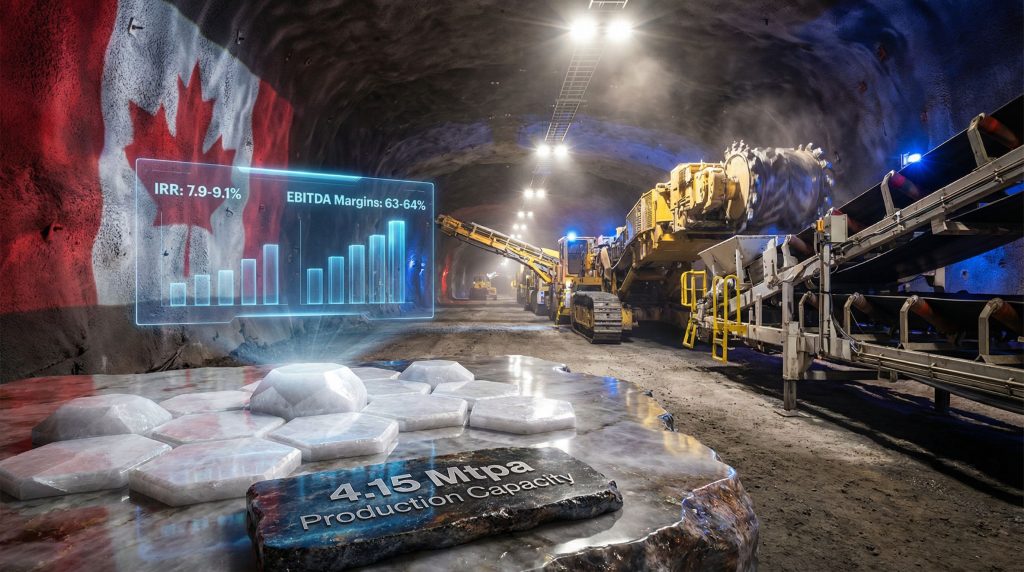
Despite cost escalations, Jansen Stage 1 maintains attractive economic returns with an updated internal rate of return between 7.9% and 9.1% at consensus commodity prices. The expected payback period extends to 11-15 years from first production, reflecting the project's long-term value proposition.
Underlying earnings before interest, tax, depreciation and amortisation margins remain robust at approximately 63-64%, reflecting Jansen's low-cost operational positioning within the global potash supply curve. These margin levels demonstrate the project's ability to generate substantial cash flows despite higher capital intensity.
Market positioning advantages for low-cost producers become increasingly valuable during commodity price volatility periods. Jansen's operational cost profile provides pricing power and margin protection during market downturns while maximising profitability during favourable price environments.
How Do Project Economics Change at Different Investment Scales?
Capital Intensity Analysis Framework
| Investment Level | Production Capacity | Unit Capital Cost | Market Position |
|---|---|---|---|
| $5.7B (August 2021) | 4.15 Mtpa | $1,374/tonne capacity | Competitive entry |
| $7.2B (July 2025 midpoint) | 4.15 Mtpa | $1,735/tonne capacity | Transitional positioning |
| $8.4B (January 2026) | 4.15 Mtpa | $2,024/tonne capacity | Premium positioning |
The 47% increase in unit capital cost from sanction to current estimate represents a fundamental shift in project economics. However, the maintained production capacity of 4.15 million tonnes per annum preserves operational scale advantages and market positioning benefits.
Premium positioning in capital efficiency metrics does not proportionally impact returns due to Jansen's superior resource quality and operational design. The project's ability to maintain 63-64% EBITDA margins despite higher capital intensity demonstrates robust underlying economics.
Operational Leverage and Margin Protection
Fixed cost absorption across production volumes creates significant operational leverage benefits. Once operational, Jansen's high-margin profile provides substantial cash flow generation capability that justifies premium capital investment levels.
EBITDA margin sustainability at 63-64% reflects the project's low-cost operational position within the global potash supply curve. This margin strength provides resilience against commodity price volatility and supports debt service capability throughout commodity cycles.
Cost curve positioning advantages become increasingly valuable as global potash demand grows. Jansen's low-cost operational profile ensures long-term competitiveness even if additional supply enters the market from higher-cost producers.
What Risk Management Lessons Apply to Future Mining Investments?
Construction Phase Performance Optimisation
Productivity measurement protocols require enhanced granularity to identify performance gaps before they create significant cost impacts. BHP's experience highlights the importance of comprehensive construction hour tracking and material quantity verification systems during project execution phases.
Technology integration opportunities for efficiency gains include automated material handling systems, digital progress monitoring, and predictive maintenance protocols. These systems provide real-time visibility into construction performance and enable rapid intervention when productivity falls below target levels. In addition, AI in drilling and blasting technologies are proving crucial for optimising operational efficiency.
Workforce management in remote locations presents unique challenges requiring specialised strategies. Construction camp logistics, worker rotation schedules, and skill development programmes significantly impact overall project productivity and cost control effectiveness.
Sequential Development Strategy Benefits
Learning curve application between project phases creates substantial value enhancement opportunities. BHP intends to apply execution improvements identified during Stage 1 development to subsequent phases, potentially improving capital intensity for Stage 2 and future expansions.
Capital allocation timing optimisation allows companies to align investment decisions with favourable market conditions. Sequential development strategies provide flexibility to accelerate or delay subsequent phases based on commodity price environments and capital availability.
Operational synergies across multiple development stages reduce unit costs through shared infrastructure, combined processing facilities, and integrated logistics systems. These benefits partially offset higher per-stage capital requirements while enhancing overall project economics.
How Does This Project Fit Within Global Potash Supply Dynamics?
Market Share and Competitive Positioning
Jansen Stage 1's 4.15 million tonnes per annum production capacity represents significant incremental supply to global potash markets. Canada's established position as a major potash producer provides regulatory and infrastructure advantages for large-scale development projects.
Supply chain security considerations increasingly drive agricultural market demand for diversified potash sources. Jansen's Canadian location provides stable supply assurance for North American agricultural markets while offering export capability to global customers.
Pricing power dynamics in concentrated potash markets favour low-cost producers with substantial production capacity. Jansen's scale and cost position provide competitive advantages during market volatility periods while ensuring profitability across commodity price cycles.
Expansion Pathway Economics
Stage 2 development timeline and investment requirements remain under evaluation as BHP applies lessons learned from Stage 1 execution challenges. The company expects to update market guidance on Stage 2 investment expenditure estimates in Q4 2026.
Ultimate capacity potential reaches 16-17 million tonnes per annum through two additional expansions beyond Stage 2, subject to further studies and regulatory approvals. This expansion pathway provides substantial long-term production growth opportunities.
Market absorption capacity for increased production appears sufficient given global potash demand growth projections. Agricultural productivity requirements and population growth trends support multi-decade demand expansion that can accommodate Jansen's full development potential.
The next major ASX story will hit our subscribers first
What Investment Metrics Matter Most for Resource Project Evaluation?
Return Profile Analysis
Key Investment Metrics for Jansen Stage 1:
- Internal Rate of Return: 7.9-9.1% at consensus prices
- Payback Period: 11-15 years from first production
- EBITDA Margins: 63-64% reflecting low-cost position
- Project Completion: 75% complete (mid-2027 production target)
- Capital Intensity: $2,024 per tonne annual capacity
These metrics demonstrate project viability despite significant cost escalations. The IRR range of 7.9-9.1% provides attractive returns for long-term institutional investors, while EBITDA margins exceeding 60% ensure strong cash flow generation capability.
Investment timeline considerations reflect the long-term nature of potash market fundamentals. The 11-15 year payback period aligns with infrastructure asset investment horizons while providing substantial value creation potential over project life.
Risk-Adjusted Valuation Considerations
Commodity price volatility impacts require sensitivity analysis across multiple price scenarios. Potash price fluctuations can significantly affect project returns, though Jansen's low-cost position provides downside protection during unfavourable market conditions.
Operational ramp-up risk factors include workforce training, equipment commissioning, and production optimisation challenges. Mining projects typically require 12-24 months to reach full production capacity, affecting initial cash flow timing and return calculations.
Regulatory and environmental compliance costs continue evolving throughout project life cycles. Ongoing monitoring requirements, community engagement programmes, and environmental remediation obligations create ongoing operating expenses that must be incorporated in long-term financial projections.
How Do Major Miners Optimise Capital Allocation Across Multiple Projects?
Portfolio Management During Cost Escalations
Resource allocation strategies must balance development project requirements against operational maintenance and growth investments. BHP's continued commitment to Jansen Stage 2 development demonstrates confidence in long-term potash fundamentals despite Stage 1 cost increases.
Strategic priority ranking across commodity exposures helps optimise capital deployment. Potash projects compete with copper, iron ore, and coal developments for capital allocation, requiring comprehensive return analysis across different commodity cycles.
Market timing considerations affect project sanction decisions and development pace. Sequential development strategies provide flexibility to align major capital commitments with favourable commodity price environments and capital market conditions.
Shareholder Value Protection Strategies
Dividend policy maintenance during major capital investment phases demonstrates financial strength and commitment to shareholder returns. Mining companies must balance growth investment requirements against income distribution expectations from yield-focused investors.
Share buyback programme deployment versus project funding creates strategic capital allocation decisions. Companies evaluate relative value creation potential between returning capital to shareholders versus investing in long-term production growth.
Debt capacity utilisation enables growth investment while preserving financial flexibility. Mining companies typically maintain conservative leverage ratios to manage commodity price volatility while funding development projects through operational cash flows and modest debt increases.
What Operational Excellence Factors Drive Project Success?
Technology Integration for Cost Management
Automation implementation in mining operations reduces long-term operating costs while improving safety performance. Advanced process control systems, automated material handling, and remote equipment operation capabilities enhance productivity and cost control effectiveness.
Digital monitoring systems provide real-time visibility into productivity metrics, equipment performance, and operational efficiency indicators. These systems enable rapid identification of performance gaps and proactive intervention to maintain target production levels.
Predictive maintenance protocols minimise unplanned equipment downtime while optimising maintenance costs. Data analytics and sensor monitoring systems identify potential equipment failures before they impact production schedules, supporting consistent operational performance.
Sustainability and ESG Integration
Environmental impact mitigation strategies increasingly influence project design and operational procedures. Water treatment systems, emissions reduction technologies, and biodiversity protection measures add capital costs but ensure regulatory compliance and social licence maintenance.
Community engagement programmes and social licence maintenance require ongoing investment in local relationships, employment opportunities, and infrastructure development. These programmes create shared value while reducing operational risk from community opposition or regulatory challenges.
Carbon footprint reduction initiatives align with investor ESG requirements and regulatory trends toward emissions reduction. Mining companies implement renewable energy systems, energy efficiency improvements, and carbon offset programmes to meet sustainability commitments.
Strategic Implications for Mining Investment Analysis
Key Takeaways for Investors
Project economics remain viable despite substantial cost increases when underlying commodity fundamentals support long-term demand growth. Jansen's maintained 7.9-9.1% IRR and 63-64% EBITDA margins demonstrate resilient project returns despite 47% capital cost escalation. The BHP Jansen potash project cost reassessment provides valuable lessons for evaluating similar large-scale mining developments.
Long-term demand fundamentals for agricultural commodities provide investment thesis support through multiple economic cycles. Population growth, food security requirements, and agricultural productivity demands create sustained potash consumption growth trajectories.
Operational improvements during project development create value enhancement opportunities across subsequent phases. Learning curve application from Stage 1 to Stage 2 development reduces execution risks while potentially improving capital efficiency for future expansions. According to latest industry reports, these improvements are already showing measurable benefits.
Industry-Wide Lessons for Project Development
Comprehensive risk assessment importance extends beyond traditional technical and geological factors to include detailed cost escalation scenarios, productivity analysis, and supply chain disruption planning. Front-end engineering and design phases require enhanced granularity to prevent significant budget overruns.
Contingency planning for inflationary environments must incorporate multiple economic scenarios and cost escalation drivers. Mining companies require flexible project financing structures and robust cost control frameworks to manage macroeconomic volatility during development phases.
Stakeholder communication strategies during project evolution affect investor confidence and market valuation. Transparent disclosure, regular progress updates, and proactive cost management communication help maintain stakeholder support during challenging execution periods. The BHP Jansen potash project cost reassessment demonstrates both the challenges and opportunities inherent in major mining project development.
This analysis contains forward-looking statements and projections based on current market conditions and company guidance. Actual results may vary significantly due to commodity price volatility, operational challenges, regulatory changes, and macroeconomic factors. Investors should conduct independent due diligence and consider professional advice before making investment decisions.
Looking to Capitalise on Major Mining Project Developments?
Discovery Alert provides instant notifications when significant ASX mineral discoveries are announced, using its proprietary Discovery IQ model to identify actionable opportunities before they reach the broader market. Discover how historic mining discoveries have delivered exceptional returns and begin your 30-day free trial today to position yourself ahead of market-moving developments.