August 24, 2026
Large-scale mining project financing has evolved dramatically in recent years, driven by shifting global economic priorities, supply chain security concerns, and the increasing complexity of securing capital for resource development projects. The convergence of favorable commodity cycles, geopolitical stability requirements, and export credit agency involvement has created new models for funding billion-dollar mining ventures. This transformation reflects broader changes in how international lenders assess mining investment opportunities, particularly in jurisdictions offering regulatory predictability and strategic mineral resources. The Troilus Mining financing decision exemplifies these evolving dynamics in contemporary resource project development.
Engineering Advancement Drives Unprecedented Debt Facility Growth
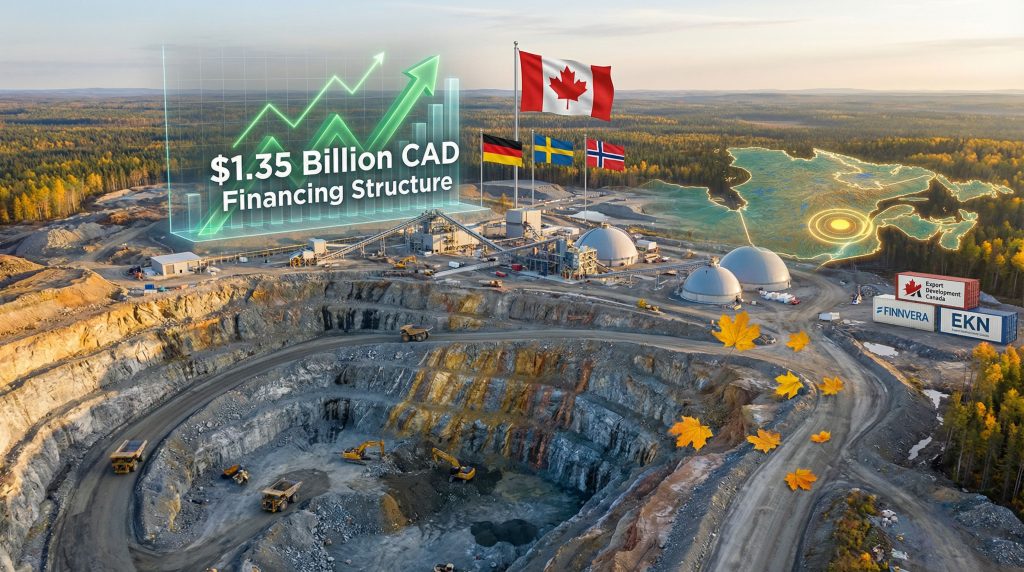
The scale of modern mining project financing has reached new heights as developers transition from feasibility studies into detailed engineering phases. The debt facility expansion from $700 million USD to $1 billion USD (approximately $1.35 billion CAD) represents more than a simple increase in available capital. Furthermore, this growth reflects enhanced lender confidence as technical risk diminishes through engineering advancement and regulatory progress.
Understanding the Technical Risk Reduction Framework
Mining project financing follows a well-established risk reduction pathway where initial capital requirements often expand during detailed engineering phases. The $1.07 billion initial capital cost outlined in the May 2024 feasibility study provides the foundation for understanding how engineering advancement impacts financing availability. As projects move from conceptual design to detailed engineering, lenders gain greater visibility into actual construction requirements, equipment specifications, and logistical challenges.
The technical parameters supporting this financing decision include processing capacity of 50,000 tonnes per day over a 22-year operational timeline. These specifications demonstrate the industrial scale required to justify billion-dollar financing structures. The reserve base of 380 million tonnes grading 0.5 grams gold per tonne, 0.06 percent copper, and 1 gram silver per tonne translates to 6 million ounces gold, 7.3 million pounds copper, and 3.2 million ounces silver over the mine life.
For instance, developers seeking comprehensive mining permitting insights understand how regulatory frameworks influence financing availability. Similarly, successful project development often benefits from examining US Exim loan example structures that demonstrate international lending approaches.
International Lender Syndicate Structure and Risk Distribution
Modern large-scale mining financing increasingly relies on diversified lender groups to distribute risk across multiple institutions and jurisdictions. The involvement of international lenders in Canadian mining projects reflects several converging factors:
- Currency diversification requirements for global lending portfolios
- Strategic mineral security considerations from developed economies
- Political risk mitigation through stable jurisdiction selection
- Technical expertise sharing across international banking syndicates
The financing structure demonstrates how mining projects have become vehicles for broader geopolitical and economic strategies. Export credit agencies from multiple jurisdictions participate not merely for commercial returns, but to secure critical mineral supply chains and support domestic equipment manufacturers and engineering firms.
When big ASX news breaks, our subscribers know first
Strategic Commodity Positioning in Current Market Dynamics
The appeal of gold-copper projects to international lenders stems from fundamental supply-demand dynamics affecting both metals. Gold's role as a monetary asset during economic uncertainty provides financing stability, while copper's position in global electrification trends offers long-term demand growth potential. This dual-commodity approach reduces project risk through diversified revenue streams.
Gold Market Fundamentals Supporting Large-Scale Financing
Current gold price dynamics create favorable environments for securing mining project debt. Central bank purchasing programs, currency debasement concerns, and geopolitical tensions maintain elevated price floors that support debt service calculations. Mining finance specialists increasingly view gold projects with 320,000+ ounce annual production targets as offering sufficient scale to weather commodity volatility.
The feasibility study's gold production estimates provide predictable cash flow projections essential for debt financing. With 6 million ounces of gold reserves distributed over 22 years of operations, the project offers extended production visibility that reduces refinancing risks during the debt tenor period.
Copper Demand Drivers and Multi-Metal Project Economics
Copper's role in renewable energy infrastructure, electric vehicle adoption, and power grid modernisation creates long-term demand support that enhances project financing attractiveness. The copper investment outlook remains robust due to electrification trends and infrastructure development requirements.
The copper component provides exposure to industrial growth trends while gold offers monetary asset stability. Silver production as a byproduct contributes additional revenue streams without proportional operating cost increases. The 3.2 million ounces of silver reserves represent meaningful economic contributions when distributed across the operational timeline.
Regulatory Framework Analysis and Permitting Risk Assessment
Quebec's mining regulatory environment offers advantages that attract international financing compared to other global mining jurisdictions. The dual federal-provincial review system provides comprehensive environmental oversight while maintaining relatively predictable timelines for project approval.
Federal vs Provincial Assessment Timeline Coordination
Environmental assessment coordination between federal and provincial authorities represents a critical pathway for project advancement. Ottawa's environmental and social impact assessment review being characterised as well advanced indicates federal-level regulatory progress. However, Quebec's assessment process running approximately six weeks behind the federal timeline creates scheduling coordination challenges.
This timing differential illustrates how multi-jurisdictional regulatory processes can create project execution complexity. The six-week delay, while manageable, demonstrates the importance of regulatory risk assessment in the Troilus Mining financing decision framework.
Indigenous Consultation Framework Integration
Modern mining project development requires comprehensive Indigenous consultation processes that affect both regulatory timelines and social licence considerations. These consultation requirements have evolved into essential components of project risk assessment rather than supplementary considerations.
The integration of Indigenous perspectives into project development affects multiple aspects of mining operations:
- Traditional territory impact assessments that influence project design
- Benefit-sharing agreement negotiations that affect project economics
- Cultural site protection requirements that may alter operational plans
- Employment and contracting opportunities that create community economic benefits
Regional Economic Development Implications and Infrastructure Requirements
Large-scale mining projects function as regional economic catalysts that extend far beyond direct employment creation. The $1.07 billion capital investment during construction phases generates significant economic multiplier effects throughout surrounding communities and supply chains.
Processing Capacity and Industrial Scale Economic Impact
A processing facility handling 50,000 tonnes per day requires substantial supporting infrastructure including power supply, transportation networks, and skilled workforce development. This industrial scale creates opportunities for regional service providers, equipment suppliers, and specialised contractors.
Annual production targeting 320,000+ ounces of gold alongside copper and silver volumes generates ongoing economic activity through:
- Direct employment during both construction and operational phases
- Indirect employment through supplier and service provider networks
- Induced economic activity from employee spending in regional economies
- Tax revenue generation for municipal, provincial, and federal governments
Infrastructure Development and Regional Connectivity Enhancement
Mining project development often necessitates infrastructure improvements that benefit broader regional development. Power grid connections, transportation route upgrades, and telecommunications infrastructure serve mining operations while creating broader economic development opportunities.
The infrastructure requirements for processing 50,000 tonnes per day include substantial power consumption that may require grid expansion or dedicated power generation facilities. These infrastructure investments frequently provide long-term benefits extending beyond mining project lifecycles.
Construction Timeline Coordination and Critical Path Management
The transition from feasibility study completion to construction commencement requires careful coordination of multiple parallel processes including detailed engineering, environmental approvals, and financing finalisation. According to recent German funding discussions, the spring 2026 credit committee timeline represents a critical decision point that affects all subsequent project milestones.
Engineering Advancement and Budget Optimisation Process
The progression from feasibility-level engineering to detailed design typically reveals cost optimisation opportunities alongside more precise construction requirements. Budget tightening during engineering advancement indicates that initial feasibility estimates may have included conservative contingencies that detailed design can eliminate.
This engineering advancement process affects financing decisions by:
- Reducing construction risk through detailed design completion
- Optimising equipment specifications to match actual requirements
- Refining construction schedules based on detailed logistics planning
- Identifying cost savings opportunities through value engineering processes
Environmental Assessment Completion Dependencies
The coordination between federal and provincial environmental assessment processes creates scheduling dependencies that affect overall project timelines. Federal review advancement while provincial processes lag by six weeks requires careful timeline management to avoid construction delays.
Environmental assessment completion triggers subsequent permitting processes including construction permits, water use authorisations, and air emission permits. These cascading approval requirements create critical path dependencies that financing schedules must accommodate.
Market Volatility and Financial Risk Mitigation Strategies
Large-scale mining project financing must account for commodity price volatility, currency fluctuation risks, and interest rate environment changes during construction and early operational periods. The 22-year mine life provides extended operational periods that reduce per-year debt service burdens while extending exposure to market cycles.
Commodity Price Sensitivity and Debt Service Coverage
Mining project debt structures typically include commodity price sensitivity analysis that models debt service coverage ratios under various price scenarios. Gold and copper price volatility creates financing risk that lenders address through conservative debt service coverage requirements and potential hedging programme implementation.
The multi-commodity nature of the project provides some natural hedging against individual metal price volatility. When gold prices decline, copper or silver prices may maintain project cash flows sufficient for debt service obligations.
Foreign Exchange Risk in Multi-Currency Financing
Canadian mining projects financed through international lending syndicates face foreign exchange risk between Canadian dollar revenues and potentially USD-denominated debt obligations. Currency hedging strategies become essential components of financial risk management programmes.
The $1.35 billion CAD debt facility relative to $1 billion USD demonstrates current exchange rate implications for project financing. Currency fluctuation during the 22-year operational period requires long-term foreign exchange risk management strategies.
The next major ASX story will hit our subscribers first
Regulatory Delays and Approval Process Risk Factors
Mining project development faces inherent regulatory risks that can affect financing schedules and construction timelines. The six-week delay in Quebec's environmental assessment process illustrates how regulatory timing variations can cascade through project schedules.
Environmental Assessment Timeline Coordination Challenges
Dual regulatory review processes create coordination complexity that affects project risk assessment. Federal environmental review advancement while provincial processes lag requires careful timeline management to maintain overall project schedules.
Environmental assessment delays can affect:
- Construction scheduling and contractor coordination
- Equipment procurement timelines and delivery schedules
- Financing commitment periods and credit committee decision timing
- Commodity hedging programmes and price protection strategies
Permit Approval Bottlenecks and Mitigation Approaches
Beyond environmental assessments, mining projects require numerous construction and operational permits that create potential bottlenecks. Water use permits, air emission authorisations, and construction permits each follow separate approval processes with distinct timelines.
Risk mitigation strategies for regulatory approval processes include:
- Early permit application submission before environmental assessment completion
- Regulatory consultant engagement with specialised permitting expertise
- Government relations programmes to maintain approval process visibility
- Contingency timeline development to accommodate potential delays
Comparative Analysis of Canadian Mining Project Financing Trends
The scale and structure of mining project financing in Canada has evolved significantly over the past decade. Billion-dollar financing packages have become more common as projects increase in scale and international lender participation expands. Understanding industry evolution trends helps contextualise these financing developments.
Mining Finance Scale Evolution and Market Trends
| Project Scale | Typical Financing Size | Timeline to Production | Primary Risk Factors |
|---|---|---|---|
| Large-scale Open Pit | $1+ billion | 4-6 years | Commodity prices, regulatory approval, construction execution |
| Mid-tier Operations | $300-800 million | 2-4 years | Resource confidence, processing technology, market access |
| Development Projects | $50-300 million | 1-3 years | Exploration results, infrastructure access, operational expertise |
The progression toward larger financing packages reflects several industry trends:
- Increased construction costs due to inflation and supply chain complexity
- Enhanced environmental standards requiring additional capital investment
- Technology advancement costs for processing equipment and automation
- Infrastructure development requirements in remote project locations
Export Credit Agency Participation and International Cooperation
Export credit agency involvement in mining project financing reflects broader strategic considerations beyond commercial lending. These institutions support domestic equipment manufacturers and engineering firms while securing critical mineral supply chains for their respective countries.
ECA participation provides several advantages for mining project financing:
- Lower interest rates compared to commercial lending rates
- Extended repayment terms that match mine life economics
- Political risk coverage for international project development
- Tied procurement requirements that support domestic industries
Long-term Strategic Implications for Canadian Mining Investment
The successful completion of large-scale mining project financing creates precedents that influence future project development and international investment in Canadian mining assets. These transactions demonstrate market confidence in Canadian regulatory frameworks and mining sector fundamentals.
Supply Chain Security and Critical Mineral Strategy Integration
Modern mining project financing increasingly incorporates strategic considerations related to critical mineral security and supply chain resilience. Gold and copper, while not traditionally classified as critical minerals, play essential roles in monetary systems and infrastructure development respectively.
The integration of supply chain security considerations affects financing decisions through:
- Government policy support for domestic mining development
- Export credit agency backing for strategic mineral projects
- International cooperation agreements that facilitate cross-border investment
- Long-term offtake contracts that provide revenue certainty for lenders
Quebec Mining Jurisdiction Competitive Positioning
Quebec's success in attracting large-scale mining investment reflects broader competitive advantages compared to other global mining jurisdictions. Political stability, established regulatory frameworks, and skilled workforce availability create conditions favourable for international investment.
The province's competitive positioning benefits from:
- Established mining industry infrastructure and service provider networks
- Stable regulatory environment with predictable approval processes
- Skilled workforce availability and mining education programmes
- Transportation infrastructure connecting projects to global markets
Critical Milestones and Investment Decision Framework
The pathway from current engineering advancement to production commencement requires successful navigation of multiple critical milestones during 2026. Each milestone represents a potential decision point that could affect overall project timing and financing completion.
Spring 2026 Credit Committee Decision Process
The spring 2026 credit committee timeline represents the culmination of technical risk reduction, regulatory advancement, and market positioning efforts. As detailed in financial analysis reports, credit committee approval processes typically evaluate multiple risk factors simultaneously:
- Technical engineering completion and construction cost certainty
- Regulatory approval status and remaining permitting requirements
- Commodity market conditions and price forecast scenarios
- Management team execution capability and construction experience
Production Ramp-up Planning and Operational Readiness
The transition from construction completion to commercial production requires comprehensive operational readiness planning. Processing facilities designed for 50,000 tonnes per day must demonstrate consistent performance before achieving full production targets.
Operational readiness factors include:
- Equipment commissioning and performance testing completion
- Workforce training programmes and operational procedure implementation
- Supply chain coordination for ongoing operational requirements
- Quality control systems for meeting production specifications
The 22-year mine life provides extended operational periods that justify substantial initial capital investment while offering potential for operational optimisation and expansion opportunities beyond initial feasibility parameters. Consequently, the Troilus Mining financing decision reflects broader industry trends toward larger-scale project development and international lender participation in Canadian mining ventures.
Disclaimer: This analysis is based on publicly available information and should not be considered investment advice. Mining project development involves significant risks including commodity price volatility, regulatory approval uncertainty, and construction execution challenges. Readers should conduct independent research and consult qualified professionals before making investment decisions.
Ready to Capitalise on Major Mineral Discoveries?
Discovery Alert's proprietary Discovery IQ model delivers instant notifications on significant ASX mineral discoveries, empowering subscribers to identify actionable opportunities ahead of the broader market. Explore how major discoveries can generate substantial returns by visiting Discovery Alert's dedicated discoveries page and begin your 14-day free trial today to secure your competitive advantage.