May 21, 2026
Mining equipment operators face split-second decisions that can determine life or death outcomes in heavy machinery environments. The sophisticated challenge of preventing collisions between massive vehicles weighing hundreds of tons requires technological intervention systems that surpass human reaction capabilities. This reality has driven the development of automated safety frameworks that can respond faster and more consistently than human operators under stress.
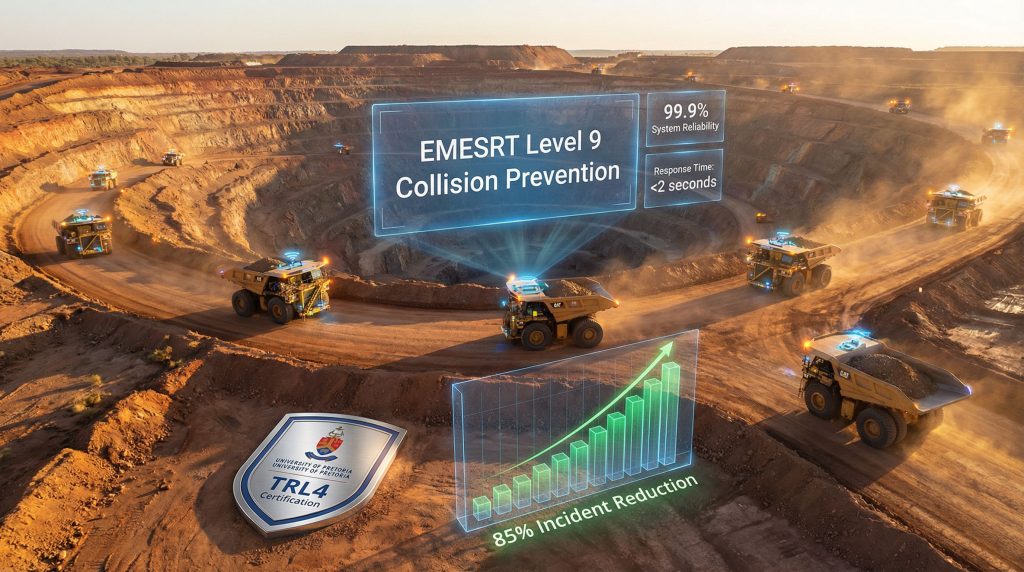
The EMESRT (Earth Moving Equipment Safety Round Table) framework establishes nine distinct levels of collision prevention technology, with each tier building upon increasingly sophisticated intervention capabilities. While levels one through eight focus primarily on warning systems and advisory notifications, Level 9 represents complete automated intervention authority. This highest classification empowers systems to override operator control when imminent collision threats are detected, applying brakes, inhibiting propulsion, or executing other safety measures without human authorization.
At Level 9, collision prevention systems transform from passive advisory tools into active safety partners. The technology continuously monitors vehicle surroundings, processes threat assessments in real-time, and executes protective responses when operators fail to react appropriately to hazard warnings. This automated intervention capability fills the critical gap between human recognition of danger and the physical implementation of collision avoidance measures.
The distinction between advisory and intervention systems reflects fundamental differences in system architecture and operational philosophy. Advisory systems rely on operator judgment and physical response to execute collision prevention, whilst Level 9 systems assume direct control over vehicle functions when safety thresholds are exceeded. This technological evolution represents recognition that human factors including fatigue, distraction, and delayed response times create unavoidable safety vulnerabilities in high-risk mining environments.
How Does University of Pretoria's TRL4 Testing Validate Mining Safety Systems?
Technology Readiness Level 4 verification establishes scientific benchmarks for collision prevention systems before they enter active mining operations. The University of Pretoria conducts independent TRL4 testing under controlled laboratory and proving ground conditions, validating fundamental sensor functionality, detection accuracy, and intervention capabilities through rigorous scientific methodologies. This testing framework serves as a critical milestone within South Africa's MOSH (Mining Industry Occupational Safety and Health) initiative.
The TRL4 specification encompasses comprehensive evaluation criteria including ISO 21815-2:2021 compatibility verification, system diagnostics testing, hazard detection and tracking validation, warning effectiveness assessment, and intervention protocol verification. These tests occur within the Minerals Council South Africa framework, ensuring that collision prevention technologies demonstrate reliable, repeatable performance before field deployment.
The Science Behind Technology Readiness Level 4 Verification
TRL4 testing methodology employs controlled environmental conditions to eliminate variables that could influence performance assessment. Testing facilities simulate mining operational scenarios whilst maintaining measurement precision necessary for scientific validation. Sensor systems undergo evaluation across multiple detection ranges, response scenarios, and environmental conditions that replicate real-world mining challenges.
The verification process validates detection accuracy across 360-degree proximity coverage, measuring system capability to identify and track potential collision threats from all directional approaches. Response time benchmarks establish maximum allowable delays between hazard identification and intervention activation, typically requiring sub-two-second performance to meet safety effectiveness standards.
System reliability testing subjects collision prevention technology to extended operational stress conditions, validating consistent performance under equipment strain, environmental interference, and component wear scenarios. This testing ensures 99.9% uptime requirements can be maintained across diverse operational conditions encountered in active mining environments.
Critical Performance Metrics Evaluated in TRL4 Testing
Performance evaluation during TRL4 testing focuses on quantifiable metrics that directly correlate with collision prevention effectiveness. Detection range testing validates sensor capability across varying distances, environmental conditions, and obstacle configurations. Automated timing systems measure response delays between threat identification and intervention activation, establishing baseline performance standards.
Environmental adaptation testing evaluates system performance under dust, moisture, temperature variation, and visibility conditions typical of mining operations. These assessments ensure collision prevention systems maintain detection accuracy and intervention capability regardless of weather conditions or operational environmental factors.
Hexagon's Vehicle Intervention System achieved distinction as the first and only open-pit Level 9 solution to successfully complete University of Pretoria's Hexagon Vehicle Intervention System safety test specification. This verification validated the system's enhanced architecture and performance alignment with current Minerals Council South Africa requirements, building upon seven years of continuous field deployment since its original 2017 introduction.
When big ASX news breaks, our subscribers know first
What Automatic Intervention Capabilities Define Level 9 Systems?
Level 9 collision prevention systems execute multiple intervention mechanisms designed to prevent vehicle collisions when operator response proves insufficient. Furthermore, boosting mining safety through these advanced systems addresses primary intervention capabilities including propulsion inhibition that prevents vehicle startup when collision risks are detected, automated retarder and service brake application that reduces vehicle speed or brings equipment to complete stops, and safe following distance enforcement that maintains predetermined spacing between moving vehicles.
Primary Intervention Mechanisms
Propulsion inhibition systems prevent vehicle startup when proximity sensors detect potential collision scenarios during equipment activation. This intervention mechanism addresses collision risks during initial vehicle movement when operator visibility may be limited or hazard recognition delayed.
• Automated brake application protocols engage retarder systems and service brakes when collision threats exceed predetermined thresholds
• Safe following distance enforcement maintains vehicle spacing through automatic speed regulation
• Overspeed management systems control vehicle velocity on ramp sections where gravitational forces increase collision risks
• Fail-safe protocols ensure vehicles reach safe operational states during system malfunctions or component failures
Advanced collision prevention systems integrate with existing fleet management infrastructure, enabling coordination between multiple vehicles and centralised monitoring capabilities. This integration supports mine-wide safety protocols whilst maintaining operational efficiency across large equipment fleets.
Advanced Control Features
Modern Level 9 systems incorporate sophisticated control algorithms that balance collision prevention effectiveness with operational continuity. In addition, AI in mining operations demonstrates how overspeed management technology specifically addresses ramp section hazards where vehicle momentum and gravitational forces create elevated collision risks. These systems automatically regulate vehicle speed on inclined surfaces, preventing runaway scenarios that could result in catastrophic collisions.
System integration capabilities enable communication between collision prevention technology and broader mine management systems. This connectivity supports fleet-wide safety coordination, allowing individual vehicle safety systems to share hazard information and coordinate intervention responses across multiple equipment units.
Fail-safe design principles ensure Level 9 systems guide vehicles to safe operational states when component failures or system malfunctions occur. Rather than simply disabling intervention capabilities, advanced systems execute predetermined safety protocols that minimise collision risks whilst maintaining operator control where feasible.
How Does Real-World Testing Validate Laboratory Results?
Laboratory testing provides controlled validation of collision prevention system capabilities, but real-world operational deployment offers essential performance verification under actual mining conditions. However, extensive mining innovation trends require more than 10,000 testing hours in active mining environments prior to market introduction, establishing operational heritage that validates laboratory performance predictions.
Field Testing Requirements Before TRL4 Certification
Comprehensive field testing exposes collision prevention systems to diverse geological conditions, equipment configurations, and operational scenarios that cannot be replicated in laboratory environments. Testing across multiple mine sites validates system performance under varying dust levels, temperature extremes, equipment vibration, and electromagnetic interference conditions common in industrial mining operations.
Operator feedback integration during field testing enables system refinement based on actual user experience and operational requirements. This feedback loop identifies performance optimisation opportunities and operational interface improvements that enhance system effectiveness whilst maintaining operator acceptance and operational efficiency.
Seven years of continuous field deployment since 2017 provides extensive performance data demonstrating system reliability and effectiveness across diverse mining operations. This operational track record validates the progression from initial technology development through mature system deployment, supporting confidence in collision prevention capability under real-world conditions.
Operational Heritage and Proven Track Record
Extended operational deployment enables collision prevention system optimisation through iterative improvement based on performance data and user feedback. System enhancements incorporate lessons learned from field deployment, addressing operational challenges and refining intervention protocols to improve effectiveness whilst minimising false activations that could disrupt mining productivity.
Integration with global fleet management systems demonstrates collision prevention technology scalability across diverse mining operations and equipment configurations. This compatibility ensures technology adoption can proceed without requiring comprehensive fleet management system replacement or extensive infrastructure modification.
Compliance with evolving regulatory frameworks validates system adaptability to changing safety requirements and industry standards. The latest generation Vehicle Intervention System aligns with current Minerals Council South Africa requirements whilst maintaining backward compatibility with existing operational infrastructure.
Why Is Independent Verification Critical for Mining Safety Technology?
Independent verification provides objective validation of collision prevention system performance through third-party testing and evaluation. University of Pretoria's TRL4 testing eliminates manufacturer bias whilst establishing scientifically quantifiable performance benchmarks that mining operations can rely upon for safety system selection and implementation decisions.
Regulatory Compliance and Industry Standards
South Africa's MOSH initiative establishes regulatory frameworks requiring demonstrated safety system effectiveness through independent verification. TRL4 testing serves as a critical milestone within this framework, ensuring collision prevention technologies meet established performance standards before operational deployment.
Department of Mineral Resources safety regulations align with independent verification requirements, creating regulatory compliance pathways for mining operations implementing certified collision prevention systems. This alignment reduces regulatory uncertainty whilst providing clear compliance documentation for safety audits and operational approvals.
International mining safety protocol integration enables collision prevention systems verified through independent testing to meet global safety standards and regulatory requirements. This compatibility supports technology deployment across multiple jurisdictions whilst maintaining consistent safety performance expectations.
Risk Mitigation Through Scientific Validation
Quantifiable performance metrics established through independent testing provide insurance providers with objective risk assessment data for policy evaluation and premium determination. Certified collision prevention systems demonstrate measurable risk reduction that can translate into reduced insurance costs and improved coverage terms for mining operations.
Liability reduction through certified safety systems creates legal protection for mining operations by demonstrating due diligence in implementing proven collision prevention technology. Independent verification provides documentation of system effectiveness that can support legal defence in accident investigation scenarios.
Operational confidence for mine management teams increases when collision prevention systems demonstrate proven performance through independent verification. This confidence supports technology adoption decisions whilst providing assurance that safety investments will deliver measurable risk reduction benefits.
What Role Does System Integration Play in Collision Prevention?
Effective collision prevention requires seamless integration between sensor technologies, data processing systems, vehicle control mechanisms, and fleet management infrastructure. Modern Level 9 systems employ multi-sensor fusion architectures that combine radar, proximity sensors, and advanced detection technologies to create comprehensive hazard identification capability across all operational scenarios.
Sensor Technology and Detection Capabilities
Multi-sensor fusion technology combines input from multiple detection systems to create comprehensive situational awareness that surpasses individual sensor limitations. This approach ensures collision prevention systems maintain effectiveness across diverse environmental conditions including dust, weather variations, and limited visibility scenarios common in mining operations.
Real-time data processing capabilities enable instantaneous threat assessment and intervention decision-making that matches the rapid pace of heavy equipment operations. Consequently, data-driven mining future developments demonstrate how advanced processing algorithms evaluate sensor inputs, calculate collision probability, and execute intervention protocols within timeframes necessary for effective collision prevention.
Environmental adaptation features ensure detection capabilities remain consistent across varying operational conditions. Systems compensate for dust interference, weather impacts, and visibility limitations whilst maintaining detection accuracy and intervention effectiveness necessary for reliable collision prevention.
Fleet-Wide Communication Networks
Vehicle-to-vehicle communication protocols enable collision prevention systems to share hazard information and coordinate intervention responses across multiple equipment units. This communication capability creates mine-wide safety awareness that extends beyond individual vehicle sensor ranges, providing enhanced collision prevention effectiveness through coordinated fleet management.
• Central monitoring systems provide real-time oversight of fleet-wide collision prevention system status
• Alert distribution networks ensure hazard information reaches relevant operators and management personnel
• Historical data collection enables safety pattern analysis and operational optimisation opportunities
• Performance monitoring systems track collision prevention effectiveness and identify improvement opportunities
Integration with existing mine management infrastructure ensures collision prevention technology deployment can proceed without requiring comprehensive system replacement or extensive operational disruption. This compatibility supports cost-effective technology adoption whilst maintaining operational continuity during implementation phases.
How Do Level 9 Systems Address Human Factor Limitations?
Human factors including fatigue, distraction, stress, and physiological response limitations create inherent vulnerabilities in collision prevention that automated systems are designed to address. Level 9 intervention systems provide consistent performance regardless of operator condition, filling critical safety gaps when human response proves insufficient or delayed.
Operator Fatigue and Response Time Challenges
Automatic intervention capabilities compensate for delayed human response times during high-stress operational scenarios. Research indicates human reaction times under stress can exceed two seconds, whilst automated systems can initiate intervention responses in under one second, providing critical time advantages for collision prevention.
Consistent performance standards ensure collision prevention effectiveness remains constant across extended operational periods when operator fatigue may compromise response capabilities. Automated systems maintain detection accuracy and intervention readiness throughout entire work shifts, providing reliable safety protection regardless of human performance variations.
Backup safety layer functionality provides secondary collision prevention when primary operator response proves insufficient. This layered safety approach recognises human limitations whilst maintaining operational flexibility through graduated intervention protocols that preserve operator authority when appropriate response occurs.
Training and Simulation Integration
Operator familiarisation programmes ensure mining personnel understand Level 9 system capabilities and intervention protocols. Training curricula address system operation, override procedures, and coordination requirements that optimise collision prevention effectiveness whilst maintaining operational efficiency.
• Scenario-based training prepares operators for emergency situations where automated intervention may occur
• Simulation systems provide safe environments for practicing response protocols and system interaction
• Competency validation ensures operators demonstrate appropriate system understanding before operational deployment
• Reduced over-reliance training maintains operator engagement and situational awareness
For instance, safety preparation tips highlight how balanced automation approaches preserve operator skill development whilst providing automated safety protection when human capabilities prove insufficient. This balance prevents technology dependency that could compromise operator competence during system maintenance or failure scenarios.
The next major ASX story will hit our subscribers first
What Are the Economic Implications of Advanced Safety Systems?
Investment in Level 9 collision prevention technology generates measurable economic benefits through accident prevention, operational efficiency improvements, and risk mitigation value creation. Cost-benefit analysis demonstrates that collision prevention system investment typically generates positive returns through reduced incident costs, insurance premium reductions, and productivity improvements from enhanced operational confidence.
Cost-Benefit Analysis for Mining Operations
Direct cost savings from collision prevention significantly exceed technology investment costs when measured across operational lifespans. Single collision incidents involving heavy mining equipment can generate repair costs, operational downtime, and liability expenses that exceed collision prevention system costs by substantial margins.
Insurance premium reductions provide ongoing economic benefits for mining operations implementing certified collision prevention technology. Insurance providers recognise measurable risk reduction from Level 9 systems, translating safety improvements into reduced premium costs and improved coverage terms over time.
Operational efficiency gains result from enhanced operational confidence and reduced safety-related downtime. Mining operations equipped with proven collision prevention technology can maintain higher productivity levels whilst achieving improved safety performance, creating dual economic and safety benefits.
Return on Investment Calculations
Comprehensive ROI analysis encompasses direct collision prevention savings, indirect productivity benefits, and risk mitigation value creation. Studies indicate collision prevention systems can reduce collision incidents by up to 85% compared to warning-only systems, providing substantial safety and economic benefits.
Long-term maintenance and upgrade considerations factor into total cost of ownership calculations. Modern collision prevention systems require ongoing maintenance, software updates, and periodic component replacement that mining operations must budget for comprehensive technology lifecycle management.
Level 9 intervention systems demonstrate measurable economic value through collision prevention rates exceeding 85% compared to warning-only alternatives, with automatic response capabilities under two seconds providing critical protection when human reaction time proves insufficient for effective collision avoidance.
How Does This Technology Advance Mining Industry Safety Standards?
Independent verification of Level 9 collision prevention technology establishes new performance benchmarks that influence industry-wide safety standard development. Furthermore, achieving collision prevention system standards as the first open-pit solution to complete University of Pretoria Hexagon Vehicle Intervention System safety test creates market differentiation whilst demonstrating feasibility of advanced automated collision prevention in large-scale mining operations.
Setting New Benchmarks for Open-Pit Operations
First-mover advantage in Level 9 certification provides competitive positioning for technology providers whilst establishing performance expectations for industry-wide safety system development. This certification demonstrates advanced collision prevention capability is achievable within operational mining environments.
Industry-wide adoption implications include accelerated development of competing technologies and establishment of Level 9 systems as standard safety requirements for major mining operations. Market pressure for equivalent safety performance drives innovation across collision prevention technology providers.
Regulatory influence on future safety requirements often reflects proven technology capabilities demonstrated through independent verification. TRL4 certification of Level 9 systems may influence future regulatory standards that require comparable collision prevention capabilities across mining operations.
Future Development Pathways
Integration with autonomous vehicle technologies creates opportunities for enhanced collision prevention through coordinated autonomous and human-operated equipment management. This integration pathway supports mining industry evolution toward increased automation whilst maintaining safety effectiveness.
Enhanced artificial intelligence-driven predictive capabilities offer potential improvements in hazard recognition and intervention decision-making. Machine learning algorithms can refine collision prevention effectiveness through operational experience and pattern recognition that surpasses current system capabilities.
Expansion to underground mining applications requires adaptation of Level 9 collision prevention technology to confined space environments with different operational challenges. Underground deployment opportunities represent significant market expansion potential for proven surface mining collision prevention systems.
What Should Mining Operations Consider When Implementing Level 9 Systems?
Successful Level 9 system implementation requires comprehensive evaluation of site-specific operational requirements, existing infrastructure compatibility, and staff preparation for advanced collision prevention technology. Mining operations must assess geological conditions, equipment configurations, and operational procedures to optimise system effectiveness and integration success.
Site-Specific Implementation Requirements
Geological and operational environment assessment identifies specific collision risks and operational scenarios that collision prevention systems must address. Site evaluation encompasses terrain characteristics, typical weather conditions, dust levels, and electromagnetic interference sources that could affect system performance.
Existing fleet compatibility evaluation ensures collision prevention technology can integrate effectively with current equipment configurations and operational procedures. Compatibility assessment addresses communication protocols, power requirements, and mechanical installation requirements across diverse equipment types.
Staff training and change management protocols prepare operational personnel for collision prevention system deployment whilst maintaining operational efficiency during implementation phases. Training programmes address system operation, maintenance requirements, and emergency procedures necessary for successful technology adoption.
Integration Timeline and Deployment Strategy
Phased rollout approaches enable systematic collision prevention system deployment across large mining operations whilst minimising operational disruption. Implementation phases typically progress from pilot equipment testing through fleet-wide deployment based on performance validation and operational experience.
System testing and validation procedures ensure collision prevention technology performs effectively within specific operational environments before full deployment. Testing protocols address system calibration, operator training validation, and performance verification under actual operational conditions.
Performance monitoring and optimisation protocols enable ongoing system refinement based on operational experience and performance data analysis. Continuous improvement processes identify optimisation opportunities and address operational challenges that emerge during initial deployment phases.
Implementation Considerations Overview
| Implementation Phase | Primary Requirements | Timeline Considerations |
|---|---|---|
| Site Assessment | Geological evaluation, equipment compatibility | 2-4 weeks |
| Pilot Testing | Limited equipment deployment, operator training | 4-8 weeks |
| System Optimisation | Performance tuning, procedure refinement | 2-4 weeks |
| Fleet-Wide Deployment | Full implementation, ongoing monitoring | 8-16 weeks |
The successful TRL4 verification of Hexagon's Vehicle Intervention System represents a pivotal advancement in mining safety technology, establishing new standards for automated collision prevention whilst demonstrating the critical importance of independent scientific validation. This achievement validates the evolution from warning-based safety systems toward comprehensive automated intervention capabilities that address human factor limitations in high-risk mining environments.
Mining operations investing in Level 9 collision prevention technology gain access to scientifically validated safety capabilities that provide measurable risk reduction, economic benefits, and regulatory compliance advantages. The combination of proven operational heritage, independent verification, and advanced intervention capabilities positions automated collision prevention as essential technology for modern mining safety management.
As the mining industry continues evolving toward enhanced automation and safety performance standards, independently verified Level 9 collision prevention systems establish the technological foundation for achieving zero-harm operational objectives whilst maintaining productive mining operations across diverse operational environments and challenging geological conditions.
Are You Looking to Invest in Mining Technology and Safety Innovation Companies?
Discovery Alert's proprietary Discovery IQ model delivers real-time alerts on significant ASX mineral discoveries in the mining technology and industrial safety sectors, instantly identifying companies developing breakthrough safety solutions and automated mining systems. Explore Discovery Alert's dedicated discoveries page to understand how major mining technology breakthroughs can generate substantial market returns, then begin your 14-day free trial to position yourself ahead of emerging opportunities in this rapidly evolving sector.