August 23, 2026
The Hidden Productivity Crisis Mining Software Is Finally Solving
Every major mining operation runs on a paradox. Companies invest hundreds of millions of dollars in geological surveys, feasibility studies, and mine development, yet once operations begin, daily production is often coordinated through spreadsheets, radio calls, and paper-based shift handover notes. The disconnect between the precision of mine planning and the improvised reality of frontline execution has quietly cost the industry enormous amounts of productive output for decades.
This gap is now drawing serious attention from technology investors and platform providers alike. The decision by Datamine to invest in Commit Works represents more than a routine software deal. It signals that the mining industry has reached an inflection point where operational execution software is being treated as mission-critical infrastructure rather than a productivity add-on.
When big ASX news breaks, our subscribers know first
Why Frontline Execution Has Been the Weakest Link in Mining Operations
The modern mine operates across a complex hierarchy of planning horizons. Strategic mine plans project production years into the future. Medium-term plans schedule equipment and personnel across quarters. However, the place where value is won or lost every single day is at the shift level, and this is precisely where the technology stack has historically been thinnest.
Shift supervisors at operating mines frequently face a set of recurring structural problems:
- Task assignments communicated verbally or through informal notes, with no digital audit trail
- Equipment availability data that lags behind reality by hours, creating blind spots during active shifts
- Production tracking that only consolidates at the end of a shift, by which point delays have already compounded
- Handovers that rely on the individual knowledge and communication skill of outgoing supervisors
- No structured mechanism to flag emerging issues before they escalate into production stoppages
Each of these problems individually has a manageable impact. Collectively, they create an environment where actual production consistently underperforms against the scheduled plan, and where the causes of underperformance are difficult to diagnose systematically.
Is Compliance-to-Plan the Right Metric?
The metric that has emerged to quantify this problem is compliance-to-plan: the degree to which actual shift production matches what was scheduled. Low compliance rates are rarely caused by a single dramatic failure. They accumulate through dozens of minor misalignments across each shift, each one individually invisible but collectively significant.
Furthermore, data-driven mining operations are increasingly demonstrating that the gap between planned and actual production is measurable, predictable, and addressable through structured digital tools.
The shift from reactive problem-solving to proactive operational management represents one of the most consequential productivity transitions available to mining operations today, and it fundamentally requires purpose-built digital tools to execute.
What the Datamine Investment in Commit Works Actually Means
When Datamine invests in Commit Works, the strategic logic operates on two levels simultaneously. The first is a technology integration play. The second, arguably more powerful, is a distribution acceleration strategy.
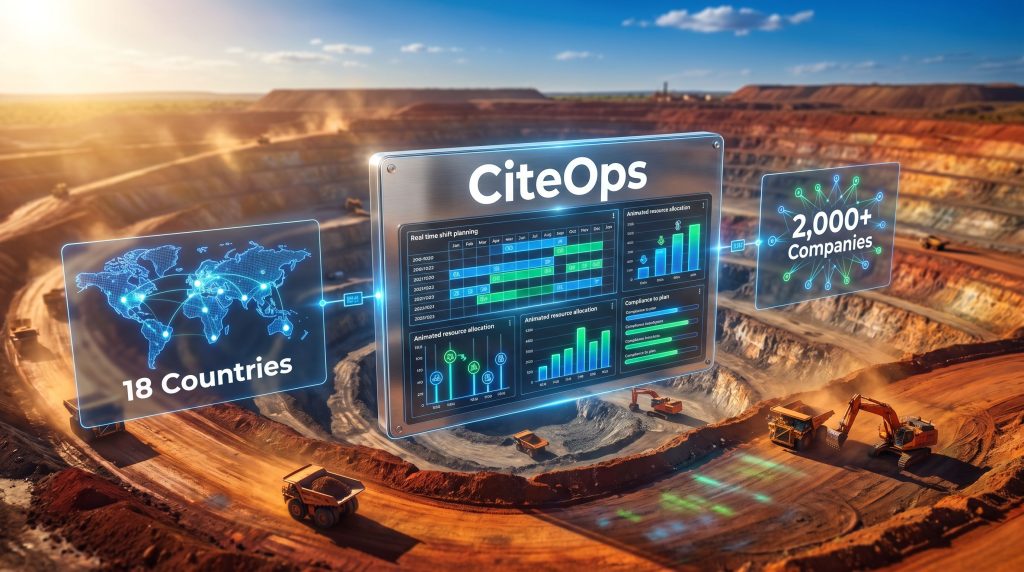
Datamine is a globally recognised mining software provider with operations across 18 countries and a client base exceeding 2,000 companies worldwide. Its existing platform addresses the upstream end of the mining technology value chain: geological data management, orebody modelling, resource estimation, and strategic mine planning. These are the tools that determine where to mine and how much ore is there.
What Datamine has not historically offered is software for the operational execution layer, which addresses how the mine runs shift by shift once those strategic decisions have been made. This is the capability gap that Commit Works fills. In addition, the mining efficiency gains achievable through better shift-level execution represent a significant untapped opportunity for most operations.
Rather than pursuing an outright acquisition, Datamine has structured this as a strategic investment, preserving Commit Works' operational identity and product focus while embedding it within a broader ecosystem. This distinction matters for customers evaluating the long-term support trajectory of CiteOps as a standalone product.
What Makes This Deal Credible?
Commit Works arrived at this deal with established credibility. Prior to Datamine's involvement, the company had already attracted institutional backing from Jolimont, a specialist mining technology venture capital fund. Jolimont's participation signals that the product had cleared a professional due diligence threshold within the mining technology investment community before Datamine entered the picture.
CiteOps: Understanding the Platform at the Centre of This Deal
CiteOps is Commit Works' flagship product and the primary technology driving the strategic value of this investment. It functions as a digital coordination layer for mine site operations, designed to bridge the structural gap between high-level mine plans and the practical realities of daily execution.
The platform targets four operational functions that have historically been managed through analogue or semi-digital approaches:
| Operational Function | Traditional Method | CiteOps Digital Approach |
|---|---|---|
| Shift Planning | Paper schedules or spreadsheets | Real-time digital shift plans with compliance tracking |
| Resource Allocation | Manual supervisor assignment | Plan-matched resource coordination |
| Task Coordination | Verbal handovers, radio communication | Structured task management with digital audit trail |
| Production Tracking | End-of-shift manual consolidation | Continuous real-time production monitoring |
How Does Short Interval Control Work in Practice?
A technically important aspect of CiteOps is its integration of short interval control (SIC) methodology with operational visualisation tools. SIC is a management practice built around monitoring and adjusting production activities at intervals ranging from one to two hours during an active shift. Rather than waiting until the end of a shift to assess performance, SIC enables supervisors to identify deviations from plan as they develop and intervene while corrective action is still possible.
Digitising this process is more complex than it sounds. SIC requires real-time data inputs from multiple sources, a display layer that surfaces the most relevant information to supervisors without overwhelming them, and a structured workflow for escalating and resolving identified issues. Integrating all of this within a single platform is what Commit Works describes as a defining characteristic of CiteOps, positioning the product as the only fully integrated provider combining SIC applications with visualisation software in a single cohesive offering.
The platform also incorporates workforce management capabilities, addressing safety and fatigue management obligations that are increasingly embedded in regulatory frameworks across major mining jurisdictions. For mine operators managing large rotating workforces, this shift planning software integration reduces the administrative burden associated with compliance and reduces the risk of human error in fatigue monitoring.
How Datamine's Global Network Transforms Commit Works' Growth Trajectory
One of the most underappreciated dimensions of this deal is what it means for Commit Works' international growth prospects. An Australian-based specialist software company, regardless of product quality, faces significant structural barriers to rapid international expansion. Building sales relationships across multiple continents requires local market knowledge, established credibility, language capabilities, and sustained investment in business development over years.
Access to Datamine's network of operations across 18 countries and relationships with more than 2,000 mining companies compresses this timeline dramatically. Datamine's existing customer relationships represent a pre-qualified pipeline of potential CiteOps deployments. These are mining operations that already trust Datamine for upstream planning software and now have access to a complementary operational execution tool from within the same ecosystem.
Datamine CEO John Bailey articulated the operational rationale clearly, emphasising that supporting front-line workers and supervisors with reliable shift planning capability enables customers to drive continued improvements in operational performance, reduce risk, and consistently deliver better outcomes. Bailey specifically identified improved compliance to plan, real-time visibility, and workforce management as critical priorities for modern mining operations.
From Commit Works' perspective, CEO James Aleman characterised the investment as an opening to significant growth through leveraging Datamine's global reach and deep organisational expertise. Aleman framed the deal as validation of the product's quality and the beginning of an accelerated international expansion phase.
The Mining Software Consolidation Trend Driving This Deal
The Datamine and Commit Works transaction does not exist in isolation. It reflects a broader restructuring occurring across the mining technology sector, where established platform providers are recognising that the point-solution model is becoming commercially untenable for buyers. Consequently, current mining innovation trends point firmly towards platform consolidation and deeper operational integration.
Mining companies are under sustained pressure to improve capital efficiency without proportional headcount expansion. In this environment, managing a fragmented portfolio of disconnected software tools creates its own operational overhead: integration maintenance, data reconciliation, vendor management, and training duplication across incompatible interfaces.
What Forces Are Driving Consolidation?
Three converging forces are driving consolidation across the sector:
- Operational pressure from mining companies seeking integrated solutions that reduce technology management complexity while delivering measurable productivity gains
- Digital maturity progression at operating mine sites that have completed foundational digitalisation and are now evaluating whether their disparate tools can be consolidated into coherent platforms
- Investor validation from specialist mining technology funds like Jolimont, which have demonstrated commercial appetite for focused operational software and attracted follow-on attention from larger strategic players
The investment structure chosen here, a strategic minority stake rather than a full acquisition, is becoming increasingly common in mining technology consolidation. It offers a middle path that allows integration at the ecosystem level while preserving the product focus and operational agility that made the acquired company attractive in the first place.
| Investment Type | Structure | Primary Objective |
|---|---|---|
| Strategic Investment | Minority stake with integration rights | Technology access and distribution expansion |
| Full Acquisition | 100% ownership | Complete platform consolidation |
| Joint Venture | Shared development entity | Co-development of new capabilities |
| VC-Backed Growth | External capital, independent operation | Scale prior to strategic exit |
The next major ASX story will hit our subscribers first
What Mine Operators Should Consider When Evaluating This Development
For mining operations currently evaluating their technology vendor landscape, the decision by Datamine to invest in Commit Works raises several practical considerations worth examining carefully.
Platform continuity: The preservation of Commit Works' operational identity within this deal structure suggests that CiteOps will continue to be developed and supported as a distinct product rather than absorbed and dissolved into Datamine's broader platform. This reduces transition risk for existing Commit Works customers.
Integration depth over time: As the Datamine and Commit Works relationship matures, the technical integration between upstream planning tools and the CiteOps operational execution layer is likely to deepen. Mining companies using both platforms could potentially gain a continuous data environment spanning from geological modelling through to shift-level production tracking. Furthermore, mining technology automation is accelerating the pace at which these integrations can be delivered at scale.
Vendor evaluation criteria are shifting: Buyers are increasingly assessing mining software vendors on the breadth and integration depth of their overall platform, not just the functional quality of individual modules. A combined Datamine and Commit Works offering addresses a significantly wider operational scope than either platform covers independently.
The compliance-to-plan opportunity: For operations that have not yet measured shift-level plan compliance as a formal KPI, implementing a structured measurement framework is often the first step toward identifying where production losses are actually occurring. Platforms like CiteOps are designed to both generate this data and create the operational environment to act on it in real time.
Mining operations that consistently achieve high compliance-to-plan rates across multiple shifts demonstrate compounding throughput advantages over time. The productivity gap between mines with structured shift execution systems and those without it tends to widen gradually rather than appear as a single dramatic event.
Key Takeaways for the Mining Technology Sector
The decision by Datamine to invest in Commit Works carries implications that extend beyond the two companies involved. It reflects a broader recognition within the mining software industry that the most significant remaining productivity opportunity lies not in better geological modelling or more precise resource estimation, but in improving the quality and consistency of daily operational execution. Indeed, AI in mining operations is reinforcing this shift by making real-time operational intelligence more accessible than ever before.
Several structural conclusions emerge from this deal:
- Integration over fragmentation is now the defining direction of mining technology investment, as operators seek fewer vendor relationships and more coherent data environments
- Frontline planning software has graduated from a discretionary productivity tool to a core operational capability in mines facing efficiency and workforce management pressures
- Strategic investment structures are proving more effective than outright acquisitions in the mining software sector, balancing ecosystem integration with product focus preservation
- Global distribution access remains the most powerful accelerant for specialist mining technology companies, and partnerships with established providers dramatically compress international growth timelines
- The combination of upstream mine planning capabilities and shift-level execution tools within a single vendor relationship represents a template that other mining software providers are likely to follow in the years ahead
Disclaimer: This article is intended for informational purposes only and does not constitute financial or investment advice. Readers should conduct their own independent research before making any investment or procurement decisions. Forward-looking statements and market observations discussed in this article involve inherent uncertainty and should not be relied upon as predictions of specific outcomes.
Want to Identify the Next Major ASX Mining Discovery Before the Market Does?
Discovery Alert's proprietary Discovery IQ model delivers real-time alerts on significant ASX mineral discoveries, transforming complex geological data into actionable investment insights for both short-term traders and long-term investors — explore the historic returns major discoveries have generated and begin your 14-day free trial today to position yourself ahead of the market.