August 14, 2026
Why Mining Stock Psychology Drives Investment Decisions in 2026
The resource sector continues to captivate Australian investors through a complex interplay of greed, fear, and cognitive biases that shape market sentiment. Understanding these psychological forces becomes crucial when evaluating whether Fortescue shares represent a compelling buy or hold opportunity in today's volatile commodity landscape.
Investor psychology in mining stocks follows predictable patterns driven by commodity price euphoria and subsequent despair cycles. When iron ore prices surge, shareholders exhibit overconfidence bias, extrapolating recent gains indefinitely. Furthermore, during price corrections, loss aversion triggers panic selling despite unchanged operational fundamentals.
This psychological volatility creates opportunities for disciplined investors who recognise that mining company valuations often deviate significantly from intrinsic value based purely on emotional reactions to commodity price movements.
When big ASX news breaks, our subscribers know first
Strong Operational Foundation Supports Investment Case
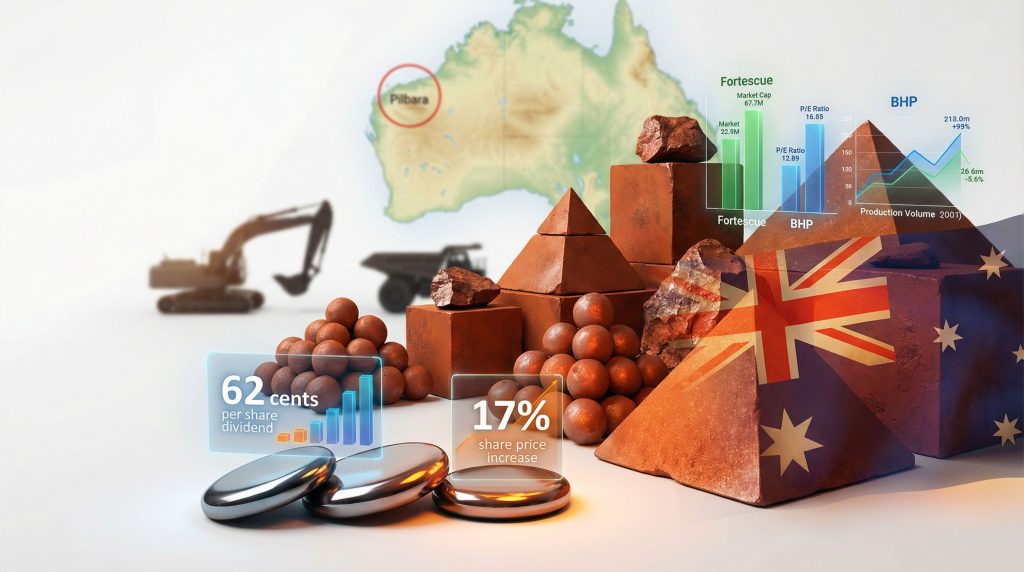
Fortescue maintains its competitive position through exceptional cash generation capabilities that underpin shareholder value creation. The company's latest financial results demonstrated robust profitability with a fully-franked dividend of 62 cents per share, representing approximately 65% of profits being distributed to shareholders.
This dividend policy reflects management confidence in sustainable earnings generation, particularly given iron ore price trends currently above $90 per tonne. The franking credits provide additional tax-efficient returns for Australian resident investors, enhancing the total return proposition beyond the headline dividend yield.
Cost Leadership Advantage
Operating as one of Australia's most efficient iron ore producers, Fortescue benefits from several structural advantages. However, investors should remain vigilant about investment risk flags when evaluating any mining company's long-term prospects.
• Integrated Pilbara operations spanning mining, rail, and port infrastructure
• Advanced automation systems reducing labour dependency and operational costs
• Economies of scale across multiple high-grade mining sites
• Strategic geographic positioning enabling low-cost transportation to Asian markets
These competitive moats provide earnings resilience during commodity downturns while maximising profit margins during favourable pricing periods.
Diversification Through Strategic Investments
The company's evolution beyond pure iron ore dependency includes substantial capital allocation toward green hydrogen projects and copper exposure expansion. Consequently, the copper investment outlook becomes increasingly relevant to Fortescue's strategic positioning. The Alta Copper acquisition represents a strategic pivot toward commodities with structural demand growth driven by global electrification trends.
However, these diversification initiatives remain in early development phases with commercial viability yet to be demonstrated at scale.
Comparative Analysis Against Industry Benchmarks
Fortescue vs BHP Investment Metrics
| Investment Criterion | Fortescue (ASX: FMG) | BHP Group (ASX: BHP) |
|---|---|---|
| Commodity Exposure | Iron ore concentrated (85%+) | Diversified portfolio |
| Dividend Yield Range | Higher volatility (8-12%) | More stable (5-8%) |
| Earnings Predictability | Cyclical iron ore dependency | Balanced commodity mix |
| Future Growth Drivers | Copper acquisition, hydrogen | Established copper leadership |
| Market Capitalisation | ~$55-60 billion | ~$180-200 billion |
Portfolio Construction Considerations
BHP's diversified commodity portfolio provides superior earnings stability through economic cycles, reducing single-commodity concentration risk. The company's established copper production leadership through assets like Escondida and Olympic Dam positions investors for structural demand growth in electrification markets.
Conversely, Fortescue's iron ore concentration creates both higher upside potential during commodity booms and greater downside vulnerability during price corrections. In addition, current mining market sentiment influences short-term trading patterns across both companies.
Critical Risk Assessment for Shareholders
Iron Ore Market Dependencies
Fortescue's financial performance remains closely correlated with iron ore pricing, creating several investment risks. For instance, iron ore demand insights suggest varying perspectives on long-term consumption patterns.
• Chinese steel demand moderation as infrastructure investment slows
• Increased global supply from Brazilian and African mining projects
• Construction sector weakness reducing steel consumption demand
• Economic slowdown risks impacting industrial commodity consumption
Operational Cost Pressures
Rising input costs present ongoing margin compression risks that require careful monitoring:
• Western Australian labour cost inflation exceeding national averages
• Energy price volatility impacting mining and processing operations
• Equipment replacement costs increasing due to supply chain constraints
• Environmental compliance investments requiring sustained capital expenditure
Currency Translation Exposure
As an Australian-domiciled company selling USD-denominated commodities, Fortescue faces significant foreign exchange risk. AUD strength reduces translated earnings while AUD weakness enhances profitability, creating additional volatility beyond commodity price movements.
Dividend Sustainability Analysis for Income Investors
Payout Policy Framework
Fortescue's dividend sustainability depends critically on maintaining iron ore prices above $80-90 per tonne to support current payout ratios. Historical analysis reveals several key patterns:
• Strong dividend coverage during 2020-2022 commodity boom periods
• Significant dividend cuts during 2015-2016 iron ore price collapse
• Management commitment to returning excess cash during favourable cycles
Income vs Growth Trade-offs
Income-focused investors must weigh attractive current yields against several important considerations:
• Dividend volatility correlated with commodity price cycles
• Capital appreciation potential versus more diversified mining alternatives
• Franking credit benefits for Australian tax residents
• Concentration risk from single-commodity exposure
Investment professionals emphasise that commodity-dependent dividends require different risk assessment frameworks compared to stable utility or REIT distributions.
Technical Price Action and Market Sentiment
Recent Performance Metrics
Fortescue shares have delivered solid 12-month returns of approximately 17%, reaching $18.68 and outperforming many ASX 200 constituents during challenging market conditions. This performance reflects both operational execution and favourable commodity price environments.
Key Technical Levels
| Support Levels | Resistance Levels | Market Significance |
|---|---|---|
| $17.00 | $20.00 | Psychological round numbers |
| $15.66 | $22.50 | Historical trading ranges |
| $14.20 | $25.00 | Long-term trend boundaries |
Current momentum indicators suggest mixed short-term signals with moving averages providing support while longer-term charts indicate potential consolidation phases ahead.
The next major ASX story will hit our subscribers first
Professional Analyst Coverage and Institutional Sentiment
Broker Consensus Overview
Professional analyst coverage reveals a cautious institutional stance on Fortescue, with most research houses maintaining "hold" recommendations rather than strong buy ratings. This reflects uncertainty about iron ore price sustainability and China's steel demand trajectory.
Price Target Distribution
Recent analyst price targets cluster around $17.35-$20.44, suggesting limited upside potential from current trading levels and indicating professional scepticism about significant near-term appreciation.
Institutional Portfolio Positioning
Large fund managers demonstrate mixed positioning strategies:
• Income-focused funds increasing exposure for dividend yield harvesting
• Growth-oriented managers reducing positions due to commodity cycle concerns
• Diversified portfolios maintaining stable allocations pending clearer economic signals
Future Value Creation Catalysts
Green Energy Transition Opportunities
Fortescue's substantial green hydrogen investments represent potential long-term value creation, though commercial viability remains years from realisation. These projects could position the company advantageously in decarbonisation markets if technological and economic hurdles are overcome.
Copper Market Positioning
The Alta Copper acquisition provides exposure to structural demand growth driven by:
• Electric vehicle adoption requiring significant copper content increases
• Renewable energy infrastructure demanding extensive copper wiring
• Data centre expansion supporting digital economy growth
• Grid modernisation projects upgrading electrical transmission systems
However, integration execution risks and copper market competition present challenges to realising these strategic benefits.
Investment Strategy Alignment Assessment
Value Investing Perspective
Current valuations may appeal to value-oriented investors seeking cyclical commodity exposure at reasonable price multiples. The investment case strengthens if iron ore prices stabilise above $90 per tonne, supporting both earnings and dividend sustainability.
Growth Investment Considerations
Growth-focused portfolios might prefer BHP's diversified commodity exposure and established copper production leadership, which aligns more closely with long-term electrification and infrastructure trends.
Income Strategy Implementation
Income investors should carefully assess position sizing to manage concentration risk while benefiting from attractive dividend yields during favourable commodity cycles. Diversification across multiple income sources reduces dependency on single-commodity performance.
Strategic Investment Decision Framework
For Existing Shareholders
Current Fortescue shareholders possess reasonable justification for maintaining positions given strong operational performance, competitive cost structure, and management's demonstrated commitment to shareholder returns through dividends.
The company's strategic evolution toward green energy and copper exposure provides interesting long-term optionality, though these initiatives remain in early development stages with uncertain commercial outcomes.
For New Capital Deployment
Fresh investment capital directed toward mining sector exposure might achieve better risk-adjusted returns through more diversified alternatives like BHP, offering broader commodity exposure and potentially more stable long-term performance.
Risk-Adjusted Recommendation
Fortescue shares represent a higher-risk, higher-reward investment suitable for investors comfortable with commodity price volatility and seeking above-average dividend yields during favourable iron ore cycles.
Investment professionals note that successful mining stock investing requires understanding both geological fundamentals and macroeconomic cycles that drive commodity demand.
The company's operational excellence and strategic positioning provide solid foundations, but investors must carefully consider their risk tolerance and portfolio diversification objectives. Furthermore, market performance data provides valuable insights for timing investment decisions.
When evaluating whether Fortescue shares buy or hold decisions align with their investment goals in March 2026, investors should weigh these multiple factors against their individual circumstances.
Considering Your Next ASX Mining Investment Opportunity?
Discovery Alert's proprietary Discovery IQ model delivers instant notifications when significant ASX mineral discoveries are announced, helping investors identify actionable opportunities in companies like those mentioned above. Begin your 14-day free trial today and gain the market-leading advantage that positions you ahead of major discoveries before they capture broader market attention.