August 14, 2026
Understanding the Strategic Landscape of Mining Tech Acquisitions
Advanced mining operations increasingly rely on sophisticated technology ecosystems that transform raw geological data into actionable intelligence. The pressure to optimise every stage of the mining value chain has created a competitive landscape where specialised software providers must navigate between maintaining independence and accessing the resources necessary for innovation. This dynamic has fundamentally altered how mining technology companies approach growth, partnerships, and market positioning, with Maptek acquires PETRA representing a significant milestone in industry trends and innovation.
What Drives Technology Consolidation in Modern Mining Operations?
The mining technology sector faces unprecedented consolidation pressures driven by several interconnected market forces. Mining companies demand integrated platforms that eliminate data silos and enable seamless information flow from exploration through processing. This requirement has made standalone software solutions increasingly challenging to sustain as independent offerings.
Vertical integration strategies have become particularly attractive as they promise comprehensive solutions that reduce implementation complexity and ongoing maintenance costs. The Maptek acquires PETRA transaction exemplifies this trend, with Maptek increasing its shareholding from 25% to 100% following a strategic partnership that began in 2019. This seven-year evolution demonstrates how successful technology integration often develops through graduated partnership models rather than immediate acquisition.
The competitive advantage of integrated data-to-decision platforms extends beyond technical capabilities to include market positioning benefits. Companies that control multiple components of the mining technology stack can offer customers reduced vendor management overhead and theoretically improved system performance through optimised integration. Furthermore, these trends align with broader industry consolidation trends reshaping the mining sector.
How Independent Mining Technology Companies Navigate Market Pressures
Specialised software providers face a complex strategic landscape where maintaining independence requires balancing innovation investment with market access limitations. The challenge becomes particularly acute when competing against integrated platforms backed by larger corporate resources or private equity funding.
Industry analysis suggests that most mining technology providers now operate under equipment manufacturer or private equity ownership, fundamentally altering the competitive dynamics for remaining independent companies.
Strategic partnership models have emerged as a viable alternative to immediate acquisition, allowing specialised companies to access resources while preserving operational autonomy. The Maptek acquires PETRA case study illustrates this approach, where PETRA maintained its technology-agnostic approach and independent culture even after full acquisition. Dr. Penny Stewart remained as CEO, ensuring continuity for customers and employees while gaining access to Maptek's global network and corporate support.
Private equity involvement has introduced additional complexity, often prioritising rapid scaling and exit strategies that may not align with long-term technology development cycles. This creates opportunities for strategic acquirers who can offer more patient capital and complementary technology assets. In addition, companies must carefully consider their investment acquisition strategies when navigating these market pressures.
When big ASX news breaks, our subscribers know first
The Economics of Orebody Intelligence Technology Integration
What Makes Orebody Learning Software Valuable to Mining Companies?
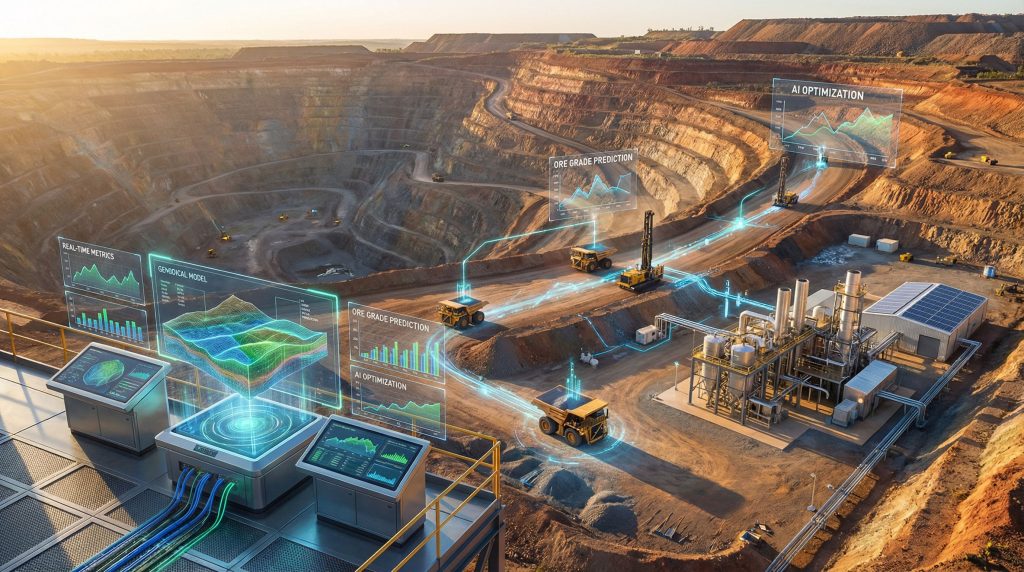
The economic value of orebody intelligence platforms stems from their ability to optimise the entire mine-to-mill process through enhanced predictive accuracy and real-time decision support. PETRA's technology, which leverages data fusion, ore tracking, and machine learning, exemplifies how specialised software can deliver granular, high-accuracy insights that directly impact operational efficiency.
Key Value Drivers in Orebody Intelligence Platforms:
| Value Driver Category | Technical Capability | Business Impact |
|---|---|---|
| Data Fusion | Integration of geological, production, and processing data | Eliminates information silos and improves decision accuracy |
| Machine Learning Applications | Predictive modelling for ore grade and processing optimisation | Reduces variability and increases recovery rates |
| Mine-to-Mill Optimisation | End-to-end value chain visibility | Maximises overall system efficiency rather than individual components |
| Real-Time Analytics | Continuous monitoring and adjustment capabilities | Enables rapid response to changing conditions |
| Technology Integration | Platform-agnostic data exchange | Preserves existing technology investments while adding value |
The implementation complexity varies significantly based on existing technology infrastructure and data quality. Companies with established data management systems typically experience faster integration timelines, while operations with legacy systems may require substantial preparatory work.
How AI-Driven Mine Planning Creates Measurable Value
Artificial intelligence applications in mine planning have evolved beyond basic optimisation to deliver autonomous operational improvements. PETRA's upcoming MAXTA 6.0 release represents this evolution, featuring advanced agentic AI designed to convert optimisation insights directly into measurable operational value rather than simply providing analytical reports.
The technical architecture of modern AI-driven systems combines multiple data streams to create comprehensive orebody models that update continuously as new information becomes available. This dynamic modelling approach enables mining operations to adjust extraction and processing strategies in real-time, maximising value recovery while minimising waste. These developments are part of broader AI in mining operations transforming the industry.
Advanced agentic AI represents the next frontier in mining optimisation, moving beyond insight generation to autonomous implementation of operational improvements.
Granular accuracy improvements in ore grade predictions translate directly to processing efficiency gains. When systems can predict ore characteristics with higher precision, processing plants can optimise parameters preemptively rather than reactively, reducing energy consumption and improving recovery rates.
Strategic Partnership Evolution in Mining Technology
Why Do Mining Software Companies Form Strategic Alliances?
Strategic partnerships in mining technology serve multiple purposes beyond simple revenue sharing arrangements. Risk mitigation represents a primary driver, as technology development in specialised mining applications requires substantial investment with uncertain market acceptance timelines. Partnership models allow companies to share both development costs and market risks while maintaining operational flexibility.
Market access considerations play an equally important role, particularly for companies with innovative technology but limited customer relationships. The Maptek acquires PETRA partnership began in 2019 as a strategic alliance that provided PETRA with access to Maptek's established customer base while giving Maptek's clients access to cutting-edge orebody learning capabilities.
Resource sharing extends beyond financial considerations to include technical expertise, market intelligence, and regulatory navigation capabilities. Companies founded by mining professionals, like both Maptek and PETRA, often share cultural and operational perspectives that facilitate deeper collaboration than purely financial partnerships.
What Factors Determine Partnership Success or Acquisition Outcomes?
Critical Success Factors for Mining Technology Partnerships:
-
Technology Compatibility and Integration Potential
• Platform architecture alignment for seamless data exchange
• API standardisation and interoperability protocols
• Shared data models and processing frameworks -
Cultural Alignment and Operational Independence
• Shared mission and values regarding mining industry challenges
• Respect for existing company cultures and management approaches
• Clear governance structures that preserve decision-making autonomy -
Market Positioning and Competitive Differentiation
• Complementary rather than competing technology capabilities
• Enhanced value proposition for combined customer base
• Protection of existing brand equity and market relationships -
Financial Performance and Growth Trajectory
• Sustainable revenue models and profitability paths
• Aligned growth expectations and investment timelines
• Clear metrics for measuring partnership success -
Customer Retention and Satisfaction Metrics
• Demonstrated ability to maintain customer relationships through transitions
• Positive customer feedback regarding integrated solutions
• Reduced customer churn during partnership evolution
The seven-year evolution from strategic partnership to full acquisition in the Maptek acquires PETRA case demonstrates how successful partnerships can develop gradually, allowing both parties to evaluate compatibility across multiple dimensions before committing to deeper integration.
The Future of Independent Mining Technology Providers
How Can Specialised Software Companies Maintain Competitive Advantage?
Independent mining technology providers face increasing pressure to differentiate themselves in a consolidating market. Innovation leadership in niche technology areas represents one sustainable competitive advantage, particularly when companies can demonstrate clear technological superiority in specialised applications. PETRA's position as the inventor of digital mine-to-mill AI software illustrates how early market entry and continued innovation can create defensible market positions.
Platform-agnostic approaches provide another competitive differentiator, particularly for mining companies that prefer to avoid vendor lock-in scenarios. The ability to integrate with multiple existing systems while preserving technology investment flexibility appeals to customers who view their technology stack as a strategic asset rather than a commodity service.
Building strategic moats through intellectual property and specialised expertise requires sustained investment in research and development. Companies that can demonstrate consistent innovation in addressing high-value mining challenges maintain pricing power and customer loyalty even in competitive markets.
What Role Does Corporate Independence Play in Customer Confidence?
Corporate independence offers several advantages that resonate particularly well with large mining operations that maintain complex technology environments. Flexibility advantages become apparent when mining companies need to integrate solutions from multiple vendors or modify systems to address unique operational requirements.
Maptek's continued independence offers customers confidence, flexibility, and a long-term focus on solving high-value mining challenges, differentiating it from competitors owned by equipment manufacturers or private equity firms.
Long-term focus on solving high-value mining challenges represents a crucial differentiator from companies operating under private equity ownership or equipment manufacturer control, where strategic priorities may shift based on broader corporate objectives rather than mining industry-specific needs.
Avoiding vendor lock-in scenarios has become increasingly important as mining companies recognise the risks associated with over-dependence on single technology providers. Independent companies can credibly position themselves as neutral partners focused purely on technological excellence rather than ecosystem expansion.
Technology Integration Opportunities in Modern Mining Operations
How Do Integrated Platforms Transform Mining Value Chains?
Modern mining operations benefit from integrated technology platforms that eliminate traditional silos between different operational stages. Maptek's Vestrex platform demonstrates this approach by enabling automation of data management, computation, workflows, and decision support across the entire mining value chain. Consequently, this integration supports the evolution toward data-driven operations future in mining.
Integration Benefits Across Mining Lifecycle Stages:
| Lifecycle Stage | Integration Benefit | Operational Impact | Technical Requirement |
|---|---|---|---|
| Exploration and Resource Modelling | Unified geological data management | Improved resource confidence and planning accuracy | Real-time data fusion from multiple survey methods |
| Mine Planning and Scheduling | Dynamic optimisation based on current conditions | Increased production efficiency and reduced waste | Machine learning integration with operational feedback |
| Production Monitoring | Real-time tracking of ore characteristics | Optimised extraction sequencing | IoT sensor integration and automated data collection |
| Processing and Quality Control | Predictive processing parameter adjustment | Enhanced recovery rates and reduced energy consumption | Advanced process control with AI-driven optimisation |
The transformation extends beyond technical integration to include organisational benefits such as reduced coordination overhead between different operational teams and improved decision-making based on comprehensive rather than fragmented information.
What Are the Technical Challenges of Multi-Platform Integration?
Data standardisation represents one of the most significant technical challenges in creating integrated mining technology platforms. Different systems often use incompatible data formats, measurement standards, and temporal frameworks that must be reconciled to enable meaningful integration.
Workflow automation across different software systems requires sophisticated orchestration capabilities that can manage complex dependencies and error handling scenarios. The technical architecture must accommodate both planned automation sequences and exception handling when systems encounter unexpected conditions.
Real-time decision support and predictive analytics capabilities demand low-latency data processing and high-reliability communication systems. Mining operations cannot tolerate significant delays in critical decision-making processes, particularly when automated systems are making operational adjustments based on changing conditions.
Market Implications for Mining Technology Consolidation
How Does Industry Consolidation Affect Innovation Rates?
The relationship between industry consolidation and innovation rates in mining technology presents complex tradeoffs that vary significantly based on implementation approach. Consolidated entities typically have access to greater resources for research and development investment, potentially accelerating breakthrough technology development in areas requiring substantial capital commitment.
Hypothetical Scenario Analysis: Independent vs. Integrated Technology Development
Independent Technology Development Model:
- Higher focus on specialised niche innovations
- Faster decision-making for technology pivots
- Greater willingness to pursue high-risk, high-reward projects
- Limited resources may constrain scope of innovation
Integrated Technology Development Model:
- Broader resource base enables comprehensive platform development
- Integration requirements may limit innovative flexibility
- Focus shifts toward incremental improvements rather than breakthrough innovations
- Market pressure reduced, potentially slowing innovation pace
Resource allocation between maintenance and breakthrough innovation becomes a critical factor in consolidated entities. Companies must balance supporting existing customer bases with investing in next-generation capabilities, often leading to more conservative innovation strategies.
What Strategic Options Remain for Emerging Mining Technology Companies?
Niche specialisation strategies offer emerging companies opportunities to establish market positions in underserved segments where larger competitors may lack focus or expertise. Areas such as specific mineral processing optimisation, environmental monitoring integration, or emerging mining methods present potential opportunities for focused innovation.
Partnership models that preserve independence while enabling growth have proven effective, as demonstrated by the Maptek acquires PETRA evolution. These arrangements can provide market access and resource sharing benefits while maintaining the agility and specialised focus that drives innovation.
International expansion opportunities in developing mining markets present alternatives to competing directly with established players in mature markets. Emerging mining regions often lack established technology relationships and may be more willing to adopt innovative solutions from smaller providers.
The next major ASX story will hit our subscribers first
Investment and Growth Considerations
How Do Investors Evaluate Mining Technology Acquisition Opportunities?
Key Investment Metrics for Mining Technology Acquisitions:
• Technology Differentiation and Competitive Moats
- Patent portfolios and proprietary algorithms
- Technical performance advantages over existing solutions
- Barriers to competitive replication
• Customer Concentration and Revenue Predictability
- Diversification across mining companies and geographic regions
- Contract terms and renewal rates
- Customer switching costs and retention metrics
• Integration Potential and Synergy Realisation
- Technical compatibility with existing platforms
- Cross-selling opportunities and customer base expansion
- Operational efficiency improvements through combined operations
• Market Size and Growth Trajectory Analysis
- Total addressable market for specific technology categories
- Mining industry spending patterns and technology adoption rates
- Regulatory and environmental drivers affecting demand
• Management Team Experience and Execution Capability
- Track record in mining industry technology development
- Ability to maintain innovation pace through ownership transitions
- Cultural fit with acquiring organisation
Investment decisions in mining technology require understanding both the technical merits of the solution and the broader market dynamics affecting the mining industry. Investors must evaluate how macroeconomic factors, commodity price cycles, and regulatory changes will impact long-term technology demand.
What Growth Strategies Work Best for Mining Software Companies?
Organic growth through product development and market expansion remains the foundation of sustainable mining technology companies. Companies that can demonstrate consistent innovation in addressing evolving mining challenges maintain pricing power and customer loyalty across commodity price cycles.
Strategic partnerships for technology complementarity, as exemplified by the initial Maptek acquires PETRA partnership structure, provide growth acceleration opportunities without the risks associated with immediate full integration. These arrangements allow companies to test market compatibility and technical integration before committing to deeper relationships.
Acquisition strategies for capability enhancement and market access become most effective when companies can identify synergistic technologies that expand their total addressable market while leveraging existing customer relationships and technical expertise. In particular, the mining technology case studies demonstrate successful integration approaches.
Future Outlook for Mining Technology Ecosystems
How Will Emerging Technologies Reshape Mining Software Markets?
Artificial intelligence and machine learning advancement impacts extend beyond current optimisation applications to include autonomous mining operations and predictive maintenance systems. The evolution toward agentic AI, as demonstrated by PETRA's MAXTA 6.0 development, represents a fundamental shift from analytical tools to autonomous operational systems.
Internet of Things (IoT) and sensor technology integration will enable unprecedented data collection granularity throughout mining operations. This data abundance will create new opportunities for specialised software companies that can transform raw sensor data into actionable operational intelligence.
Cloud computing and edge processing capabilities are resolving traditional limitations around real-time data processing in remote mining locations. These infrastructure improvements enable more sophisticated software applications that were previously constrained by computational and connectivity limitations.
Digital twin technology and real-time simulation models represent the next evolution in mining operation optimisation. These technologies enable mining companies to test operational scenarios virtually before implementing changes, reducing risks and improving decision-making quality.
What Competitive Dynamics Will Define the Next Decade?
The three key trends that will determine mining technology market leadership by 2030:
-
Integration versus specialisation balance – Companies must choose between comprehensive platform approaches and best-in-class specialised solutions
-
Independence versus consolidation positioning – Market differentiation based on ownership structure and customer relationship flexibility
-
Geographic expansion strategies – Success in emerging mining markets while maintaining positions in established regions
The balance between specialisation and integration in software solutions will likely determine which companies can maintain competitive advantages as the market matures. Companies that can demonstrate clear value propositions for their chosen approach will outperform those attempting to compete across multiple strategies simultaneously.
Geographic expansion opportunities in emerging mining regions present significant growth potential, particularly for companies that can adapt their technologies to different operational environments and regulatory frameworks. Success in these markets often requires different partnership models and go-to-market strategies than established mining regions.
This analysis is based on publicly available information and industry observations. Investment decisions should consider multiple factors and professional financial advice. The mining technology sector involves inherent risks related to commodity price cycles, regulatory changes, and technological adoption rates that may affect company performance and market dynamics.
Looking for Investment Opportunities in Mining Technology?
Discovery Alert delivers instant notifications of significant ASX mineral discoveries through its proprietary Discovery IQ model, helping investors identify emerging opportunities in the mining technology space before broader market recognition. Start your 14-day free trial today to gain immediate access to real-time alerts that could position you ahead of major industry developments and technological breakthroughs.