June 17, 2026
Understanding the Convergence of Mining Technology Systems
The intersection of artificial intelligence, sensor networks, and cloud computing has created unprecedented opportunities for operational transformation in the extractive industries. A digital platform driving innovation in modern mining represents a fundamental shift from reactive management approaches toward predictive, data-driven methodologies that enhance decision-making across multiple operational domains. Modern mining operations face mounting pressure to optimise productivity while addressing environmental concerns and workforce limitations.
Traditional mining software solutions operated as isolated systems, managing specific functions such as equipment maintenance schedules or geological surveys. Today's comprehensive digital ecosystems integrate these previously separate functions into unified platforms that enable real-time coordination between exploration, extraction, processing, and logistics operations. This technological convergence creates operational efficiencies that were previously unattainable through conventional approaches.
The distinction between legacy systems and modern digital platforms lies in their capacity for cross-functional data integration and predictive analytics. While traditional systems responded to operational events after they occurred, integrated technology platforms anticipate potential issues and automatically implement corrective measures before disruptions impact production schedules.
When big ASX news breaks, our subscribers know first
Core Technologies Powering Modern Mining Operations
Artificial Intelligence and Machine Learning Applications
Predictive analytics systems have revolutionised equipment maintenance protocols by analysing sensor data patterns to identify potential mechanical failures weeks before they occur. These machine learning algorithms process vast datasets from mining equipment sensors, identifying subtle performance degradation patterns that indicate impending component failures. Furthermore, AI in mining operations enables condition-based maintenance strategies that reduce unplanned downtime while optimising equipment lifespan.
Geological data processing through AI algorithms enhances mineral exploration accuracy by identifying ore body characteristics that traditional analysis methods might overlook. Computer vision systems analyse rock samples and geological formations, detecting mineral concentrations and structural patterns with greater precision than manual assessment techniques. This technological advancement enables mining companies to make more informed decisions about exploration investments and extraction strategies.
Cost reduction through AI-driven exploration strategies occurs through improved targeting of high-grade mineral deposits and reduced exploration drilling requirements. Machine learning models analyse historical geological data, satellite imagery, and geophysical surveys to predict the most promising exploration sites, potentially reducing exploration costs by 20-30% compared to traditional prospecting methods.
Real-Time Location Systems and IoT Infrastructure
Autonomous vehicle coordination through RTLS networks enables mining operations to manage fleets of unmanned trucks, excavators, and drilling equipment with precision previously unattainable through human operators alone. These systems utilise GPS coordinates, proximity sensors, and wireless communication protocols to coordinate vehicle movements across complex mining sites, optimising traffic patterns and reducing collision risks.
Sensor network deployment creates continuous operational monitoring capabilities that provide management teams with real-time visibility into equipment performance, environmental conditions, and production metrics. These networks typically include:
- Vibration sensors for equipment health monitoring
- Temperature and humidity sensors for environmental compliance
- Pressure sensors for hydraulic system optimisation
- Chemical sensors for ore quality assessment
- Air quality monitors for safety protocol enforcement
Environmental and equipment performance data collection methodologies integrate information from multiple sensor types to create comprehensive operational dashboards. These systems process thousands of data points per minute, identifying anomalies and trends that inform both immediate operational decisions and long-term strategic planning.
Digital Twin Technology Implementation
Virtual mining ecosystem modelling capabilities enable operations management to simulate various production scenarios before implementing changes to actual mining processes. Digital twin technology creates computer-generated replicas of mining operations that mirror real-world conditions through continuous data feeds from operational sensors and equipment monitoring systems.
Real-time operational mirroring through integrated sensor data provides management teams with unprecedented visibility into mining operations. These systems process information from equipment sensors, environmental monitors, and production tracking systems to maintain accurate virtual representations of actual mining conditions. When operational parameters change in the physical environment, corresponding adjustments occur automatically in the digital twin model.
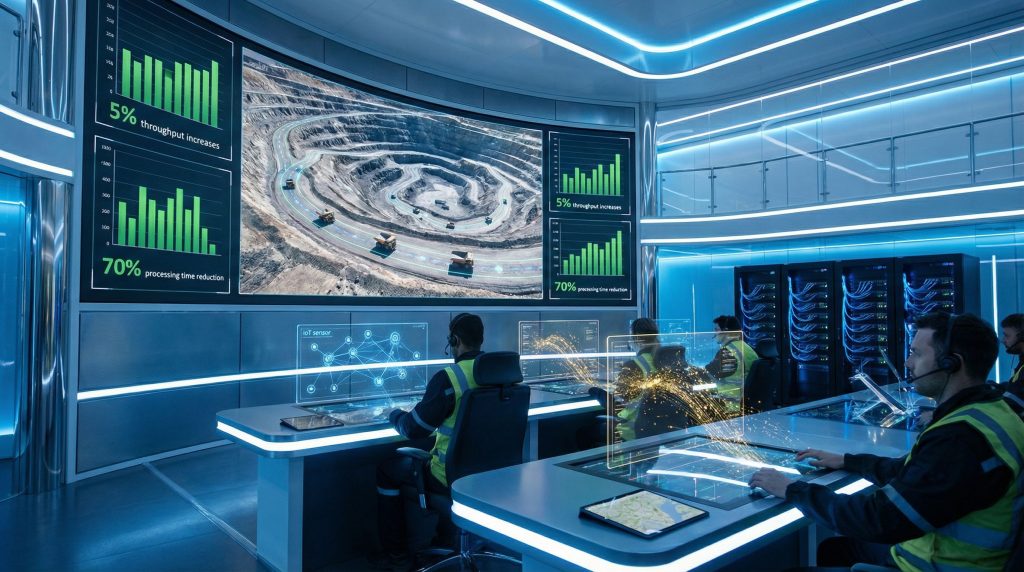
Production optimisation case studies from various mining operations have documented throughput improvements ranging from 3% to 8% through digital twin implementation. These improvements typically result from enhanced scheduling algorithms, optimised equipment utilisation patterns, and reduced operational bottlenecks identified through virtual modelling scenarios.
Cloud-Based Coordination Systems for Multi-Site Operations
Centralised Information Management
Cross-site operational visibility enables mining companies operating multiple locations to coordinate activities and share resources more effectively than traditional site-specific management approaches. Cloud-based platforms provide real-time access to operational data from all mining locations, enabling centralised decision-making and resource allocation optimisation across geographical boundaries.
Geographic dispersion management through unified platforms addresses one of the most significant challenges facing multi-site mining operations. Consequently, data-driven mining operations enable management teams to:
- Monitor production metrics across all operational sites simultaneously
- Coordinate equipment transfers between locations based on operational requirements
- Standardise safety protocols and compliance procedures across multiple jurisdictions
- Optimise supply chain logistics through centralised procurement and distribution
- Share technical expertise between sites through remote consultation capabilities
Real-time decision-making across multiple mining locations becomes possible when operational data from all sites feeds into centralised analytics platforms. Management teams can identify optimisation opportunities, respond to operational disruptions, and implement corrective measures without the delays associated with traditional site-by-site communication protocols.
Advanced Processing and Automation Technologies
Machine learning applications in core sample analysis have transformed geological assessment procedures by reducing the time required for mineral content evaluation and improving accuracy of ore grade determinations. Computer vision systems analyse rock samples through high-resolution imaging and spectral analysis, identifying mineral compositions with precision that exceeds traditional laboratory assessment methods.
Processing time reduction through computer vision systems has been documented at up to 65% in certain mining operations, particularly those involving complex ore compositions requiring detailed mineralogical analysis. These improvements result from automated image processing algorithms that eliminate manual sample preparation steps and reduce laboratory analysis timeframes.
Electrokinetic In Situ Recovery (EK-ISR) represents an emerging fully electric extraction methodology that applies electrical fields to mobilise target minerals without traditional excavation requirements. This technology shows particular promise for extracting strategic minerals from low-grade deposits that would be economically unfeasible using conventional mining methods. Moreover, the implementation of in situ recovery benefits requires sophisticated monitoring and control platforms to optimise electrical field parameters and monitor extraction progress.
Quantifiable Benefits Driving Technology Adoption
Productivity and Efficiency Metrics
Automation-driven productivity improvements in mining operations typically range from 15% to 35%, depending on the scope of digital platform implementation and the baseline efficiency of existing operations. These improvements result from optimised equipment utilisation, reduced operational delays, and enhanced coordination between different operational phases.
| Productivity Metric | Improvement Range | Implementation Timeline |
|---|---|---|
| Equipment Utilisation | 20-30% | 6-12 months |
| Fuel Efficiency | 10-25% | 3-6 months |
| Processing Throughput | 5-15% | 12-18 months |
| Maintenance Efficiency | 25-40% | 6-9 months |
Fuel efficiency optimisation through AI-guided routing reduces operational costs by determining optimal pathways for mining vehicles and equipment. These systems analyse terrain conditions, traffic patterns, and operational schedules to minimise fuel consumption while maintaining production targets. Some mining operations have achieved fuel consumption reductions of 15-20% through intelligent routing algorithms.
Labour shortage mitigation through automated fleet expansion addresses one of the most pressing challenges facing modern mining operations. Automated systems can operate continuously without shift changes, break periods, or safety training requirements that affect human operators. This capability becomes particularly valuable in remote mining locations where recruiting and retaining skilled operators presents ongoing challenges.
Cost Reduction and Operational Optimisation
Maintenance cost reduction through predictive analytics occurs when operations transition from scheduled maintenance protocols to condition-based maintenance strategies. Predictive maintenance systems analyse equipment performance data to identify optimal maintenance timing, potentially reducing maintenance costs by 20-30% while improving equipment reliability and extending operational lifespan.
Exploration cost minimisation through improved ore body identification results from enhanced geological modelling capabilities that reduce the number of exploratory drill holes required to characterise mineral deposits. Advanced analytics platforms integrate geological, geophysical, and geochemical data to create more accurate subsurface models, potentially reducing exploration drilling requirements by 25-40%.
Unplanned downtime elimination through proactive maintenance models represents one of the most significant cost reduction opportunities in mining operations. Unplanned equipment failures can cost mining operations $50,000 to $500,000 per day, depending on the scale of operations and the critical nature of failed equipment. Predictive maintenance systems identify potential failures weeks in advance, enabling maintenance teams to schedule repairs during planned downtime periods.
Industries and Applications Benefiting From Digital Mining Platforms
Critical Mineral Extraction Operations
Clean energy transition support through optimised extraction focuses on minerals essential for renewable energy technologies, including lithium, cobalt, nickel, and rare earth elements. Digital platforms enable mining companies to optimise extraction processes for these strategic materials while maintaining environmental compliance requirements. Enhanced geological modelling capabilities improve resource estimation accuracy for critical mineral deposits, enabling more efficient extraction planning.
Strategic mineral supply chain enhancement occurs through improved production forecasting and supply chain visibility. Digital platforms provide real-time production data that enables more accurate delivery scheduling and inventory management for critical minerals. This capability becomes particularly important given the geopolitical significance of strategic mineral supplies and the need for supply chain resilience.
Infrastructure development material sourcing benefits from digital platforms through optimised production scheduling and quality control systems. Construction materials such as iron ore, copper, and aggregates require consistent quality specifications and reliable delivery schedules. Digital platforms enable mining operations to maintain quality standards while optimising production volumes to meet infrastructure development demands.
Large-Scale Mining Operations
Equipment fleet management across extensive operations becomes significantly more efficient through centralised monitoring and coordination systems. Large mining operations may utilise hundreds of vehicles and pieces of equipment across multiple operational areas. Digital platforms enable fleet managers to:
- Optimise equipment allocation based on real-time production requirements
- Monitor fuel consumption and maintenance needs across entire fleets
- Coordinate maintenance schedules to minimise operational disruptions
- Track equipment location and utilisation rates throughout operational shifts
Environmental monitoring and compliance automation addresses increasingly stringent regulatory requirements through continuous data collection and automated reporting systems. Large-scale mining operations must monitor air quality, water discharge, noise levels, and ecosystem impacts across extensive operational areas. Accordingly, innovation in mining automates data collection, analysis, and regulatory reporting processes.
Safety protocol enhancement through real-time monitoring creates comprehensive safety management systems that identify potential hazards before they result in accidents or injuries. These systems monitor environmental conditions, equipment operation parameters, and personnel location data to identify safety risks and implement appropriate protective measures.
Implementation Strategies for Digital Platform Integration
Technology Adoption Strategies
Phased implementation approaches enable mining operations to gradually integrate digital technologies while maintaining operational continuity. Most successful digital transformations follow structured implementation phases:
- Assessment and Planning Phase (3-6 months): Evaluate existing systems and identify integration opportunities
- Pilot Project Implementation (6-12 months): Deploy digital platforms in limited operational areas
- System Integration Phase (12-18 months): Expand digital platforms across operational domains
- Optimisation and Scaling (18-24 months): Refine systems based on operational experience
Integration challenges commonly include data compatibility issues between legacy systems and new digital platforms, workforce training requirements, and cybersecurity concerns related to connected operational systems. Solution frameworks typically involve extensive testing protocols, comprehensive training programs, and robust cybersecurity measures designed specifically for industrial applications.
ROI measurement methodologies for platform investments require careful tracking of productivity improvements, cost reductions, and operational efficiency gains. Mining operations typically evaluate digital platform investments based on:
- Equipment utilisation improvements measured through operational hour tracking
- Maintenance cost reductions compared to historical maintenance expenditures
- Production throughput increases relative to pre-implementation baselines
- Safety incident reduction rates following digital platform deployment
Infrastructure Requirements and Considerations
5G network deployment for enhanced automation capabilities requires significant infrastructure investments, particularly for mining operations in remote locations. 5G networks provide the low-latency, high-bandwidth connectivity required for real-time coordination of autonomous equipment and comprehensive sensor networks. Implementation costs for 5G infrastructure can range from $500,000 to $5 million per mining site, depending on coverage area and geographic challenges.
Data storage and processing infrastructure needs scale significantly with digital platform implementation. Mining operations implementing comprehensive digital platforms typically require:
Data Storage Requirements: 10-50 terabytes per month of operational data, including sensor readings, equipment performance metrics, and production tracking information
Processing Infrastructure: High-performance computing capabilities for real-time analytics, machine learning model execution, and digital twin simulations
Network Bandwidth: Minimum 100 Mbps connectivity for real-time data transmission between operational sites and central processing systems
Cybersecurity considerations for connected mining operations become critical as digital platforms create potential attack vectors for malicious actors seeking to disrupt operations or access sensitive geological and operational data. Cybersecurity frameworks for mining operations must address both information technology and operational technology security requirements, including secure communication protocols, access control systems, and intrusion detection capabilities specifically designed for industrial environments.
The next major ASX story will hit our subscribers first
Future Developments Shaping Digital Mining Platforms
Emerging Technology Integration
Advanced AI capabilities continue evolving toward more sophisticated predictive modelling and autonomous decision-making systems. Next-generation AI platforms will likely incorporate quantum computing capabilities for complex geological modelling and optimisation problems that exceed current computational limitations. Machine learning algorithms are becoming more specialised for mining applications, with development focusing on domain-specific models that understand geological processes, equipment behaviour patterns, and operational constraints unique to extractive industries.
Enhanced automation through improved sensor technologies will enable more comprehensive monitoring and control systems. Emerging sensor technologies include hyperspectral imaging for detailed mineral identification, advanced vibration analysis systems for equipment health monitoring, and environmental sensors capable of detecting trace concentrations of pollutants or hazardous gases.
Sustainable mining practices through digital optimisation focus on reducing environmental impacts while maintaining operational efficiency. According to the Australasian Institute of Mining and Metallurgy, digital platforms enable mining operations to optimise energy consumption, minimise water usage, and reduce waste generation through precision control systems and advanced process optimisation algorithms. These capabilities become increasingly important as mining operations face stricter environmental regulations and stakeholder expectations regarding sustainability performance.
Industry Transformation Predictions
Digital platform standardisation across mining sectors appears likely as technology providers develop industry-specific standards for data formats, communication protocols, and system integration approaches. Standardisation efforts will reduce implementation costs and improve interoperability between different technology platforms, making digital transformation more accessible for smaller mining operations.
Regulatory framework evolution for automated operations will require new safety standards, environmental monitoring requirements, and operational oversight protocols designed specifically for autonomous mining systems. Regulatory bodies are beginning to develop guidelines for unmanned mining operations, remote monitoring systems, and automated safety protocols.
Global competitiveness factors in digitalised mining markets will increasingly favour operations that successfully implement comprehensive digital platforms. Mining companies with advanced digital capabilities will likely achieve competitive advantages through lower operational costs, improved safety records, and enhanced environmental performance. These factors become particularly important as mining operations compete for access to high-grade mineral deposits and long-term supply contracts.
Strategic Implementation Considerations
Competitive Advantage Through Technology Integration
Market positioning benefits of early digital adoption include enhanced operational efficiency, improved safety performance, and reduced environmental impact. Mining companies implementing digital platforms ahead of industry adoption curves typically achieve cost advantages that persist for several years as competitors work to implement similar capabilities.
Operational resilience through comprehensive platform implementation creates mining operations capable of maintaining production during various disruption scenarios. Digital platforms with redundant systems, automated backup protocols, and remote monitoring capabilities enable operations to continue during equipment failures, workforce disruptions, or supply chain interruptions.
Long-term sustainability advantages result from optimised resource utilisation, reduced environmental impacts, and improved community relations through enhanced safety and environmental performance. Furthermore, the integration of 3D geological modelling enables mining operations to demonstrate measurable improvements in sustainability metrics, supporting social licence to operate and stakeholder relationship management.
Investment Evaluation and Risk Management
Technology platform evaluation criteria should include system scalability, integration capabilities with existing infrastructure, vendor stability and support capabilities, and demonstrated performance improvements in similar mining applications. Due diligence processes must evaluate both technical capabilities and the financial stability of technology providers, particularly for platforms requiring long-term support and maintenance agreements.
Implementation timeline and resource allocation strategies typically require 18-36 months for comprehensive digital platform deployment across large mining operations. Resource allocation must account for technology acquisition costs, infrastructure development requirements, workforce training programs, and potential operational disruptions during implementation phases.
Risk mitigation through digital transformation planning includes developing contingency protocols for technology failures, maintaining backup systems for critical operational functions, and ensuring workforce capabilities remain adequate during transition periods. Successful digital transformation requires careful change management strategies that address both technical and organisational adaptation requirements.
The mining industry's evolution towards digital platform driving innovation in modern mining continues to accelerate, driven by competitive pressures and technological advancement. As noted in a comprehensive report by Minerals Australia, mining operations implementing comprehensive digital platforms demonstrate measurable improvements across productivity, safety, and environmental metrics, establishing these technologies as essential components of future mining operations.
Investment Disclaimer: Digital platform implementations in mining operations involve significant capital investments and operational risks. Potential returns on investment depend on numerous factors including commodity prices, operational scale, implementation quality, and market conditions. Prospective investors should conduct thorough due diligence and seek professional financial advice before making investment decisions related to mining technology platforms or mining operations implementing such technologies.
Ready to Invest in the Next Major Mineral Discovery?
Discovery Alert instantly alerts investors to significant ASX mineral discoveries using its proprietary Discovery IQ model, turning complex mineral data into actionable insights. Understand why historic discoveries can generate substantial returns by exploring the transformative potential of well-timed investments in mineral exploration companies.