
July 11, 2026
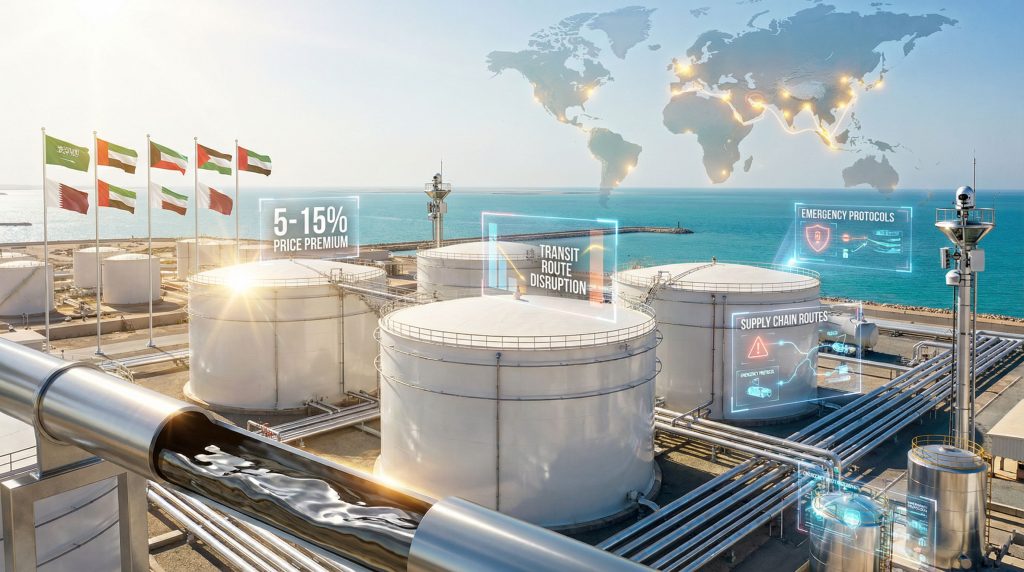
Modern Energy Infrastructure Under Siege: Understanding Strategic Vulnerabilities
Global energy security has undergone fundamental transformation as infrastructure networks become increasingly complex and interconnected. The concentration of strategic facilities in geographically constrained regions creates amplified vulnerabilities that extend far beyond immediate operational disruptions. Furthermore, these energy security dynamics encompass systemic risks across entire supply chains.
Understanding these vulnerabilities requires examination of how modern energy systems have evolved toward hub-and-spoke models that prioritise efficiency over resilience. This architectural approach, while economically optimised during stable periods, reveals critical weaknesses when subjected to targeted disruptions or regional conflicts.
When big ASX news breaks, our subscribers know first
Critical Infrastructure Concentration Risks in Energy Networks
The vulnerability of concentrated energy infrastructure manifests most clearly in storage and transit facilities that serve as force-multiplication nodes within the broader energy ecosystem. These installations represent high-value targets where relatively small-scale disruptions can generate cascading effects across multiple market segments and geographic regions.
Key vulnerability characteristics include:
- Concentrated storage volumes creating single points of failure
- Limited redundancy in regional storage networks
- High replacement costs and extended reconstruction timelines
- Cascading effects on downstream refining and distribution systems
Recent infrastructure attacks in the Gulf region demonstrate these vulnerabilities in practice. The Iranian drone strike on Oman's largest oil storage facility exemplifies how strategic targeting can eliminate both primary and secondary routing options simultaneously. This geographic diversification attack effectively narrows available bypass alternatives, transforming regional disruptions into global supply constraints.
Current infrastructure disruptions include:
- Multiple oil storage facilities damaged across the Gulf region
- Qatar LNG operations shutdown with Shell and TotalEnergies declaring force majeure
- Fujairah bunker hub disruptions affecting critical storage capacity
- Saudi defence systems intercepting drones targeting major oilfields
The targeting of Oman's storage infrastructure represents a particularly sophisticated approach, as Oman traditionally serves as a key alternative to Strait of Hormuz transit routes. By attacking secondary alternatives rather than just primary infrastructure, belligerents effectively eliminate redundancy from the system. According to maritime security reports, these strikes have significantly impacted regional energy security.
Force Majeure Declarations Signal System Stress
The invocation of force majeure clauses by major energy companies provides formal acknowledgment that infrastructure unavailability has exceeded normal operational parameters. As of March 2026, these declarations span LNG export facilities in Qatar, oil storage in Bahrain, and maritime transit routes throughout the region.
Force majeure represents more than temporary operational adjustments; it signals that companies recognise physical infrastructure constraints that cannot be resolved through normal market mechanisms or operational flexibility.
Market Pricing of Geopolitical Infrastructure Risk
Energy market participants employ sophisticated mechanisms to price geopolitical risk, with traders continuously adjusting valuations based on perceived threats to infrastructure continuity. This pricing occurs through multiple channels including spot markets, futures contracts, insurance premiums, and strategic reserve policies.
Current market indicators demonstrate extreme risk pricing:
| Risk Indicator | Current Level | Historical Context |
|---|---|---|
| Brent crude premium | $98.47/barrel (+7.06%) | Highest since previous Gulf crisis |
| WTI crude premium | $93.53/barrel (+7.20%) | Reflecting infrastructure concerns |
| Russian Urals premium | $100.67/barrel | First time above Brent in history |
| IEA emergency release | 400 million barrels | Largest coordinated release ever |
The unprecedented premium for Russian Urals crude trading above Brent benchmark demonstrates that markets will pay substantial premiums for accessible supply. This pricing reflects acute recognition that geographic accessibility has become more valuable than traditional quality differentials, particularly amid ongoing US–China trade tensions affecting global market dynamics.
Strategic Reserve Releases Reveal Policy Response Limits
The International Energy Agency's unanimous agreement on a record 400-million-barrel emergency oil stock release represents official recognition that normal market mechanisms are inadequate to absorb current supply shocks. IEA Executive Director Fatih Birol described the situation as presenting oil market challenges that are unprecedented in scale.
However, the fact that oil prices surged despite this record-breaking release suggests markets are pricing in scepticism about the release's effectiveness. Traders appear to believe that physical supply disruption severity exceeds the quantitative offset from coordinated reserve releases.
Key market psychology factors include:
- Premium pricing for geographically accessible supplies
- Scepticism about strategic reserve sufficiency
- Direct sensitivity to political risk perception
- Willingness to pay premiums for supply security
The U.S. Treasury's special permission for Indian refiners to purchase Russian crude loaded before March 5, 2026, enabled rapid spot market purchases. This could potentially double Russian oil exports to India from 1 million barrels per day to 2 million barrels per day in the near term, representing extreme market demand substitution driven by infrastructure chokepoint disruption.
Alternative Infrastructure Deployment During Crisis Conditions
Crisis conditions reverse normal economic calculations regarding infrastructure utilisation, making previously uneconomical routing options valuable when primary systems become unavailable. This phenomenon drives rapid deployment of alternative capacity and emergency coordination mechanisms. Consequently, the oil price rally impact becomes increasingly evident as markets respond to supply constraints.
Current alternative routing responses include:
- Saudi Arabia maximising East-West pipeline capacity to 7 million barrels per day
- Multiple tankers avoiding Emirati ports due to elevated risk perception
- Asian buyers developing dual supply plans for Red Sea and Hormuz alternatives
- Enhanced strategic stockpiling by major importing nations
Saudi Arabia's utilisation of the East-West pipeline to transport maximum capacity to the Red Sea demonstrates how alternative infrastructure, while providing relief, remains fundamentally insufficient to replace normal throughput volumes. Analysts predict this pipeline will reach full capacity within days, indicating rapid exhaustion of available alternatives.
Emergency Infrastructure Coordination Mechanisms
Crisis conditions catalyse international coordination mechanisms that might otherwise take years to develop and implement. Current emergency responses include:
Coordinated policy responses:
- G7 nations backing strategic reserve releases
- Europe and Asia competing for critical spot LNG supply
- Enhanced emergency sharing agreements between allies
- Coordinated infrastructure protection initiatives
Market-driven reallocations:
- Chevron and Shell developing new Venezuelan sourcing arrangements
- China boosting oil imports nearly 16% for strategic stockpiling
- Asian regions outbidding other areas for available fuel cargoes
- Indian refiners rapidly securing Russian crude alternatives
The shift toward Venezuelan alternative sourcing demonstrates market willingness to accept operational complexity in exchange for reduced geopolitical supply risk. This occurs even though Venezuelan heavy crude requires specialised refining processes different from Middle Eastern grades.
Regional Infrastructure Competition and Strategic Leverage
Control over or threats to energy infrastructure have become central tools of statecraft, with regional powers using various approaches to project influence and secure strategic advantages. This competition manifests through both direct control mechanisms and indirect influence strategies. For instance, Saudi Arabia's exploration strategy demonstrates how resource control extends beyond traditional extraction.
Direct control mechanisms include:
- Ownership of critical transit facilities
- Regulatory authority over pipeline routes
- Military protection or threat to installations
- Technical expertise and maintenance capabilities
Indirect influence strategies encompass:
- Insurance and financing restrictions
- Technology transfer limitations
- Diplomatic pressure on host governments
- Economic incentives for alternative routing
The current Gulf crisis demonstrates how infrastructure targeting serves strategic objectives beyond immediate economic disruption. By attacking both primary chokepoints and secondary alternatives, belligerents systematically eliminate redundancy from regional energy networks. Energy industry analysts note that detailed energy reports confirm the severity of current infrastructure vulnerabilities.
Coalition Building Through Emergency Response
Regional crises often accelerate the formation of energy security partnerships as nations seek to reduce individual vulnerabilities through collective action. Current examples include:
- Emergency sharing agreements for strategic reserves
- Coordinated infrastructure development projects
- Joint investment in alternative supply routes
- Shared intelligence on threat assessment and response
The unprecedented coordination of the 400-million-barrel IEA release demonstrates how infrastructure threats can drive policy coordination that exceeds normal diplomatic frameworks. This level of emergency cooperation suggests recognition that individual national responses are inadequate for addressing systemic infrastructure vulnerabilities.
Economic Models for Infrastructure Resilience Investment
Energy market participants follow predictable patterns when adapting to increased geopolitical risk, with investment priorities shifting from pure efficiency optimisation toward resilience enhancement. This adaptation occurs across multiple phases with distinct characteristics and timelines, particularly as nations face energy transition challenges.
Phase 1: Immediate Response (0-6 months)
- Price volatility and risk premium increases
- Emergency supply arrangement activation
- Short-term production adjustments
- Enhanced security measures implementation
Phase 2: Tactical Adaptation (6-24 months)
- Alternative supplier development
- Inventory level adjustments
- Contract term modifications
- Geographic diversification initiatives
Phase 3: Strategic Restructuring (2-10 years)
- Infrastructure investment redirection
- Comprehensive diversification programmes
- Technology adoption acceleration
- Permanent risk framework integration
Cost-Benefit Analysis Framework for Resilience Investments
The economic justification for resilience investments requires sophisticated risk modelling that weighs upfront costs against potential disruption impacts across various scenarios and timeframes.
| Investment Type | Upfront Cost | Risk Reduction | Payback Period | Implementation Complexity |
|---|---|---|---|---|
| Alternative routing | High | Moderate | 8-12 years | High technical requirements |
| Redundant storage | Moderate | High | 5-8 years | Moderate complexity |
| Enhanced security | Low | Low-Moderate | 3-5 years | Immediate deployment |
| Technology upgrades | Variable | High | 4-10 years | Ongoing development |
Current market conditions demonstrate that resilience investments previously considered economically marginal have become essential for maintaining operational continuity. The premium pricing for geographically secure supplies validates the economic logic of redundancy investments.
The next major ASX story will hit our subscribers first
Regional Case Study: Gulf Infrastructure Vulnerability Assessment
The Gulf region's energy infrastructure exhibits characteristics that amplify vulnerability to targeted attacks while simultaneously constraining available response options. Understanding these vulnerabilities provides insights into broader infrastructure security challenges.
Current vulnerability factors include:
- High facility density in geographically constrained areas
- Shared infrastructure dependencies across multiple operators
- Limited alternative routing options for certain products
- Complex ownership structures complicating security coordination
Recent production cuts demonstrate the scale of infrastructure disruption impact. Standard Chartered analysis indicates Middle East producers have reduced output by approximately 6-7 million barrels per day. This includes Saudi Arabia cutting 2.0-2.5 million barrels per day, Iraq reducing 2.9 million barrels per day, and smaller cuts across UAE, Qatar, and Kuwait operations.
Production Impact Analysis
Current production disruptions by country:
- Saudi Arabia: 2.0-2.5 million barrels per day reduction
- Iraq: 2.9 million barrels per day offline
- United Arab Emirates: 0.5-0.8 million barrels per day cut
- Qatar: 0.5 million barrels per day reduced
- Kuwait: 0.5 million barrels per day offline
- Iran: Additional 1 million barrels per day estimated offline based on reduced gas flaring
A 45% reduction in Iranian gas flaring compared to pre-conflict levels suggests significant additional crude production may be offline beyond officially reported figures. This reduction in flaring activity serves as a proxy indicator for overall production levels when direct measurement becomes difficult during conflict conditions.
Long-term Implications for Global Energy Architecture
The evolution of regional conflicts and their impact on energy infrastructure demonstrates the need for adaptive security frameworks that can respond to changing threat environments while maintaining economic efficiency. Success requires sophisticated risk assessment capabilities, flexible infrastructure design, and coordinated international cooperation.
Emerging Threat Assessment Methodologies
Integration of new types of threats into energy security planning requires updated analytical frameworks that account for evolving risk landscapes. These include asymmetric attack capabilities, cyber-physical vulnerabilities, climate change impacts, and economic warfare potential.
Key strategic priorities include:
- Development of resilient infrastructure networks with built-in redundancy
- Enhanced international cooperation on emergency response capabilities
- Investment in alternative energy sources to reduce import dependencies
- Advanced threat assessment and early warning systems
Investment Priority Rebalancing
Long-term energy security planning increasingly emphasises resilience over pure efficiency, leading to fundamental shifts in investment priorities. Geographic diversification takes precedence over cost optimisation, while redundancy and backup systems receive higher investment priority than historically justified by efficiency metrics alone.
The challenge for policymakers and industry leaders lies in balancing the costs of enhanced security measures against the benefits of reduced vulnerability. This must occur while maintaining the economic efficiency that underpins global energy markets. Current market conditions suggest this balance has shifted significantly toward prioritising security and resilience over marginal efficiency gains.
In addition, the Iranian drone strike on Oman's largest oil storage facility serves as a stark reminder of how quickly critical infrastructure can become targeted in regional conflicts. These events demonstrate that traditional energy security models must evolve to address contemporary threat landscapes while maintaining operational viability.
Furthermore, as nations grapple with these challenges, the importance of diversified energy portfolios becomes increasingly apparent. The current crisis reinforces that over-reliance on any single region or supply route creates unacceptable strategic vulnerabilities that can destabilise global markets.
Disclaimer: This analysis is based on publicly available information and market data as of March 2026. Energy market conditions remain highly volatile, and infrastructure security situations continue to evolve rapidly. Investment decisions should consider comprehensive risk assessments and professional financial advice. The views expressed represent analytical perspectives on market dynamics and should not be construed as investment recommendations or predictions of future market performance.
Interested in Positioning Yourself Ahead of Energy Market Volatility?
Discovery Alert's proprietary Discovery IQ model provides real-time notifications on significant ASX mineral discoveries, including critical energy transition minerals that are increasingly vital for global infrastructure resilience. Explore how major mineral discoveries have historically generated substantial market returns during periods of energy uncertainty, and begin your 14-day free trial today to secure your market-leading advantage in identifying actionable opportunities.