May 10, 2026
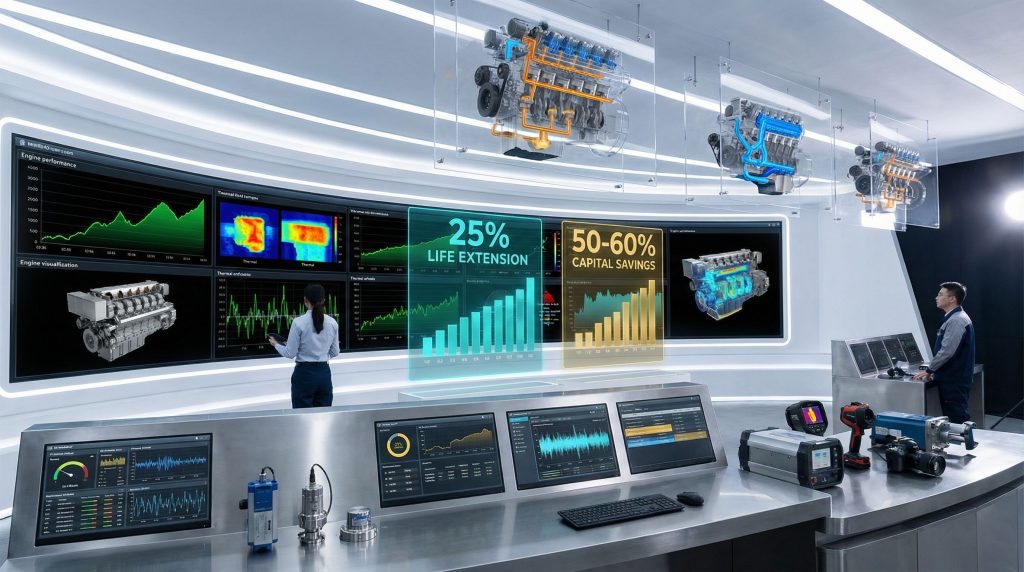
Understanding Modern Industrial Engine Longevity
Complex machinery operating in industrial environments faces unprecedented demands that challenge traditional performance expectations. Modern mining operations, construction sites, and heavy manufacturing facilities require equipment capable of sustaining productivity across extended operational periods while minimising costly downtime events. The intersection of advanced materials science, predictive analytics, and systematic maintenance protocols has fundamentally altered how organisations approach equipment longevity optimisation.
Understanding the mechanisms that enable extending the operational life of engines requires examining multiple interconnected systems working in harmony to resist degradation under extreme conditions. Contemporary approaches to industrial engine management emphasise data-driven decision making, component-level optimisation strategies, and comprehensive maintenance frameworks that adapt to specific operational environments.
When big ASX news breaks, our subscribers know first
Core Performance Metrics That Define Engine Durability
Industrial engine performance measurement extends far beyond simple operational hours to encompass comprehensive durability assessments that predict long-term reliability. The QSK60 engine utilised in large mining excavators demonstrates how systematic optimisation can transform operational expectations, with documented improvements extending service intervals from 12,000 hours to over 18,000 hours under typical mining load conditions.
Total cost of ownership calculations must incorporate multiple variables including initial capital expenditure, maintenance frequency, component replacement costs, and productivity impacts from downtime events. Furthermore, data-driven mining operations particularly benefit from extended engine life through reduced rebuild frequency within total machine operational periods, or by extending absolute service life beyond original design specifications.
Environmental operating conditions significantly influence durability metrics, with mining and construction applications presenting unique challenges through sustained high ambient temperatures, intensive loading cycles, and contamination exposure. These operational stressors require engines designed with enhanced thermal management capabilities and robust filtration systems capable of maintaining performance in demanding environments.
Environmental Stress Factors in Industrial Settings
Temperature cycling represents one of the most significant durability challenges for industrial engines, particularly in mining applications where equipment operates across wide temperature ranges throughout daily operational cycles. Thermal stress manifests through expansion and contraction of metal components, potentially creating micro-fractures and accelerated wear patterns in critical engine systems.
Contamination exposure in mining and construction environments demands specialised approaches to air intake management and lubrication system protection. Dust infiltration can compromise engine internals through abrasive wear, while moisture contamination may accelerate corrosion processes in fuel and lubrication systems.
Load variability effects require engines capable of maintaining efficiency across diverse operational demands, from sustained high-output periods during peak production to extended idle periods between operational cycles. For instance, modern mining excavators experience particularly challenging load patterns that stress engine components through frequent transitions between operational modes.
Real-Time Monitoring Systems for Performance Optimisation
Contemporary industrial operations require comprehensive visibility into equipment operating conditions to enable proactive maintenance interventions before component failures occur. Modern connected systems provide real-time insights that enable operators to optimise performance parameters and identify potential issues during early development stages.
Vibration analysis technologies detect bearing deterioration, misalignment issues, and component imbalances through sophisticated sensor networks that monitor equipment signatures continuously. Additionally, oil analysis programmes track contamination levels, additive depletion, and wear particle concentrations to provide early warning indicators of internal component degradation.
Thermal imaging applications identify heat signature anomalies that may indicate cooling system inefficiencies, excessive friction, or electrical component degradation before these issues progress to catastrophic failures. Integration of these monitoring technologies enables comprehensive condition assessment that supports data-driven maintenance scheduling.
Data-Driven Maintenance Scheduling Frameworks
Condition-based maintenance protocols represent a fundamental shift from traditional time-based service intervals toward responsive maintenance strategies that adapt to actual equipment condition and operational demands. This approach requires sophisticated data collection and analysis capabilities that can process multiple input variables to generate actionable maintenance recommendations.
Machine learning algorithms enhance failure prediction modelling by analysing historical operational data, identifying patterns that precede component failures, and generating predictive models that improve with continued data collection. These systems become increasingly accurate as they process larger datasets from diverse operational environments, and professional engine maintenance advice supports these technological approaches with proven practical techniques.
IoT sensor integration with maintenance management systems creates comprehensive equipment monitoring networks that enable remote diagnostics, automated alert generation, and centralised fleet management capabilities. This infrastructure supports proactive maintenance scheduling that minimises unplanned downtime while optimising resource allocation.
Advanced Lubrication Management Protocols
Synthetic oil formulations designed for extreme operating conditions provide enhanced thermal stability, superior contamination resistance, and extended service intervals compared to conventional lubricants. These advanced formulations incorporate sophisticated additive packages that maintain viscosity characteristics across wide temperature ranges while providing enhanced wear protection.
Filtration system upgrades play critical roles in extending the operational life of engines through contamination control strategies that prevent abrasive particles from entering lubrication circuits. Multi-stage filtration approaches combine different filtration technologies to address various contamination sources while maintaining adequate oil flow rates.
Oil sampling frequency optimisation involves balancing analysis costs against the value of condition information, with sampling intervals adjusted based on operational intensity, environmental conditions, and historical contamination patterns. Systematic sampling programmes provide trending data that enables predictive maintenance interventions.
Cooling System Enhancement Techniques
Heat exchanger efficiency improvements focus on maximising thermal transfer capabilities while minimising pressure drops that could impact overall engine performance. Enhanced cooling capacity becomes particularly important in mining applications where ambient temperatures and sustained high loads challenge thermal management systems.
Coolant additive programmes provide corrosion prevention, pH buffering, and enhanced heat transfer properties that protect cooling system components while optimising thermal management efficiency. These programmes require careful chemical balance to avoid incompatibility issues with system materials.
However, radiator design modifications for harsh environment operation incorporate features such as reversible fans for cleaning cycles, reinforced fin structures resistant to impact damage, and enlarged surface areas that provide additional cooling capacity under extreme conditions.
Air Intake and Exhaust System Modifications
Multi-stage filtration systems address the extraordinary contamination challenges present in mining and construction environments through sequential filtration processes that remove progressively smaller particles while maintaining adequate airflow volumes. These systems require careful design to balance filtration efficiency against pressure drop constraints.
Turbocharger maintenance protocols focus on protecting these precision components from contamination damage while maintaining boost pressure characteristics throughout extended service intervals. Regular inspection and cleaning procedures prevent efficiency losses that could impact overall engine performance.
Exhaust gas recirculation optimisation balances emissions compliance requirements with engine longevity considerations, ensuring that environmental protection measures do not compromise operational durability or maintenance requirements.
Operational Best Practices for Equipment Operators
Load management techniques minimise mechanical stress through strategic operational planning that avoids unnecessary peak loading conditions while maintaining productivity requirements. Operators trained in these techniques can significantly extend component life through conscious operational choices.
Warm-up and cool-down procedures control thermal cycling stress by allowing engines to reach optimal operating temperatures gradually and cool down systematically after high-intensity operations. These procedures become particularly important in applications with frequent start-stop cycles, and proper engine operation techniques provide comprehensive guidance for operators seeking to maximise equipment longevity.
Fuel quality management involves monitoring fuel contamination, water content, and additive concentrations to prevent fuel system degradation and combustion efficiency losses that could accelerate engine wear or reduce performance.
Maintenance Team Skill Development Programmes
Diagnostic equipment training enables maintenance personnel to utilise advanced monitoring technologies effectively, interpreting complex data outputs and translating analytical results into appropriate maintenance actions. This capability becomes increasingly important as monitoring systems become more sophisticated.
Component replacement procedures require specialised knowledge of proper installation techniques, torque specifications, and quality control measures that ensure replacement components provide expected service life and performance characteristics.
Documentation protocols establish systematic record-keeping practices that enable trend analysis, warranty claim support, and historical performance evaluation. Comprehensive maintenance documentation supports continuous improvement efforts and helps identify optimisation opportunities.
Electronic Control Module Advancements
Adaptive engine mapping technologies automatically adjust operational parameters based on real-time load conditions, ambient temperatures, and fuel quality variations to optimise performance while minimising component stress. These systems represent significant advances in engine management sophistication, particularly when integrated with AI in mining operations.
Fault detection algorithms continuously monitor multiple engine parameters to identify developing issues before they progress to component failures. Early detection capabilities enable proactive maintenance interventions that prevent costly emergency repairs and unplanned downtime events.
Remote diagnostics capabilities allow technical specialists to evaluate engine performance and troubleshoot issues without requiring on-site visits, reducing response times and enabling expert analysis of complex operational problems.
Material Science Innovations in Engine Components
Advanced metallurgy applications incorporate high-strength alloys, specialised heat treatments, and precision manufacturing techniques that enhance component durability under extreme operational conditions. These materials provide superior wear resistance while maintaining dimensional stability.
Ceramic coating applications provide thermal protection for combustion chamber components while reducing heat transfer to cooling systems. These coatings enable higher operating temperatures while protecting underlying metal components from thermal stress.
Composite materials offer weight reduction benefits while maintaining structural integrity, enabling design optimisations that improve fuel efficiency without compromising durability or performance characteristics. This aligns with advanced materials in mining applications across the industry.
The next major ASX story will hit our subscribers first
Total Cost of Ownership Analysis
Capital expenditure reduction through extended equipment life involves calculating the financial benefits of delayed replacement purchases against the costs of life extension programmes. Organisations achieving 50 percent operational life extensions realise substantial capital cost deferrals that improve financial performance.
Operational expense optimisation occurs through reduced maintenance frequency, lower inventory carrying costs, and decreased labour requirements for major overhaul procedures. These benefits accumulate over time as life extension programmes mature and optimisation strategies prove effective.
Productivity improvements result from decreased downtime events, more predictable maintenance scheduling, and enhanced operational reliability that enables better production planning and resource allocation.
Return on Investment Calculations for Life Extension Programmes
Maintenance programme investments require careful cost-benefit analysis comparing implementation costs against expected savings from extended operational periods and reduced failure rates. Most industrial operations observe positive returns within 12-18 months of programme implementation.
Labour cost reductions emerge from predictive maintenance implementations that replace reactive emergency repairs with planned maintenance activities performed during scheduled downtime periods. This transition reduces overtime costs and improves maintenance team productivity.
Inventory optimisation benefits result from improved component life prediction that enables more accurate spare parts planning, reducing inventory carrying costs while ensuring critical components remain available when needed.
Artificial Intelligence Applications in Engine Management
Machine learning algorithms for predictive failure analysis process vast datasets from operational sensors to identify subtle patterns that precede component failures. These systems continuously improve prediction accuracy as they process additional operational data from diverse applications.
Automated maintenance scheduling based on operational patterns optimises service intervals by considering actual usage patterns rather than relying on fixed time-based schedules. This approach maximises component utilisation while ensuring maintenance occurs before performance degradation.
Performance optimisation through AI-driven parameter adjustment enables real-time engine tuning that responds to changing operational conditions while maintaining efficiency and minimising component stress. Consequently, extending the operational life of engines becomes more achievable through these intelligent systems.
Advanced Materials and Manufacturing Techniques
3D printing applications for replacement component production enable on-demand manufacturing of specialised parts, reducing inventory requirements and enabling rapid prototyping of design improvements. This technology particularly benefits remote operations where parts availability challenges exist, complementing 3D modelling in mining applications.
Nanotechnology coatings provide enhanced component protection through molecular-level surface modifications that reduce friction, improve corrosion resistance, and extend component service life. These advanced coatings represent frontier technologies in engine component protection.
Smart materials that adapt to operating conditions automatically adjust their properties in response to temperature, pressure, or chemical exposure changes, providing self-optimising component performance that enhances longevity.
Integration with Digital Twin Technology
Virtual engine modelling for performance simulation enables engineers to test optimisation strategies and predict component behaviour under various operational scenarios without physical testing requirements. These simulations accelerate development cycles and reduce validation costs.
Real-time synchronisation between physical and digital systems creates comprehensive monitoring platforms that enable advanced analytics, predictive modelling, and optimisation strategies based on continuous performance data collection.
Scenario planning for maintenance optimisation strategies utilises digital twin technology to evaluate various maintenance approaches, predict their outcomes, and select optimal strategies based on specific operational requirements and constraints.
Assessment and Baseline Establishment
Current performance evaluation requires comprehensive analysis of existing operational data, maintenance records, and component condition assessments to establish baseline metrics for improvement measurement. This analysis identifies specific optimisation opportunities and quantifies potential benefits.
Maintenance history analysis reveals patterns in component failures, identifies recurring issues, and highlights systems requiring priority attention in life extension programmes. Historical data provides valuable insights for optimisation strategy development.
Cost-benefit analysis for programme implementation involves detailed financial modelling that compares implementation costs against expected benefits from extended operational life, reduced maintenance frequency, and improved productivity.
Technology Integration and Training Implementation
Monitoring system installation requires careful sensor placement, calibration procedures, and integration with existing maintenance management systems to ensure accurate data collection and meaningful analytical outputs. Proper installation fundamentally determines system effectiveness.
Staff training programmes must address new maintenance protocols, diagnostic equipment operation, and data interpretation skills that enable personnel to utilise advanced monitoring technologies effectively. Training represents a critical success factor for programme implementation.
Performance tracking establishes systematic measurement processes that document programme effectiveness, identify areas requiring adjustment, and provide data supporting continuous improvement efforts.
Long-term Success Metrics and Optimisation
Key performance indicator development focuses on measurable outcomes that demonstrate programme value, including extended operational hours, reduced failure rates, improved productivity metrics, and enhanced cost efficiency. These indicators guide programme management and optimisation efforts.
Regular review cycles enable systematic evaluation of programme performance, identification of improvement opportunities, and adjustment of strategies based on operational experience and changing requirements. Furthermore, mining innovation trends continue to shape these optimisation approaches.
Industry best practice integration involves continuous monitoring of technological advances, methodology improvements, and case study results that can enhance existing programmes and maximise long-term benefits. This approach ensures that extending the operational life of engines remains aligned with evolving industry standards and technological capabilities.
Disclaimer: The information presented in this article is based on industry analysis and available data as of the publication date. Operational results may vary based on specific equipment, operating conditions, and implementation approaches. Organisations should conduct thorough analysis and consult with qualified technical specialists before implementing engine life extension programmes.
Ready to Capitalise on Equipment Efficiency Investments?
Discovery Alert's proprietary Discovery IQ model delivers real-time alerts on significant mining equipment and technology discoveries announced on the ASX, helping subscribers identify companies developing breakthrough solutions for industrial operations. Explore Discovery Alert's dedicated discoveries page to understand how major technological advances can generate substantial market returns, then begin your 30-day free trial today to position yourself ahead of the market.