May 14, 2026
Understanding the Strategic Architecture of Modern Lithium Operations
The global transition toward electrification has fundamentally altered how mining companies approach resource development strategies. Modern lithium operations must balance immediate production demands with long-term resource sustainability, technological innovation, and regulatory compliance across multiple jurisdictions. This complex operational matrix becomes particularly critical when projects span decades of anticipated production cycles and involve multinational partnerships navigating evolving policy frameworks.
Argentina's position within South America's lithium triangle exemplifies these strategic considerations, where geological advantages intersect with technological advancement opportunities and regulatory evolution. The recent developments demonstrate how lithium expansion in Cauchari-Olaroz serves as an indicator of broader industry transformation, reflecting changes in extraction methodologies, production scaling approaches, and international investment patterns within the battery metals sector. Furthermore, these developments align with broader Argentina lithium insights that highlight the region's strategic importance.
When big ASX news breaks, our subscribers know first
Resource Base Enhancement and Geological Confidence Building
The foundation of any large-scale lithium expansion rests on geological certainty and resource quality validation. Recent assessments at Cauchari-Olaroz have demonstrated the critical importance of independent geological validation in supporting expansion decisions. Independent hydrogeological consulting firms Aquatec and Groundwater Insight conducted comprehensive studies that resulted in significant resource classification upgrades.
Technical Resource Metrics and Grade Analysis
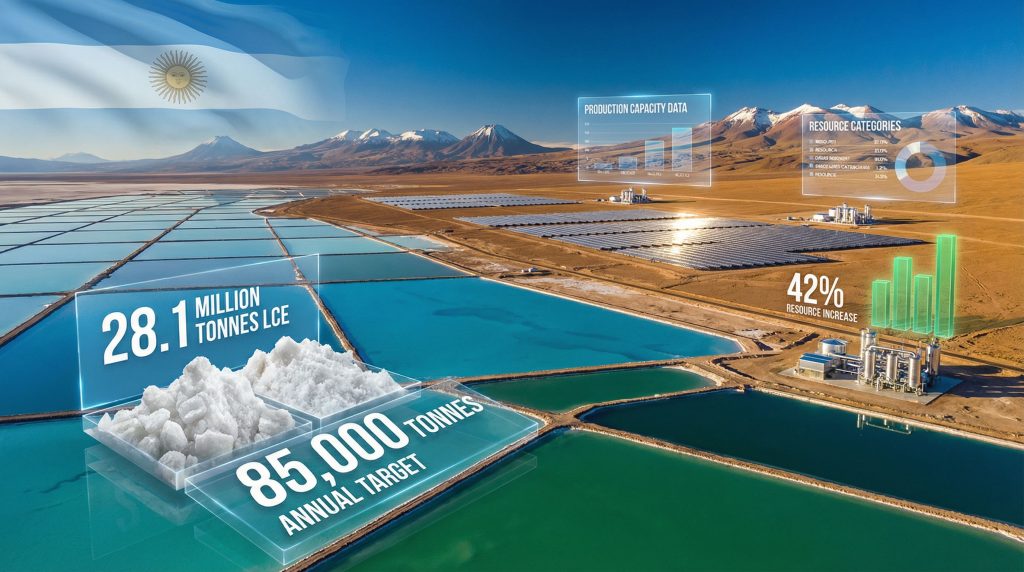
The updated resource estimates reveal 28.1 million tonnes of lithium carbonate equivalent (LCE) in measured and indicated categories, representing a 42% increase compared to 2019 assessments. These resources maintain an average grade of 562 mg/l of lithium, indicating consistent mineralization quality across the deposit. Additionally, inferred resources total 9.6 million tonnes of LCE with an average grade of 567 mg/l.
| Resource Category | Volume (Mt LCE) | Average Grade (mg/l) | Confidence Level |
|---|---|---|---|
| Measured & Indicated | 28.1 | 562 | High |
| Inferred | 9.6 | 567 | Moderate |
| Total Resource Base | 37.7 | 564 | Combined |
The consistency between measured/indicated and inferred resource grades suggests uniform lithium distribution across the aquifer system. This geological uniformity reduces technical risk associated with resource conversion from inferred to indicated categories through additional drilling programs.
Aquifer Understanding and Hydrogeological Modeling
The enhanced aquifer characterisation provides improved understanding of brine flow dynamics, lithium concentration variations, and long-term sustainability parameters. This geological insight strengthens confidence in multi-decade production scenarios and supports more sophisticated extraction planning approaches.
Key hydrogeological insights include:
- Improved brine flow modelling capabilities
- Enhanced understanding of lithium concentration stability
- Better characterisation of aquifer boundaries and capacity
- Refined estimates of sustainable extraction rates
Production Scaling and Operational Efficiency Optimisation
The transition from current production levels to 85,000 tonnes per year represents more than a simple capacity expansion. This scaling involves sophisticated operational planning, technology integration, and phased development strategies designed to minimise capital exposure while maximising long-term production potential.
Phase 1 Operational Performance Analysis
Current operations demonstrate strong performance metrics that support expansion confidence. The facility maintains an installed capacity of 40,000 tonnes per year of LCE, achieving 34,100 tonnes of actual production in 2025. Fourth-quarter 2025 capacity utilisation reached 97%, indicating near-optimal operational efficiency.
Operational Performance Indicators:
- Cash costs: Below $6,000 per tonne
- Capacity utilisation trend: Accelerating toward full capacity
- Production reliability: Consistent quarterly performance
- Cost competitiveness: Lower quartile of global cost curve
Phase 2 Development Strategy and Technology Integration
The expansion strategy incorporates both traditional evaporation methods and direct lithium extraction technologies. This hybrid approach addresses scalability constraints while maintaining cost competitiveness. Phase 2 development proceeds through multiple stages:
Initial Expansion Phase:
- Target capacity: 45,000 tonnes per year LCE
- Technology: Enhanced traditional methods
- Timeline: Initial expansion phase
Ultimate Capacity Target:
- Final capacity: 85,000 tonnes per year LCE
- Technology: Hybrid traditional/DLE integration
- Timeline: Full ramp-up by 2029
Joint Venture Dynamics and Strategic Positioning
The multinational consortium structure creates unique opportunities and complexities in expansion planning. The partnership combines Chinese technological expertise, Swiss financial market access, and Argentine regulatory navigation capabilities.
Ownership Structure and Strategic Contributions
Consortium Ownership:
- Ganfeng Lithium (China): 46.7%
- Lithium Argentina (Switzerland): 44.8%
- JEMSE (Argentina): 8.5%
Each partner contributes distinct strategic value. Ganfeng Lithium provides access to advanced extraction technologies and established Asian market relationships. Lithium Argentina enables European capital markets exposure and international project management expertise. JEMSE offers local regulatory knowledge and provincial government alignment.
Market Access and Offtake Strategy
Current offtake arrangements direct 80% of production to Asian markets, primarily China and Thailand. This concentration provides revenue security while creating market dependency considerations for long-term planning. The expansion may enable diversification of customer base and geographic market exposure, particularly as the global lithium market continues to evolve.
Regulatory Framework Navigation and Investment Incentives
The expansion strategy incorporates Argentina's regulatory environment through strategic application processes and compliance frameworks. The consortium submitted applications for the Incentive Regime for Large Investments (RIGI) in December 2025, seeking regulatory stability for the expansion phase.
RIGI Framework Benefits and Strategic Value
The RIGI application demonstrates management's assessment that regulatory incentives are critical to project economics. Expected benefits include enhanced lithium industry tax breaks and other strategic advantages:
- Tax stability provisions for multi-year planning certainty
- Foreign currency retention rights for international transactions
- Accelerated depreciation schedules improving cash flow timing
- Import duty exemptions reducing capital equipment costs
Environmental Permitting and Risk Mitigation
Parallel to RIGI applications, the consortium processes environmental permits to minimise regulatory risk in growth strategy execution. This dual-track approach demonstrates proactive regulatory management and reduces potential delays in expansion timeline execution.
Technology Innovation and Operational Sustainability
Modern lithium operations face increasing scrutiny regarding environmental impact, water usage, and community relations. The lithium expansion in Cauchari-Olaroz incorporates innovative approaches addressing these challenges while maintaining operational efficiency.
Water Management and Conservation Technologies
Traditional lithium brine operations require substantial water resources for evaporation pond systems. The integration of DLE technology significantly reduces water consumption while increasing lithium recovery rates. This dual benefit addresses both operational constraints and environmental sustainability requirements.
Water Efficiency Improvements:
- Reduced freshwater consumption per tonne LCE produced
- Enhanced brine processing efficiency
- Minimised evaporation pond requirements
- Improved overall recovery rates
How is renewable energy being integrated into the expansion?
The expansion includes 300 MW of solar power capacity, positioning the operation as a leader in renewable energy integration within the lithium sector. This approach addresses both operational cost optimisation and environmental sustainability requirements, potentially improving long-term competitiveness in environmentally conscious supply chains.
The next major ASX story will hit our subscribers first
Market Dynamics and Demand Projection Analysis
Global electric vehicle adoption rates, battery technology evolution, and competing lithium supply sources influence strategic timing and scale of expansion projects. Understanding these market dynamics provides insight into production target rationale and development timeline decisions.
Electric Vehicle Market Growth and Battery Demand
Electric vehicle market expansion projections suggest continued strong demand for lithium compounds through the 2030s. However, competing supply sources from Australia, Chile, and emerging African projects create complex competitive landscapes requiring strategic positioning through scale, cost competitiveness, and supply chain integration.
Demand Growth Drivers:
- Accelerating EV adoption across major automotive markets
- Energy storage system expansion for renewable energy integration
- Battery technology advancement requiring higher lithium content
- Infrastructure development supporting electrification trends
Competitive Positioning Through Scale Achievement
The expansion positions Cauchari-Olaroz within the top tier of global lithium operations by production capacity. This scale provides advantages in contract negotiations, cost optimisation through economies of scale, and market influence during supply chain disruptions or demand fluctuations.
Risk Assessment and Mitigation Framework
Large-scale expansion projects face multiple risk categories requiring comprehensive assessment and mitigation planning. Technical, operational, regulatory, and market uncertainties must be addressed through systematic risk management approaches.
Technical and Operational Risk Management
Primary Risk Categories:
- Resource quality variations across expanded production areas
- Technology integration challenges during DLE implementation
- Infrastructure development delays affecting expansion timeline
- Environmental compliance requirements evolution
Mitigation Strategies:
- Phased development approach reducing capital exposure
- Proven technology integration minimising technical risk
- Redundant infrastructure planning ensuring operational continuity
- Proactive environmental management exceeding regulatory requirements
Market and Regulatory Risk Considerations
Argentina's mining sector has experienced policy evolution creating both opportunities through RIGI and uncertainties regarding long-term regulatory stability. The provincial partnership through JEMSE provides political risk mitigation while the multinational consortium structure diversifies regulatory exposure.
Risk Mitigation Framework:
- Diversified ownership structure reducing single-jurisdiction risk
- Regulatory incentive participation ensuring policy alignment
- Multi-year offtake agreements providing revenue stability
- Technology diversification reducing single-method dependency
Regional Development Impact and Infrastructure Synergies
The lithium expansion in Cauchari-Olaroz serves as a catalyst for broader regional development, creating infrastructure improvements, supply chain development, and technical expertise concentration. These spillover effects extend beyond immediate project boundaries to benefit regional economic development.
Infrastructure Development and Economic Multipliers
Major lithium operations drive regional infrastructure improvements including transportation network enhancements, power grid expansion, water infrastructure development, and communications system upgrades. These improvements benefit multiple industries and communities beyond the immediate mining operation.
Supply Chain Ecosystem Development
Large-scale operations create demand for specialised services, equipment suppliers, and technical expertise, fostering development of regional lithium industry ecosystems. This clustering effect can improve cost competitiveness and operational efficiency across multiple projects within the lithium triangle.
Long-term Strategic Implications and Industry Evolution
The successful execution of this expansion project influences future lithium development strategies throughout South America's lithium triangle. The integration of traditional and advanced extraction technologies may establish new industry standards for operational efficiency and environmental performance.
Technology Transfer and Operational Best Practices
The hybrid extraction approach being implemented may accelerate broader industry adoption of DLE technologies, potentially transforming lithium production economics and environmental profiles across the sector. This technology integration provides a testing ground for commercial-scale DLE implementation in brine operations.
Resource Longevity and Supply Security
With combined resources supporting over 40 years of production at expanded rates, this project represents a cornerstone asset for long-term lithium supply security. The strategic implications extend beyond immediate market considerations to encompass decades of supply chain planning for the global battery industry.
The total resource base of 37.7 million tonnes LCE provides substantial flexibility for production optimisation, market response, and technology evolution over multiple decades. Consequently, this resource depth enables strategic supply management during market volatility while supporting long-term customer relationships requiring supply security guarantees. Furthermore, Lithium Argentina has demonstrated consistent operational performance, positioning the lithium expansion in Cauchari-Olaroz as a strategic cornerstone for future supply chain security.
Investment Disclaimer: This analysis is for informational purposes only and should not be considered as investment advice. Lithium mining projects involve substantial technical, regulatory, and market risks. Readers should conduct independent research and consult qualified professionals before making investment decisions. Resource estimates, production forecasts, and market projections are subject to change based on geological, technical, and market developments.
Want to Discover the Next Major Lithium Breakthrough?
Discovery Alert's proprietary Discovery IQ model delivers real-time alerts on significant ASX mineral discoveries, including lithium and battery metal opportunities that could generate substantial returns. Visit Discovery Alert's dedicated discoveries page to explore historic examples of exceptional market outcomes, then begin your 14-day free trial today to position yourself ahead of the market with actionable insights powered by advanced AI technology.