June 22, 2026
The Evolution of Modern Metal Extraction Science
Contemporary mining operations face unprecedented pressure to balance productivity with environmental responsibility, creating demand for processing technologies that can deliver both economic efficiency and reduced ecological impact. Traditional pyrometallurgical approaches, while historically dominant, increasingly struggle to meet these dual requirements, particularly when processing complex or low-grade materials. This technological tension has accelerated development of alternative methodologies that fundamentally reimagine how metals are extracted, purified, and refined.
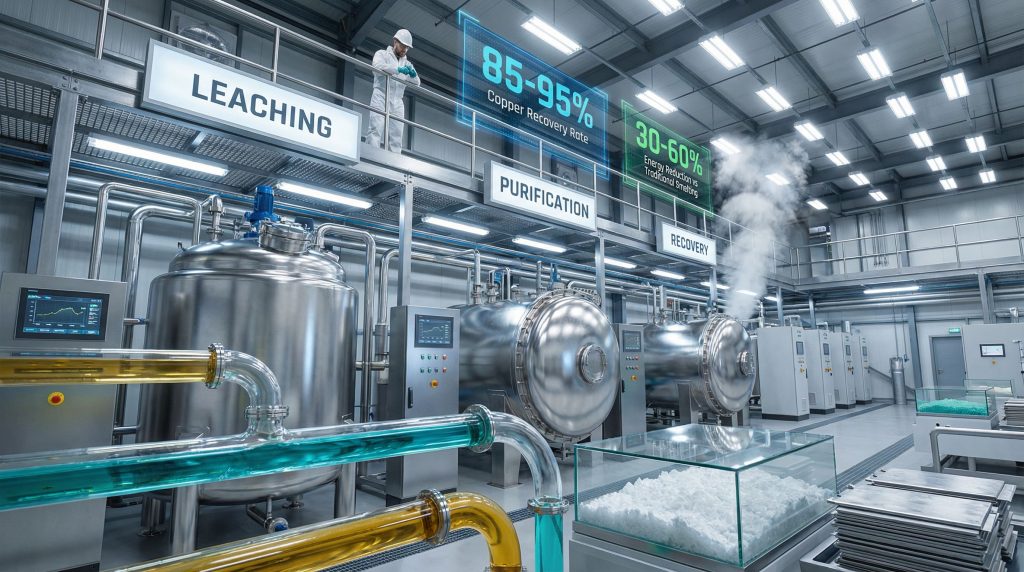
Aqueous-based processing represents one such paradigm shift, utilising water-based chemical solutions rather than high-temperature furnaces to achieve metal recovery. These systems operate through controlled chemical dissolution rather than thermal decomposition, enabling precise selectivity and potentially dramatic reductions in energy consumption compared to conventional smelting operations.
The strategic importance extends beyond operational efficiency to encompass supply chain security, particularly for nations dependent on critical mineral imports. Recent technological demonstrations have shown that sophisticated hydrometallurgical processing technology can achieve recovery rates exceeding 99% for platinum and palladium, with 95% recovery for rhodium from automotive catalytic converters, representing state-of-the-art performance in previously challenging applications.
When big ASX news breaks, our subscribers know first
Fundamental Principles of Aqueous Metal Processing
Chemical Dissolution Mechanisms in Controlled Environments
Hydrometallurgical processing technology operates through three integrated stages that transform solid metal-bearing materials into purified products via aqueous chemistry. The initial dissolution phase employs carefully formulated lixiviants (leaching solutions) to selectively dissolve target metals while leaving unwanted materials in solid form. This selectivity represents a fundamental advantage over thermal processing, which typically requires subsequent separation of mixed metal products.
Chemical dissolution rates depend on multiple variables including temperature, pressure, solution pH, and contact time. Unlike smelting operations that achieve rapid phase changes through extreme heat, hydrometallurgical processing allows precise kinetic control, enabling optimization for specific metal recovery targets. Research has demonstrated that systematic testing protocols can identify optimal operating parameters through extensive experimental programs.
Advanced Separation and Purification Protocols
Following dissolution, solution purification employs sophisticated chemical techniques to achieve selective metal separation. Solvent extraction utilises organic compounds that preferentially extract specific metals from aqueous solutions, creating distinct chemical phases that can be mechanically separated. This approach enables processing of complex multi-metal solutions with high precision.
Ion exchange technologies offer alternative purification pathways using solid resins that selectively absorb target metal ions while allowing impurities to remain in solution. These systems can achieve extremely high purification levels, producing battery-grade or industrial-specification metals directly from mixed feedstocks.
Precipitation control through pH manipulation provides additional selectivity options, particularly for recovering metals as intermediate compounds that can be further processed to final products. The integration of multiple purification stages enables customised flowsheets optimised for specific applications and feedstock compositions.
Metal Recovery and Production Technologies
Final metal production typically employs electrowinning processes that use electrical current to deposit pure metals onto cathode surfaces, or precipitation reactions that convert dissolved metals into solid compounds for subsequent processing. Electrowinning enables direct production of high-purity metals but requires significant electrical input, while precipitation may offer energy advantages for certain applications.
The choice between recovery technologies depends on target metal specifications, energy costs, and downstream processing requirements. Modern facilities often incorporate multiple recovery options to optimise efficiency across varying operating conditions and market demands.
Operational Advantages Compared to Traditional Thermal Processing
Energy Consumption and Thermal Efficiency Analysis
Hydrometallurgical processing technology operates at significantly lower temperatures than conventional smelting, typically requiring heating to only 200-400°C compared to 1,400-1,600°C for precious metals smelting. This temperature differential translates to substantial energy savings, particularly given that heating costs typically represent major operational expenses in thermal processing facilities.
However, energy analysis must consider total system requirements including electrical power for electrowinning, pumping, and solution heating. While thermal energy requirements decrease dramatically, electrical consumption may increase depending on recovery technologies employed. Furthermore, the mining industry evolution continues to drive efficiency improvements across all processing methodologies.
Environmental Performance and Emissions Profiles
Atmospheric emissions differ fundamentally between processing approaches. Smelting operations generate significant sulfur dioxide, particulates, and carbon dioxide from high-temperature combustion and chemical decomposition reactions. Hydrometallurgical systems typically produce minimal atmospheric emissions, particularly when operating with renewable electricity sources.
Water management presents different challenges and opportunities. While aqueous processing requires substantial water inputs as chemical medium, closed-loop system designs enable extensive recycling and minimal discharge. Smelting operations require water primarily for cooling but may generate contaminated wastewater requiring treatment before discharge.
Waste stream characteristics vary significantly between approaches:
- Smelting: Produces slag, dust, and particulates requiring specialised disposal
- Hydrometallurgy: Generates spent solutions and chemical residues
- Volume comparison: Hydrometallurgical waste streams may be smaller by volume
- Toxicity profiles: Aqueous wastes may be more amenable to neutralisation treatments
Economic Scalability and Capital Requirements
Facility construction costs typically favour hydrometallurgical approaches for smaller-scale operations due to reduced infrastructure complexity compared to smelting plants. Modular system designs enable phased capacity expansion, potentially reducing initial capital requirements and enabling staged investment as market conditions develop.
Operating cost structures differ substantially. While chemical reagent consumption represents ongoing expense in aqueous processing, these costs may be offset by reduced energy expenses and potentially lower labour requirements. In addition, the ongoing mining sustainability transformation influences economic considerations across the industry.
Metal-Specific Applications and Recovery Performance
Platinum Group Metals Processing Excellence
Recent technological validation has demonstrated exceptional performance in platinum group metals (PGMs) recovery from spent automotive catalytic converters. Extended test programs processing one tonne of material over two years achieved recovery rates exceeding 99% for platinum and palladium, with 95% rhodium recovery, representing state-of-the-art performance for these challenging materials.
| Metal | Recovery Rate | Processing Method | Commercial Significance |
|---|---|---|---|
| Platinum | >99% | Acid leaching + electrowinning | Industrial catalyst applications |
| Palladium | >99% | Integrated hydrometallurgical | Automotive emissions control |
| Rhodium | 95% | Multi-stage separation | Highest value PGM component |
A single processing facility designed for automotive catalyst recycling could theoretically produce 220,000 ounces of combined 3E PGMs annually, representing approximately 11% of total US annual import requirements of roughly two million ounces. For rhodium specifically, such production could exceed five times current domestic mining output, demonstrating the strategic potential of advanced recycling technologies.
Battery Metals and Critical Materials Processing
Lithium processing through hydrometallurgical processing technology enables >99% recovery from both brine and hard rock spodumene sources, producing battery-grade lithium carbonate or lithium hydroxide directly from raw materials. This capability supports domestic battery supply chains and reduces dependence on imported refined products, particularly through innovations in direct lithium extraction.
Nickel laterite processing has increasingly adopted hydrometallurgical approaches, particularly pressure acid leaching for lateritic ores that prove challenging for traditional pyrometallurgical treatment. These systems can process lower-grade materials economically while achieving high metal recovery rates.
Cobalt recovery from mixed sulfide concentrates benefits from selective leaching technologies that can separate cobalt from nickel and copper in complex ore systems, enabling optimised recovery of this supply-constrained battery metal.
Rare Earth Elements and Strategic Materials
Rare earth element separation represents one of the most technically demanding applications for hydrometallurgical processing technology, requiring sophisticated multi-stage solvent extraction circuits to achieve individual element purification. The chemical similarity of rare earth elements necessitates extremely precise process control and extensive purification stages.
Vanadium extraction from steel slag and petroleum residues has emerged as an important application, utilising acid leaching followed by selective precipitation to recover this battery storage metal from industrial waste streams. This approach transforms waste management costs into revenue opportunities.
Revolutionary Impact on Materials Recycling Operations
Advanced Battery Recycling Methodologies
Hydrometallurgical processing technology enables comprehensive recovery of battery materials through integrated processing circuits designed for specific battery chemistries. Lithium-ion battery recycling achieves >99% recovery rates for lithium, nickel, cobalt, and manganese through controlled acid leaching followed by sequential solvent extraction stages.
The technology produces battery-grade materials meeting stringent purity specifications for direct reintegration into new battery manufacturing, supporting true circular economy principles rather than downcycling to lower-value applications. Processing capacity can reach 5,000 tonnes per annum for a single facility, representing substantial material flow management for end-of-life battery streams, which aligns with advances in the battery recycling process.
Key advantages in battery recycling include:
- Material purity: Direct production of battery-grade compounds
- Chemical selectivity: Individual metal recovery from complex chemistries
- Processing flexibility: Accommodation of varying battery types
- Valuable element recovery: Economic processing of mixed waste streams
Electronic Waste Processing Capabilities
Precious metal recovery from electronic waste represents a high-value application where hydrometallurgical processing technology can extract gold, silver, platinum, and palladium from complex electronic assemblies. Traditional recycling approaches often struggle with the intimate mixing of metals in electronic components, while selective leaching can achieve targeted dissolution of specific elements.
Processing e-waste through aqueous methods also enables recovery of rare earth elements and other specialty metals used in electronics manufacturing, creating value streams from materials typically lost in conventional recycling approaches. The ability to process heterogeneous feedstocks provides operational flexibility for facilities managing diverse waste streams.
Automotive Catalyst Recycling Excellence
Spent automotive catalytic converters contain high concentrations of platinum, palladium, and rhodium, but these metals are intimately bound to ceramic substrates that make mechanical separation challenging. Hydrometallurgical processing can achieve virtually complete metal liberation through selective dissolution while leaving ceramic materials intact for separate processing or disposal.
The economics prove compelling: a single processing module designed for automotive catalysts could generate revenue streams equivalent to a significant primary mining operation while providing environmental benefits through waste stream elimination and reduced import dependence for strategic materials.
Technical Limitations and Optimization Challenges
Process Kinetics and Throughput Considerations
Hydrometallurgical reactions typically proceed more slowly than high-temperature pyrometallurgical processes, requiring extended residence times that can limit processing throughput. While smelting operations achieve rapid phase changes through extreme thermal input, aqueous processing relies on chemical kinetics that may require hours or days for completion depending on the application.
Kinetic optimisation strategies include:
- Temperature elevation: Within equipment limitations
- Pressure application: To accelerate reaction rates
- Catalyst utilisation: Chemical or biological acceleration
- Particle size reduction: Increased surface area for reaction
- Agitation intensity: Enhanced mass transfer rates
Extended testing periods, such as the two-year program required to process one tonne of autocatalytic converter material, demonstrate the systematic approach necessary for process optimisation and commercial validation.
Chemical Consumption and Operating Costs
Reagent consumption represents a significant ongoing operational expense in hydrometallurgical facilities. Acid consumption for leaching, organic solvents for extraction, and neutralisation chemicals for waste treatment create continuous cost pressures that must be balanced against recovery value and environmental benefits.
Cost optimisation approaches include:
- Reagent recycling: Recovery and reuse of processing chemicals
- Solution management: Minimising makeup chemical requirements
- Process integration: Multi-metal recovery from single circuits
- Waste stream valorisation: Revenue from byproduct materials
Technical Complexity and Operational Expertise
Successful hydrometallurgical operations require sophisticated process control and extensive technical expertise in solution chemistry, separation science, and metallurgical engineering. The integration of multiple unit operations demands comprehensive understanding of chemical interactions and system optimisation.
Operator training and process troubleshooting present ongoing challenges, particularly for facilities processing variable feedstock compositions. Unlike smelting operations with relatively straightforward thermal control, aqueous processing requires continuous monitoring and adjustment of multiple chemical and physical parameters, which can benefit from AI process optimization technologies.
The next major ASX story will hit our subscribers first
Industrial Implementation and Commercial Success Stories
Technology Validation Through Extensive Testing
Commercial viability validation requires systematic demonstration across thousands of individual tests to establish process reliability and optimisation parameters. Recent automotive catalyst processing achievements involved 1,179 comprehensive tests over a two-year period, demonstrating the methodical approach necessary for technology transition from laboratory to commercial scale.
This testing scope establishes statistical confidence in process performance while identifying operational parameters for scale-up design. The systematic methodology provides foundation for engineering feasibility studies and investment decision-making for commercial facility development.
Strategic Partnership Models for Technology Deployment
Major mining and trading companies have begun investing in hydrometallurgical processing technology development, recognising the strategic potential for supply chain security and environmental performance improvement. Partnership structures typically involve equity investment combined with offtake agreements and potential project financing participation.
A recent example involves a $1.5 million investment for 6% equity stake with options to fund 50% of capital expenditure requirements, demonstrating institutional confidence in commercial viability while spreading development risk across multiple partners. These partnership models enable technology companies to access capital and market expertise while providing established mining companies exposure to innovative processing capabilities.
Commercial Facility Planning and Design Criteria
Transition from pilot-scale demonstration to commercial operation requires comprehensive facility design incorporating process equipment, infrastructure, utilities, and environmental management systems. Modern hydrometallurgical facilities incorporate modular designs enabling capacity expansion as market conditions develop.
Critical design considerations include:
- Feed preparation systems: Material handling and sizing
- Leaching circuit design: Reactor configuration and residence time
- Solution handling infrastructure: Pumping, storage, and transfer systems
- Purification equipment: Solvent extraction and separation technologies
- Recovery systems: Electrowinning or precipitation circuits
- Waste management: Treatment and disposal infrastructure
Facility location selection considers feedstock logistics, utility availability, skilled labour access, and regulatory frameworks supporting advanced manufacturing operations.
Future Technology Development and Market Evolution
Integration with Biological Processing Systems
Bio-hydrometallurgy represents an emerging frontier combining microbial catalysis with traditional aqueous processing to enhance selectivity and potentially reduce chemical consumption. Certain microorganisms can accelerate metal dissolution or provide selective separation capabilities, offering pathways for more sustainable processing approaches.
Biological systems operate under mild conditions and may enable processing of materials that prove challenging for conventional chemical approaches. Research continues on optimising microbial communities for specific metal recovery applications and integrating biological stages into existing circuits.
Artificial Intelligence and Process Optimization
Advanced process control incorporating artificial intelligence enables real-time optimisation of complex circuits with multiple interdependent variables. Machine learning algorithms can identify optimal operating parameters across varying feedstock compositions and market conditions, potentially improving recovery rates while minimising chemical consumption.
AI applications include:
- Predictive maintenance: Equipment optimisation and failure prevention
- Process control: Real-time parameter adjustment for optimal performance
- Quality assurance: Product specification maintenance across varying conditions
- Energy management: Power consumption optimisation for electrowinning operations
Distributed Processing and Modular Systems
Modular facility design enables distributed processing networks that can be deployed closer to materials sources or consumption centers, reducing transportation costs and enabling more responsive supply chain management. Standardised module designs could accelerate deployment while reducing capital costs through economies of scale in equipment manufacturing.
| Market Segment | 2024 Estimated Value | 2030 Projection | Primary Growth Drivers |
|---|---|---|---|
| Battery Recycling | $2.1 billion | $8.7 billion | Electric vehicle adoption |
| Critical Minerals | $1.8 billion | $4.2 billion | Supply chain security |
| Precious Metals | $3.4 billion | $5.1 billion | Urban mining expansion |
| E-waste Processing | $1.2 billion | $3.8 billion | Technology lifecycle acceleration |
Circular Economy Integration and Sustainable Materials Management
Hydrometallurgical processing technology enables true circular economy approaches by producing materials that meet virgin material specifications while utilising waste feedstocks. This capability supports closed-loop manufacturing systems where end-of-life products become inputs for new product manufacturing without quality degradation.
Urban mining applications can recover strategic materials from built infrastructure and waste streams, potentially reducing primary mining requirements while addressing waste management challenges. The technology enables economic processing of low-concentration materials that would prove uneconomical for traditional approaches.
Supply chain transparency benefits from hydrometallurgical processing through enhanced traceability and documentation of materials flows, supporting responsible sourcing initiatives and ESG compliance requirements in manufacturing operations.
Strategic Considerations for Metal Processing Innovation
Transformative Potential for Supply Chain Security
Hydrometallurgical processing technology represents a fundamental shift in how nations can approach critical materials security, particularly for countries heavily dependent on imports of strategic metals. The demonstrated capability to achieve >99% recovery rates from recycled materials creates pathways for domestic supply chain development using waste streams as feedstock rather than requiring new mining operations.
For platinum group metals specifically, domestic processing capability representing 11% of national import requirements from a single facility demonstrates the scalability potential for reducing foreign dependence through advanced recycling technologies. This strategic significance extends beyond economic considerations to encompass national security implications for materials essential to defence, aerospace, and clean energy applications.
Environmental Leadership Through Technology Innovation
The integration of hydrometallurgical processing into broader sustainability frameworks supports corporate and national environmental objectives while maintaining economic competitiveness. Reduced energy consumption, lower emissions profiles, and enhanced recycling capabilities align with carbon reduction targets and circular economy principles.
As environmental regulations become more stringent and carbon pricing mechanisms expand globally, the operational advantages of aqueous processing technologies may provide increasingly significant competitive advantages over traditional thermal processing approaches. Moreover, understanding hydrometallurgy processes becomes crucial for industry professionals navigating this technological transformation.
Disclaimer: This analysis is for educational purposes and does not constitute investment advice. Hydrometallurgical processing involves technical and economic risks, and commercial success depends on multiple factors including technology performance, market conditions, regulatory frameworks, and operational execution. Recovery rates and economic projections discussed represent technological demonstrations rather than guaranteed commercial performance. Potential investors should conduct independent due diligence and consult qualified professionals before making investment decisions.
Ready to Capitalise on Advanced Metal Processing Innovations?
Discovery Alert's proprietary Discovery IQ model delivers instant notifications on significant ASX mineral discoveries in metals processing and extraction technologies, empowering subscribers to identify breakthrough opportunities ahead of the broader market. Explore how major mineral discoveries have generated substantial returns by visiting Discovery Alert's dedicated discoveries page and begin your 14-day free trial today to secure your competitive advantage in the evolving metals processing sector.