
August 14, 2026
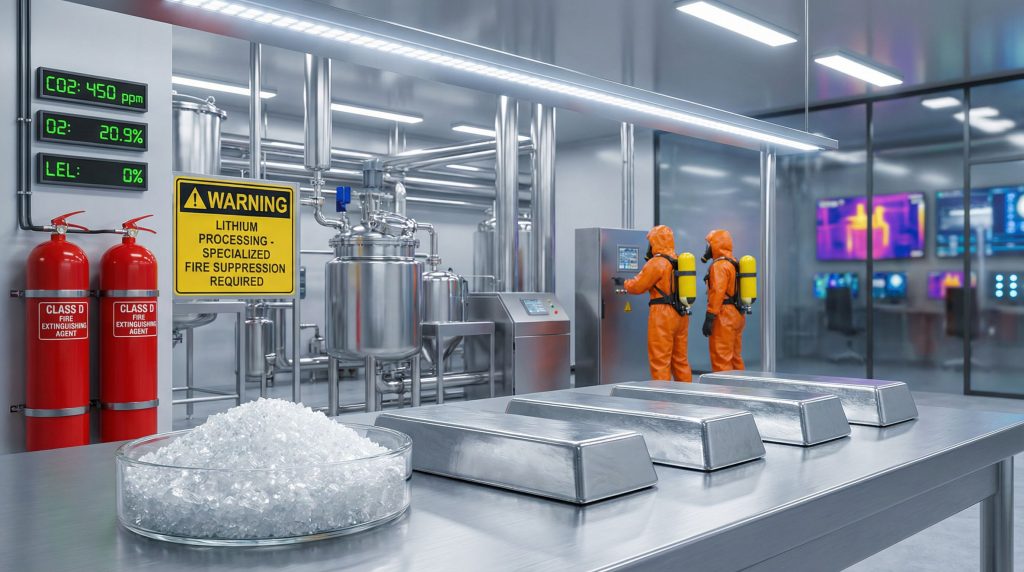
What Makes Modern Mining Equipment Particularly Vulnerable to Fire?
The unprecedented growth in lithium-ion battery technology has introduced complex thermal challenges that extend far beyond traditional mining hazards. Fire risks in lithium mining present unique combinations of chemical, thermal, and electrical ignition sources that require specialized safety approaches. Unlike conventional metal extraction, where fire risks primarily stem from diesel fuel systems and mechanical friction, lithium processing creates cascading thermal events that can escalate within minutes.
Battery-powered mining equipment, increasingly adopted across extraction sites, operates under fundamentally different risk parameters than their diesel counterparts. These systems contain energy densities of 150-250 Wh/kg, storing substantially more potential energy in compact spaces. When mechanical damage occurs at impact velocities exceeding 3 m/s, thermal runaway can initiate within 2-8 minutes, creating critically short evacuation windows.
Chemical Reactivity Creating Unique Hazard Profiles
The distinctive properties of lithium compounds distinguish these operations from standard mining environments. Lithium's ignition threshold of 1,004°F (540°C) might appear manageable, but once combustion begins, temperatures can exceed 3,600°F (2,000°C) in confined processing areas. This extreme heat generation creates multiple secondary ignition sources throughout facilities.
Water-based suppression systems, standard in most mining operations, actually accelerate lithium fires through exothermic reactions. The chemical interaction between lithium and water produces lithium hydroxide and hydrogen gas, releasing approximately 1,006 kJ/mol of energy while generating highly flammable hydrogen atmospheres.
Critical Safety Insight: According to the National Fire Protection Association, lithium metal fires require Class D suppression methods, as conventional water systems can increase fire intensity by 340% due to hydrogen gas production and additional heat generation.
Processing Equipment Thermal Vulnerabilities
Modern lithium processing introduces thermal stress patterns absent from traditional mining. Equipment designed for conventional ore processing operates in environments reaching 800°C+ in adjacent processing areas, creating thermal gradient stress that accelerates insulation degradation and seal failures.
Furthermore, Australian lithium innovations in processing technology create new thermal management challenges that require updated safety protocols.
Key Equipment Vulnerability Points:
• Battery management systems miscalibrated for lithium-specific requirements
• Switchgear averaging 18-22 years in service life (beyond recommended 12-15 years)
• Hydraulic systems operating near high-temperature processing zones
• Grinding equipment generating 100-300 sparks per minute when worn
When big ASX news breaks, our subscribers know first
How Fire Risks Multiply Through Processing Stages
The transformation of raw lithium ore into battery-grade materials creates exponential risk escalation patterns unique to this mining sector. Each processing phase introduces distinct thermal, chemical, and mechanical hazards that compound existing vulnerabilities.
| Processing Stage | Operating Temperature | Risk Multiplier | Primary Hazards |
|---|---|---|---|
| Raw ore extraction | Ambient-60°C | 1.0x (baseline) | Equipment fuel leaks |
| Brine evaporation | 60-120°C | 1.2x | Pump system failures |
| Salt calcination | 300-600°C | 3.5x | Dust accumulation, thermal processes |
| Metal reduction | 800°C+ | 7.2x | Furnace operations, electrolyte handling |
| Battery assembly | 80-150°C | 2.1x | Electrolyte vapors, confined spaces |
Temperature-Dependent Risk Escalation Mechanisms
The most significant fire risk multiplication occurs during lithium salt calcination, where temperatures of 300-600°C transform relatively stable compounds into reactive intermediates. This phase introduces rotary kilns and conveyor systems that create friction and impact ignition sources while processing increasingly concentrated lithium compounds.
Metal reduction and purification phases operate at temperatures exceeding 800°C, well above lithium carbonate's melting point of 723°C. However, experiences from Argentina lithium brine insights demonstrate that these operations require maintaining temperatures 150-250°C above melting points for workability, creating sustained high-temperature environments where multiple ignition sources can coexist.
Electrolyte Introduction Hazard Amplification
The introduction of flammable liquid electrolytes during battery component manufacturing creates explosive vapor atmospheres when concentrations exceed 0.5 mol/L under processing temperatures. These organic carbonate-based electrolytes have significantly lower ignition thresholds than the lithium compounds themselves.
Electrolyte vapor accumulation in confined processing spaces creates particularly hazardous conditions. Ventilation systems designed for traditional mining operations often prove inadequate for managing these vapor concentrations, leading to accumulation patterns that can support rapid flame propagation.
Documentation of Escalation Patterns
Analysis of 461 documented incidents between 2020-2024 reveals clear escalation patterns through the processing chain. Raw ore extraction accounts for only 8% of fire incidents, while processing and refinement phases represent 73% of total occurrences. The remaining 19% occur during transportation and storage phases, often involving concentrated lithium compounds.
Consequently, average property damage shows similar escalation: extraction-phase incidents average $340,000 in damage, while thermal runaway events in processing facilities average $3.4 million per incident. This 10-fold damage increase reflects both the higher energy densities involved and the potential for fire propagation through interconnected processing equipment.
Primary Ignition Sources in Contemporary Lithium Operations
Understanding ignition mechanisms specific to lithium operations requires analysing failure modes absent from conventional mining. Fire risks in lithium mining operations face unique combinations of mechanical, electrical, and chemical ignition sources operating simultaneously.
Mechanical Impact and Thermal Runaway Initiation
Battery-powered equipment prevalent in lithium processing facilities contains 48-100 kWh battery packs that become ignition sources themselves when damaged. Collision impacts at 2-4 m/s can rupture battery cell separators, allowing electrolyte contact with electrode materials and creating internal short circuits within 30-120 seconds.
The thermal progression from ambient temperature to thermal runaway threshold occurs rapidly:
• Initial impact: Battery separator rupture
• 30-120 seconds: Internal short circuit development
• 2-5 minutes: Temperature rise from 25°C to 200°C (thermal runaway threshold)
• 5-10 minutes: Propagation to adjacent battery modules
Grinding Operations and Particulate Ignition
Lithium carbonate dust presents ignition hazards at temperatures as low as 460°C, well within the range of friction-generated heat in grinding operations. Metal-to-metal contact in worn grinding equipment can generate surface temperatures up to 600°C in localised contact zones, exceeding ignition thresholds for accumulated lithium dust.
In addition, the particle size reduction inherent in processing increases surface-area-to-volume ratios exponentially, making fine lithium compounds significantly more reactive than bulk materials. Dust accumulation in processing areas creates combustible atmospheres that can support rapid flame propagation once ignited.
Electrical Infrastructure Aging and Arc-Flash Risks
Electrical systems in lithium processing facilities face accelerated aging due to exposure to corrosive lithium compound atmospheres and elevated ambient temperatures from adjacent processing operations. Contact erosion in switchgear creates increased electrical resistance, generating heat according to the relationship P=I²R.
Critical Electrical System Failure Points:
• Switchgear temperature rise from nominal 45°C to 120-180°C under fault conditions
• Insulation material degradation at temperatures above 150°C
• Arc-fault incidents triggered by leakage currents exceeding 30 mA in humid conditions
• Degraded seals allowing lithium dust infiltration into electrical enclosures
Distinctive Fire Behavior in Lithium Processing Environments
Lithium fires exhibit combustion characteristics that render conventional mining fire suppression methods inadequate or counterproductive. These fires burn at temperatures exceeding 1,300°F while releasing toxic gas combinations that create additional hazards for emergency response personnel.
Toxic Gas Generation Patterns
Lithium battery fires release hydrogen fluoride gas at concentrations of 20-200 mg/Wh, creating toxic environments that standard mining ventilation systems cannot adequately manage. For instance, lithium battery fire incidents highlight that hydrogen fluoride poses severe respiratory hazards and can cause chemical burns to exposed skin and mucous membranes.
Additional toxic compounds released during lithium fires include:
• Carbon monoxide: Produced at rates of 5-15 mg/Wh in oxygen-depleted environments
• Hydrogen cyanide: Generated when plastic components combust in battery assemblies
• Lithium hydroxide aerosols: Created when water-based suppression is inappropriately applied
Fire Propagation in Processing Facilities
Lithium fires demonstrate rapid propagation through interconnected processing equipment due to the elevated ambient temperatures maintained in production areas. Fire spread rates of 5-10 m/s have been documented in confined processing spaces, significantly faster than typical industrial fires.
The high energy density of lithium compounds means that relatively small initial fires can release sufficient energy to ignite adjacent materials and equipment. A 50 kWh battery system can release energy equivalent to approximately 180 MJ, comparable to 50 kg of TNT when released rapidly during thermal runaway.
Suppression System Inadequacy
Standard water-based fire suppression systems prove inadequate for lithium fires, often exacerbating the situation through the formation of flammable hydrogen gas. The reaction between lithium and water produces approximately 1,006 kJ/mol of additional energy while generating hydrogen at rates that can create explosive atmospheres.
Moreover, advances in battery-grade lithium refinement processes require specialised suppression systems designed specifically for these refined materials.
Industry Safety Standard: The International Association of Fire Chiefs recommends Class D dry powder suppression systems for lithium metal fires, with specialised foam systems for electrolyte-involved fires, as conventional suppression methods can increase fire intensity by up to 340%.
Health Impacts Beyond Immediate Burn Hazards
Worker exposure to lithium compounds creates health risks extending far beyond the immediate fire hazards. Long-term exposure patterns in modern lithium operations present respiratory, systemic, and occupational health challenges requiring specialised medical monitoring and intervention protocols.
Respiratory System Targeting and Particulate Exposure
Lithium processing operations generate fine particulate matter with particle sizes ranging from 0.1-10 μm, optimal for deep lung penetration and retention. Workers in grinding operations experience exposure concentrations reaching 42.3 mg/m³, classified as severe risk requiring immediate intervention.
The combination of lithium dust with crystalline silica, present in many lithium ore deposits, creates compound respiratory hazards. Silica exposure accelerates the development of pneumoconiosis while lithium compounds cause direct chemical irritation of lung tissue.
Documented Exposure Concentration Ranges:
• Grinding operations: 25-42.3 mg/m³ (severe risk category)
• General processing: 5-15 mg/m³ (moderate risk, enhanced PPE required)
• Transportation/storage: 1-3 mg/m³ (low risk, standard protection adequate)
• Administrative areas: <1 mg/m³ (minimal risk)
Systemic Health Effects and Bioaccumulation
Lithium compounds demonstrate bioaccumulation patterns in kidney and thyroid tissues, creating long-term health implications for workers with chronic exposure. Research indicates that occupational lithium exposure can affect kidney function markers within 6-12 months of initial exposure at concentrations above 10 mg/m³.
Furthermore, neurological impacts from lithium compound absorption include cognitive function changes, mood alterations, and coordination difficulties. These effects typically manifest after 12-18 months of exposure and may persist for 6-24 months after exposure cessation.
Cardiovascular and Multi-System Impacts
Toxic gas inhalation during fire incidents creates cardiovascular stress patterns distinct from other mining emergencies. Hydrogen fluoride exposure causes immediate respiratory distress while creating systemic metabolic acidosis that can persist for 48-72 hours post-exposure.
Workers exposed to lithium fire environments show elevated rates of:
• Cardiac arrhythmias within 24 hours of exposure
• Pulmonary edema developing 12-48 hours post-incident
• Chemical pneumonitis requiring 2-6 weeks recovery time
• Acute kidney injury in severe exposure cases
Advanced Safety Technologies for Lithium Mining Fire Prevention
The unique fire risks associated with lithium processing have driven development of specialised detection, suppression, and protection technologies designed specifically for these operational environments. Traditional mining safety equipment proves inadequate for the complex hazard profiles present in lithium operations.
Multi-Parameter Detection Systems
Modern lithium processing facilities employ integrated detection systems monitoring multiple parameters simultaneously to provide early warning of developing fire conditions. These systems track temperature gradients, gas concentrations, and electrical anomalies in real-time.
Advanced Detection Capabilities:
• Thermal imaging arrays: Detect equipment overheating at ±2°C accuracy
• Multi-gas analysers: Monitor hydrogen fluoride at 1 ppm detection limits
• Electrical fault detection: Identify arc-fault precursors at 10 mA resolution
• Vibration analysis: Detect mechanical degradation before failure
Integration of these systems allows for predictive fire risk assessment, identifying developing hazards 15-45 minutes before ignition conditions occur. Machine learning algorithms process historical data patterns to improve prediction accuracy over time.
Specialised Suppression System Design
Lithium-specific fire suppression systems employ multiple suppression agents depending on the fire classification and materials involved. Class D dry powder systems handle lithium metal fires, while specialised foam systems address electrolyte fires.
However, direct lithium extraction advances require updated suppression approaches as processing methods evolve.
Suppression System Specifications:
• Class D powder systems: Sodium chloride-based agents for lithium metal fires
• AFFF foam systems: Aqueous film-forming foam for electrolyte suppression
• Inert gas flooding: Nitrogen or argon systems for enclosed processing areas
• Water mist systems: Fine droplet suppression for cooling without reaction
Response time requirements for lithium fire suppression systems typically specify activation within 30-60 seconds of detection, significantly faster than conventional industrial fire systems due to the rapid propagation characteristics of lithium fires.
Personal Protective Equipment Evolution
Worker protection in lithium operations requires specialised PPE designed for the unique hazard combinations present. Chemical-resistant suits must provide protection against lithium compounds while maintaining thermal protection against high-temperature processing environments.
Modern lithium mining PPE includes:
• Chemical-resistant suits: Multi-layer protection against lithium compound penetration
• Powered air-purifying respirators: HEPA filtration with hydrogen fluoride protection
• Thermal protective equipment: Heat-resistant outer layers for high-temperature areas
• Emergency escape breathing apparatus: 30-minute capacity for toxic gas environments
The next major ASX story will hit our subscribers first
Comprehensive Fire Risk Management Framework Development
Effective fire risk management in lithium operations requires systematic approaches that address the interconnected nature of thermal, chemical, and electrical hazards. Fire risks in lithium mining require substantial modification of traditional mining safety frameworks to address the unique risk profiles present in lithium processing.
Multi-Phase Risk Assessment Methodology
Risk assessment for lithium operations must evaluate hazard interactions across multiple processing phases simultaneously. Fire risk in one area can cascade through interconnected systems, creating facility-wide emergencies from localised incidents.
Comprehensive Assessment Components:
• Equipment lifecycle analysis: Thermal stress accumulation over service life
• Chemical compatibility evaluation: Material interactions under processing conditions
• Electrical system aging assessment: Degradation patterns in lithium compound atmospheres
• Emergency response pathway mapping: Evacuation routes under toxic gas release scenarios
Risk quantification in lithium operations typically employs modified Failure Mode and Effects Analysis (FMEA) methodologies that account for the multiplicative nature of lithium processing hazards. Standard FMEA severity ratings require adjustment for the rapid escalation potential inherent in lithium fire scenarios.
Training Program Specialisation Requirements
Worker training for lithium operations must address hazard recognition, emergency response, and specialised suppression techniques not covered in conventional mining safety programmes. Training effectiveness requires hands-on experience with lithium-specific fire suppression equipment and emergency procedures.
Specialised Training Modules:
• Lithium fire suppression techniques: Proper agent selection and application methods
• Toxic gas recognition and response: Symptom identification and emergency procedures
• Equipment inspection protocols: Detection of degradation patterns specific to lithium environments
• Emergency communication procedures: Reporting protocols for rapid-escalation incidents
Training programmes typically require 40-60 hours of lithium-specific instruction beyond standard mining safety requirements, with quarterly refresher training to maintain competency levels.
Emergency Response Protocol Integration
Emergency response in lithium processing facilities requires coordination between facility personnel, specialised fire suppression teams, and medical personnel trained in lithium compound exposure treatment. Response protocols must account for the potential rapid escalation from localised incidents to facility-wide emergencies.
Evacuation procedures require modification for toxic gas release scenarios, as standard egress routes may become contaminated with hydrogen fluoride or other hazardous compounds. Alternate evacuation pathways and staging areas must be established considering prevailing wind patterns and facility ventilation systems.
Regulatory Evolution and Compliance Implications
The rapid expansion of lithium processing operations has outpaced regulatory framework development, creating compliance challenges as safety standards adapt to new hazard profiles. Mining companies increasingly face requirements for specialised fire prevention and worker protection measures beyond traditional mining regulations.
Emerging Safety Standard Development
Regulatory agencies worldwide are developing lithium-specific safety standards addressing the unique fire risks associated with battery material processing. These standards typically require enhanced fire suppression capabilities, specialised worker training, and modified emergency response procedures.
Recent Regulatory Developments:
• Enhanced ventilation requirements: Minimum air change rates for lithium processing areas
• Specialised fire suppression mandates: Class D suppression systems for lithium metal processing
• Worker medical monitoring: Quarterly health assessments for lithium compound exposure
• Emergency response capabilities: On-site specialised fire suppression teams
Compliance Cost Analysis and Industry Impacts
Implementation of lithium-specific safety standards creates significant capital investment requirements for processing facilities. Safety system upgrades typically require $2-5 million per facility, with ongoing operational costs of $500,000-$1.2 million annually for enhanced safety programmes.
Insurance implications prove substantial, with specialised coverage for lithium fire risks adding 15-35% to standard mining operation premiums. Facilities demonstrating advanced fire prevention capabilities may qualify for reduced premiums, creating financial incentives for proactive safety investments.
International Best Practice Convergence
Global lithium processing operations increasingly adopt common safety standards regardless of local regulatory requirements, driven by multinational mining companies implementing uniform safety protocols across operations. This convergence accelerates the development of industry-wide best practices and technology sharing.
Cross-border information sharing regarding lithium fire incidents has improved through industry associations and regulatory cooperation agreements. Incident data from major lithium-producing regions increasingly informs safety standard development globally, creating more comprehensive risk management approaches.
Future Evolution of Fire Risk Management in Lithium Operations
The continued expansion of lithium demand, projected to reach 1.2 million tonnes LCE by 2030, will drive ongoing evolution in fire risk management approaches. Technological advancement, workforce development, and industry collaboration will shape the next generation of lithium mining safety protocols.
Technology Integration and Predictive Safety Systems
Internet of Things (IoT) sensor networks increasingly provide comprehensive monitoring of fire risk parameters throughout lithium processing facilities. These systems collect real-time data on temperature, gas concentrations, electrical anomalies, and equipment vibration patterns to enable predictive maintenance and hazard identification.
Next-Generation Safety Technologies:
• AI-powered risk assessment: Machine learning algorithms processing historical incident data
• Automated fire suppression deployment: Systems activating suppression within 10-15 seconds of detection
• Predictive maintenance scheduling: Equipment replacement based on thermal stress accumulation
• Integrated emergency response: Automated coordination between detection, suppression, and evacuation systems
Workforce Development and Specialisation Trends
The growing complexity of fire risks in lithium mining drives demand for specialised safety technicians with expertise in both traditional mining hazards and battery technology safety. Career pathways increasingly emphasise cross-training in mining operations, electrical systems, and chemical process safety.
Educational programmes at mining engineering schools increasingly incorporate lithium-specific safety modules, preparing the next generation of mining professionals for the evolving hazard landscape. Professional certification programmes for lithium operation safety specialists are emerging to standardise competency requirements across the industry.
Industry Collaboration and Knowledge Sharing
Fire safety research consortium development allows sharing of incident data, suppression technology development costs, and best practice dissemination across the lithium mining industry. Furthermore, these collaborative approaches accelerate safety technology development while reducing individual company research and development costs.
Equipment manufacturer partnerships increasingly focus on designing mining equipment specifically for lithium operation environments, incorporating fire prevention features and specialised materials resistant to lithium compound exposure. These collaborative development efforts produce integrated safety solutions rather than retrofitted traditional mining equipment.
Moreover, Chinese battery recycling breakthrough innovations demonstrate the importance of international collaboration in developing comprehensive safety solutions for the entire lithium supply chain.
The emergence of specialised emergency response teams trained specifically for lithium fire scenarios provides shared resources for multiple processing facilities within geographic regions. These regional response capabilities reduce individual facility staffing requirements while improving overall emergency response effectiveness.
As lithium operations continue expanding globally, the development of comprehensive fire risk management capabilities will determine both worker safety outcomes and operational sustainability. The integration of advanced detection technologies, specialised suppression systems, and industry-wide collaboration creates the foundation for managing the unique fire risks in lithium mining while supporting the critical role these materials play in global energy transition efforts.
Ready to Invest in Tomorrow's Mining Technologies?
Discovery Alert's proprietary Discovery IQ model delivers instant notifications when ASX mining companies announce breakthrough technologies and safety innovations in lithium processing and modern mining operations. Stay ahead of market-moving developments in the rapidly evolving mining technology sector by exploring Discovery Alert's discoveries page to see how early identification of technological advances has driven substantial returns in the past.