June 9, 2026
How Do Modern Mining Operations Address Water Scarcity Through Recovery Technologies?
Mining operations consume extraordinary volumes of freshwater for mineral processing, with copper, nickel, cobalt, and rare earth element extraction ranking among the highest industrial freshwater withdrawal activities globally. In this context, wastewater recovery technology mining solutions have become essential for sustainable operations. Current data indicates that at least 16% of critical mineral mines, deposits, and districts operate in regions experiencing high or extremely high water stress levels, with projections suggesting this proportion will increase to 20% by 2050.
The scale of water consumption becomes particularly acute in specific geographic regions where mining operations concentrate. Chile's Salar de Atacama serves as a prominent example, where lithium and copper extraction activities have consumed over 65% of local water supply, creating significant environmental and community impacts that extend far beyond immediate mining boundaries.
Furthermore, mining industry evolution has driven operators to recognise that wastewater recovery technology mining represents both environmental necessity and economic opportunity. Mining operations generate approximately 13 billion square tonnes of tailings annually on a global scale, with water representing a substantial component of this waste stream.
The Engineering Challenge of Mining Wastewater Management
These volumes create massive accumulation challenges, as wastewater typically contains complex combinations of suspended solids, dissolved metals, processing chemicals, and valuable mineral components that conventional treatment approaches cannot effectively separate or recover. The complexity of modern mining wastewater streams requires sophisticated separation technologies that can handle variable compositions whilst maximising resource recovery.
Traditional approaches to mining wastewater management focused primarily on compliance and disposal rather than recovery and reuse. However, technological advances have enabled operators to view wastewater as a resource stream rather than simply a waste product requiring treatment.
Regulatory Framework Driving Technology Adoption
Environmental compliance requirements across major mining jurisdictions increasingly emphasise water conservation, reuse standards, and discharge limitations. Regulatory frameworks in multiple countries have tightened discharge limits and implemented mandatory reuse requirements due to documented risks posed to mining operations and surrounding communities.
The economic implications of regulatory compliance create compelling drivers for technology adoption. Mining companies face escalating costs associated with environmental impact assessments, waste management infrastructure, regulatory penalties, and long-term liability costs for site remediation.
Risk mitigation strategies increasingly focus on proactive technology implementation rather than reactive compliance measures, as waste management failures and accidents can cause environmental devastation, human health impacts, and casualties. Extractive waste containment dams demonstrate significantly higher failure rates compared to conventional water supply reservoir dams.
When big ASX news breaks, our subscribers know first
What Are the Core Technical Approaches to Mining Wastewater Recovery?
Physical Separation Technologies
Membrane-Based Systems
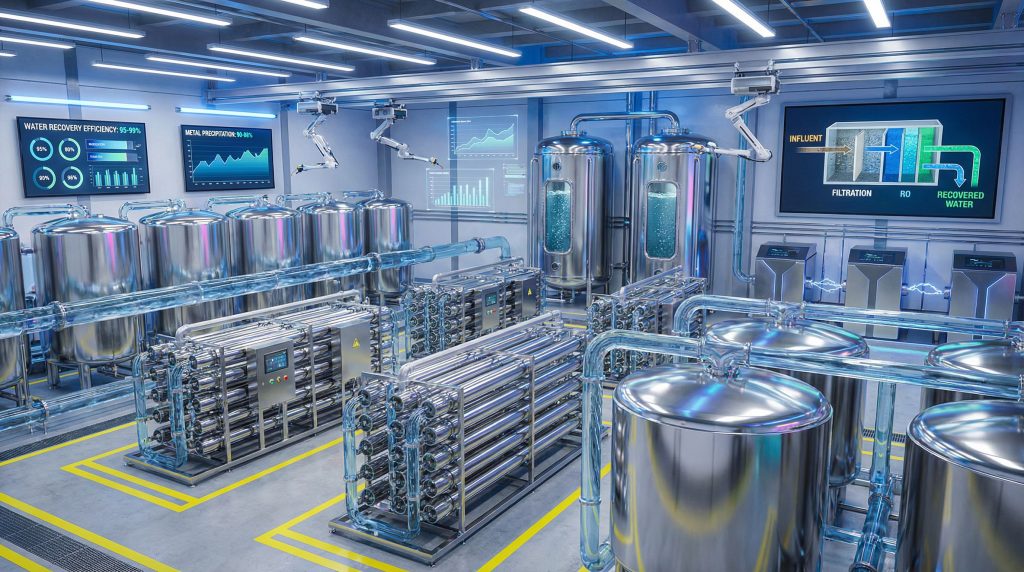
Reverse osmosis implementation in mining applications addresses high-salinity wastewater streams characteristic of many mineral processing operations. These systems operate effectively across varying total dissolved solids concentrations, though energy requirements increase substantially with salinity levels and require careful economic evaluation against alternative treatment approaches.
Ultrafiltration technologies focus on suspended solids removal, targeting particle size ranges between 0.01 and 0.1 microns to capture fine mineral particles, processing chemicals, and organic contaminants. System performance depends heavily on membrane material selection, operating pressure optimisation, and cleaning protocol effectiveness.
Consequently, nanofiltration systems provide selective ion separation capabilities, particularly valuable for applications requiring specific metal recovery or removal. These systems operate at lower pressures than reverse osmosis while achieving targeted separation of monovalent and divalent ions.
Mechanical Separation Processes
Advanced sedimentation tank design incorporates computational fluid dynamics modelling to optimise particle settling characteristics and minimise short-circuiting flow patterns. Modern installations utilise clarifier technology with automated sludge removal systems and real-time turbidity monitoring.
Hydrocyclone optimisation focuses on particle size classification efficiency, with design parameters including feed pressure control systems, apex diameter optimisation, cyclone specifications, and underflow density monitoring.
Filter press technology for dewatering operations achieves solid-liquid separation through pressure filtration, with modern systems incorporating automated plate shifting, washing cycles, and cake discharge mechanisms to minimise manual intervention requirements.
Chemical Treatment Methodologies
Precipitation and Coagulation Systems
pH adjustment protocols for heavy metal removal require precise control systems capable of managing rapid pH swings characteristic of mining wastewater streams. Optimal pH ranges vary significantly across different metals, with copper precipitation typically requiring pH 8.5-9.5, while nickel removal optimises around pH 10.5-11.0.
Moreover, flocculant selection criteria depend on specific ore types and processing chemicals present in wastewater streams. Anionic, cationic, and nonionic polymers demonstrate different effectiveness profiles based on particle charge characteristics and desired settling rates.
Chemical dosing optimisation requires continuous monitoring of wastewater composition and automated adjustment systems to maintain treatment efficiency while minimising chemical consumption costs. Advanced wastewater treatment solutions have revolutionised how mining operations approach chemical treatment protocols.
Ion Exchange and Adsorption
Resin selection for metal recovery applications focuses on selectivity coefficients, capacity, and regeneration characteristics. Specialised resins demonstrate enhanced performance for specific applications such as copper recovery from acid mine drainage or rare earth element concentration from processing streams.
Activated carbon systems address organic contaminant removal, including flotation reagents, extractants, and processing aids that interfere with downstream recovery processes. Carbon selection criteria include surface area, pore size distribution, and resistance to chemical degradation.
Which Advanced Technologies Are Transforming Recovery Efficiency?
Electrochemical Treatment Systems
Electrocoagulation Applications
Current density optimisation varies significantly across different wastewater compositions, with typical operating ranges between 40-200 amperes per square meter. Energy consumption analysis demonstrates that electrocoagulation can achieve comparable metal removal efficiency to chemical precipitation while eliminating ongoing chemical costs.
Electrode material selection impacts both treatment effectiveness and system longevity. Aluminium electrodes provide effective coagulant generation for most applications, while iron electrodes demonstrate superior performance for specific contaminants including arsenic and chromium.
In addition, advanced electrochemical systems enable simultaneous valorisation and remediation of complex, acidic waste streams. Raw wastewater can be processed directly through systems that recover materials with significantly reduced water input compared to conventional methods.
Electrodialysis for Selective Ion Recovery
Membrane configuration for critical mineral concentration utilises selective ion exchange membranes to separate and concentrate target metals while producing treated water suitable for reuse. Power requirements typically range between 2-8 kWh per cubic metre depending on target ion concentrations and separation requirements.
Operational cost considerations include electricity consumption, membrane replacement intervals, and system maintenance requirements. Integration with existing processing circuits requires careful evaluation of solution compatibility and downstream processing impacts.
Biological Treatment Integration
Constructed Wetland Systems
Design parameters for mining-specific contaminants incorporate substrate selection, hydraulic loading rates, and detention time optimisation. Horizontal subsurface flow wetlands typically achieve effective metal removal with detention times between 3-7 days, depending on target metal concentrations and removal requirements.
Plant species selection emphasises metal tolerance and uptake capacity. Research demonstrates that specific plant varieties can accumulate substantial metal concentrations, including Typha latifolia for copper and zinc uptake, Phragmites australis for multiple metal removal, and Lemna minor for rapid nutrient and metal uptake.
However, long-term performance monitoring protocols track both treatment efficiency and ecosystem health indicators to ensure sustainable operation and identify maintenance requirements.
Bioreactor Technology
Microbial community optimisation for sulfate reduction utilises specialised bacteria strains capable of thriving in acidic conditions characteristic of mining wastewater. Sulfate-reducing bacteria convert sulfate to sulfide, enabling metal precipitation as insoluble metal sulfides.
Biofilm reactor design for continuous operation incorporates controlled oxygen levels, temperature regulation, and nutrient supplementation systems. Typical operating parameters include pH ranges between 6.5-7.5 and temperatures between 25-35°C for optimal microbial activity.
How Do Integrated Recovery Systems Maximise Resource Extraction?
Multi-Stage Treatment Trains
| Treatment Stage | Primary Function | Recovery Efficiency | Energy Consumption | Typical Applications |
|---|---|---|---|---|
| Pre-treatment | Solids removal | 85-95% water | 0.5-1.5 kWh/m³ | Copper, iron ore operations |
| Chemical treatment | Metal precipitation | 90-98% metals | 1.0-2.5 kWh/m³ | Gold, silver processing |
| Membrane filtration | Final polishing | 95-99% water | 2.0-6.0 kWh/m³ | Lithium, rare earth extraction |
| Biological polishing | Organic removal | 80-95% organics | 0.3-0.8 kWh/m³ | Coal, uranium mining |
Process Optimisation Strategies
Real-time monitoring systems incorporate multiple sensor technologies including pH, conductivity, turbidity, and ion-selective electrodes to provide continuous water quality assessment. Advanced systems utilise machine learning algorithms to predict optimal operating parameters and identify potential process upsets before they impact treatment efficiency.
Automated chemical dosing systems respond to influent quality variations within 30-60 second response times, maintaining optimal treatment conditions while minimising chemical waste and cost fluctuations. Furthermore, data-driven mining operations increasingly rely on sophisticated monitoring systems to optimise wastewater recovery technology mining processes.
Predictive maintenance protocols utilise vibration analysis, thermal monitoring, and performance trending to identify equipment maintenance requirements before failures occur, reducing downtime and extending equipment service life.
Resource Recovery Optimisation
By-product mineral extraction from treatment sludges represents significant value recovery opportunities. Many mining operations report that valuable minerals are available for recovery in existing wastewater streams with minimal additional processing. High-purity, market-ready critical minerals that previously accumulated in waste streams can offset remediation costs and establish new revenue sources.
Salt recovery for industrial applications includes sodium sulfate, calcium chloride, and magnesium compounds that command market prices ranging from $200-800 per tonne depending on purity and local market conditions.
In addition, water quality upgrading for process reuse achieves treatment standards suitable for direct reintegration into mineral processing circuits, reducing freshwater consumption and associated costs.
What Are the Economic Drivers for Technology Implementation?
Capital Investment Analysis
Technology Cost Comparison
Initial capital requirements vary substantially across different treatment approaches. Electrochemical systems typically require $50,000-150,000 per thousand gallons per day of treatment capacity, while membrane systems range from $75,000-250,000 for comparable capacity depending on water quality and target specifications.
Operational expenditure analysis over equipment lifecycle includes energy consumption, chemical costs, membrane replacement, and labour requirements. Integrated treatment systems demonstrate operational costs between $2.50-8.00 per cubic metre treated, with significant variation based on wastewater complexity and recovery targets.
Return on investment calculations incorporating resource recovery demonstrate payback periods typically ranging from 3-7 years for comprehensive wastewater recovery systems, with shorter periods achieved when valuable metal recovery offsets treatment costs.
Financing Mechanisms
Technology leasing options enable smaller operations to implement advanced treatment systems without substantial capital investment. Equipment-as-a-Service models include maintenance, monitoring, and performance guarantees within monthly operating fees.
Government incentive programmes for water conservation provide tax credits, grants, and low-interest financing for qualifying wastewater recovery projects. Many jurisdictions offer 20-40% capital cost offsets for technologies demonstrating significant environmental benefits.
Operational Benefits Quantification
Water Cost Savings
Reduced freshwater procurement expenses vary significantly by location and availability. Mining operations in water-stressed regions report freshwater costs ranging from $0.50-5.00 per cubic metre, making wastewater recovery economically attractive even with moderate treatment costs.
Lower wastewater disposal fees result from reduced discharge volumes and improved discharge quality. Disposal cost reductions of 60-85% are commonly achieved through effective wastewater recovery implementation.
Revenue Generation Opportunities
Market value of recovered critical minerals depends on purity, local market conditions, and transportation costs. Copper recovery from wastewater streams typically yields $6,000-9,000 per tonne of recovered copper, while rare earth element recovery can generate substantially higher returns depending on specific elements and market conditions.
By-product sales from treatment processes include gypsum, magnetite, and various metal hydroxides that command industrial market prices. Gypsum sales typically generate $15-35 per tonne, while iron hydroxide products achieve $50-150 per tonne in industrial markets.
How Do Site-Specific Factors Influence Technology Selection?
Geological and Operational Considerations
Ore Composition Impact
Sulfide mineral processing generates acid mine drainage requiring specialised treatment approaches including limestone neutralisation, sulfate-reducing bioreactors, and metal precipitation systems. Pyrite oxidation produces sulfuric acid that maintains low pH conditions and high dissolved metal concentrations.
Oxide mineral processing typically produces alkaline wastewater streams with different treatment requirements. pH adjustment often focuses on metal precipitation rather than acid neutralisation, with different optimal operating parameters.
Heavy metal concentration profiles vary significantly across ore types. Copper porphyry operations typically generate wastewater with 200-2,000 mg/L copper, while nickel laterite processing produces streams with 50-500 mg/L nickel and elevated iron concentrations.
Climate and Geographic Factors
Water availability in arid mining regions creates additional economic drivers for wastewater recovery implementation. Operations in Australia's Pilbara region and Chile's Atacama Desert demonstrate particular economic benefits from comprehensive water recovery due to limited freshwater availability.
Seasonal variation in treatment requirements results from precipitation patterns, temperature fluctuations, and operational schedule changes. Evaporation losses in arid climates can concentrate contaminants by 300-500% during dry seasons.
Remote location infrastructure challenges include power availability, transportation costs for chemicals and equipment, and skilled labour availability for system operation and maintenance. Consequently, sustainable mining transformation initiatives increasingly incorporate localised treatment solutions.
Scalability and Modularity
Modular System Design
Containerised treatment units enable rapid deployment and system scaling based on production requirements. Standard 40-foot container systems typically provide 50-200 cubic metres per day treatment capacity with integrated monitoring and control systems.
Scalable capacity accommodates production changes through modular addition or removal of treatment units. Plug-and-play system designs minimise installation time and infrastructure requirements.
Mobile systems for exploration and development phases provide wastewater treatment capability during temporary operations. Trailer-mounted systems offer 10-100 cubic metres per day capacity with self-contained power and chemical supply systems.
Integration with Existing Infrastructure
Retrofitting considerations for established operations include available space, utility connections, and process circuit compatibility. Gravity flow integration minimises pumping requirements and associated energy costs when site topography permits.
Process circuit modification requirements vary based on existing infrastructure and target recovery objectives. Bypass configurations enable continued operation during system installation and commissioning.
The next major ASX story will hit our subscribers first
What Emerging Technologies Are Shaping the Future of Mining Water Recovery?
Advanced Material Applications
Nanomaterial Integration
Graphene-based filtration membranes demonstrate enhanced permeability and selectivity compared to conventional polymer membranes. Research indicates 2-3 times higher water flux rates with comparable rejection characteristics for target contaminants.
Nanoparticle catalysts enhance treatment processes through increased surface area and catalytic activity. Titanium dioxide nanoparticles demonstrate effective photocatalytic degradation of organic contaminants in mining wastewater under solar illumination.
Smart materials for selective metal recovery incorporate molecular recognition principles to achieve highly selective separation of target metals from complex wastewater matrices.
Biomimetic Technologies
Nature-inspired separation processes replicate biological mechanisms for enhanced treatment efficiency. Aquaporin-based membranes utilise biological water channel proteins to achieve exceptional water permeability with near-perfect salt rejection.
Enzyme-based treatment systems employ specialised proteins to catalyse specific chemical reactions including metal reduction, organic compound degradation, and complex formation reactions.
Digital Integration and Automation
Artificial Intelligence Applications
Machine learning algorithms for process optimisation analyse real-time operational data to predict optimal operating parameters and identify process improvement opportunities. Neural network models demonstrate 15-25% improvement in treatment efficiency through predictive parameter adjustment.
Predictive analytics for equipment maintenance utilise sensor data patterns to forecast equipment failures and optimise maintenance scheduling. Condition-based monitoring reduces maintenance costs by 20-40% compared to time-based approaches.
Internet of Things (IoT) Implementation
Sensor networks for real-time monitoring incorporate wireless communication protocols to transmit data from remote monitoring points throughout treatment systems. LoRaWAN technology enables long-range, low-power data transmission suitable for mining environments.
Remote operation capabilities allow centralised monitoring and control of multiple treatment systems across different mine sites. Cloud-based platforms enable 24/7 monitoring with automated alert systems for operational anomalies.
How Can Mining Companies Implement Effective Water Recovery Strategies?
Implementation Planning Framework
Technology Assessment Protocol
Site-specific feasibility studies evaluate wastewater characteristics, treatment objectives, regulatory requirements, and economic constraints to identify optimal technology combinations. Bench-scale testing typically requires 3-6 months for comprehensive evaluation of treatment alternatives.
Pilot testing methodologies incorporate continuous operation periods of typically 6-18 months to evaluate long-term performance, operational reliability, and maintenance requirements under actual operating conditions. However, mining water treatment technologies continue evolving rapidly, requiring regular reassessment of available options.
Performance validation criteria establish specific targets for water recovery efficiency (typically 85-95%), metal recovery rates (typically 90-98% for target metals), operating cost targets (typically $3-7 per cubic metre), and system availability (typically 95-98% uptime).
Risk Management Strategies
Technology redundancy planning incorporates backup systems for critical treatment components to ensure continued operation during maintenance or equipment failures. N+1 redundancy provides spare capacity equivalent to the largest single system component.
Emergency response protocols address potential system upsets, power failures, and chemical spills. Automated shutdown systems protect equipment and prevent environmental releases during emergency conditions.
Furthermore, mine reclamation innovation increasingly integrates wastewater recovery technology mining solutions to support long-term environmental restoration objectives.
Performance Monitoring and Optimisation
Key Performance Indicators
Water recovery efficiency metrics track the percentage of input wastewater converted to reusable water quality. Real-time monitoring systems provide continuous efficiency calculations and trend analysis.
Resource extraction rates measure the quantity and quality of recovered minerals relative to input concentrations. Mass balance calculations verify system performance and identify optimisation opportunities.
Environmental compliance tracking ensures continued adherence to discharge permits and regulatory requirements through automated monitoring and reporting systems.
Continuous Improvement Processes
Regular technology updates incorporate advances in materials, automation, and process optimisation to maintain competitive performance. Annual technology reviews evaluate emerging alternatives and potential upgrades.
Performance benchmarking compares operational results against industry standards and similar installations to identify improvement opportunities. Quarterly performance assessments track trends and establish improvement targets.
Stakeholder Engagement
Community Relations
Environmental impact communication involves regular reporting to local communities regarding water quality improvements and environmental benefits achieved through wastewater recovery implementation.
Local employment opportunities created through technology implementation include system operation, maintenance, and monitoring positions that provide long-term economic benefits to mining communities.
Water resource sharing agreements enable collaboration between mining operations and local communities to maximise water resource utilisation while meeting all stakeholder needs.
Regulatory Compliance
Permit application processes for wastewater recovery systems require comprehensive environmental impact assessments and technology performance demonstrations. Regulatory approval timelines typically range from 6-24 months depending on jurisdiction complexity.
Monitoring and reporting requirements establish ongoing obligations for performance documentation and regulatory compliance verification. Monthly reporting typically includes treatment volumes, efficiency metrics, and discharge quality data.
Technology approval procedures vary across jurisdictions but generally require pilot testing results, environmental impact assessments, and long-term performance guarantees before commercial implementation approval.
This analysis is based on current industry practices and emerging technology developments. Performance projections and cost estimates may vary significantly based on site-specific conditions, regulatory requirements, and market factors. Readers should conduct comprehensive feasibility studies and consult with qualified engineering professionals before making technology investment decisions.
Ready to Capitalise on Mining Water Technology Investments?
Discovery Alert's proprietary Discovery IQ model delivers real-time alerts on significant ASX mineral discoveries, instantly empowering subscribers to identify actionable opportunities ahead of the broader market in innovative mining technologies like wastewater recovery systems. Begin your 30-day free trial today and secure your market-leading advantage in the evolving sustainable mining sector.