
May 22, 2026
The Quiet Revolution in Mining Services: Why Maintenance Contracts Are Rewriting the Rules
There is a structural shift underway in how the world's largest mining companies allocate capital, and it is happening largely out of view. Across Australia's iron ore heartland and beyond, major operators are channelling increasing proportions of their spending not into new mines, but into keeping existing ones running at peak efficiency. Sustaining capital expenditure, once considered the unglamorous sibling of headline growth projects, has become one of the most strategically significant budget lines in global mining finance.
For engineering services firms with the scale, relationships, and technical depth to service this demand, the rewards are substantial and increasingly predictable. The WA resources sector is at the centre of this transformation, drawing sustained investment from both operators and their preferred contractors.
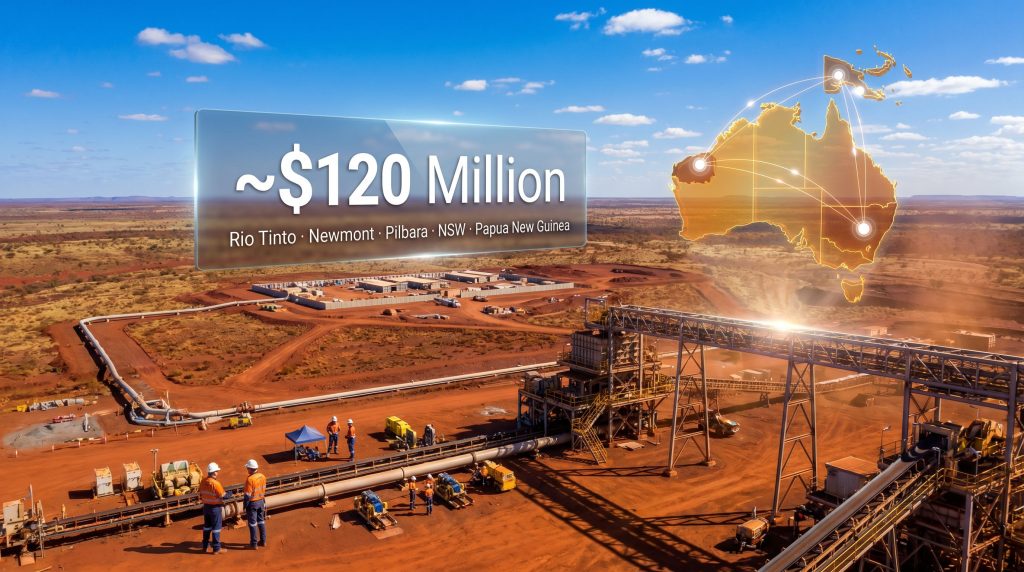
It is within this context that Monadelphous Group's latest contract package, totalling approximately $120 million across Western Australia's Pilbara region and New South Wales, deserves examination not merely as a transactional news item, but as a window into the deeper mechanics of how Australia's mining services sector is evolving.
When big ASX news breaks, our subscribers know first
Monadelphous and the Architecture of Long-Term Client Relationships
Monadelphous Group is one of Australia's most established engineering and construction services companies, operating across three core service pillars: construction services, maintenance and industrial services, and multidisciplinary project delivery. Listed on the ASX, the Perth-headquartered firm has built its reputation across decades of involvement in the Pilbara, where its workforce has become deeply embedded within the operational rhythms of the region's iron ore majors.
The company's client roster reads like a who's who of Australian resources: Rio Tinto, BHP, Fortescue, and internationally, Newmont. These are not casual commercial relationships. In the mining services world, proximity to Tier 1 operators over extended periods generates something that cannot be easily replicated by competitors: institutional familiarity. Monadelphous personnel understand the specific engineering tolerances, safety cultures, logistical constraints, and operational priorities of each client site in ways that take years to develop.
This accumulated knowledge base functions as a genuine competitive moat. Panel-style maintenance contracts, which form a growing share of Monadelphous' revenue mix, are structured specifically to leverage this depth of site knowledge. Rather than competitive re-tendering on every job, panel arrangements provide approved contractors with ongoing work within a pre-negotiated framework, reducing transaction costs for both parties while rewarding incumbents who deliver consistent performance.
Breaking Down the $120 Million Contract Package
The Monadelphous $120 million contracts in Pilbara and New South Wales announced in May 2026 encompass multiple discrete work streams rather than a single project award, a distinction that matters considerably for understanding their strategic significance.
Rio Tinto Work Streams in the Pilbara
Two specific contracts with Rio Tinto anchor the Pilbara component of the package:
-
Western Range Project: Monadelphous has been awarded shutdown and miscellaneous works at Rio Tinto's Western Range iron ore development. Shutdown services are a highly specialised segment of mining maintenance, requiring precise coordination to minimise production downtime during scheduled maintenance windows. The Western Range Project is part of Rio Tinto's broader strategy to sustain and expand Pilbara iron ore output, and the involvement of an experienced shutdown contractor is integral to that objective.
-
Hope Downs 4 Potable Water Distribution System: Monadelphous has been contracted to construct a potable water distribution system at the Hope Downs 4 operation. This type of infrastructure work, while less visible than production-facing engineering, is a critical component of remote site functionality. Hope Downs 4 sits deep in the Pilbara, and maintaining reliable water supply infrastructure for large workforces in extreme heat is both a safety imperative and a regulatory requirement under Western Australian occupational health standards.
New South Wales and Eastern Seaboard Expansion
The NSW component of the package reflects Monadelphous' deliberate effort to reduce geographic revenue concentration. Panel-style maintenance contracts in New South Wales add a meaningful eastern seaboard footprint to what has historically been a heavily WA-weighted revenue profile. This matters not just for financial diversification, but for workforce planning, as it allows the company to allocate skilled tradespeople across a broader operational geography rather than competing entirely within the notoriously tight Pilbara labour market. Furthermore, for more detail on infrastructure developments in the region, the Pilbara haul road update offers useful context on the scale of activity underway.
Papua New Guinea: International Exposure Through Newmont
The package also includes long-term maintenance services work with Newmont in Papua New Guinea. PNG operations carry a different risk profile to domestic Australian contracts, with considerations including sovereign risk, logistical complexity, currency exposure, and community relations requirements. However, for an experienced services firm, the PNG market also offers less competitive pressure than the Pilbara corridor, where multiple large contractors are actively competing for the same client base. Long-term maintenance arrangements with a counterparty of Newmont's scale provide both revenue stability and international portfolio credentials.
Contract Overview at a Glance
| Contract | Client | Location | Work Type | Package Component |
|---|---|---|---|---|
| Western Range Project | Rio Tinto | Pilbara, WA | Shutdown & Miscellaneous Works | Part of ~$120M |
| Hope Downs 4 Infrastructure | Rio Tinto | Pilbara, WA | Potable Water System Construction | Part of ~$120M |
| Panel Maintenance Services | Various | New South Wales | Ongoing Maintenance | Part of ~$120M |
| Long-Term Maintenance | Newmont | Papua New Guinea | Sustaining Capital Services | Part of ~$120M |
The Shutdown Services Market: A Specialist Discipline Within Mining Maintenance
Shutdown services represent one of the most technically demanding and commercially valuable niches within the broader mining services sector. A shutdown, or planned maintenance outage, requires a mining operator to temporarily halt production across all or part of a processing facility in order to conduct inspections, repairs, and component replacements that cannot be safely performed during live operation.
The economics of shutdowns create intense pressure for efficiency. Every hour that a major iron ore processing facility sits idle represents lost revenue measured in the tens of thousands of dollars at minimum. Contractors responsible for shutdown execution are therefore held to extremely tight timeframes, with penalties for overruns that can be significant. This commercial pressure, combined with the safety-critical nature of working on heavy industrial equipment, means clients are highly reluctant to experiment with unfamiliar contractors for shutdown work.
This dynamic explains a pattern that recurs consistently across the Pilbara: the same contractors tend to win shutdown work repeatedly at the same facilities, not simply because of commercial relationships, but because site-specific knowledge genuinely reduces execution risk and shortens turnaround times.
Monadelphous' repeated selection for shutdown services at Rio Tinto operations reflects this dynamic directly. The company has developed specialised capabilities including rope access, confined space operations, and heavy lift coordination that are prerequisites for complex shutdown execution in iron ore processing environments.
Sustaining Capex Versus Growth Capex: Understanding the Shift
A meaningful way to contextualise the Monadelphous $120 million contracts in Pilbara and New South Wales is through the lens of how iron ore majors are currently allocating capital. The distinction between sustaining capital expenditure and growth capital expenditure is central to mining finance:
-
Sustaining capex covers spending required to maintain existing production levels, including equipment replacement, infrastructure maintenance, tailings management, and shutdown services. It does not expand the asset base but protects it from degradation.
-
Growth capex funds new mines, expansions, and capacity additions that increase production output.
In the current environment, Rio Tinto and other Pilbara iron ore majors have been managing their growth capex with greater discipline following the commodity price cycles of previous decades. However, sustaining capex has grown, driven by the ageing of infrastructure at long-running operations like Hope Downs 4, which has been in production since 2013. Water systems, power distribution networks, and processing infrastructure all reach replacement or upgrade cycles on predictable schedules, generating a relatively foreseeable pipeline of work for contractors like Monadelphous.
This is one reason why recurring contract announcements from Monadelphous carry weight beyond their nominal dollar values. They signal that Rio Tinto and other majors are committing to sustaining their existing asset base, which in turn sustains the revenue base of their preferred contractors. This pattern is closely tied to broader mining industry consolidation trends reshaping how operators manage long-term asset portfolios.
The next major ASX story will hit our subscribers first
BESS and Energy Transition: A New Revenue Frontier
One of the more strategically interesting dimensions of Monadelphous' current positioning is its growing involvement in Battery Energy Storage System (BESS) construction and related energy transition infrastructure. Mining Magazine's reporting on this contract package specifically flagged additional BESS work as part of Monadelphous' expanding service scope.
This is not a peripheral activity. As Pilbara mining operators accelerate their transition away from diesel-dependent power generation, the construction and integration of large-scale battery storage systems at remote mine sites has become a substantial engineering challenge. BESS installations at mining operations differ fundamentally from grid-connected utility projects. In addition, the broader shift toward renewable energy in mining is creating structural demand for contractors with proven capability in this space.
BESS installations at mining sites must meet several demanding requirements:
-
They must integrate with existing diesel or gas generation infrastructure during the transition period.
-
They operate in extreme ambient temperatures that affect battery performance and longevity.
-
They require specialised commissioning expertise that is distinct from standard electrical installation.
-
Safety case development for large lithium-ion installations in remote locations involves complex regulatory engagement.
Monadelphous' ability to cross-sell BESS construction capability to existing mining clients represents a natural revenue extension of its core infrastructure services business. Companies like Fortescue have publicly committed to ambitious decarbonisation targets, creating a structural pipeline of energy transition construction work that sits directly within the capability envelope of an experienced site services contractor. The mining electrification trend consequently positions contractors such as Monadelphous to benefit considerably over the coming decade.
Recent Contract Comparison: Building a Picture of Order Book Momentum
| Announcement Period | Approximate Value | Primary Client | Scope |
|---|---|---|---|
| May 2026 | ~$120 million | Rio Tinto, Newmont, Others | Shutdown, Infrastructure, Maintenance, BESS |
| Prior Period | ~A$175 million | BHP | Car dumper works, Finucane Island |
| Ongoing | Various | Fortescue, Others | Energy transition, BESS construction |
The sequence of these announcements illustrates a pattern of consistent order book replenishment across multiple Tier 1 clients. For investors and analysts monitoring Monadelphous' forward revenue visibility, the cadence and scale of these contract wins provide meaningful signals about the company's trajectory heading into FY2026 and beyond.
Labour Market Dynamics and the Pilbara Premium
One aspect of mining services contracting that rarely receives sufficient attention in financial analysis is the labour dimension. Western Australia's resources sector operates within one of the tightest skilled labour markets in the world. Fly-in-fly-out (FIFO) workforces, high wage rates driven by competition between large operators and contractors, and the physical remoteness of Pilbara operations all create significant workforce cost pressures.
For established contractors like Monadelphous, a pre-existing Pilbara workforce is itself a competitive asset. Recruiting, training, and inducting workers for individual project bids is expensive and time-consuming. Contractors who maintain standing workforces with current site access, Rio Tinto or BHP inductions, and existing familiarity with specific operations can mobilise faster and at lower marginal cost than new entrants attempting to assemble a workforce from scratch.
This creates a self-reinforcing dynamic: winning contracts allows Monadelphous to retain skilled workers, who in turn enable the company to win further contracts. Losing a major client relationship, by contrast, would create workforce attrition that is difficult and costly to reverse.
Investor Perspective: What These Contracts Signal Beyond Revenue
For investors tracking ASX-listed mining services companies, contract announcements of the type made by Monadelphous carry both direct and indirect informational content. According to the ASX announcement, the direct implication is straightforward: approximately $120 million in additional revenue has been added to the forward order book, improving earnings visibility for coming reporting periods.
The indirect signals are, however, more nuanced:
-
Repeated awards from Rio Tinto indicate that Monadelphous remains on preferred supplier panels, which typically require ongoing performance reviews and re-qualification.
-
Geographic diversification into NSW and PNG reduces the earnings volatility risk associated with over-concentration in any single region or commodity.
-
Expansion into BESS and energy infrastructure signals that management is actively positioning the business to capture revenue streams that will grow as the energy transition accelerates.
-
Multi-contract packages involving both construction and maintenance work suggest a healthy balance between project-based and annuity-style income.
Important disclaimer: Nothing in this article constitutes financial advice. Investors should conduct their own due diligence and consult a licensed financial adviser before making any investment decisions regarding ASX-listed securities.
Frequently Asked Questions
What are the Monadelphous $120 million contracts in Pilbara and New South Wales?
Monadelphous Group announced approximately $120 million in new contracts and contract extensions across Western Australia's Pilbara region, New South Wales, and Papua New Guinea. The package includes shutdown and miscellaneous works at Rio Tinto's Western Range Project, construction of a potable water distribution system at Hope Downs 4, panel maintenance services in New South Wales, and long-term maintenance work with Newmont in Papua New Guinea, as well as additional BESS-related construction work.
What is the Western Range Project and what is Monadelphous doing there?
Western Range is part of Rio Tinto's iron ore portfolio in the Pilbara. Monadelphous has been contracted to provide shutdown and miscellaneous works at the operation, covering the specialised planned maintenance activities required to sustain processing infrastructure during scheduled production outages.
Why does Monadelphous continue winning contracts with Rio Tinto?
The relationship between Monadelphous and Rio Tinto reflects years of accumulated site knowledge, workforce familiarity, and demonstrated delivery performance. Panel contract structures favour incumbents who have already earned site access approvals and demonstrated competence, making it genuinely difficult for competitors to displace established contractors without a clear performance gap.
Is Monadelphous expanding beyond Western Australia?
Active expansion is underway. The NSW panel maintenance work and PNG Newmont contract both represent deliberate moves to reduce geographic concentration risk and capture revenue streams beyond the Pilbara corridor.
What is BESS work and why is Monadelphous involved?
Battery Energy Storage Systems are large-scale lithium-ion installations used to store electricity generated from renewable sources or to buffer diesel generation at remote sites. Mining operators across the Pilbara are investing in BESS as part of decarbonisation commitments, and Monadelphous has developed capability in BESS construction and integration that extends naturally from its existing electrical and infrastructure services offering.
The Broader Picture: What This Package Reveals About Australian Mining Services
The Monadelphous $120 million contracts in Pilbara and New South Wales, taken individually, represent a solid but not exceptional quarter of contract wins for a company of Monadelphous' scale. Taken in sequence alongside the prior A$175 million BHP car dumper award and growing BESS activity, they reveal something more significant: a business that has successfully navigated the transition from project-dependent construction revenues toward a more balanced model incorporating recurring maintenance income, energy transition infrastructure, and international diversification.
This evolution mirrors a broader trend across the global mining services sector, where the most durable businesses are those that have secured annuity-like revenue streams with major mining operators while simultaneously positioning themselves to benefit from the structural changes reshaping how mines are powered and maintained. For Monadelphous, the Pilbara remains the engine room, but the machine is increasingly drawing fuel from a wider range of sources.
Want To Stay Ahead Of The Next Major ASX Mining Discovery?
Discovery Alert's proprietary Discovery IQ model delivers real-time alerts on significant ASX mineral discoveries, instantly cutting through complex data to surface actionable opportunities before the broader market reacts — start your 14-day free trial today and see why historic discoveries have generated extraordinary returns by exploring Discovery Alert's dedicated discoveries page.