June 22, 2026

How Did Monetary Policy Shifts Drive Gold's 2025 Bull Run?
The monetary policy landscape of 2025 created unprecedented conditions for gold's 2025 surge explained, fundamentally altering the risk-reward calculus for precious metals investors. Central bank policy decisions across major economies generated a confluence of factors that transformed gold from a portfolio diversifier into a primary wealth preservation vehicle.
Federal Reserve Rate Trajectory and Dollar Debasement Concerns
Real interest rate dynamics emerged as the primary transmission mechanism driving institutional capital into gold throughout 2025. The Federal Reserve's policy stance created a negative real yield environment where inflation-adjusted returns on traditional fixed-income instruments fell below zero. This mathematical relationship made non-yielding assets like gold comparatively attractive, as investors could preserve purchasing power without sacrificing returns to negative real yields.
Key Performance Metrics:
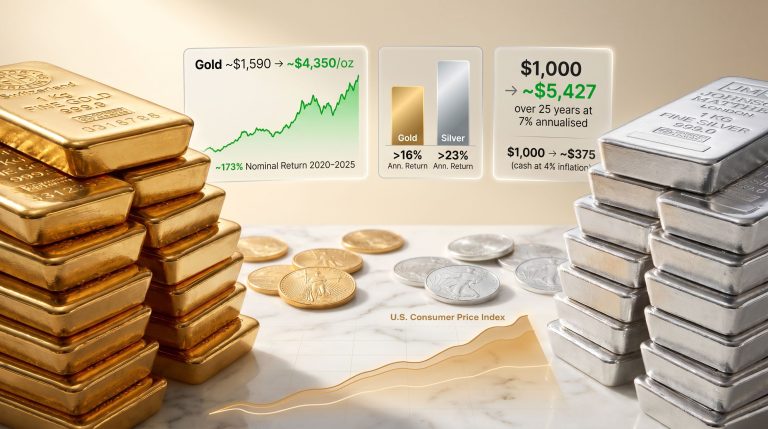
- Gold delivered 60% returns in 2025, significantly outperforming equity markets at approximately 30% returns
- The precious metal achieved more than 50 all-time high prices during the year
- Current trading levels reached $4,220.79 per ounce as of December 5, 2025
Dollar weakness amplified gold's appeal across international markets, creating currency-adjusted gains for foreign investors. The Dollar Index decline throughout 2025 reduced the opportunity cost of holding gold for non-US investors, while domestic investors sought hedge positions against potential currency debasement concerns. This dual dynamic supported sustained demand from both institutional and retail investment channels.
The credit market transmission effects of Fed policy created spillover demand for alternative assets. As traditional bond portfolios struggled with duration risk and inflation erosion, institutional asset allocators increased alternative asset weightings. Gold benefited from this structural reallocation as pension funds and insurance companies sought inflation hedging characteristics unavailable in conventional fixed-income markets.
Central Bank Digital Currency Development Impact
Central bank digital currency research programs indirectly influenced sovereign gold accumulation strategies throughout 2025. As monetary authorities explored digital payment systems, questions emerged regarding the long-term stability and independence of traditional reserve assets. This uncertainty drove central banks toward increased physical gold holdings as a neutral reserve asset independent of digital infrastructure vulnerabilities.
Exchange-Traded Fund Capital Flows:
- Global gold ETFs experienced $77 billion in inflows during 2025
- More than 700 tonnes were added to total ETF holdings
- Current holding levels remain below historical saturation points from previous bull cycles
Sovereign wealth funds demonstrated increased diversification mandates away from traditional dollar-denominated reserves. The development of alternative cross-border payment systems created demand for settlement assets outside established banking networks. Gold's physical characteristics and historical monetary role positioned it as an optimal reserve diversification tool for central banks concerned about payment system fragmentation.
The intersection of CBDC development and geopolitical tensions created a "perfect storm" for gold demand. Central banks simultaneously researched digital currencies while accumulating physical precious metals, reflecting institutional uncertainty about future monetary system architecture. This hedging behavior supported sustained official sector demand throughout 2025.
When big ASX news breaks, our subscribers know first
What Structural Economic Forces Created Gold's Perfect Storm?
The convergence of multiple structural economic forces created ideal conditions for gold market performance during 2025. These weren't temporary market dislocations but fundamental shifts in global economic architecture that supported sustained precious metals demand across diverse investor categories.
Global Trade Fragmentation and Currency Instability
Trade fragmentation accelerated throughout 2025 as bilateral settlement mechanisms increasingly bypassed traditional dollar-based infrastructure. Regional economic blocs developed alternative payment systems, creating demand for neutral settlement assets that could facilitate trade outside established banking networks. Gold's universal acceptance and physical characteristics made it an optimal bridge asset for international commerce.
The frequency of tail risk events increased significantly, creating persistent uncertainty in global markets. Geopolitical tensions, supply chain disruptions, and regional conflicts generated sustained risk-aversion sentiment that favored safe-haven assets. Unlike previous cycles where geopolitical premiums were temporary, 2025 demonstrated elevated baseline risk levels that structurally supported gold valuations.
Currency bloc formation contributed to gold demand as regional monetary authorities sought reserve assets independent of any single national currency. The emergence of trade settlement in alternative currencies (Chinese yuan, Russian ruble, Indian rupee) created demand for universally accepted reserve assets. Gold fulfilled this role as a monetary anchor independent of specific national economic policies.
Institutional Portfolio Rebalancing Dynamics
Institutional investors executed significant portfolio rebalancing throughout 2025 amid concerns about traditional asset class performance. Bond markets delivered disappointing returns while equity valuations reached levels that triggered "frothiness" concerns among professional investors. This created structural demand for alternative assets offering both diversification and downside protection.
Portfolio Diversification Drivers:
- Lacklustre bond returns drove alternative asset allocation
- Equity market "frothiness" concerns triggered risk management protocols
- Investment demand and central bank buying surged simultaneously
- Diverse forces supported momentum rather than single catalyst events
Pension fund allocation strategies shifted toward alternative assets as actuarial assumptions required higher return targets amid low interest rate environments. Furthermore, gold-stock dynamics became increasingly important as correlation characteristics and tail risk hedging properties satisfied regulatory requirements for portfolio diversification while providing inflation protection for long-term liabilities.
Insurance companies faced regulatory capital requirements that favoured physical precious metals over financial market exposures. Solvency regulations increasingly recognised gold's role in capital adequacy calculations, creating structural demand from insurance sector balance sheets. This regulatory support provided steady institutional buying throughout 2025.
Credit Market Stress Indicators
Credit market conditions throughout 2025 exhibited stress indicators that supported flight-to-quality dynamics favouring gold. Corporate bond spreads widened periodically during geopolitical events, while banking sector liquidity concerns created periodic demand spikes for physical assets outside the financial system.
Municipal bond market instability added another layer of credit stress, particularly in jurisdictions facing fiscal challenges. As local government financing costs increased, investors sought alternatives to traditional credit markets. Gold provided exposure outside credit risk entirely, appealing to investors concerned about systemic financial stability.
The banking sector faced intermittent liquidity pressures that elevated precious metals premiums. During periods of financial system stress, physical gold commanded higher premiums over financial gold instruments, reflecting investor preference for assets outside counterparty risk exposure.
Which Investment Flows Sustained Gold's Momentum Throughout 2025?
Investment capital flows into gold during 2025 demonstrated remarkable diversity across investor categories and geographic regions. This broad-based participation provided sustained momentum throughout the year rather than concentrated flows subject to rapid reversal.
Exchange-Traded Fund Accumulation Patterns
Exchange-traded fund accumulation represented the most visible component of institutional gold demand during 2025. The $77 billion in global ETF inflows added more than 700 tonnes to total holdings, yet these levels remained substantially below historical peaks from previous precious metals bull cycles.
ETF Market Dynamics:
- Monthly inflow patterns demonstrated consistent demand across quarters
- Institutional versus retail participation ratios favoured professional investors
- Geographic distribution showed broad international participation
- Holdings levels suggest "ample room for growth" compared to historical cycles
The sustainability of ETF demand reflected structural rather than speculative investment motivations. Unlike previous cycles driven by monetary crisis or inflation fears, 2025 flows demonstrated diversification and risk management objectives. This fundamental difference suggested greater durability of capital commitments.
Fund sponsor reporting indicated increased institutional participation relative to retail investors. Pension funds, insurance companies, and sovereign wealth funds comprised larger percentages of ETF holdings compared to previous cycles. This institutional dominance suggested longer holding periods and reduced sensitivity to short-term price volatility.
Futures Market Positioning and Speculative Interest
Futures market positioning throughout 2025 reflected balanced participation between speculative and commercial interests. Managed money positioning supported price appreciation while commercial hedging activity provided liquidity during volatile periods. This balanced market structure prevented excessive speculative bubbles while maintaining adequate liquidity.
Options market activity demonstrated increased institutional participation in volatility strategies. Portfolio managers utilised gold options for tail risk hedging rather than directional speculation. This structural demand supported option premiums while providing downside protection for equity portfolios during periods of market stress.
The COMEX delivery mechanism functioned efficiently throughout 2025 despite increased physical demand. Warehouse stocks remained adequate to support futures market convergence while enabling physical settlement for institutional investors requiring actual metal delivery.
Physical Bullion Market Dynamics
Physical bullion markets experienced supply constraints that supported premium expansion across major dealer networks. Coin and bar premiums increased throughout 2025 as retail demand competed with institutional physical allocation requirements.
Secondary Supply Constraints:
- Recycling activity remained "relatively muted" throughout 2025
- Consumer behaviour favoured holding rather than selling physical gold
- Secondary market inefficiencies limited available inventory
- Technology sector demand competed with traditional recycling channels
Vault storage capacity utilisation increased across major financial centres as institutional investors sought physical allocation outside traditional financial system counterparty risk. London, New York, Shanghai, and Dubai storage facilities reported increased utilisation rates throughout 2025.
Retail versus institutional demand segmentation created two-tiered pricing structures in physical markets. Retail investors paid higher premiums for smaller denomination products whilst institutional purchasers accessed wholesale pricing for larger quantities. This segmentation reflected different liquidity and storage requirements across investor categories.
How Do Geopolitical Risk Premiums Factor Into Gold Valuations?
Geopolitical risk premiums became structural features of gold valuations during 2025 rather than temporary event-driven spikes. The frequency and magnitude of international tensions created persistently elevated baseline risk levels that supported precious metals demand across diverse geographic regions.
Regional Conflict Impact Assessment
Regional conflicts throughout 2025 demonstrated gold's continued relevance as a crisis hedge despite technological and financial system evolution. Unlike previous decades where geopolitical events created temporary price spikes, 2025 exhibited sustained tension levels that embedded permanent risk premiums in gold valuations.
Risk Environment Characteristics:
- "Supercharged geopolitical and geo-economic environment" throughout 2025
- Tail risk event frequency increased significantly from historical norms
- Regional conflicts and trade tensions created sustained uncertainty
- Financial market volatility increased across asset classes
The correlation between geopolitical events and gold price movements strengthened during 2025 as investors recognised the limitations of traditional diversification strategies during crisis periods. Portfolio managers increased gold allocations specifically for tail risk hedging rather than return generation objectives.
Safe-haven capital flows demonstrated geographic diversification as international investors sought neutral assets independent of any specific national jurisdiction. Gold's universal acceptance and physical characteristics provided optimal crisis protection regardless of specific conflict locations or economic sanctions regimes.
Trade War and Tariff Policy Implications
Trade policy uncertainty throughout 2025 created persistent demand for assets outside traditional international commerce channels. Tariff implementations and retaliatory measures generated supply chain disruption costs that supported inflation hedging demand across commodity markets.
Currency manipulation concerns and competitive devaluation risks drove institutional investors toward neutral benchmark assets. Gold's role as an independent store of value provided protection against currency wars and trade-related monetary policy distortions.
Import duty impacts on industrial metals created relative value opportunities for precious metals investors. As base metals faced tariff-induced price distortions, gold maintained its monetary characteristics independent of industrial trade policies.
Sanctions and Financial System Fragmentation
Financial sanctions regimes accelerated the development of alternative payment systems throughout 2025. Central banks increased gold reserves as insurance against potential asset freezes or payment system exclusions. This defensive accumulation created sustained official sector demand independent of price levels.
Cross-border capital flow restrictions in multiple jurisdictions increased demand for physical assets that could be transferred outside traditional banking networks. Gold's portability and universal acceptance made it optimal for capital preservation during financial system fragmentation.
The emergence of parallel financial systems created demand for settlement assets acceptable across multiple monetary regimes. Gold's historical monetary role and political neutrality positioned it as an optimal bridge asset for international transactions outside established banking infrastructure.
What Supply-Side Constraints Amplified Gold's Price Discovery?
Supply-side constraints created significant limitations on available gold inventory throughout 2025, amplifying price discovery mechanisms and supporting sustained price appreciation despite increased investment demand.
Mining Industry Production Challenges
Mining industry production faced multiple structural constraints that limited new gold supply throughout 2025. Ore grade decline across major producing regions reduced output efficiency while environmental compliance costs increased operational expenses. Capital expenditure deferrals during previous years limited new project development, creating medium-term supply shortfalls.
Geopolitical disruptions in key producing regions added uncertainty to global supply projections. Mining operations in politically unstable areas faced intermittent shutdowns while regulatory changes in several jurisdictions increased operational complexity and costs.
Technology sector demand for gold in electronics and renewable energy applications created competition for available supply outside traditional jewellery and investment channels. This industrial demand component added baseline consumption that reduced discretionary supply availability for investment markets.
Recycling Market Inefficiencies
Secondary gold supply from recycling remained "relatively muted" throughout 2025, constraining total available inventory and supporting primary market prices. Consumer behaviour demonstrated preference for holding rather than liquidating existing gold positions, reducing typical recycling flows during price appreciation periods.
Recycling Market Dynamics:
- Consumer holding behaviour reduced typical recycling volumes
- Processing bottlenecks limited secondary supply responsiveness
- Technology sector recycling competed with traditional jewellery flows
- Geographic variations in recycling efficiency created supply imbalances
Collection and processing infrastructure inefficiencies prevented rapid recycling response to higher prices. Unlike other commodity markets where higher prices quickly incentivise increased secondary supply, gold recycling demonstrated structural lags that limited supply elasticity.
Scrap gold processing capacity constraints created bottlenecks in secondary supply channels. Refining facilities operated at capacity limits while quality control requirements slowed processing speeds, preventing rapid supply increases despite attractive price incentives.
Central Bank Sales Reduction Impact
Central bank sales activity decreased significantly throughout 2025 as monetary authorities shifted from net selling to net purchasing positions. This fundamental change in official sector behaviour removed a traditional source of gold supply whilst simultaneously adding demand pressure.
Reserve adequacy calculations increasingly favoured gold allocation as central banks recognised correlation benefits and crisis hedging characteristics. Official sector purchasing created structural demand that absorbed available supply and reduced inventory accessible to private markets.
Monetary authority coordination effects influenced global supply management as central banks avoided simultaneous large transactions that could destabilise markets. This coordination reduced supply volatility whilst supporting orderly price discovery throughout 2025.
Which Economic Scenarios Could Sustain Gold's Bull Market Into 2026?
Multiple economic scenarios present pathways for continued gold price forecast 2025 strength into 2026, each driven by different fundamental factors but sharing common themes of financial system uncertainty and monetary policy challenges.
Stagflation Risk Assessment and Portfolio Implications
Stagflation scenarios represent the most favourable conditions for continued gold outperformance into 2026. The combination of persistent inflation with economic growth deceleration creates conditions where traditional asset classes struggle whilst real assets like gold provide optimal portfolio protection.
Base Case Scenario (5-15% price increase):
- Heightened risk aversion paired with lower interest rates
- Weaker dollar conditions supporting international demand
- Continued supportive macroeconomic environment
- Sustained institutional portfolio diversification
Historical precedent from 1970s inflationary periods demonstrates gold's effectiveness during simultaneous growth and price pressures. Modern portfolio theory applications incorporating tail risk hedging suggest optimal gold allocations between 5-10% for institutional investors during stagflationary environments.
Corporate earnings pressure from persistent cost-push inflation would likely drive increased real asset allocation across institutional portfolios. Gold's characteristics as an inflation hedge with portfolio diversification benefits position it favourably during extended stagflationary periods.
Financial System Stability Concerns
Banking sector stress indicators suggest potential systemic risks that could support continued gold demand throughout 2026. Financial institution balance sheet constraints and regulatory capital requirements may create periodic liquidity pressures favouring physical asset allocation.
Deep Slowdown Scenario (15-30% price increase):
- Deeper and more synchronised global economic slowdown
- Rising geopolitical and geo-economic risk factors
- Trade tensions and unresolved regional conflicts
- Aggressive Federal Reserve rate cutting in response to weak growth
Shadow banking sector growth and cryptocurrency market volatility create potential spillover risks into traditional safe-haven assets. As alternative financial systems demonstrate instability, gold's established monetary characteristics become relatively more attractive for risk-averse capital.
Central bank stress test results and systemic risk assessments may reveal vulnerabilities that support increased gold allocation among institutional investors. Financial system fragmentation concerns could drive defensive positioning toward assets outside counterparty risk exposure.
Fiscal Policy Sustainability Questions
Government debt sustainability concerns across major economies create potential currency debasement risks that favour hard asset allocation. Debt-to-GDP trajectories in developed markets suggest potential challenges for traditional fiscal policy effectiveness, supporting alternative store of value demand.
Modern Monetary Theory implementation experiments may create unintended consequences for currency stability and inflation expectations. As monetary and fiscal policy boundaries blur, investors may seek assets independent of government policy implementation risks.
Intergenerational wealth transfer patterns increasingly favour hard assets over financial instruments. Demographic trends suggest continued structural demand for physical wealth preservation assets as baby boomer wealth transfers accelerate throughout the 2020s.
The next major ASX story will hit our subscribers first
What Downside Risks Could Challenge Gold's Continued Outperformance?
Several potential scenarios could challenge record high gold prices continuation, primarily centred on technological disruption, monetary policy normalisation, and alternative investment competition.
Technology Sector Innovation and Deflationary Pressures
Artificial intelligence productivity gains present potential deflationary pressures that could reduce inflation hedging demand for gold. Automation technologies may decrease production costs across multiple industries, creating disinflationary forces that reduce real asset allocation requirements.
Bearish Scenario (5-20% price decline):
- Stronger-than-expected US economic growth from fiscal support
- Rising inflation pressures forcing Federal Reserve rate increases
- Higher long-term yields and dollar strength
- Risk-on positioning reducing safe-haven demand
Energy transition cost reductions through technological advancement could affect commodity price structures broadly, potentially reducing industrial gold demand whilst creating alternative investment opportunities in renewable energy infrastructure.
Breakthrough innovations in materials science or electronics manufacturing might reduce industrial gold consumption, removing baseline demand that currently supports price floors during investment demand fluctuations.
Monetary Policy Normalisation Scenarios
Central bank balance sheet reduction programmes could create opportunity cost pressures for non-yielding assets like gold. As monetary authorities normalise policy from crisis-era accommodation, traditional fixed-income instruments may provide competitive returns that challenge gold allocation decisions.
Term structure normalisation could restore positive real interest rates that increase the opportunity cost of holding gold. If inflation expectations moderate whilst nominal yields increase, the mathematical relationship favouring gold investment could reverse.
International monetary system reforms might reduce gold's traditional reserve asset role. Central bank digital currency implementations or new international monetary agreements could diminish official sector gold demand that currently supports market pricing.
Alternative Investment Competition
Real estate investment trusts and infrastructure assets present potential competition for inflation hedging and portfolio diversification objectives. These alternative asset classes offer yield generation combined with real asset characteristics that may attract capital currently allocated to gold.
Cryptocurrency adoption could provide alternative store of value characteristics for younger investors, potentially reducing long-term gold demand from demographic cohorts entering peak wealth accumulation years.
Infrastructure investment opportunities from energy transition and technological advancement may offer attractive risk-adjusted returns that compete with gold's portfolio diversification benefits.
How Should Investors Position for Gold's Next Phase?
Strategic positioning for gold's continued evolution requires sophisticated risk management frameworks that account for multiple economic scenarios whilst maintaining flexibility for changing market conditions.
Portfolio Allocation Optimisation Models
Modern portfolio theory applications suggest gold allocations between 5-15% for institutional investors seeking optimal risk-adjusted returns with downside protection. Correlation analysis demonstrates gold's effectiveness as a portfolio diversifier during equity market stress periods whilst providing inflation hedging characteristics.
Implementation Considerations:
- Physical versus financial instrument exposure trade-offs
- Currency hedging decisions for international gold investments
- Tax efficiency optimisation across different investment vehicles
- Rebalancing frequency targeting 5-15% portfolio allocation
Rebalancing methodologies should consider gold's volatility patterns and correlation characteristics during different market regimes. Quarterly rebalancing generally provides optimal trade-offs between transaction costs and portfolio optimisation for institutional investors.
Volatility targeting strategies can help maintain consistent risk exposure whilst allowing for tactical allocation adjustments based on market conditions. This approach prevents excessive concentration during price appreciation whilst maintaining adequate exposure for downside protection.
Implementation Strategy Considerations
Physical gold exposure provides optimal crisis protection and inflation hedging characteristics but requires storage and insurance considerations. Financial instruments offer superior liquidity and lower transaction costs whilst maintaining exposure to gold price movements.
Currency hedging decisions depend on investor base currency and international exposure objectives. US dollar-based investors may prefer unhedged gold exposure for dollar debasement protection, whilst international investors might hedge currency risk to isolate gold price movements.
Tax efficiency varies significantly across investment vehicles and investor jurisdictions. Exchange-traded funds generally provide optimal tax treatment for taxable accounts whilst physical ownership may offer advantages for tax-deferred retirement accounts.
Risk Management Framework Development
Comprehensive risk management requires scenario analysis across multiple economic environments including stagflation, deflation, financial crisis, and normalised growth conditions. Gold allocation should provide protection across diverse scenarios whilst avoiding excessive concentration risks.
Drawdown protection mechanisms should incorporate gold's historical performance during equity market stress periods. Back-testing analysis suggests gold allocations between 10-20% provide optimal downside protection during major equity bear markets.
Liquidity management considerations vary between physical and financial gold instruments. Exchange-traded funds provide daily liquidity whilst physical gold requires specialised markets and potentially longer settlement periods during stress conditions.
The drivers of gold's remarkable 2025 performance suggest structural rather than cyclical factors supporting precious metals demand. According to analysts, this exceptional year has been characterised by a supercharged geopolitical environment that has fundamentally altered investor risk assessment. Additionally, portfolio managers have noted that gold's record breaking rally demonstrates the metal's enduring appeal during periods of economic uncertainty.
As global economic uncertainty persists and traditional asset classes face valuation concerns, gold's role as a portfolio diversifier and wealth preservation tool appears likely to continue attracting institutional and retail investor interest throughout 2026 and beyond.
Investment Disclaimer: Gold investing involves risks including price volatility, storage costs, and opportunity costs from non-yielding characteristics. Historical performance does not guarantee future results. Investors should consult qualified financial advisors and consider personal circumstances before making allocation decisions. Economic scenario forecasting involves uncertainty and actual outcomes may differ materially from projections.
Looking to Capitalise on the Next Major Mineral Discovery?
Discovery Alert's proprietary Discovery IQ model delivers instant notifications on significant ASX mineral discoveries, empowering subscribers to identify actionable opportunities ahead of the broader market. Understand why historic discoveries can generate substantial returns by exploring our dedicated discoveries page, then begin your 30-day free trial today to position yourself ahead of the market.