May 20, 2026
The Ancient Metal Driving a Modern Revolution: Inside Zambia's Copperbelt
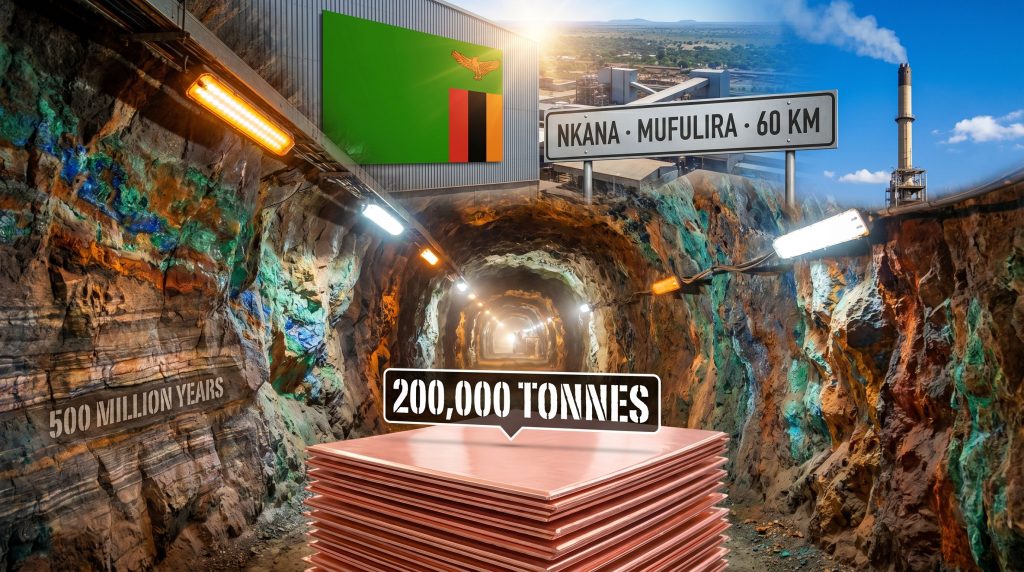
Few geological phenomena on Earth have shaped human civilisation quite like the twin forces of mineral concentration and tectonic collision. Long before the first electric vehicle rolled off a production line, before the first solar panel was wired into a grid, and centuries before industrial capitalism rewired the global economy, the ground beneath central Africa was already in the process of becoming one of the most consequential mineral corridors in human history. That process began roughly 500 million years ago, and today, its most commercially significant expression sits in Zambia's Copperbelt Province, where Mopani Copper Mines Zambia operates two of Africa's most strategically important integrated copper production complexes.
When big ASX news breaks, our subscribers know first
How Half a Billion Years of Geology Created the World's Second Largest Copper Reserve
The Copperbelt's extraordinary mineral endowment is not a coincidence of geography but a direct consequence of deep geological time. The region forms part of the Lufilian Arc, a curved belt of deformed rocks stretching across northern Zambia and into the southeastern Democratic Republic of the Congo (DRC). This arc was generated when the Kalahari and Congo cratons, two ancient and rigid blocks of continental crust, collided in a series of tectonic events between 700 and 500 million years ago during the formation of the Gondwana supercontinent.
This collision was far more than a geological spectacle. The immense pressures involved remobilised base metals that had accumulated within sedimentary basins between the two cratons. Saline fluids, or brines, transported copper, cobalt, and other metals along stratigraphic boundaries, faults, and structurally controlled traps, precipitating them in highly concentrated ore bodies. The result is a deposit style known in economic geology as a sediment-hosted stratiform copper deposit, one of the most economically productive ore deposit types on the planet.
The Copperbelt today is recognised as the world's second-largest copper reserve, estimated at roughly one-third the scale of Chile's Atacama-adjacent deposits. Beyond copper, Zambia's mineral landscape is strikingly diverse. The Northern Province alone hosts significant resources of:
- Cobalt
- Lithium
- Tin
- Graphite
- Nickel
- Manganese
- Uranium
- Various rare earth elements
This co-location of copper with battery-critical minerals makes the Zambian Copperbelt uniquely positioned relative to the global energy transition supply chain, where critical minerals demand across multiple commodity classes is already intensifying investor scrutiny of the region.
Zambia's Scale and Strategic Position
Zambia covers approximately 752,000 square kilometres, a landmass broadly comparable to France, Belgium, the Netherlands, and Switzerland combined. It is a landlocked, high-plateau nation with an average elevation of between 1,060 and 1,363 metres above sea level. These physical characteristics have historically complicated export logistics, but they have not diminished Zambia's status as Africa's largest copper producer, with the Copperbelt Province as the undisputed anchor of the country's industrial economy. For further context on production trajectories, the Zambia copper growth forecast outlines expectations through 2025 and beyond.
| Country | Global Copper Reserve Rank | Approx. Share of Global Reserves |
|---|---|---|
| Chile | 1st | ~23% |
| Zambia/DRC Copperbelt | 2nd (combined region) | ~8-10% |
| Peru | 3rd | ~9% |
| Australia | 4th | ~9% |
Note: Reserve figures are indicative estimates based on publicly available geological survey data. Readers should consult the latest USGS Mineral Commodity Summaries for current verified data.
Mopani Copper Mines Zambia: Operational Architecture and Value Chain Integration
Within this geological context, Mopani Copper Mines Zambia stands as the country's most fully integrated copper producer. The company operates across two distinct but complementary complexes:
- Nkana Complex, Kitwe – underground mining, concentration, and ancillary processing
- Mufulira Complex – underground mining, concentration, smelting, and electrolytic refining
The two sites sit approximately 60 kilometres apart, connected by shared operational infrastructure and a common management structure. What distinguishes Mopani from many of its African peers is the depth of its vertical integration. Where some producers sell copper concentrate to third-party smelters, Mopani controls the entire value chain in-house:
- Underground ore extraction using mechanised deep-level mining methods
- Milling and flotation-based concentration to produce copper concentrate
- Pyrometallurgical smelting at Mufulira to produce blister copper
- Electrolytic refining to produce London Metal Exchange (LME) grade copper cathode
- Packaging and export preparation
This integration is commercially significant. Each step up the processing chain adds value to the raw ore and reduces reliance on third-party processors, providing greater margin capture and supply chain resilience. LME-grade copper cathode, the end product of this chain, commands a premium over concentrate sales and is immediately tradeable on global commodity markets.
The 2024 Ownership Transition: IRH Acquires Majority Control
Understanding the current strategic direction of Mopani requires understanding its ownership evolution, which reflects broader shifts in how African mineral assets are being acquired and managed.
| Period | Majority Owner | Structure |
|---|---|---|
| Pre-2000 | ZCCM (state-owned) | Full state ownership under privatisation era |
| 2000–2021 | Carlisa Investments | Joint venture: Glencore (Switzerland) and First Quantum Minerals (Canada) |
| 2021–2024 | ZCCM-IH (100%) | Full state reacquisition after Carlisa exit |
| 2024–Present | IRH / Delta Mining (51%) + ZCCM-IH (49%) | UAE-led strategic partnership with sovereign equity retention |
In March 2024, International Resources Holding (IRH), a UAE-based investment group, completed its acquisition of a 51% stake through its subsidiary Delta Mining Limited. ZCCM Investment Holdings Plc, Zambia's state mining investment vehicle, retained the remaining 49%. This structure is notable because it preserves sovereign Zambian equity while introducing Gulf-based capital and operational expertise, a model that reflects a more nuanced approach to foreign direct investment than outright privatisation.
"This IRH-ZCCM-IH structure may represent an emerging template for African critical mineral asset transactions, where host nations increasingly insist on retained equity positions rather than full divestment, while still accessing the capital and technical capability that private operators bring."
Deep Shaft Development and the 25-Year Mine Life Extension
One of the most technically significant investments in Mopani's recent history is its deep shaft programme. Between 2014 and 2021, three new shaft systems were commissioned:
- Synclinorium Shaft (commissioned and operational)
- Henderson Shaft (commissioned and operational)
- Mindola Shaft (earmarked for full completion by 2028)
The strategic rationale behind these shafts goes beyond simple capacity expansion. Deep-level underground mining in the Copperbelt is fundamentally different from open-pit operations. As ore bodies at shallower levels are depleted, accessing mineralisation at greater depths requires purpose-built vertical shaft infrastructure, specialised ground support systems, and ventilation engineering capable of managing both heat and gas at depth.
The capital investment in these three shafts is intended to extend Mopani's operational mine life by over 25 years, safeguard existing employment at both mine sites, and ensure sustained copper export capacity for Zambia.
Mufulira Smelter Modernisation: Environmental Gains and Processing Efficiency
Alongside the shaft programme, the Mufulira smelter has undergone substantial modernisation. The upgrade programme, supported by the European Investment Bank, delivered three critical infrastructure improvements:
- Installation of a new primary smelting furnace
- Construction of a dedicated sulphuric acid production plant
- Addition of an on-site oxygen plant to support smelting efficiency
The environmental significance of the sulphuric acid plant is often underappreciated. Historically, copper smelting in the Copperbelt generated large volumes of sulphur dioxide (SO₂) emissions, a major atmospheric pollutant associated with acid rain and respiratory harm in surrounding communities. By capturing SO₂ off-gases and converting them into sulphuric acid — a commercially sellable product used extensively in fertiliser production and industrial processing — the smelter modernisation simultaneously reduced atmospheric pollution and created an additional revenue stream. This is an example of circular industrial logic that is increasingly valued within ESG frameworks applied to mining investment.
Medium-Term Production Target: 200,000 Tonnes of Copper Cathode
Under IRH's operational leadership, Mopani has established a medium-term production target of 200,000 tonnes of copper cathodes per year, to be achieved within three years of the 2024 acquisition. To contextualise this ambition: Zambia's total national copper output in recent years has fluctuated between roughly 700,000 and 800,000 tonnes annually, meaning Mopani's target alone would represent a material share of national production.
Achieving this would materially strengthen ZCCM-IH's balance sheet through dividend flows and reinforce Zambia's position as the continent's leading copper producer.
Disclaimer: Production targets represent management ambitions and are subject to operational, commodity price, and capital availability risks. Past production levels are not necessarily indicative of future outcomes.
Copper's Millennia-Long History and Its Extraordinary Modern Acceleration
Copper has been in documented use for approximately 10,000 years, predating even the Bronze Age, during which it served as the foundational alloying metal that enabled the transition from stone-tool cultures to metallurgical civilisations. Archaeological excavations across the Zambian Copperbelt have uncovered evidence suggesting that early Iron Age communities were smelting and trading copper as far back as the 6th or 7th century AD, with copper bangles and bracelets recovered from multiple sites across the region.
What is striking from a historical perspective is the sheer concentration of extraction in the modern era. Despite 10,000 years of use, more than 95% of all copper ever mined globally has been extracted since 1900. This compression of extraction into a single century reflects the exponential acceleration of industrial demand, from electrification and telecommunications infrastructure in the early 20th century to the electrification of mobility and renewable energy systems today.
Large-scale commercial mining in Zambia began in the 1920s, when a technical breakthrough made deep ore extraction economically viable. Post-World War I demand from the global electrical and automotive industries drove the initial boom, which was interrupted by the Great Depression before surging again through World War II. By the early 1970s, copper had irrevocably shaped Zambian political identity, catalysing the formation of trade unions, accelerating nationalist movements, and forming the fiscal backbone of the newly independent nation's economic strategy.
The Leadership Driving Mopani Forward
The current strategic direction of Mopani Copper Mines Zambia is steered by CEO Charles Sakanya, a mechanical engineer whose career spans more than four decades across some of the world's most demanding mining environments. His professional footprint includes operational exposure in Zambia, Canada, South Africa, Australia, and Kazakhstan, with domestic Zambian experience accumulated across Kalulushi, Chambishi, Kitwe, Mufulira, Chingola, and Chililabombwe.
Sakanya holds a Higher National Diploma in mechanical engineering and a Bachelor's degree with honours in mechanical engineering and management from the University of Liverpool, United Kingdom. He served as President of the Engineering Institution of Zambia (EIZ) and built his operational knowledge base at Konkola Copper Mines, Hudson Bay Mining and Smelting Company, and the Nkana, Chibuluma, and Chambishi mines.
His leadership philosophy centres on workforce capability as the primary competitive advantage of the business. Sakanya has articulated clearly that the development and growth of Mopani's people is not a peripheral objective but a core strategic priority. This people-first approach is reflected in Mopani's community investment programmes, which extend beyond typical corporate social responsibility activities to include educational access, scholarships, skills development, and local employment creation across Kitwe and Mufulira.
The next major ASX story will hit our subscribers first
Mopani vs. Konkola Copper Mines: How the Two Major Zambian Operators Compare
Furthermore, understanding Mopani's competitive position is aided by reviewing operating copper mine comparisons across key operational metrics.
| Metric | Mopani Copper Mines | Konkola Copper Mines (KCM) |
|---|---|---|
| Location | Kitwe and Mufulira | Chingola and Chililabombwe |
| Current Majority Owner | IRH / Delta Mining (51%) | Vedanta Resources (majority) |
| Processing Depth | Full vertical integration (underground to LME cathode) | Underground mining + concentration |
| Mine Life Investment | 25+ year extension via three deep shafts | Ongoing rehabilitation programmes |
| Stated Production Target | 200,000 tonnes cathode within 3 years | Not publicly disclosed |
| Smelter Infrastructure | Mufulira smelter with SO₂ capture | Concentrator focused |
Data sourced from publicly available corporate disclosures and industry publications. Readers are encouraged to consult ZCCM-IH annual reports and Zambia's Ministry of Mines for the most current verified production figures.
Mopani's Role in the Global Copper Demand Supercycle
The investment and operational thesis underpinning Mopani's expansion is inseparable from structural trends in global copper demand. The transition to low-carbon energy systems is intensifying copper consumption across multiple vectors simultaneously, and the copper demand drivers shaping this supercycle are broad-based and persistent:
| Application | Copper Intensity vs. Traditional Alternative |
|---|---|
| Battery electric vehicle | 3–4x more copper than internal combustion vehicle |
| Offshore wind turbine | Approximately 8–10 tonnes of copper per MW |
| Solar photovoltaic installation | 4–5 tonnes of copper per MW |
| EV charging infrastructure | High copper wiring and transformer demand |
| Smart grid upgrades | Transmission and distribution copper intensity |
This demand convergence across clean energy technologies is structurally different from the commodity cycles of previous decades. Unlike demand spikes driven by single-sector construction booms, the electrification megatrend draws on copper across transport, power generation, grid transmission, and building infrastructure simultaneously. Supply, however, faces structural headwinds: declining ore grades at many existing mines, longer permitting timelines for new projects, and increasing capital requirements for deeper extraction. The growing copper supply crunch is consequently drawing renewed strategic attention to long-life, integrated producers.
"Against this backdrop, assets with long mine lives, integrated processing capability, and established infrastructure command a strategic premium that is not always fully reflected in near-term production metrics alone."
Mopani's combination of deep shaft investment extending its ore body access by over 25 years, fully integrated processing through to export-ready cathode, and modernised smelter infrastructure positions it as a structurally significant supplier within this demand environment.
Frequently Asked Questions About Mopani Copper Mines Zambia
What does Mopani Copper Mines produce?
Mopani produces LME-grade copper cathodes through a fully integrated chain from underground extraction through smelting and electrolytic refining.
Who owns Mopani Copper Mines?
As of 2024, Mopani is 51% owned by Delta Mining Limited, a subsidiary of International Resources Holding (UAE), and 49% owned by ZCCM Investment Holdings Plc (Zambia).
Where is Mopani located?
Mopani operates the Nkana Complex in Kitwe and the Mufulira Complex, located approximately 60 kilometres apart within Zambia's Copperbelt Province.
What is Mopani's production target?
Under IRH operational leadership, Mopani is targeting 200,000 tonnes of copper cathodes annually within three years of the March 2024 acquisition.
How long has copper been mined in Zambia?
Archaeological evidence indicates copper extraction dating to the 6th or 7th century AD, though large-scale commercial mining commenced in the 1920s.
Strategic Outlook to 2030: Growth Catalysts and Risks
Key Growth Catalysts
- Completion of the Mindola Shaft by 2028, unlocking additional ore body depth
- Continued smelter modernisation improving yields and environmental compliance
- Accelerating global copper demand from electrification megatrends
- IRH's capital base enabling sustained infrastructure investment
- Growing investor and institutional interest in African critical mineral supply chains
Key Risk Considerations
- Copper price volatility and its direct impact on project economics and capital allocation decisions
- Technical complexity and cost uncertainty in deep-level underground mining operations
- Environmental compliance obligations under Zambian regulatory frameworks
- Geopolitical and currency risk exposure inherent in a UAE-majority-owned Zambian operation
- Social licence requirements in one of the Copperbelt's most densely populated urban corridors
If Mopani achieves its 200,000-tonne annual cathode target by 2027, the output increase would represent a meaningful contribution to Zambia's national copper production figures and a significant strengthening of ZCCM-IH's dividend income. More broadly, the IRH-ZCCM-IH partnership structure — combining sovereign equity retention with private capital and operational capability — may serve as a reference model for future foreign investment negotiations across African critical mineral assets as host nations become increasingly sophisticated negotiators in a tightening supply environment.
Mopani Copper Mines Zambia is not simply a copper producer. It is a lens through which the converging forces of geological inheritance, industrial history, sovereign economic ambition, and global decarbonisation all come into sharp and revealing focus.
Want To Know Which ASX Copper Discoveries Are Hitting The Market Right Now?
Discovery Alert's proprietary Discovery IQ model delivers real-time alerts on significant ASX mineral discoveries — including copper and other energy-transition metals — instantly cutting through complex data to surface actionable opportunities ahead of the broader market. Explore historic examples of major mineral discoveries and their extraordinary returns, then begin your 14-day free trial at Discovery Alert to position yourself at the forefront of the next significant find.