May 21, 2026
What Makes Mount Isa Australia's Emerging Critical Minerals Powerhouse?
Global supply chain vulnerabilities have thrust critical minerals processing into the spotlight, creating unprecedented opportunities for established industrial centers with existing infrastructure. Australia's northwestern Queensland region, anchored by Mount Isa, represents one of the most compelling cases for strategic industrial transformation in the Mount Isa critical minerals Silicon Valley sector.
The convergence of mining heritage, processing capabilities, and geographic positioning creates a unique foundation for critical minerals development that few locations globally can match. Understanding these underlying advantages reveals why government and industry leaders increasingly view this region as central to Australia's resource strategy.
Geographic Advantages of the North West Minerals Province
Mount Isa's location in northwestern Queensland positions it within the North West Minerals Province, one of Australia's most mineral-rich geological regions. This area has supported continuous mining operations since the 1920s, with nearly a century of copper, zinc, and lead production creating deep institutional knowledge and specialised workforce capabilities.
The region benefits from established rail and road connectivity to Townsville Port, located 900 kilometres away on the Queensland coast. This transportation corridor provides direct access to Asian export markets, where growing demand for critical minerals in technology manufacturing and renewable energy infrastructure creates sustained market opportunities.
Geological surveys indicate the North West Minerals Province contains significant undeveloped mineral resources across multiple critical minerals categories, suggesting long-term resource security for processing operations. The area's mineral endowment includes copper deposits essential for electrical infrastructure, zinc formations crucial for battery applications, and potential rare earth element concentrations that could support advanced technology manufacturing.
Existing Infrastructure Assets and Processing Capabilities
Mount Isa hosts one of Australia's largest integrated copper mining, smelting, and refining operations, managed by Glencore. The facility processes approximately 1.2 million tonnes of copper concentrate annually, representing significant processing capacity that cannot be easily replicated elsewhere.
The integrated operations encompass multiple stages of mineral processing:
- Primary smelting facilities that convert copper concentrate into intermediate products
- Converting equipment that produces blister copper for further refinement
- Supporting infrastructure including power systems, materials handling, and logistics coordination
- Specialised workforce with decades of metallurgical processing experience
The Townsville copper refinery complements Mount Isa operations by providing final-stage electrolytic refining, producing 99.99% pure copper cathode that meets international quality standards for electronics manufacturing and electrical applications. This two-location processing chain enables optimisation of both operational efficiency and market positioning.
Strategic Location for Asian Export Markets
Mount Isa's position relative to Asian technology manufacturing centres creates natural export advantages for critical minerals products. The established logistics chain through Townsville Port provides container handling, bulk cargo facilities, and shipping relationships with Asian partners.
Recent analysis of global trade impacts shows increasing demand from Asian economies transitioning to renewable energy systems and electric vehicle manufacturing. Copper demand alone is projected to increase by 30% above current levels due to renewable energy deployment and grid electrification requirements.
The proximity to these markets reduces transportation costs and delivery timeframes compared to alternative global suppliers, creating competitive advantages that extend beyond production costs alone.
When big ASX news breaks, our subscribers know first
How Does the $600 Million Government Investment Transform Regional Capabilities?
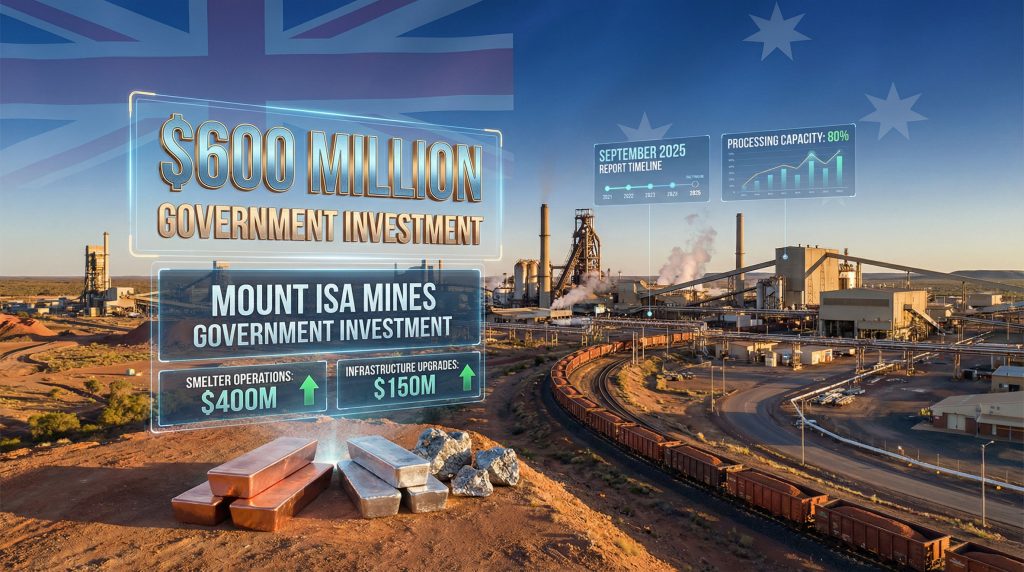
Strategic government investment in critical infrastructure represents recognition that market forces alone may not sustain essential processing capabilities during global supply chain transitions. The Australian copper investment commitment through the joint $600 million funding package demonstrates recognition of Mount Isa's role in critical minerals processing.
This investment extends beyond simple operational subsidies, encompassing infrastructure modernisation, workforce development, and community sustainability initiatives that position the region for long-term competitiveness.
Glencore Smelter and Refinery Modernisation Framework
The funding package prioritises $400 million for smelter operations over three years, ensuring continuity of processing capabilities while broader strategic planning proceeds. This operational security provides stability for workforce retention, supply chain relationships, and community economic planning.
Infrastructure upgrades receiving $150 million over 18 months focus on critical equipment replacement and efficiency improvements that had been deferred due to market pressures. These modernisation projects likely encompass:
- Energy efficiency upgrades reducing per-unit energy consumption
- Environmental control system improvements meeting increasingly stringent standards
- Processing automation enhancements improving productivity and safety
- Materials handling optimisation reducing operational costs and delays
Three-Year Funding Timeline and Performance Metrics
The three-year funding timeline aligns strategically with completion of the Mount Isa Transformation Study, scheduled for September 2025. This synchronisation enables evidence-based decision-making about post-2027 funding arrangements without immediate political pressure for long-term commitments.
Performance expectations include maintenance of current 1.2 million tonnes annual processing capacity, continued employment for approximately 1,000 direct workers, and preservation of supply chain relationships with Asian technology manufacturers.
| Component | Funding Amount | Timeline | Expected Outcomes |
|---|---|---|---|
| Smelter Operations | $400M | 3 years | Continued processing capacity |
| Infrastructure Upgrades | $150M | 18 months | Enhanced efficiency |
| Community Programs | $50M | Ongoing | Workforce development |
Community Employment Security and Skills Development
Community programmes receiving $50 million in ongoing funding address workforce development challenges that extend beyond immediate operational needs. These initiatives encompass vocational training programmes, apprenticeship funding, and educational partnerships with Queensland institutions.
The focus on skills development reflects recognition that critical minerals processing requires specialised technical capabilities that cannot be rapidly replaced if lost. Furthermore, maintaining this expertise requires sustained investment in training programmes and career development opportunities that retain experienced workers whilst developing next-generation capabilities.
Which Critical Minerals Position Mount Isa for Future Technology Demands?
Technology transition towards renewable energy and electrification creates specific demand patterns for critical minerals that align closely with Mount Isa's existing processing capabilities and regional mineral endowment. Understanding these alignment factors reveals the strategic logic behind positioning Mount Isa as a Mount Isa critical minerals Silicon Valley hub.
Copper's Role in Renewable Energy Infrastructure
Copper's exceptional electrical conductivity (approximately 59.6 × 10⁶ siemens per metre) and thermal properties make it irreplaceable for high-performance electrical applications in renewable energy systems. Electric vehicle manufacturing typically requires 60-90 kilograms of copper per vehicle in wiring, motors, and charging infrastructure.
Renewable energy installations demand substantial copper quantities for power transmission and conversion equipment. Wind turbines require approximately 3-5 tonnes of copper per megawatt of generating capacity, whilst solar installations need 4-5 tonnes per megawatt for electrical systems and grid connections.
Mount Isa's established copper processing capabilities position it to serve growing demand from renewable energy deployment across Asian markets, where government commitments to carbon neutrality drive rapid infrastructure development.
Zinc and Lead Applications in Battery Technology
Zinc serves critical functions in electrochemical energy storage systems, particularly zinc-air, zinc-bromine, and zinc-based flow batteries that offer advantages in cost, thermal safety, and long-duration storage applications. These battery chemistries differ from lithium-ion systems and serve specific grid-scale applications.
Mount Isa's mineral portfolio includes copper essential for electric vehicle charging infrastructure, zinc critical for energy storage systems, and lead vital for grid-scale battery applications. This combination positions the region uniquely for clean energy transition supply chains.
Lead-acid battery systems continue expansion in grid-scale frequency regulation and power quality applications, despite greater attention to lithium-ion technologies. Modern grid-scale lead-acid systems incorporate advanced electrode materials and electrolyte formulations that improve performance characteristics for renewable energy grid integration.
Rare Earth Elements and Processing Potential
Whilst Mount Isa's current operations do not include rare earth processing, the region's geological characteristics and existing chemical processing infrastructure create potential for future rare earth development. Rare earth elements are essential for permanent magnets in electric motors, wind turbines, and advanced technology applications.
Processing rare earth concentrates into refined oxides and separated individual elements requires sophisticated chemical processing capabilities similar to those used in copper refining operations. The potential for leveraging existing infrastructure and expertise for rare earth processing represents a significant expansion opportunity.
What Are the Key Challenges Facing Mount Isa's Transformation?
Strategic positioning advantages must be balanced against competitive pressures and operational challenges that could undermine Mount Isa's critical minerals ambitions. Understanding these risk factors enables realistic assessment of transformation requirements and investment priorities.
Global Competition in Copper Smelting Markets
International copper smelting markets operate under conditions that Australian facilities characterise as unequal competitive environments. Several countries provide substantial government support for domestic processing operations, creating cost advantages that purely market-driven facilities struggle to match.
Asian smelting operations benefit from lower energy costs, different environmental standards, and government support programmes that enable aggressive pricing strategies. These competitive pressures contributed to the financial challenges that prompted the $600 million government intervention.
Competition intensifies as other countries recognise critical minerals processing as strategically important, leading to increased government support for domestic capabilities that may not reflect pure economic efficiency.
Energy Cost Pressures and Reliability Requirements
Copper smelting operations require substantial and reliable energy supplies, making energy costs a primary factor in operational competitiveness. Australian energy markets present challenges in both cost competitiveness and supply reliability that affect industrial operations.
Smelting operations require continuous power supply and cannot easily accommodate intermittent renewable energy without substantial battery storage investment. Balancing environmental objectives with industrial energy requirements creates complex policy and investment decisions.
The requirement for affordable and reliable energy as essential for competitive smelting operations highlights the interconnection between energy policy and critical minerals energy transition strategy.
Skilled Workforce Retention and Development
Specialised metallurgical processing requires technical expertise that develops over years of practical experience. Mount Isa's remote location creates workforce retention challenges, particularly for younger professionals seeking diverse career opportunities and urban amenities.
The ageing of the existing workforce compounds recruitment challenges, as retirement of experienced personnel must be balanced with attraction of new talent to remote industrial operations. Training programmes require sustained investment and cannot rapidly replace lost institutional knowledge.
How Will the Mount Isa Transformation Study Shape Future Development?
Comprehensive analysis of industrial capabilities, market conditions, and development pathways provides the foundation for evidence-based strategic planning beyond the current three-year funding period. The Mount Isa Transformation Study represents crucial preparation for long-term competitiveness decisions.
September 2025 Report Timeline and Scope
The transformation study examines the complete value chain from mining through processing to export markets, providing integrated analysis of operational capabilities, market positioning, and development opportunities. Queensland's expressions of interest process indicates urgent progress towards comprehensive strategic assessment.
Analysis encompasses long-term industrial capability requirements, future development pathways aligned with global critical minerals demand, market conditions affecting competitiveness, and broader opportunities for regional economic development that extend beyond immediate mining operations.
The study's completion timeline aligns with the three-year funding commitment, enabling informed decision-making about post-2027 strategic directions without premature policy commitments.
Value Chain Analysis from Mine to Market
Integrated value chain analysis examines coordination between mining operations, processing facilities, logistics infrastructure, and export market relationships. This comprehensive approach identifies optimisation opportunities and bottlenecks that affect overall competitiveness.
The analysis considers potential for expanded processing capabilities, integration with additional mineral streams, and coordination with other regional mining operations that could provide feedstock for expanded processing activities.
Integration with Townsville Port Infrastructure
The 900-kilometre corridor between Mount Isa processing operations and Townsville Port represents a critical component of the value chain that requires optimisation for competitive export positioning. Port infrastructure capabilities, logistics coordination, and shipping relationships affect market access.
Townsville Port's existing container handling and bulk cargo facilities provide established export infrastructure, whilst potential improvements could enhance capacity and efficiency for critical minerals shipments to Asian technology manufacturers.
What Strategic Partnerships Could Accelerate Mount Isa's Growth?
International cooperation in critical minerals development reflects recognition that supply chain security requires coordinated approaches between allied nations. Mount Isa's strategic positioning creates opportunities for partnerships that enhance both Australian capabilities and international supply chain resilience.
United States Critical Minerals Cooperation
The United States has identified critical minerals supply chain security as a national priority, creating opportunities for partnerships with Australian processing operations. Mount Isa's copper processing capabilities align with U.S. renewable energy infrastructure requirements and defence industrial base needs.
Potential cooperation could encompass technology sharing, joint investment in processing capability enhancement, and preferential supply arrangements that provide market security for Australian operations whilst supporting U.S. supply chain diversification objectives.
European Union Green Deal Supply Chain Integration
The European Union's Green Deal initiatives require substantial critical minerals imports to support renewable energy deployment and electric vehicle manufacturing targets. Mount Isa's processing capabilities could serve European supply chain diversification away from concentrated Asian suppliers.
Partnership opportunities include joint investment in processing technology development, sustainability certification programmes that meet European environmental standards, and supply agreements that provide long-term market security.
North Asian Technology Manufacturing Links
Established relationships with Asian technology manufacturers create natural partnership opportunities for expanded cooperation in critical minerals processing. These relationships could support development of specialised processing capabilities tailored to specific industrial applications.
Asian partners possess advanced technology for critical minerals processing and could contribute expertise for facility modernisation and capability expansion that enhances Mount Isa's competitiveness.
The next major ASX story will hit our subscribers first
Why Is Timing Critical for Mount Isa's Industrial Evolution?
Global supply chain restructuring creates windows of opportunity that may not remain open indefinitely. Understanding the urgency factors affecting Mount Isa's strategic positioning reveals why government and industry leaders emphasise immediate action requirements.
Global Supply Chain Diversification Pressures
Geopolitical tensions and supply chain vulnerabilities exposed during recent crises have accelerated efforts by developed nations to diversify critical minerals sourcing away from concentrated suppliers. This creates temporary advantages for alternative suppliers that can demonstrate reliability and processing capability.
The current window for establishing alternative processing hubs may narrow as other countries develop domestic capabilities or secure alternative supply relationships. Early positioning provides advantages in securing long-term supply agreements and investment partnerships.
Competing International Processing Hubs
Other countries recognise the strategic importance of critical minerals processing and are implementing support programmes for domestic capability development. Canada, several African nations, and South American countries are developing processing capabilities that could compete with Australian operations.
The race to establish competitive processing hubs means that delays in capability development could result in loss of market positioning to international competitors with more aggressive development timelines.
Technology Transition Windows and Market Opportunities
Renewable energy deployment and electric vehicle adoption create demand growth for critical minerals that is projected to continue for the next decade. However, this demand growth may moderate as technology matures and recycling capabilities develop.
| Timeline | Optimistic Scenario | Baseline Scenario | Challenging Scenario |
|---|---|---|---|
| 2025-2027 | Full transformation funding secured | Current operations maintained | Partial facility closures |
| 2028-2030 | Expanded processing capacity | Moderate growth | Market share decline |
| 2031-2035 | Regional hub status achieved | Steady-state operations | Restructuring required |
How Does Mount Isa Compare to Other Global Critical Minerals Hubs?
International benchmarking reveals Mount Isa's competitive position relative to other established and emerging critical minerals processing centres. This comparative analysis identifies both advantages and areas requiring development focus.
Processing Capacity Benchmarking
Mount Isa's 1.2 million tonnes annual copper concentrate processing capacity positions it as a significant facility within the global copper processing industry, though smaller than the largest international operations in Chile, China, and other major producing regions.
The facility's age and established operations provide operational stability and proven capability, whilst also indicating potential for modernisation to improve efficiency and environmental performance compared to newer facilities.
Infrastructure Maturity Assessment
Mount Isa benefits from nearly a century of mining and processing operations that have created mature supporting infrastructure including transportation, utilities, workforce housing, and community services. This infrastructure maturity reduces development costs compared to greenfield processing operations.
However, ageing infrastructure also requires ongoing maintenance and modernisation investment to remain competitive with newer facilities designed with current technology and efficiency standards.
Regulatory Environment Advantages
Australia's regulatory framework for mining and processing operations provides predictability and transparency that supports long-term investment planning. Environmental standards and safety requirements, whilst stringent, are consistently applied and well-understood by industry participants.
The political stability and rule of law in Australia create advantages for international partners seeking reliable long-term supply relationships, particularly compared to some regions with significant mineral resources but less stable governance structures.
What Investment Opportunities Emerge from Mount Isa's Strategic Positioning?
Strategic positioning creates multiple investment opportunities across technology development, infrastructure enhancement, and market expansion that could accelerate Mount Isa's transformation into a Mount Isa critical minerals Silicon Valley.
Processing Technology Upgrades and Innovation
Investment in advanced processing technologies could improve efficiency, reduce environmental impact, and enable processing of lower-grade mineral concentrates that expand resource utilisation. Technology partnerships with international equipment suppliers could accelerate capability development.
Innovation opportunities include automation systems that improve safety and productivity, environmental control technologies that reduce emissions and waste, and advanced metallurgical processes that improve recovery rates and product quality.
Logistics and Transportation Infrastructure
Enhancement of the Mount Isa to Townsville logistics corridor could improve cost competitiveness and capacity for expanded operations. Infrastructure investment opportunities include rail capacity improvements, materials handling optimisation, and port facility enhancements.
Digital logistics coordination systems could improve efficiency and reduce costs through better scheduling, inventory management, and transportation optimisation across the complete supply chain.
Renewable Energy Integration Projects
Development of renewable energy capabilities to serve processing operations could address both cost competitiveness and environmental objectives. Large-scale solar installations combined with battery storage could provide reliable industrial power supply whilst reducing operating costs.
Renewable energy integration projects could also support export market positioning in regions with environmental standards that favour low-carbon processed materials, creating market differentiation advantages.
What Role Does Mining Industry Evolution Play in Mount Isa's Future?
The broader transformation of Australia's mining evolution trends significantly influences Mount Isa's strategic positioning. Modern mining operations increasingly focus on sustainability, technology integration, and value-added processing rather than simple extraction.
This evolution creates opportunities for Mount Isa to position itself as a technology-forward processing hub that aligns with pivot critical minerals strategy initiatives. The integration of advanced processing technologies with existing infrastructure provides a pathway to enhanced competitiveness.
Technology Integration and Automation
Advanced automation systems reduce operational costs whilst improving safety standards in processing operations. Mount Isa's established infrastructure provides a foundation for implementing these technologies without the capital requirements of greenfield development.
Artificial intelligence and machine learning applications can optimise processing parameters, predict maintenance requirements, and improve overall operational efficiency. These technological advances position Mount Isa within the broader context of modern industrial development.
Conclusion: Mount Isa's Path to Critical Minerals Leadership
Mount Isa's transformation into Australia's Mount Isa critical minerals Silicon Valley requires coordinated development across multiple strategic dimensions, from infrastructure modernisation to international partnership development. The convergence of government support, strategic positioning, and market opportunity creates unprecedented potential for regional transformation.
Integration of Mining, Processing, and Export Capabilities
The integrated value chain from mining through processing to export represents Mount Isa's fundamental competitive advantage that cannot be easily replicated by competitors. This integration enables optimisation across the complete supply chain whilst providing supply security for international partners.
Successful transformation requires coordination between mining operations, processing facility development, logistics infrastructure, and export market positioning to create a cohesive competitive strategy.
Timeline for Achieving Regional Hub Status
The three-year government funding period provides essential stability for strategic planning and capability development, whilst the transformation study completion by September 2025 enables evidence-based decision-making about long-term development pathways.
Regional hub status depends on demonstrated ability to serve international markets competitively whilst maintaining operational reliability and environmental standards that support long-term partnership relationships.
Long-term Economic Impact Projections
Successful transformation could position Mount Isa as a critical component of global critical minerals supply chains for the next several decades. The economic impact extends beyond direct mining and processing employment to encompass supporting services, community development, and regional economic diversification.
The vision of Mount Isa as a regional critical minerals hub represents more than industrial development—it embodies Australia's strategic response to global supply chain challenges whilst creating sustainable economic opportunities for regional communities positioned at the centre of the global energy transition.
Ready to Invest in the Next Major Mineral Discovery?
Discovery Alert instantly alerts investors to significant ASX mineral discoveries using its proprietary Discovery IQ model, turning complex mineral data into actionable insights. Understand why major mineral discoveries can lead to substantial returns by exploring historic examples of exceptional outcomes, then begin your 14-day free trial today to position yourself ahead of the market.