May 20, 2026
Power-Intensive Industrial Operations and Strategic Resource Dependencies
Global aluminum production represents one of the most energy-intensive manufacturing processes in modern industrial economies. When examining facilities that consume substantial portions of national electricity grids, the intersection of energy policy, international investment, and strategic resource management creates complex operational environments. These dynamics become particularly pronounced in developing economies where single industrial operations can represent significant portions of export revenues and employment bases, as demonstrated by the current challenges facing the Mozambique South32 aluminum smelter.
In Southern Africa, the aluminum smelting sector exemplifies these challenges, where facilities requiring continuous high-capacity power supplies must navigate evolving energy security outlook considerations alongside government policy frameworks and international ownership structures. The technical requirements of aluminum production, combined with the scale of investment and infrastructure needed, create unique dependencies that influence both corporate strategy and national economic planning.
When big ASX news breaks, our subscribers know first
What Makes Mozambique's Mozal Smelter Critical to Regional Aluminum Production?
Production Scale and Continental Ranking
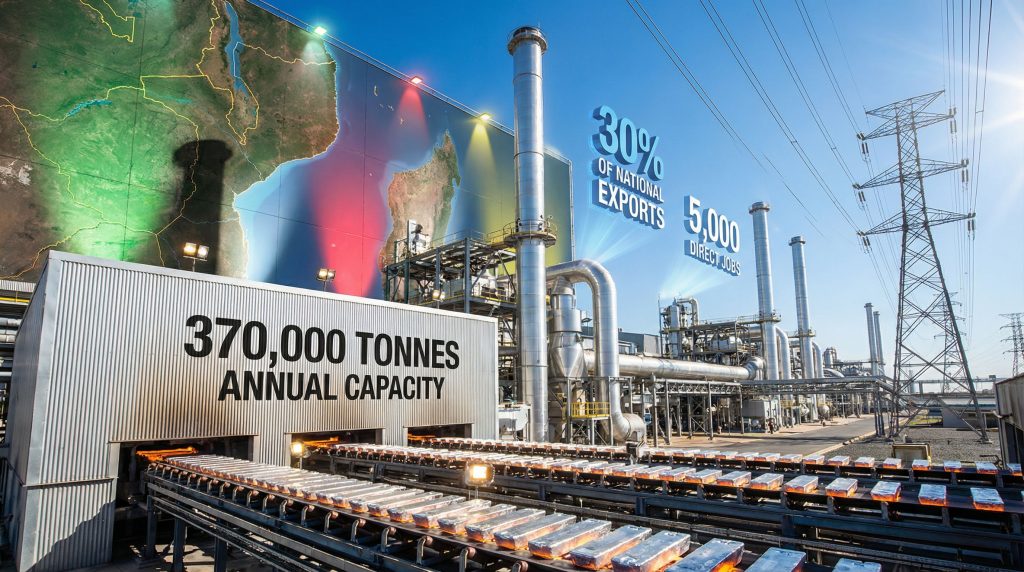
The Mozambique South32 aluminum smelter facility operates as one of Africa's most significant aluminum production centers, with technical capabilities that position it among the continent's primary industrial operations. The facility's annual production capacity places it within the top tier of African aluminum manufacturing, representing a substantial portion of the region's total smelting capacity.
According to Mining.com reporting from February 2026, Mozal functions as the largest industrial employer in Mozambique, indicating its central role in the country's manufacturing sector. This employment scale reflects the facility's operational complexity and its integration into the national economy.
The smelter's continental ranking significance emerges from Africa's limited aluminum production infrastructure. With most African countries focusing on raw material extraction rather than value-added processing, facilities capable of transforming bauxite and alumina into finished aluminum products represent strategic industrial assets for the continent.
Economic Integration Metrics
The facility's economic footprint extends beyond direct production metrics to encompass broader integration patterns within Mozambique's export economy. The smelter represents a significant component of the country's industrial base, with employment effects that ripple through supporting sectors including transportation, logistics, and technical services.
Energy consumption patterns demonstrate the facility's substantial infrastructure requirements. Furthermore, aluminum smelting operations require continuous, high-capacity electrical supply to maintain electrolytic processes, positioning such facilities among the most energy-intensive industrial operations globally.
The export contribution analysis reveals the facility's role in Mozambique's foreign exchange generation. As a producer of finished aluminum products rather than raw materials, the smelter participates in higher-value segments of global aluminum markets, potentially commanding premium pricing compared to unprocessed mineral exports.
How Do Power Supply Negotiations Shape Smelter Economics?
Current Power Agreement Structure
Power supply arrangements for aluminum smelting operations typically involve long-term contracts with guaranteed capacity allocations, given the continuous nature of smelting processes and the substantial capital investments required. These agreements often incorporate complex pricing mechanisms designed to balance industrial competitiveness with utility cost recovery.
According to Reuters reporting via Mining.com in February 2026, South32 has engaged in protracted negotiations with the Southern African country's government and power suppliers for years to establish sustainable power arrangements for the facility's energy-intensive operations.
The negotiation complexity reflects the intersection of industrial policy, energy sector regulation, and international investment frameworks. However, long-term power agreements for major industrial consumers often require coordination between utility providers, government energy authorities, and economic development agencies.
Proposed Terms Analysis
Recent developments in the power supply negotiations highlight the challenges facing energy-intensive industries in markets experiencing capacity constraints. The December 2024 announcement by South32 regarding potential facility suspension indicates the severity of the power supply challenges facing the operation.
As reported by Mining.com in February 2026, South32 indicated it would place the Mozal plant under care and maintenance by March, incurring a $60 million one-off cost, after failing to secure a power deal with the government. This substantial transition cost reflects the technical complexity of suspending aluminum smelting operations while preserving asset value for potential restart.
Cost Structure Breakdown
Electricity typically represents the largest single operational expense for aluminum smelters globally, often accounting for 25-35% of total production costs. This cost sensitivity makes power pricing negotiations critical determinants of facility viability, particularly in competitive global aluminum markets.
The $60 million one-off cost cited for transitioning to care and maintenance status demonstrates the substantial financial implications of operational suspension. These costs typically encompass workforce transition expenses, equipment preservation procedures, and ongoing security and maintenance requirements during suspension periods.
Comparative energy cost analysis across global aluminum production reveals significant variations based on local power generation sources, regulatory frameworks, and industrial policy priorities. For instance, facilities operating in regions with abundant hydroelectric capacity often enjoy cost advantages compared to those relying on thermal generation.
What Are the Strategic Scenarios for Mozal's Future?
Care and Maintenance Scenario
The March 2026 timeline for potential care and maintenance implementation represents a critical decision point for all stakeholders involved in the facility's operations. Care and maintenance status involves suspending primary production while maintaining essential systems to preserve restart capability.
Technical procedures for aluminum smelter care and maintenance involve complex processes including pot room preservation, electrolyte management, and critical infrastructure protection. These procedures require specialised expertise and ongoing capital expenditure to maintain asset integrity during operational suspension.
Workforce implications extend beyond direct employment to encompass supporting industries and regional economic activity. Consequently, the transition process typically involves retrenchment packages, skills transfer programs, and coordination with local employment authorities to manage community impacts.
Negotiated Resolution Pathways
Alternative power supply configurations could include participation in regional power markets, integration of renewable energy sources, or modified capacity arrangements that balance industrial requirements with grid constraints. These natural gas trends may also influence broader energy pricing negotiations.
Multi-stakeholder agreement frameworks might incorporate graduated pricing mechanisms, capacity sharing arrangements, or infrastructure development commitments that align various participant interests while ensuring facility viability.
Government statements indicate ongoing commitment to facility preservation. Minister Estevao Pale's declaration that the government is doing everything that is required to maintain operations signals political priority for industrial retention.
Long-term Viability Models
Regional power market development could create new opportunities for industrial power procurement through increased generation capacity or improved transmission infrastructure. Southern African power pool developments may offer alternative supply sources that reduce dependence on domestic generation.
Infrastructure investment scenarios might involve facility participation in power generation projects, renewable energy integration, or grid stability enhancement programs that create mutual benefits for industrial operations and national energy security.
In addition, competitive positioning strategies require analysis of global aluminum market trends, alternative production locations, and technological developments that could influence facility economics over extended timeframes.
How Does Ownership Structure Influence Decision-Making?
Stakeholder Distribution Analysis
The facility's ownership structure reflects a complex international partnership involving Australian, Japanese, South African, and Mozambican interests. This multi-stakeholder arrangement creates sophisticated governance requirements that must balance operational efficiency with diverse strategic objectives.
| Stakeholder Category | Strategic Interest | Decision Influence |
|---|---|---|
| International Mining Company | Operational profitability and global portfolio optimization | Primary operational control |
| Japanese Trading House | Supply chain integration and long-term resource security | Strategic partnership influence |
| Development Finance Institution | Regional industrial development and economic transformation | Policy alignment advocacy |
| Host Government | National economic impact and industrial employment | Regulatory and policy framework |
Decision-Making Dynamics
Operational authority distribution among international partners requires coordination mechanisms that can respond effectively to changing market conditions while maintaining strategic consensus among diverse stakeholders with different risk tolerances and time horizons.
Government influence extends beyond direct ownership participation to encompass regulatory authority, policy development, and infrastructure provision. These influence channels can significantly impact facility operations regardless of formal ownership percentages.
International partner considerations include global commodity strategies, regional development priorities, and risk management frameworks that may prioritise different outcomes depending on broader portfolio performance and strategic objectives.
What Are the Broader Economic Implications?
National Economic Impact Assessment
Industrial employment concentration in developing economies creates both opportunities and vulnerabilities for national economic development. Large-scale industrial operations can provide substantial employment and skills development while creating dependency risks if operational sustainability faces challenges.
The facility's status as Mozambique's largest industrial employer according to Mining.com reporting indicates its central role in the country's manufacturing employment base. This concentration creates multiplier effects through supporting industries while also concentrating economic risk in a single operation.
Export revenue analysis must consider not only direct facility contributions but also upstream and downstream economic activity generated by industrial operations of this scale. Furthermore, value-added manufacturing typically generates higher export values per unit compared to raw material extraction.
Regional Industrial Strategy Considerations
Southern African aluminum production networks benefit from geographical proximity to raw material sources, established transportation infrastructure, and regional power grid connections. These advantages support industrial clustering strategies that can enhance competitiveness across multiple facilities.
Infrastructure development catalyst effects from major industrial operations often extend beyond immediate facility requirements to encompass port facilities, transportation networks, and utility infrastructure that support broader economic development objectives. Such industry innovation trends demonstrate the interconnected nature of industrial development.
Investment Climate Signals
Foreign direct investment confidence indicators include government responsiveness to industrial challenges, policy stability, and framework flexibility for addressing changing market conditions. The current negotiations serve as a precedent for future investment decisions across multiple sectors.
Resource sector negotiation precedents established through these discussions will influence expectations for future public-private partnerships in Mozambique and potentially across Southern Africa. Consequently, this affects investment flows and development project structuring, particularly considering broader trade war impacts on global markets.
The next major ASX story will hit our subscribers first
How Do Global Aluminum Market Dynamics Affect the Situation?
Market Positioning Analysis
Current aluminum futures pricing reflects ongoing market dynamics affecting global production decisions. According to Mining.com market data from February 2026, aluminum futures were trading at $3,056.25 per ton with a recent positive movement of 0.44%, indicating stable demand conditions in global markets.
Global aluminum demand trends support continued consumption growth driven by automotive lightweighting, construction applications, and packaging requirements. These demand patterns suggest sustained market opportunities for efficient production facilities that can manage operational costs effectively.
African aluminum production capacity within international context remains limited relative to global consumption patterns. However, this creates potential strategic advantages for continental producers that can achieve competitive operational economics.
Supply Chain Integration Factors
Downstream processing opportunities in aluminum manufacturing include rolled products, alloy production, and recycling integration that can enhance value capture while reducing transportation costs for finished products destined for regional markets.
Regional value-addition strategies could incorporate automotive component manufacturing, construction material production, or packaging applications that leverage proximity to growing African consumer markets while reducing import dependence.
Export market diversification requires analysis of global aluminum consumption patterns, transportation cost structures, and competitive positioning relative to other global production centers. For instance, identifying optimal market penetration strategies becomes crucial for long-term viability.
What Lessons Emerge from Similar Industrial Negotiations?
Comparative Case Studies
Power-intensive industry negotiations in developing markets often involve similar challenges related to balancing industrial competitiveness with national energy policy objectives. Successful frameworks typically incorporate flexible pricing mechanisms, infrastructure development commitments, and risk-sharing arrangements.
Zambian copper mining operations have faced comparable power supply challenges, with successful resolution typically requiring multi-year negotiation processes, international stakeholder coordination, and creative financing mechanisms for infrastructure development.
Energy pricing dispute resolution frameworks in Southern Africa have evolved through experience with major industrial operations. Consequently, these have developed precedents for graduated pricing, capacity reservation fees, and force majeure provisions that protect both industrial operations and utility providers.
Best Practice Frameworks
Stakeholder alignment strategies require early identification of core interests, transparent communication of constraints and opportunities, and development of mutual benefit mechanisms that create value for all participants rather than zero-sum negotiations.
- Graduated pricing mechanisms that adjust to market conditions while providing operational predictability
- Infrastructure development partnerships that share costs and benefits of capacity expansion
- Alternative energy integration provisions that encourage renewable energy adoption
- Economic development incentives that align industrial operations with national development priorities
- Risk mitigation frameworks that address force majeure events and market volatility
Long-term contract structuring approaches should incorporate flexibility mechanisms that can respond to changing market conditions while maintaining operational stability. In addition, capital-intensive industrial operations require predictable cost structures alongside considerations of potential tariff impacts.
Strategic Outlook and Industry Implications
Short-term Scenario Planning
The March 2026 decision timeline creates urgency for all stakeholders to identify acceptable compromise frameworks that can maintain operational continuity while addressing government energy policy objectives and corporate profitability requirements.
Market reaction preparation should anticipate potential impacts on aluminum pricing, regional supply chain adjustments, and investor sentiment toward similar operations across Southern Africa if negotiations reach unsuccessful conclusions.
Immediate stakeholder response strategies require coordination between corporate management, government authorities, international partners, and workforce representatives. Furthermore, these strategies must manage transition processes effectively regardless of negotiation outcomes.
Long-term Strategic Positioning
Mozambique's industrial development trajectory will be significantly influenced by the resolution of current negotiations, establishing precedents for future industrial investment and government-private sector partnership frameworks.
Regional aluminum production network evolution depends partly on successful resolution of current challenges. For instance, facility closure would reduce continental production capacity while successful negotiation could encourage additional regional investment.
Energy infrastructure investment priorities require integration of industrial requirements with national electrification goals, renewable energy development objectives, and regional power market participation strategies.
Policy Framework Development
Resource sector negotiation protocols could benefit from standardised frameworks that provide predictability for investors while maintaining government flexibility to respond to changing economic conditions and development priorities.
Public-private partnership model refinements should incorporate lessons learned from current negotiations to develop more robust frameworks. However, these must manage complex multi-stakeholder industrial operations in developing market contexts.
Energy pricing mechanism optimisation requires balanced approaches that encourage industrial development while ensuring sustainable cost recovery for utility providers and alignment with national energy security objectives.
The resolution of the Mozambique South32 aluminum smelter situation will serve as a critical precedent for similar industrial operations across the region. Furthermore, it will influence future investment decisions and policy frameworks governing large-scale industrial operations in Southern Africa.
"The government is doing everything that is required to maintain operations" – Minister Estevao Pale, highlighting the political priority placed on industrial retention.
This case demonstrates the complex interplay between industrial competitiveness, energy policy, and national development objectives. Consequently, successful resolution requires innovative approaches that balance diverse stakeholder interests while maintaining operational viability in challenging market conditions.
Tracking Major Industrial Shifts in Global Markets?
Discovery Alert's proprietary Discovery IQ model delivers real-time insights into significant market developments across mining, resources, and industrial sectors, helping investors identify actionable opportunities as they emerge. Stay ahead of major industrial and commodity market shifts by exploring Discovery Alert's discoveries page and begin your 14-day free trial today to secure your market-leading advantage.