
June 11, 2026
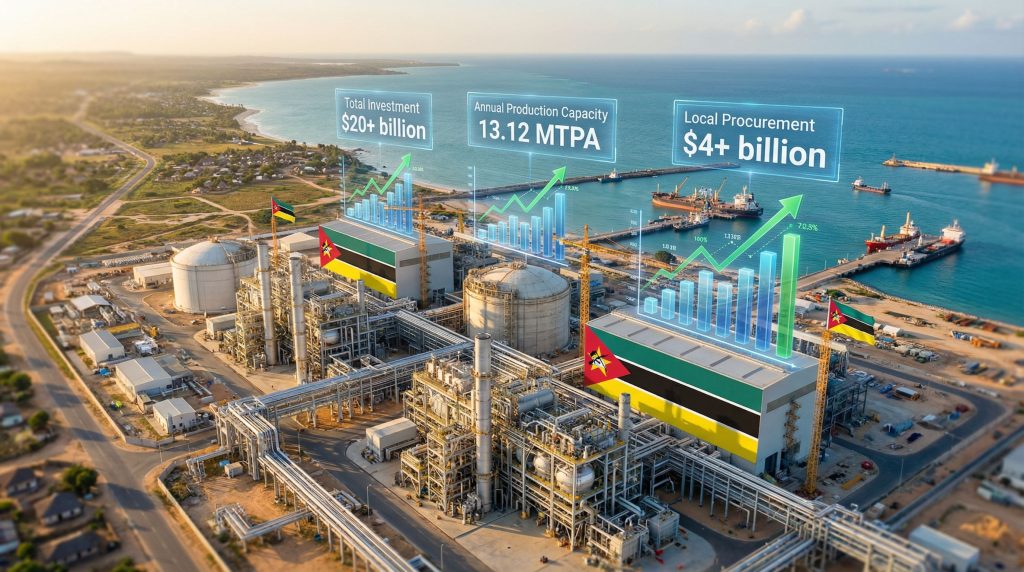
The Mozambique LNG local business development programme represents one of Africa's most significant energy sector industrialisation opportunities, creating pathways for domestic economic participation across multiple phases of project development. Furthermore, this initiative demonstrates how large-scale infrastructure investments can catalyse broader economic transformation while building indigenous capabilities that extend beyond individual project timelines. The programme's approach to supplier development, technology transfer, and economic integration reflects evolving best practices in resource sector governance across sub-Saharan Africa.
Economic Foundation and Strategic Context
Mozambique's position within Africa's energy landscape demonstrates how natural gas discoveries can fundamentally restructure national economic architecture. The country's offshore Rovuma Basin contains approximately 65 trillion cubic feet of proven gas reserves, positioning it among the continent's most significant hydrocarbon provinces. Consequently, this resource endowment creates opportunities for systematic industrial development that extends far beyond traditional extraction models.
The scale of natural gas price trends reflects broader regional investment patterns. Comparative analysis across African LNG projects reveals varying approaches to domestic economic integration. For instance, Nigeria's experience with LNG development generated substantial local procurement networks, while Tanzania's emerging gas sector emphasizes different models of community engagement and supplier development.
Mozambican LNG Project Economic Metrics:
| Investment Category | Scale | Regional Context |
|---|---|---|
| Total Project Investment | $20+ billion | Largest energy investment in East Africa |
| Annual Production Target | 13.12 MTPA | Third-largest African LNG capacity |
| Local Procurement Value | $4+ billion estimate | 20% of total project investment |
| Peak Construction Employment | 7,000+ positions | 15% of Cabo Delgado workforce |
| Operational Employment | 1,500+ long-term roles | Permanent skilled workforce base |
GDP multiplier effects from large-scale energy infrastructure typically generate economic impacts across three distinct channels. Direct effects include immediate employment creation, equipment procurement, and service contracting. However, indirect effects encompass upstream supplier development, logistics network expansion, and supporting infrastructure improvements. In addition, induced effects involve broader economic stimulus through increased household incomes, expanded commercial activity, and enhanced government revenue streams.
The project's development timeline spans multiple phases, each presenting different opportunities for Mozambique LNG local business development. Initial construction phases emphasise heavy engineering, site preparation, and logistics coordination. Moreover, operational phases shift focus toward maintenance services, ongoing supply provision, and specialised technical support. This phased approach enables progressive localisation as domestic capabilities mature and expand.
When big ASX news breaks, our subscribers know first
Procurement Opportunities Across LNG Value Chains
The complexity of liquefied natural gas projects creates extensive procurement networks spanning multiple industrial sectors. Each phase of project development generates distinct contracting opportunities that domestic businesses can access through structured supplier development programmes.
Construction and Engineering Services
Heavy construction contracts represent the foundation of LNG project procurement, encompassing site preparation, concrete works, and structural engineering. These services require significant labour mobilisation, equipment deployment, and materials coordination. Furthermore, local contractors can participate through subcontracting arrangements, joint venture partnerships, or direct contract awards for specialised activities.
Specialised engineering services involve process equipment installation, pipeline construction, and facility commissioning. These activities demand technical expertise, quality assurance capabilities, and adherence to international safety standards. Consequently, domestic engineering firms can develop these competencies through technology transfer programmes, training initiatives, and mentorship arrangements with international contractors.
Project management services encompass planning coordination, progress monitoring, and quality control across multiple work streams. These services create opportunities for local professional services firms to develop project management capabilities, gain exposure to international best practices, and build long-term client relationships within the energy sector.
Logistics and Supply Chain Management
Port operations and marine services in Pemba and Palma form critical components of LNG project logistics networks. These services include vessel coordination, cargo handling, equipment offloading, and supply base management. Additionally, local marine service providers can expand their capabilities through investment in specialised equipment, staff training, and operational system upgrades.
Transportation networks require comprehensive coordination of road freight, equipment logistics, and personnel transport. This sector creates opportunities for local transport companies to expand their fleet capacity, upgrade their operational systems, and develop specialised capabilities for heavy equipment movement and hazardous materials handling.
Warehousing and inventory management systems support project operations through strategic materials positioning, supply chain optimisation, and cost-effective procurement coordination. Local logistics providers can develop these capabilities through facility investments, technology adoption, and operational partnership arrangements with international supply chain specialists.
Import and export facilitation services encompass customs clearance, documentation processing, and regulatory compliance coordination. These services create opportunities for local clearing agents, freight forwarders, and trade facilitation specialists to expand their service offerings. Moreover, they can develop expertise in lng import tax structure requirements specific to the energy sector.
Support Services and Operations
Health, Safety, and Environmental (HSE) compliance services represent mandatory requirements under international operational standards and host-country legislation. These services include safety training, environmental monitoring, emergency response coordination, and regulatory compliance reporting. Furthermore, local HSE providers can develop specialised capabilities through certification programmes, equipment investment, and partnership arrangements with international safety consultants.
Emergency response and medical services require specialised capabilities for offshore operations, hazardous materials handling, and industrial accident response. Local healthcare providers and emergency service organisations can expand their capabilities through equipment acquisition, staff training, and operational protocol development aligned with international energy sector standards.
Information and Communication Technology infrastructure supports project operations through data management, communications networks, and operational control systems. Local ICT providers can participate through network installation, system maintenance, software development, and technical support services that align with energy sector security and reliability requirements.
Facilities management, catering, and accommodation services encompass a broad range of operational support activities. These services create opportunities for local hospitality providers, facilities management companies, and support service specialists to develop capabilities that meet international workforce standards while leveraging local knowledge and community relationships.
Industry Insight: Mozambique's LNG development creates structured pathways for domestic supplier participation through phased localisation programmes that balance international quality standards with local economic development objectives.
Local Content Regulatory Framework
Mozambique's approach to local content regulation reflects evolving best practices in resource sector governance across sub-Saharan Africa. The regulatory framework establishes clear expectations for domestic economic participation while maintaining flexibility for project implementation and international competitiveness.
Legal Structure and Compliance Mechanisms
Decree-Law 2/2014 establishes the foundational legal framework for local content requirements across Mozambique's extractive industries. This legislation mandates preference for domestic suppliers who meet international quality standards, creating structured opportunities for local business participation while ensuring project delivery standards remain competitive.
The draft Local Content Law introduces enhanced enforcement mechanisms, penalty structures, and oversight capabilities that strengthen government monitoring of compliance outcomes. These regulatory enhancements reflect lessons learned from regional experiences and aim to improve local content effectiveness while reducing administrative burden on project operators.
Three-year compliance reporting cycles provide structured frameworks for monitoring local content outcomes, measuring economic development impacts, and adjusting policy approaches based on implementation experience. This reporting structure enables continuous improvement in local content policy design and implementation effectiveness.
Supplier Development and Capacity Building
Supplier qualification processes establish technical standards, financial capacity requirements, and HSE certifications that domestic businesses must achieve for LNG project participation. These standards align with international energy sector practices while providing clear pathways for local business development and capability enhancement. Additionally, the framework addresses energy transition challenges that emerging economies face in developing industrial capabilities.
Training and skills development programmes create structured approaches for building domestic technical capabilities aligned with energy sector requirements. These programmes encompass technical education, vocational training, and professional development initiatives that prepare local workforces for specialised energy sector roles.
Technology transfer mechanisms facilitate knowledge sharing between international contractors and domestic partners through joint venture arrangements, mentorship programmes, and collaborative project implementation. These mechanisms enable progressive localisation of technical capabilities while maintaining international quality and safety standards.
Compliance Monitoring and Enforcement
Government monitoring systems track local content compliance through regular reporting, audit processes, and performance measurement frameworks. These systems provide transparency in compliance outcomes while enabling policy adjustments based on implementation experience and changing economic conditions.
Penalty structures for non-compliance create incentives for genuine local content participation rather than superficial compliance approaches. These structures balance enforcement effectiveness with recognition of legitimate operational constraints and market limitations that may affect local content implementation.
Economic Development Multiplier Effects
The transformation of Mozambique's economy through LNG development encompasses multiple channels of impact that extend far beyond direct project expenditure. Understanding these multiplier effects provides insight into how energy infrastructure can catalyse broader economic transformation across developing economies. Moreover, these economic impact insights demonstrate patterns observed across similar resource development projects globally.
Direct Economic Impacts
Employment creation through LNG development generates 7,000+ construction positions during peak development phases, representing approximately 15% of Cabo Delgado province's total workforce. These positions provide immediate income generation for local communities while creating demand for supporting services across the regional economy.
Local procurement spending, estimated at $4+ billion over the project lifecycle, creates direct demand for domestic goods and services across multiple economic sectors. This spending encompasses construction materials, professional services, logistics support, and operational supplies that stimulate domestic production capacity and business development.
Tax revenue generation includes corporate income taxes, withholding taxes on international payments, and royalty payments on hydrocarbon production. These revenue streams provide government resources for infrastructure development, social services expansion, and economic diversification initiatives that support broader development objectives.
Indirect and Induced Effects
Supply chain development creates upstream and downstream business opportunities that extend throughout Mozambique's economy. Upstream effects include increased demand for construction materials, equipment supplies, and professional services. Furthermore, downstream effects encompass logistics services, maintenance activities, and operational support that continue throughout the project's operational life.
Infrastructure development accompanies LNG project implementation through road improvements, port facility upgrades, telecommunications network expansion, and power system enhancements. These infrastructure improvements create lasting economic benefits that support broader economic development beyond the energy sector.
Service sector expansion encompasses banking, insurance, legal services, and hospitality industries that develop capabilities to support energy sector operations. This sector development creates permanent economic capacity that can serve other industries and support broader economic diversification efforts.
Economic Multiplier Framework:
- Direct Effects: Immediate project expenditure and employment
- Indirect Effects: Supply chain development and infrastructure improvement
- Induced Effects: Broader economic stimulus through increased incomes and commercial activity
- Catalytic Effects: Long-term industrial development and economic transformation
Geographic Distribution and Regional Integration
The spatial distribution of LNG development opportunities across Mozambique reflects both project logistics requirements and broader regional development strategies. Understanding these geographic patterns enables targeted business development approaches that maximise local economic benefits while supporting project operational efficiency.
Cabo Delgado Province Concentration
Pemba's role as the primary logistics hub creates concentrated opportunities for marine services, port operations, and supply base management. The city's existing infrastructure provides foundations for service provider development while its strategic location facilitates coordination between offshore operations and onshore support activities.
Palma's proximity to LNG facilities creates advantages for direct service provision, reduced transportation costs, and local workforce engagement. Businesses located in Palma can leverage these proximity benefits to develop specialised capabilities in facilities management, maintenance services, and operational support that require regular site access.
Rural area development programmes associated with LNG implementation include infrastructure improvements, community business programmes, and workforce development initiatives. These programmes create opportunities for community-based enterprises while addressing social development objectives that support project sustainability and community acceptance.
National Economic Integration
Maputo's connection to LNG development encompasses financial services coordination, specialised supplier networks, and regulatory management functions. The capital's existing business infrastructure and professional services capabilities provide essential support for LNG operations while creating opportunities for national business participation in energy sector development.
Regional supply chain integration extends beyond Mozambique's borders through Southern African Development Community (SADC) procurement networks, cross-border logistics coordination, and regional skills development programmes. This regional approach enables access to broader supplier networks while creating opportunities for Mozambican businesses to develop capabilities that serve regional energy markets.
Skills development networks encompass technical training institutions, certification programmes, and professional development initiatives that build human capital for energy sector participation. These networks create lasting economic benefits that extend beyond individual projects while supporting broader industrial development objectives.
Market Entry Challenges and Strategic Solutions
Domestic business participation in LNG development faces significant challenges that require systematic solutions and support mechanisms. Addressing these challenges effectively enables broader local content success while maintaining project delivery standards and international competitiveness. Furthermore, understanding these patterns helps contextualise industry evolution trends across resource sectors.
Common Market Entry Barriers
Technical capability gaps represent primary obstacles to domestic supplier participation, particularly in meeting international quality standards, implementing comprehensive quality systems, and maintaining operational performance levels required for LNG operations. These gaps reflect limited exposure to international energy sector practices and insufficient investment in technical capability development.
Financial capacity constraints affect many local businesses through working capital limitations, bonding and insurance requirements, and restricted access to project financing. These constraints reflect underdeveloped financial markets, limited credit availability, and risk assessment challenges that affect small and medium enterprises across Mozambique's economy.
Information asymmetries create barriers through limited understanding of procurement processes, contract requirements, and project timing schedules. These information gaps prevent effective business development planning while creating competitive disadvantages for local suppliers relative to international contractors with established industry networks.
Strategic Solutions and Support Mechanisms
Supplier development programmes provide technical assistance, business mentoring, and capacity building support that enables local businesses to meet international standards. These programmes typically encompass quality system implementation, technical training provision, and operational best practices transfer that build sustainable competitive capabilities.
Financial facilitation mechanisms include development finance institution support, guarantee schemes, and credit enhancement programmes that address working capital constraints and project financing limitations. These mechanisms enable qualified suppliers to participate in opportunities that would otherwise remain inaccessible due to financial capacity constraints.
Information sharing platforms encompass procurement roadshows, business seminars, and online portals that provide transparent access to contracting opportunities, qualification requirements, and project schedules. These platforms level the information playing field while enabling more effective business development planning and market entry strategies.
The next major ASX story will hit our subscribers first
International Partnerships and Technology Transfer
The development of Mozambique LNG local business development capabilities depends significantly on effective partnerships between international contractors and domestic enterprises. These partnerships create pathways for technology transfer, capability building, and market access that enable progressive localisation while maintaining operational standards.
Joint Venture Models and Partnership Structures
International-local partnership arrangements provide structured approaches for technology transfer, capacity building, and market access that benefit both parties. International partners gain local knowledge, community relationships, and regulatory compliance support, while local partners access technical expertise, financial resources, and international market networks.
Subcontracting arrangements enable local content compliance while building domestic capabilities through graduated responsibility transfer. These arrangements typically begin with local businesses providing basic services under international supervision, progressing to independent service delivery as capabilities mature and expand.
Equity participation requirements create long-term incentives for genuine partnership development rather than superficial compliance arrangements. Local ownership requirements ensure domestic businesses develop sustainable capabilities while sharing in project success through profit participation and asset ownership.
Knowledge Transfer Mechanisms
Technical training programmes facilitate transfer of international best practices, safety standards, and operational procedures to domestic workforces. These programmes encompass both formal training initiatives and on-the-job learning experiences that build practical capabilities aligned with energy sector requirements. For instance, the Mozambique LNG project offers comprehensive business opportunities across multiple sectors.
Management systems development encompasses quality assurance frameworks, project management methodologies, and operational control systems that enable local businesses to meet international standards. This systems development creates lasting competitive advantages that support broader business development beyond individual projects.
Innovation and technology adoption programmes introduce digital systems, operational efficiency improvements, and advanced technical practices that enhance local business competitiveness. These programmes position domestic suppliers for long-term success while supporting broader economic modernisation objectives. Additionally, comprehensive local content development strategies ensure sustainable participation across the project lifecycle.
Long-term Economic Transformation Pathways
The ultimate success of Mozambique LNG local business development depends on its ability to generate lasting economic transformation that extends beyond individual project timelines. This transformation encompasses industrial development, human capital formation, and export market creation that position Mozambique for sustained economic growth.
Industrial Development and Manufacturing Growth
Manufacturing sector development opportunities include steel fabrication, equipment assembly, and consumables production that serve both domestic LNG operations and regional energy markets. These manufacturing capabilities create permanent industrial capacity while generating export revenues and employment opportunities.
Service sector sophistication encompasses engineering consultancy, project management, and technical services that can serve multiple industries beyond energy. This service sector development creates high-value economic activities while building capabilities that support broader economic diversification efforts.
Export market development enables Mozambican businesses to leverage LNG sector capabilities for regional market participation. This export orientation creates opportunities for sustainable growth beyond domestic market limitations while positioning Mozambique as a regional energy services hub.
Human Capital and Entrepreneurship Development
Skills ecosystem creation encompasses technical education, vocational training, and professional development that builds human capital for energy sector participation. This skills development creates lasting economic benefits while supporting broader industrial development objectives that extend beyond individual projects.
Entrepreneurship promotion includes small and medium enterprise development, business incubation, and startup support programmes that create new business formation. These entrepreneurship programmes leverage energy sector opportunities to generate broader economic dynamism while creating pathways for community participation in economic development.
Leadership development encompasses management capability building, governance system improvement, and institutional capacity enhancement that supports broader economic transformation. This leadership development creates foundations for sustained economic growth while ensuring local communities can effectively participate in and benefit from energy sector development.
Frequently Asked Questions
What percentage of LNG project contracts must be allocated to local businesses?
While specific percentage requirements vary by contract type and project phase, Mozambique's local content regulations mandate preference for qualified domestic suppliers across all procurement categories. Total local procurement is expected to exceed $4 billion across the project lifecycle, representing approximately 20% of total project investment.
How can small businesses qualify for LNG supply chain opportunities?
Small business qualification requires meeting technical standards, financial capacity requirements, and Health, Safety, and Environmental certifications. Supplier development programmes provide training, mentoring, and capacity building support to help small and medium enterprises achieve these qualification standards while building sustainable competitive capabilities.
Which sectors offer the highest local business opportunities?
Construction and engineering, logistics and transport, support services including catering and facilities management, and specialised services such as HSE consulting, ICT support, and marine operations represent the largest procurement categories. Each sector offers different entry requirements and development timelines that accommodate varying business capabilities.
How does the LNG project impact broader economic development?
Beyond direct procurement, the project drives infrastructure development, skills creation, technology transfer, and supply chain sophistication that create economic multiplier effects throughout Mozambique's economy. These impacts include permanent improvements in port facilities, road networks, telecommunications systems, and human capital that support broader economic transformation.
This analysis draws from publicly available information about Mozambique's LNG sector development and local content frameworks available as of April 2024. Economic projections and strategic insights represent independent analysis of available data and industry trends. Readers should verify current project status and regulatory requirements through official sources before making business decisions.
Looking to Capitalise on Africa's Energy Sector Growth?
Discovery Alert's proprietary Discovery IQ model identifies significant mining and energy discoveries across global markets, providing real-time alerts that help investors capitalise on transformative resource developments. While Mozambique's LNG opportunities unfold, Discovery Alert's discoveries page showcases how major resource discoveries have generated substantial returns for early investors, powered by advanced AI technology that turns complex resource data into actionable investment insights.