June 13, 2026
Understanding Multi-Modal Infrastructure Dependencies in West African Mining Operations
Complex mineral supply chains across West Africa increasingly rely on sophisticated transportation networks that span multiple jurisdictions and regulatory frameworks. As global steel production faces mounting pressure to diversify sourcing patterns, mining operators are developing strategic approaches to rail access for Guinea iron-ore exports that extend far beyond traditional single-corridor dependencies. These multi-faceted logistics systems represent a fundamental shift in how resource companies approach market access, risk distribution, and operational resilience in an era of heightened geopolitical tensions and supply chain uncertainties.
When big ASX news breaks, our subscribers know first
What Strategic Advantages Do Cross-Border Rail Corridors Offer Guinea's Iron Ore Producers?
Diversified Export Route Benefits for Mining Operations
Cross-border rail access fundamentally transforms the strategic positioning of Guinea's iron ore producers by providing multiple pathway optionality that extends far beyond simple transportation logistics. The development of alternative export corridors creates operational redundancy that mining companies can leverage during infrastructure maintenance periods, political disruptions, or capacity constraints at primary facilities.
Risk Distribution Through Infrastructure Diversity
- Emergency rerouting capabilities during primary corridor disruptions
- Reduced vulnerability to single-point infrastructure failures
- Enhanced operational continuity during seasonal weather impacts
- Improved bargaining leverage with logistics service providers
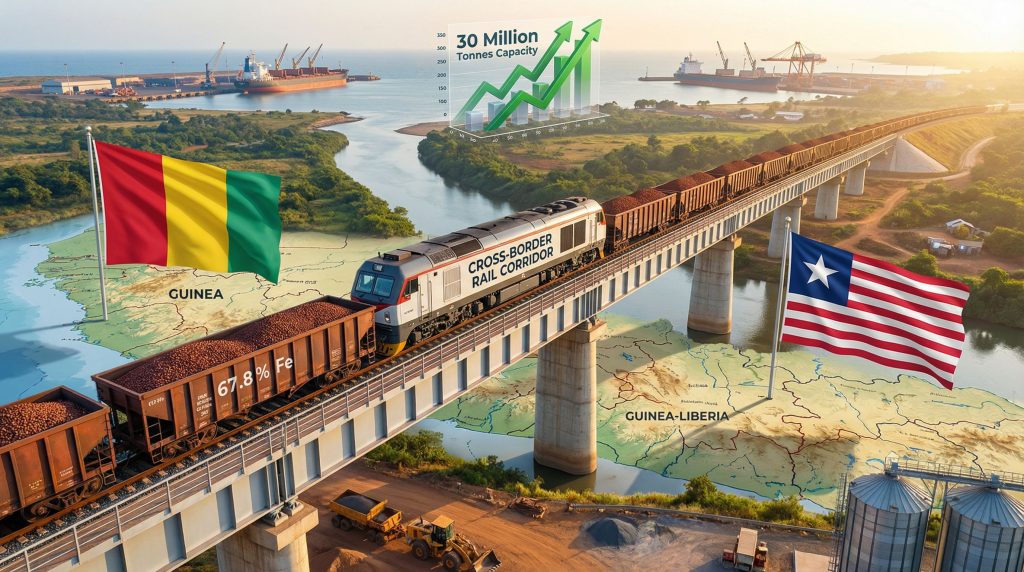
The Kon Kweni project exemplifies this strategic approach, with its 751.9 million tonnes of direct ship ore resource base providing sufficient scale to justify multi-corridor utilisation. Furthermore, the project's 209 million tonnes of high-grade ore at 67.8% iron content represents premium material that can command enhanced pricing through strategic route selection and market-specific delivery optimisation.
Geopolitical Implications of Alternative Export Channels
Mining operations developing cross-border infrastructure access create strategic alignment opportunities with different international supply chains, fundamentally altering their position in global commodity markets. Companies can leverage alternative corridors to position themselves as Western-aligned suppliers while maintaining operational flexibility across diverse customer bases.
Strategic Market Positioning Insight: Mining operations with multi-corridor access can differentiate themselves through supply chain transparency and geopolitical alignment, potentially commanding premium pricing of 15-25% above standard grades for specialised customer requirements.
Enhanced Market Access Through Route Diversification
- Direct access to Western steelmaker supply chains seeking China-alternative sourcing
- Reduced exposure to single-market demand fluctuations
- Strategic positioning during trade policy shifts and sanctions regimes
- Enhanced long-term contract negotiation leverage
How Do Liberian Rail Access Agreements Impact Regional Mining Economics?
Cost-Benefit Analysis of Cross-Border Transportation
Cross-border rail agreements create shared infrastructure investment models that distribute capital requirements across multiple users while optimising operational efficiency through coordinated capacity utilisation. The Yekepa-Buchanan rail line represents this multi-user approach, with government ownership facilitating access for various mining operations under independently operated management structures.
Infrastructure Investment Distribution Model:
| Component | Investment Category | Shared Cost Structure | Economic Impact |
|---|---|---|---|
| Rail Maintenance | Operational | Multi-user allocation | Reduced per-tonne costs |
| Port Facilities | Capital Enhancement | Capacity-based sharing | Enhanced throughput efficiency |
| Loading Systems | Specialised Equipment | Quality-specific investment | Premium handling capabilities |
| Digital Integration | Technology Platform | Coordinated implementation | Optimised scheduling efficiency |
The economic advantages become particularly pronounced during scaling phases, where operations can transition from initial production of 2 million tonnes annually to 5 million tonnes annually in Phase 1, ultimately reaching 30 million tonnes annually by the targeted 2029 Phase 2 expansion.
Revenue Optimisation Through Strategic Corridor Selection
Mining operations with cross-border access can implement dynamic routing strategies that optimise revenue through market-specific delivery timing and quality positioning. In addition, high-grade iron ore at 67.8% iron content represents direct-ship quality material requiring minimal processing, creating competitive advantages in markets demanding consistent specification delivery.
Market-Specific Revenue Enhancement:
- Premium pricing through Western supply chain alignment
- Seasonal demand balancing across multiple port facilities
- Customer-specific quality delivery optimisation
- Enhanced contract negotiation flexibility through alternative routing options
Regional employment creation through multi-user infrastructure extends beyond direct mining operations, encompassing transportation corridor personnel, port facility workers, and downstream service providers. Consequently, this economic multiplier effect creates sustainable development opportunities that extend across multiple jurisdictions and economic sectors.
What Technical Infrastructure Requirements Enable Successful Cross-Border Mining Logistics?
Multi-User Rail System Design Considerations
Successful cross-border mining logistics require standardised technical specifications that accommodate multiple operators while maintaining operational efficiency and safety protocols. Rail gauge compatibility, loading system integration, and coordinated scheduling protocols form the foundation of effective multi-user infrastructure.
Critical Technical Specifications:
Rail Infrastructure Requirements:
- Standardised gauge systems across international borders
- Coordinated maintenance scheduling between multiple users
- Integrated digital tracking and optimisation platforms
- Emergency response protocols for cross-border incidents
Port Integration Standards:
- Bulk handling facilities designed for 67.8% Fe direct-ship ore
- Specialised storage systems maintaining quality specifications
- Loading efficiency optimisation for various vessel categories
- Quality control protocols ensuring consistent specification delivery
Port Integration and Handling Capacity Optimisation
The Port of Buchanan serves as the Atlantic Ocean gateway for rail access for Guinea iron-ore exports, requiring specialised handling infrastructure capable of maintaining premium ore quality throughout the logistics chain. Direct-ship ore handling demands contamination control systems and blending facilities that ensure consistent delivery of high-grade specifications.
Technical Infrastructure Requirements:
| System Component | Specification Requirement | Quality Impact | Capacity Optimisation |
|---|---|---|---|
| Storage Facilities | Segregated high-grade ore stockpiles | Prevents contamination | Enables simultaneous multi-user operations |
| Loading Systems | Variable-rate conveyor systems | Maintains consistent quality | Optimises vessel loading efficiency |
| Digital Integration | Real-time quality monitoring | Ensures specification compliance | Facilitates predictive maintenance |
| Handling Equipment | Specialised ore-handling machinery | Minimises degradation | Maximises throughput capacity |
Coordinated capacity planning becomes essential during peak export periods, where multiple mining operations require simultaneous access to rail and port facilities. Technical coordination through jointly established committees ensures operational efficiency while maintaining safety and quality standards across all user operations.
How Do Environmental and Regulatory Frameworks Affect Cross-Border Mining Operations?
Dual-Jurisdiction Environmental Compliance Requirements
Cross-border mining operations navigate complex regulatory landscapes requiring coordination between multiple governmental authorities and environmental oversight bodies. The regulatory framework established through the 2019 implementation agreement between Guinea and Liberia governments provides the legal foundation for mineral transportation across international borders.
Environmental Assessment Timeline Framework:
| Assessment Phase | Jurisdiction | Timeline Estimate | Coverage Scope |
|---|---|---|---|
| Mining Operations ESIA | Guinea | 6-12 months | Extraction and processing facilities |
| Infrastructure ESIA | Liberia | 12-18 months | Rail corridor and port facilities |
| Cross-Border Permits | Both jurisdictions | 3-6 months | Transit and export authorisations |
| Ongoing Monitoring | Coordinated oversight | Continuous | Joint environmental compliance |
October 2025 permit submissions to relevant authorities in both Guinea and Liberia initiated the formal regulatory approval process, with Phase 1 mining activities covering initial production scaling from 2 million tonnes annually to 5 million tonnes annually. Subsequently, separate regulatory processes will address Phase 2 expansion to 30 million tonnes annually targeted for 2029.
Regulatory Coordination Mechanisms
Effective cross-border operations require integrated regulatory oversight through jointly established technical committees and coordinated approval processes. The Technical Committee with the Guinea government facilitates ongoing coordination between mining operations and regulatory authorities throughout project development and operational phases.
Regulatory Coordination Elements:
- Joint technical oversight committees for project monitoring
- Harmonised environmental compliance standards across jurisdictions
- Coordinated enforcement protocols for cross-border operations
- Shared environmental monitoring and reporting requirements
Construction timelines targeting Q1 2026 commencement depend on successful completion of environmental approvals in both jurisdictions, demonstrating the critical importance of coordinated regulatory processes for cross-border infrastructure development.
What Market Positioning Strategies Emerge from Alternative Export Access?
Supply Chain Differentiation Through Route Selection
Mining operations with multi-corridor access can implement strategic supply chain positioning that differentiates their products through geopolitical alignment and market-specific delivery optimisation. The explicit positioning as an alternative to China-dominated supply chains creates competitive advantages among Western steelmakers seeking diversified sourcing strategies.
Strategic Market Positioning Framework:
- Western-aligned supply chain marketing for geopolitically sensitive customers
- Direct-ship quality positioning through 67.8% iron content specifications
- Reliability messaging through multi-corridor operational redundancy
- Premium pricing strategies for specialised customer requirements
Furthermore, the strategic positioning of rail access for Guinea iron-ore exports within the broader context of mining industry evolution demonstrates how infrastructure development aligns with global market shifts. The high-grade ore resource at Kon Kweni, with its 209 million tonnes at 67.8% Fe, represents direct-ship quality material that requires minimal processing.
Investment Attractiveness Through Infrastructure Diversification
Multi-corridor infrastructure access enhances project investment profiles by reducing operational risks and providing multiple market exit strategies. Infrastructure diversification demonstrates operational resilience that attracts international investors seeking stable, long-term commodity exposure with reduced geopolitical risk profiles.
Investment Enhancement Factors:
- Reduced project risk through multiple export pathway options
- Enhanced asset valuation through operational flexibility
- Improved financing terms due to diversified market access
- Strategic partnership opportunities with corridor infrastructure stakeholders
The six-year development timeline culminating in Liberian legislature ratification demonstrates the persistence and strategic planning required to establish cross-border infrastructure access, creating sustainable competitive advantages for operations willing to invest in complex regulatory coordination processes.
The next major ASX story will hit our subscribers first
How Do Production Scaling Scenarios Utilise Multi-Corridor Infrastructure?
Phase-Based Capacity Utilisation Models
Mining operations implementing phased expansion strategies can optimise infrastructure utilisation through dynamic capacity allocation across multiple export corridors. The transition from Phase 1 operations (2-5 million tonnes annually) to Phase 2 expansion (30 million tonnes annually by 2029) demonstrates strategic scaling approaches that leverage infrastructure investments across multiple operational phases.
Phase 1 Optimisation Strategies (2-5 Million Tonnes):
- Single-corridor focus with backup access arrangements
- Market testing across different export channels
- Cost optimisation through preferred route selection
- Operational learning curve management with gradual scaling
Phase 2 Expansion Utilisation (Up to 30 Million Tonnes):
- Dual-corridor utilisation for maximum throughput capacity
- Market-specific allocation strategies based on customer requirements
- Risk distribution across multiple infrastructure systems
- Enhanced negotiating leverage with logistics service providers
Long-Term Infrastructure Investment Coordination
Sustained infrastructure development requires coordinated investment planning among multiple stakeholders, including mining operators, government authorities, and infrastructure service providers. For instance, companies that have successfully resumed haulage operations demonstrate how coordinated infrastructure management enhances operational efficiency. Shared upgrade costs across multiple users create economies of scale that reduce individual operator investment requirements.
Infrastructure Development Coordination:
- Technology standardisation across corridor systems
- Coordinated capacity expansion planning among multiple users
- Regional economic development through mining infrastructure anchoring
- Skills development and technology transfer through multi-user operations
The independently operated multi-user corridor model facilitates broader economic opportunities beyond mining operations, including agricultural and industrial freight utilisation that creates sustainable revenue streams for infrastructure maintenance and enhancement.
What Competitive Dynamics Shape West African Iron Ore Export Strategies?
Market Share Competition Through Infrastructure Access
West African iron ore producers compete through strategic infrastructure positioning that enables timing advantages in reaching specific customer markets and cost competitiveness across different transportation routes. Access to multiple export corridors creates negotiating leverage with customers and logistics providers while reducing vulnerability to infrastructure disruptions.
Competitive Positioning Elements:
- Strategic timing advantages through multiple corridor access
- Quality differentiation through specialised handling systems
- Cost competitiveness across various transportation routes
- Reliability enhancement through operational redundancy
The explicit positioning as Western-aligned suppliers creates market differentiation among steelmakers seeking supply chain diversification away from traditional China-dominated export corridors. This strategic positioning, particularly relevant to current iron ore price trends, potentially commands premium pricing for operators willing to invest in complex cross-border infrastructure development.
Regional Mining Hub Development Implications
Successful cross-border infrastructure development creates regional mining hub effects that attract additional mining investments and related service industry development. The multi-user corridor model facilitates economies of scale that benefit all participating operators while creating sustainable economic development opportunities across multiple jurisdictions.
Regional Development Multiplier Effects:
- Attraction of additional mining investments through proven infrastructure
- Service industry development around multi-user corridors
- Skills development and technology transfer opportunities
- Economic multiplier effects from diversified mining operations
However, this development must be considered within the broader resources sector impact on regional economies. Technology transfer through multi-user infrastructure creates capacity building opportunities that extend beyond direct mining operations.
How Do Resource Quality Specifications Influence Export Route Selection?
High-Grade Iron Ore Handling Requirements
Direct-ship quality iron ore at 67.8% iron content requires specialised handling infrastructure that maintains quality specifications throughout the transportation and export process. High-grade ore handling demands contamination control systems, segregated storage facilities, and quality assurance protocols that justify premium pricing strategies.
Quality Specification Impact Framework:
| Quality Metric | Technical Requirement | Infrastructure Investment | Market Positioning |
|---|---|---|---|
| 67.8% Fe Content | Specialised storage and blending systems | Enhanced facility specifications | 15-25% pricing premium above standard grades |
| Direct-Ship Quality | Minimal processing requirements | Reduced handling complexity | Premium market access for steel industry customers |
| Consistency Standards | Advanced quality control systems | Integrated monitoring platforms | Long-term contract eligibility with major steelmakers |
| Contamination Control | Dedicated transport systems | Segregated handling infrastructure | Steel industry preference for reliable specification delivery |
Market-Specific Quality Positioning
High-grade iron ore creates strategic positioning opportunities with premium steel industry customers seeking consistent specification delivery and reduced processing requirements. Quality-based pricing strategies through optimised route selection enable mining operations to capture value premiums for superior product specifications.
Premium Market Access Strategy:
- Steel industry targeting through guaranteed quality specifications
- Brand development through consistent specification delivery
- Long-term contract positioning with major industrial customers
- Quality assurance differentiation in competitive commodity markets
The direct-ship quality characteristics of high-grade ore reduce customer processing requirements, creating competitive advantages in markets where processing capacity constraints or environmental regulations favour ready-to-use materials over lower-grade alternatives requiring extensive beneficiation.
What Risk Management Frameworks Support Multi-Corridor Operations?
Operational Risk Mitigation Strategies
Multi-corridor operations require comprehensive risk management frameworks that address operational disruptions, regulatory coordination challenges, and market volatility impacts across multiple jurisdictions and infrastructure systems. Diversified transportation capacity reservations provide operational flexibility during infrastructure maintenance periods or political disruptions.
Risk Distribution Strategies:
- Emergency rerouting protocols during corridor disruptions
- Insurance coverage across multiple jurisdiction operations
- Contingency planning for infrastructure maintenance periods
- Coordinated emergency response between multiple stakeholders
The six-year development timeline for securing cross-border infrastructure access demonstrates the regulatory complexity and persistence requirements for establishing sustainable multi-corridor operations, highlighting the importance of long-term strategic planning and stakeholder relationship management.
Financial Risk Distribution Models
Cross-border operations face multiple currency exposures, regulatory compliance costs, and infrastructure investment requirements that demand sophisticated financial risk management approaches. Revenue stream diversification through multiple corridors provides natural hedging against market volatility and operational disruptions.
Financial Risk Management Elements:
- Currency exposure management across different export markets
- Capital allocation optimisation between infrastructure alternatives
- Long-term contract balancing across various export routes
- Revenue diversification through market-specific pricing strategies
Phase-based investment strategies enable mining operations to optimise capital deployment across operational scaling phases, with Phase 1 investments (2-5 million tonnes annually) providing proof-of-concept validation before committing to Phase 2 expansion capital (30 million tonnes annually).
How Do Local Economic Development Strategies Integrate with Cross-Border Mining Infrastructure?
Community Benefit Optimisation Through Multi-User Systems
Multi-user infrastructure creates extended economic opportunities that benefit communities across transportation corridors and port facilities beyond direct mining operation impacts. Employment creation spans multiple skill categories and geographic regions, creating sustainable economic development that extends far beyond traditional mining employment.
Community Economic Development Framework:
- Employment creation across extended transportation corridors
- Local service provider development opportunities
- Skills training programmes for multi-jurisdictional operations
- Revenue sharing mechanisms for affected communities
The independently operated multi-user model facilitates broader economic participation through agricultural and industrial freight opportunities that utilise shared infrastructure investments, creating sustainable revenue streams that support long-term community development beyond mining operation lifecycles.
Regional Economic Integration Through Mining Infrastructure
Cross-border infrastructure development creates regional economic integration opportunities that extend trade facilitation beyond mining operations to include agricultural products, industrial freight, and technology transfer initiatives that benefit broader regional economic development.
Regional Integration Benefits:
- Cross-border trade facilitation beyond mining operations
- Technology transfer and capacity building initiatives
- Infrastructure sharing creating economies of scale
- Sustainable development through diversified economic activities
The 2019 implementation agreement between Guinea and Liberia governments established institutional frameworks for ongoing economic cooperation that extends beyond mineral transportation to encompass broader regional development initiatives and cross-border economic integration strategies.
What Future Scenarios Could Transform West African Iron Ore Export Dynamics?
Technology Integration Opportunities
Emerging technologies offer transformation potential for cross-border mining logistics through automated transportation systems, real-time optimisation platforms, and predictive maintenance capabilities that enhance operational efficiency while reducing infrastructure operating costs across multi-user systems.
Technology Enhancement Opportunities:
- Automated transportation systems across corridors
- Real-time tracking and optimisation platforms
- Predictive maintenance for shared infrastructure
- Digital integration of cross-border operations
Advanced quality control systems utilising continuous monitoring technologies can ensure consistent specification delivery for 67.8% Fe direct-ship ore while optimising blending operations and storage management across multiple user facilities.
Market Evolution Scenarios
Global steel industry evolution toward environmental sustainability and supply chain transparency creates strategic opportunities for Western-aligned suppliers offering high-grade iron ore through geopolitically stable transportation corridors. Moreover, carbon footprint considerations may increasingly influence route selection and supplier preferences.
The evolution of commodity trading dynamics continues to reshape how rail access for Guinea iron-ore exports fits within global supply chain strategies. Additionally, the recent developments at Guinea's Simandou mine demonstrate the increasing importance of infrastructure diversification in West African iron ore operations.
Market Evolution Drivers:
- Environmental regulations influencing transportation choices
- Geopolitical developments impacting corridor access preferences
- Steel industry demand shifts affecting route utilisation
- Technology integration enabling operational optimisation
New mining discoveries throughout West Africa may create additional infrastructure utilisation opportunities while regional cooperation initiatives could expand cross-border infrastructure development beyond current Guinea-Liberia coordination to encompass broader West African integration strategies.
Furthermore, recent developments highlighting US miners challenging Rio Tinto's Simandou project underscore the strategic importance of alternative rail access arrangements for Guinea's iron ore exports, demonstrating how infrastructure diversification becomes crucial in competitive market environments.
Disclaimer: This analysis contains forward-looking statements regarding mining operations, infrastructure development, and market conditions. Actual results may differ materially from projections due to regulatory changes, market volatility, operational challenges, and geopolitical developments. Investment decisions should be based on comprehensive due diligence and professional financial advice.
Looking to capitalise on West Africa's evolving mining infrastructure opportunities?
Discovery Alert's proprietary Discovery IQ model delivers real-time alerts on significant iron ore and multi-commodity discoveries across global markets, instantly empowering subscribers to identify actionable opportunities as complex supply chain developments unfold. Begin your 30-day free trial today to position yourself ahead of market movements in this rapidly evolving sector, where infrastructure developments can create substantial trading and investment opportunities.