June 27, 2026
Battery energy storage systems continue evolving through technological breakthroughs that challenge established performance paradigms. While lithium-ion technologies dominate current market deployments, alternative battery chemistries advance through systematic research initiatives targeting specific performance limitations. Understanding how emerging battery technologies achieve competitive energy densities requires examining the technical mechanisms, material innovations, and engineering approaches that enable superior electrochemical performance. Furthermore, developments in mining sustainability trends and critical raw materials supply continue to shape the battery technology landscape.
What Makes NanoMalaysia's Sodium-Ion Battery Achievement Significant?
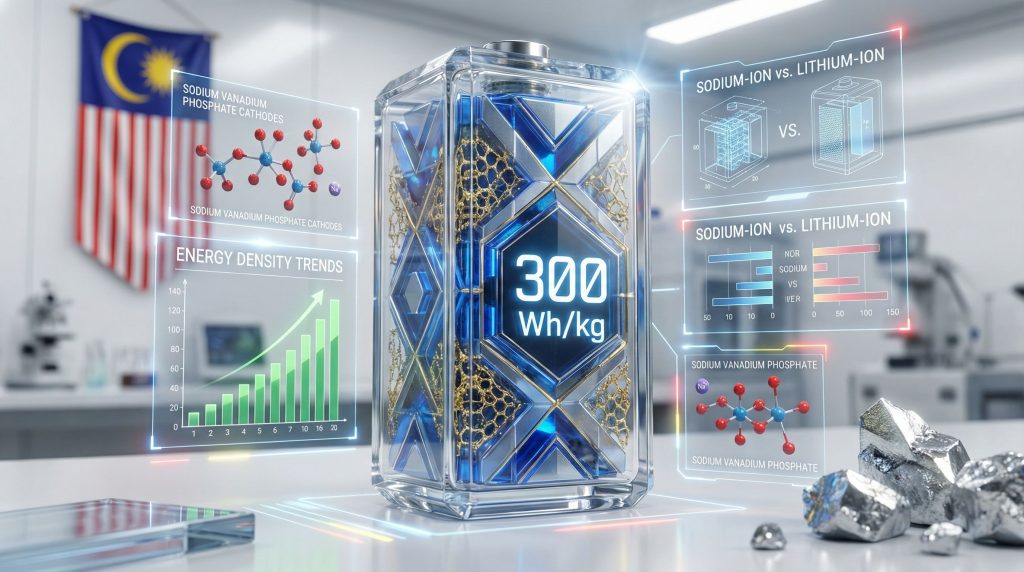
The NanoMalaysia sodium-ion battery prototype represents a substantial leap in sodium-ion energy density capabilities, achieving 300 Wh/kg performance that significantly exceeds current commercial sodium-ion deployments. This milestone places the prototype among the most advanced sodium-ion systems reported globally, demonstrating performance characteristics that challenge conventional assumptions about sodium-ion battery limitations.
Understanding the 300 Wh/kg Energy Density Milestone
Current commercial sodium-ion batteries typically achieve energy densities between 90-160 Wh/kg at the cell level, while state-of-the-art laboratory prototypes generally reach 160-200 Wh/kg benchmarks. The 300 Wh/kg achievement represents approximately 50-87% improvement over existing commercial standards and 50% advancement beyond typical laboratory prototype performance levels.
For comparative context, commercial lithium iron phosphate (LFP) batteries generally achieve 140-160 Wh/kg, with recent advanced products exceeding 200 Wh/kg. This positioning demonstrates that the prototype approaches competitive performance levels with established lithium-ion technologies while maintaining sodium-ion inherent advantages in safety and supply chain resilience.
| Battery Technology | Energy Density Range | Development Stage |
|---|---|---|
| Commercial Sodium-Ion | 90-160 Wh/kg | Market Deployment |
| Laboratory Sodium-Ion | 160-200 Wh/kg | Research Phase |
| Commercial LFP | 140-160 Wh/kg | Market Deployment |
| Advanced LFP | 200+ Wh/kg | Commercial Production |
| NanoMalaysia Prototype | 300 Wh/kg | Prototype Stage |
NASICON Technology Architecture Explained
The prototype utilises NASICON (Na Super Ionic CONductor) structures that enable rapid sodium-ion transport through optimised crystalline frameworks. NASICON materials provide three critical performance advantages:
• Enhanced ionic conductivity through structured sodium-ion pathways that reduce transport resistance
• Structural stability during charge-discharge cycling that prevents material degradation
• High-rate capability enabling fast charging and discharging without performance penalties
These architectural advantages address fundamental limitations in conventional sodium-ion battery designs where ionic transport bottlenecks and structural instability typically constrain energy density and cycling performance. The NASICON framework creates ordered sodium-ion channels that facilitate efficient electrochemical reactions essential for high-performance energy storage applications.
When big ASX news breaks, our subscribers know first
Which Technical Innovations Enable Superior Performance in This Prototype?
The NanoMalaysia sodium-ion battery prototype incorporates three integrated technological components that collectively enable the exceptional 300 Wh/kg energy density achievement. Understanding how these innovations function together reveals the systematic engineering approach required to overcome traditional sodium-ion performance limitations.
Sodium Vanadium Phosphate (NVP) Cathode Design
Sodium vanadium phosphate (NVP) cathode material provides superior electrochemical properties compared to conventional sodium-ion cathode chemistries. NVP offers several critical performance characteristics:
• Stable voltage output that maintains consistent energy delivery throughout discharge cycles
• Structural integrity during sodium-ion insertion and extraction processes that prevents capacity degradation
• Enhanced energy density through optimised material utilisation and reduced inactive mass
The vanadium-phosphate framework creates robust crystalline structures that accommodate sodium-ion movement without experiencing the expansion and contraction stresses that typically limit cathode material longevity. In addition, this structural stability directly contributes to improved cycle life and energy retention characteristics essential for practical energy storage applications.
Graphene Nano-Additive Integration
Graphene nano-additives enhance electrical conductivity within the cathode material by creating electron transport pathways that reduce internal resistance. The integration of graphene provides multiple performance improvements:
• Improved electron conductivity that reduces voltage drops during charge and discharge operations
• Enhanced power delivery capability through reduced polarisation losses
• Better electrochemical utilisation of active cathode materials through improved charge transfer kinetics
Manufacturing scalability considerations for graphene integration involve specialised processing techniques to achieve uniform distribution throughout the cathode material while controlling costs associated with high-quality graphene production. The successful integration of graphene nano-additives at prototype scale demonstrates technical feasibility for future commercial production.
NESTI Development Framework Analysis
The NanoMalaysia Energy Storage Technology Initiative (NESTI) provides structured research methodology through collaboration with International Battery Centre. This framework emphasises:
• Standardised testing protocols that ensure reproducible performance measurements
• Quality assurance procedures that validate prototype performance claims
• Systematic scaling pathways that bridge laboratory achievements with commercial production requirements
The collaborative approach combines NanoMalaysia's research capabilities with specialised battery testing infrastructure, enabling comprehensive validation of the prototype's performance characteristics under standardised conditions that support technology readiness level advancement.
How Do Manufacturing Costs Impact Commercial Viability?
Manufacturing cost structures represent the most significant barrier to widespread sodium-ion battery adoption, despite technical performance improvements. Current production economics create substantial challenges for market competitiveness that require systematic analysis of cost drivers and scaling requirements. However, innovations in battery recycling breakthrough technologies could help address some cost concerns.
Current Cost Structure Challenges
Manufacturing costs for sodium-ion battery systems are estimated at minimum 30% higher than equivalent lithium-ion systems. This cost premium stems from several factors:
• Limited production volumes that prevent economies of scale benefits
• Specialised manufacturing equipment requirements for sodium-ion specific processes
• Higher material processing costs despite abundant raw material availability
• Quality control complexity associated with emerging technology production
The cost differential creates significant market barriers where performance advantages must justify premium pricing in applications that prioritise safety, supply chain resilience, or operational characteristics over lowest initial cost.
Supply Chain Advantages Assessment
Despite manufacturing cost challenges, sodium-ion batteries offer substantial supply chain advantages over lithium-ion systems:
| Supply Chain Factor | Sodium-Ion | Lithium-Ion |
|---|---|---|
| Raw Material Abundance | High (sodium globally distributed) | Limited (concentrated geographic sources) |
| Geopolitical Risk | Low (stable supply sources) | High (dependent on specific regions) |
| Price Volatility | Stable (commodity pricing) | Volatile (market speculation) |
| Processing Complexity | Moderate (established methods) | High (specialised techniques) |
| Resource Sustainability | Excellent (renewable sources) | Constrained (finite deposits) |
These advantages create long-term value propositions that may justify cost premiums in applications where supply security and price stability outweigh initial capital cost considerations. Furthermore, advances in battery-grade lithium processing continue to influence comparative economics.
Path to Cost Competitiveness
Achieving cost parity with lithium-ion systems requires coordinated scaling initiatives across multiple development areas:
• Production volume scaling to minimum 10-20 GWh annual capacity to achieve meaningful cost reductions
• Technology learning curve progression through cumulative production experience
• Supply chain maturation enabling specialised equipment and material cost reductions
• Investment coordination between research institutions, manufacturing partners, and end-user applications
Industry analysis suggests that sodium-ion cost competitiveness requires sustained investment in scaling infrastructure combined with market demand sufficient to justify capital expenditure in dedicated manufacturing facilities.
What Are the Safety and Performance Trade-offs?
Sodium-ion battery systems demonstrate inherent safety advantages over lithium-ion technologies while accepting specific performance trade-offs that influence application suitability. Understanding these characteristics enables informed decisions about deployment scenarios where sodium-ion advantages justify performance compromises.
Thermal Stability Characteristics
Sodium-ion chemistries offer superior thermal stability because sodium is chemically less reactive than lithium, reducing exothermic decomposition risks during thermal runaway scenarios. Key safety advantages include:
• Higher thermal runaway threshold temperatures that provide greater safety margins
• Reduced fire risk through lower energy release during failure modes
• Improved thermal management requirements with less aggressive cooling system needs
These characteristics make sodium-ion systems particularly suitable for applications where thermal safety represents a critical operational requirement, such as densely populated areas or critical infrastructure environments where fire risk creates significant liability concerns.
Weight and Volume Considerations
The fundamental physics of sodium versus lithium creates unavoidable volumetric and gravimetric penalties that impact system design:
| Performance Metric | Sodium-Ion Impact | Application Implications |
|---|---|---|
| Atomic Mass | 3.3x heavier than lithium | Reduced gravimetric energy density |
| Ionic Radius | Larger ion size | Increased electrode material requirements |
| Cell Voltage | Lower operating voltage | Higher cell count for equivalent voltage |
| System Weight | 15-25% heavier per kWh | Transportation and installation impacts |
These physical constraints cannot be eliminated through technological advancement and represent permanent trade-offs that influence application suitability based on weight and space requirements.
Cycling Performance and Longevity
While specific cycle life data for the NanoMalaysia sodium-ion battery prototype remains proprietary, NASICON-based systems generally demonstrate excellent cycling stability through structural advantages that resist degradation mechanisms common in other battery chemistries.
Expected performance characteristics include:
• Enhanced cycle life through reduced structural stress during charge-discharge operations
• Stable capacity retention over extended operational periods
• Reduced maintenance requirements compared to systems with active thermal management needs
Disclaimer: Specific cycle life performance data for the NanoMalaysia prototype requires validation through extended testing protocols that may not be publicly available at the current development stage.
Which Market Applications Could Benefit Most?
Sodium-ion battery technology with improved energy density characteristics enables deployment in applications where safety, supply chain resilience, and operational reliability justify cost premiums over conventional lithium-ion systems.
Grid-Scale Energy Storage Opportunities
Grid-scale energy storage represents the primary market opportunity for high-energy-density sodium-ion systems, particularly for applications requiring:
• Multi-hour discharge duration (4-8 hours) where volumetric constraints are less critical
• Enhanced safety requirements in populated areas where fire risk creates liability concerns
• Supply chain security for strategic infrastructure applications
• Long operational lifespans (15-20 years) where durability advantages justify higher initial costs
Grid applications typically prioritise safety, reliability, and total cost of ownership over minimising initial capital expenditure, creating favourable economic conditions for sodium-ion deployment despite current cost premiums.
Industrial and Commercial Use Cases
Industrial backup power applications benefit from sodium-ion safety characteristics and supply chain advantages:
• Critical facility backup systems where fire safety requirements are stringent
• Process industry applications with extreme temperature or hazardous environment exposure
• Remote installation scenarios where maintenance access is limited and reliability is essential
Commercial applications include load shifting and demand management systems where multi-hour discharge capability and safety characteristics provide operational advantages that justify cost differentials compared to lithium-ion alternatives.
Niche Market Positioning Strategy
Market positioning focuses on specialised applications where sodium-ion advantages create competitive differentiation:
• Cold climate operations where low-temperature performance exceeds lithium-ion capabilities
• Safety-critical installations in urban environments or sensitive facilities
• Supply-chain-sensitive applications requiring domestic or allied-nation sourcing requirements
• Long-duration storage applications where cycle life and calendar aging advantages provide economic benefits
This positioning strategy acknowledges that sodium-ion technology serves complementary market segments rather than directly competing with lithium-ion in mainstream applications where cost optimisation dominates decision criteria.
How Does This Development Impact Global Sodium-Ion Competition?
The NanoMalaysia sodium-ion battery prototype advancement occurs within a competitive international research landscape where multiple organisations pursue sodium-ion commercialisation through different technological approaches and market strategies.
International Research Landscape
Chinese manufacturers lead current sodium-ion commercialisation efforts with companies like CATL and BYD advancing production-scale systems, though specific technical performance data for comparative analysis remains proprietary. European research initiatives receive substantial funding through Horizon Europe programs focusing on strategic battery technology development, while North American programs emphasise supply chain security and domestic manufacturing capabilities.
The Malaysian development represents Southeast Asian entry into advanced sodium-ion research, potentially creating regional manufacturing capabilities that serve Asia-Pacific markets with locally-developed technology solutions. Moreover, innovations in direct lithium extraction innovation continue to influence global competitive dynamics.
Technology Readiness Level Advancement
The prototype achievement advances sodium-ion technology through several development milestones:
• Laboratory validation of 300 Wh/kg energy density demonstrates technical feasibility
• Systematic testing protocols through NESTI framework provide performance verification
• Scaling pathway identification toward pilot production and commercial validation
Technology readiness progression from prototype to commercial deployment typically requires 3-5 years for battery technologies, depending on manufacturing infrastructure development and market validation activities.
Malaysia's Strategic Position
Malaysia's sodium-ion development aligns with broader strategic initiatives through the National Energy Transition Roadmap and Ministry of Science, Technology and Innovation (MOSTI) support for advanced battery research. This positioning creates potential advantages:
• Regional manufacturing hub development serving Southeast Asian markets
• Technology transfer partnerships with international battery companies seeking production locations
• Supply chain integration with existing electronics and automotive manufacturing infrastructure
• Market access to growing Asian energy storage deployment markets
The strategic development approach suggests Malaysian recognition of battery technology as critical infrastructure requiring domestic capabilities rather than import dependence.
The next major ASX story will hit our subscribers first
What Are the Key Challenges for Market Adoption?
Despite technical performance achievements, sodium-ion battery commercialisation faces substantial challenges that require coordinated solutions across multiple development areas.
Production Scaling Requirements
Manufacturing infrastructure development represents the primary bottleneck for sodium-ion commercialisation. Critical requirements include:
• Specialised production equipment designed for sodium-ion specific manufacturing processes
• Quality control systems capable of validating performance specifications at production volumes
• Workforce training programmes for technicians and engineers unfamiliar with sodium-ion technologies
• Capital investment estimated at $100-500 million for gigawatt-scale production facilities
Scaling challenges intensify because sodium-ion manufacturing cannot directly utilise existing lithium-ion production infrastructure without significant modifications and equipment upgrades.
Market Demand Development
Customer education and technology acceptance require demonstrating sodium-ion advantages through real-world deployment validation rather than laboratory performance claims. Market development challenges include:
• Performance validation in operational environments over multi-year periods
• Cost justification for premium pricing compared to established lithium-ion alternatives
• Supply chain confidence from customers requiring assured long-term technology support
• Standards development for safety, performance, and grid integration requirements
Industry analysis suggests that market acceptance typically requires 2-3 years of successful commercial deployments before broad customer adoption occurs.
Regulatory and Standards Framework
Safety certification processes for sodium-ion systems require establishing testing protocols and performance standards specific to sodium-ion chemistry characteristics. Regulatory development needs include:
• International safety standards (IEC, UL) adapted for sodium-ion specific requirements
• Grid integration approvals for utility-scale deployment applications
• Transportation regulations for sodium-ion battery shipping and handling
• Environmental impact assessments for manufacturing and end-of-life disposal
Regulatory framework development typically proceeds parallel to technology advancement but can create deployment delays if standards lag behind technical readiness.
Evaluating the Commercial Prospects
The NanoMalaysia sodium-ion battery prototype achievement demonstrates significant technical progress while highlighting the complex pathway from laboratory performance to commercial viability. Understanding realistic development timelines and market opportunities enables informed assessment of sodium-ion technology prospects.
Near-Term Development Priorities
Technology advancement from prototype to commercial readiness requires systematic progression through several development phases:
• Pilot production scaling to validate manufacturing processes at intermediate volumes
• Partnership development with industrial partners for technology validation and market development
• Investment securing for scaling infrastructure and commercial demonstration projects
• Market entry timing coordination with customer demand development and competitive positioning
Realistic timelines suggest 3-5 years for progression from current prototype stage to initial commercial deployment, assuming adequate investment and partnership development.
Long-Term Industry Impact Assessment
Sodium-ion technology with enhanced energy density capabilities addresses specific market segments where safety, supply chain, and operational characteristics provide competitive advantages. Long-term impact assessment suggests:
• Complementary positioning alongside lithium-ion rather than wholesale market displacement
• Niche market leadership in safety-critical and supply-chain-sensitive applications
• Regional manufacturing opportunities in markets prioritising supply chain security
• Technology diversification benefits for energy storage ecosystem resilience
The technology represents incremental advancement in energy storage capabilities rather than disruptive breakthrough that fundamentally alters market dynamics.
Disclaimer: Commercial prospects depend on numerous factors including continued technical development, manufacturing scaling success, market acceptance rates, and competitive positioning relative to advancing lithium-ion technologies. Investment and deployment decisions should consider these uncertainties alongside technical performance achievements.
Understanding sodium-ion battery development requires recognising both technical achievements and commercial realities. While the NanoMalaysia sodium-ion battery prototype demonstrates impressive energy density advancement, successful commercialisation depends on addressing manufacturing, market, and regulatory challenges through sustained investment and strategic partnerships. Consequently, the technology offers valuable diversification for energy storage applications while complementing rather than replacing established battery technologies in the evolving global energy storage ecosystem. According to recent industry developments, European sodium-ion manufacturers are also making significant strides in this competitive landscape.
Ready to Capitalise on Emerging Battery Technology Discoveries?
Discovery Alert's proprietary Discovery IQ model delivers real-time alerts on significant ASX mineral discoveries, including companies developing critical battery materials and energy storage technologies that power next-generation innovations. Explore Discovery Alert's discoveries page to understand how major mineral discoveries have generated substantial returns for early investors, then begin your 14-day free trial to secure your market-leading advantage in this rapidly evolving sector.