June 30, 2026
The global petrochemical industry operates within an intricate network of feedstock supply chains that have evolved over decades to optimize efficiency and cost structures. When these established pathways face disruption, the reverberations extend far beyond immediate price adjustments, creating systemic vulnerabilities that expose the delicate balance between regional production capabilities and international trade dependencies. The naphtha market US Iran conflict impact represents a critical case study in how major geopolitical events reshape these fundamental market dynamics, requiring examination of both immediate supply constraints and the longer-term structural adaptations that emerge from crisis-driven market evolution.
The Critical Role of Naphtha in Global Petrochemical Production
Naphtha functions as the backbone of modern petrochemical manufacturing, serving as the primary feedstock for producing essential chemical building blocks that underpin countless industrial processes. This light hydrocarbon fraction, typically derived from crude oil refining operations, feeds directly into steam crackers where thermal decomposition creates the foundation chemicals for plastic production, synthetic fibers, and industrial solvents.
The significance of naphtha extends beyond simple volume metrics. Its molecular composition and consistent quality characteristics make it the preferred feedstock for ethylene production, which accounts for approximately 180 million tonnes of global annual capacity. Furthermore, this ethylene subsequently transforms into polyethylene, ethylene glycol, and styrene, forming the chemical backbone for packaging materials, automotive components, and construction products.
Global Naphtha Utilization Breakdown:
- Ethylene cracker feedstock: 65% of consumption
- Gasoline blending component: 25% of consumption
- Aromatics production: 8% of consumption
- Industrial solvents and specialty chemicals: 2% of consumption
Regional consumption patterns reveal stark geographic dependencies that have shaped international trade flows for decades. Asian petrochemical complexes consume nearly 230 million tonnes annually, representing 65% of global naphtha demand, while domestic production covers only 40% of this requirement. Consequently, this structural imbalance creates inherent vulnerability to supply chain disruptions affecting international shipping routes.
The quality specifications for petrochemical-grade naphtha demand precise control over sulfur content, aromatic composition, and distillation characteristics. These technical requirements limit the substitutability of alternative feedstocks during supply emergencies, as refineries cannot quickly adjust product specifications without significant operational modifications.
When big ASX news breaks, our subscribers know first
Geopolitical Disruptions Reshape Traditional Supply Networks
The escalation of tensions between major regional powers has fundamentally altered the geographic flow of naphtha across international markets, creating supply bottlenecks that extend far beyond the immediate conflict zone. Traditional shipping routes that facilitated efficient cargo movements between production hubs and consumption centers now face extended transit times, elevated insurance costs, and complete route diversions.
Middle Eastern production facilities typically export 2.8 million barrels per day of naphtha and related light products through established shipping channels. The disruption of these flows has created immediate supply gaps in Asian markets, where refineries and petrochemical complexes maintain relatively lean inventory positions due to high working capital costs and limited storage infrastructure.
Primary Impact Zones by Supply Dependency:
| Region | Import Dependency | Alternative Sources | Transportation Cost Impact |
|---|---|---|---|
| Northeast Asia | 75% | Limited domestic capacity | +180% freight premiums |
| Southeast Asia | 45% | Diverse supplier base | +120% freight premiums |
| Indian Subcontinent | 55% | Expanding domestic production | +150% freight premiums |
| Mediterranean Europe | 25% | Multiple supply options | +85% freight premiums |
The geographic concentration of global naphtha production creates systemic vulnerabilities that extend beyond any single conflict zone. Five countries control approximately 60% of internationally traded volumes, with production facilities clustered in regions that share similar geopolitical risks and transportation chokepoints.
However, alternative routing options involve significantly longer transit distances, higher fuel consumption, and increased cargo handling complexity. Vessels that previously completed round-trip voyages in 25-30 days now require 40-50 days for equivalent deliveries, effectively reducing global shipping capacity by 35-40% for affected trade routes. For instance, the US economy tariffs on certain products have further complicated international trade relationships during this period.
Market Price Dynamics and Volatility Patterns
The immediate price response to supply disruptions reveals the structural characteristics of global naphtha markets, where relatively inelastic demand meets suddenly constrained supply availability. Unlike crude oil markets with extensive strategic reserve systems and alternative sourcing mechanisms, naphtha trading operates within tighter parameters that amplify price volatility during supply emergencies.
Regional Price Movements During Crisis Period:
| Market Hub | Baseline Price ($/tonne) | Peak Crisis Price ($/tonne) | Volatility Index |
|---|---|---|---|
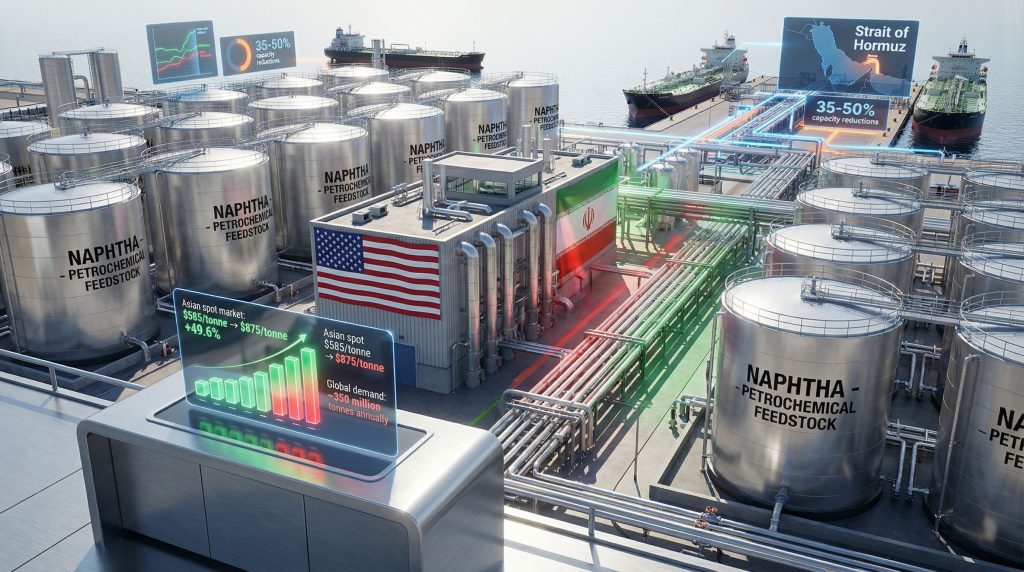
| Asian CIF Japan | 585 | 875 | +49.6% |
| European CIF ARA | 620 | 810 | +30.6% |
| US Gulf Coast FOB | 550 | 695 | +26.4% |
The pricing differential between regions reflects varying degrees of supply security and market depth. Asian markets experienced the most severe price escalation due to their heavy dependence on Middle Eastern supplies and limited alternative sourcing options. European markets demonstrated greater resilience through diversified supply chains and domestic production capabilities.
Forward curve structures shifted dramatically as market participants attempted to secure long-term supply commitments. Contango relationships that typically characterise stable supply conditions inverted into backwardation, with prompt month deliveries commanding premiums of $150-200 per tonne over forward positions.
Furthermore, trading volumes in paper markets expanded by 300-400% as financial participants sought to capitalise on volatility while industrial consumers implemented hedging strategies to manage procurement risks. This financialisation of physical supply constraints created additional price momentum beyond fundamental supply-demand imbalances, as analysts studying the broader trade war oil price impact have noted similar patterns across energy markets.
Petrochemical Industry Operational Adjustments
Manufacturing facilities across affected regions implemented comprehensive operational modifications to manage feedstock shortages and cost escalations. These adjustments extended beyond simple production curtailments to include fundamental changes in product mix optimisation, inventory management protocols, and customer allocation strategies.
Production Capacity Utilisation by Region:
- Northeast Asian crackers: 45-55% capacity (down from 85-90%)
- Southeast Asian facilities: 65-75% capacity (down from 80-85%)
- European complexes: 75-80% capacity (minimal impact)
- North American operations: 85-90% capacity (export optimisation)
The severity of operational impacts correlates directly with import dependency levels and alternative feedstock availability. In addition, facilities with integrated refining operations demonstrated greater resilience through internal naphtha production, while merchant crackers faced more severe constraints.
Alternative Feedstock Adoption Strategies:
- LPG utilisation increase: 35-50% above normal levels
- Gas oil cracking: Emergency protocols activated at 15% of facilities
- Ethane imports: Accelerated infrastructure development for long-term diversification
- Recycled content integration: Enhanced chemical recycling capacity utilisation
Contract renegotiation efforts intensified as producers sought to modify delivery terms, pricing mechanisms, and force majeure provisions. Minimum volume commitments that typically ensure supply security became sources of commercial dispute as physical availability constraints prevented contract fulfilment. This situation mirrors broader concerns about the OPEC oil production impact on global energy markets.
Consequently, downstream polymer producers experienced cascading effects through reduced monomer availability and elevated raw material costs. Major polyethylene and polypropylene manufacturers declared force majeure on customer contracts, triggering supply chain disruptions that extended through packaging, automotive, and construction sectors.
Alternative Supply Route Development and Constraints
The crisis accelerated development of non-traditional supply channels as market participants sought to establish supply security through geographic diversification. However, alternative routing faces significant logistical constraints that limit rapid capacity expansion and create structural cost disadvantages compared to disrupted pathways.
Emerging Trade Pattern Developments:
| New Route | Capacity (kbd) | Lead Time (days) | Cost Premium (%) |
|---|---|---|---|
| US Gulf Coast to Asia | 450 | 45-50 | +180% |
| European exports to Asia | 280 | 35-40 | +150% |
| Russian Far East shipments | 320 | 25-30 | +120% |
| Alternative Middle East ports | 180 | 30-35 | +200% |
Transportation infrastructure limitations constrain rapid supply chain reconfiguration. Port facilities, storage terminals, and specialised shipping capacity require months or years to develop, preventing immediate substitution of disrupted trade flows with alternative routing options.
The global fleet of specialised chemical tankers operates at near-maximum utilisation under normal market conditions. Sudden demand for alternative routing creates severe vessel availability constraints, with day rates increasing by 250-350% for suitable tonnage. Long-term charter arrangements become essential for supply security but lock in elevated transportation costs for extended periods.
For instance, insurance market responses add additional complexity to alternative sourcing strategies. War risk premiums ranging from 0.5-2.0% of cargo value apply to shipments through or near conflict zones, while extended voyage routes increase basic maritime insurance costs through prolonged exposure periods. Industry observers tracking broader US‑China trade war effects report similar insurance complications across multiple commodity sectors.
Long-Term Structural Market Implications
The crisis catalyses fundamental shifts in global petrochemical supply chain architecture that will persist long after immediate geopolitical tensions resolve. Industrial consumers and governments recognise the strategic vulnerability created by concentrated supply sources and are implementing policies to enhance domestic production capabilities and supply diversification.
Investment Flow Redirections by Region:
| Region | Planned Capacity (million tonnes/year) | Investment Timeline | Primary Focus |
|---|---|---|---|
| US Gulf Coast | 12-15 | 2027-2030 | Integrated refinery-cracker complexes |
| European Union | 6-8 | 2028-2032 | Domestic feedstock security |
| Northeast Asia | 18-22 | 2026-2029 | Import dependency reduction |
| India | 8-10 | 2027-2031 | Self-sufficiency initiatives |
Government policy responses include strategic reserve programmes, domestic production incentives, and infrastructure development initiatives aimed at reducing import dependencies. These interventions create market distortions that may persist for decades as political considerations override pure economic optimisation.
Technology acceleration in alternative feedstock utilisation gains momentum through crisis-driven investment. Bio-based naphtha production, chemical recycling expansion, and methanol-to-olefins technology development receive enhanced funding as industries seek to reduce dependence on traditional petroleum-derived feedstocks.
Furthermore, the crisis establishes new baseline expectations for supply chain resilience that fundamentally alter investment decision frameworks. Risk-adjusted returns calculations now incorporate geopolitical stability factors, transportation route diversification requirements, and strategic inventory holding costs that were previously considered excessive. This reflects broader market trends as tariffs impact markets across various sectors.
The next major ASX story will hit our subscribers first
Financial Risk Management and Market Evolution
The unprecedented volatility experienced during the supply crisis drives innovation in financial risk management tools and market structure evolution. Traditional hedging mechanisms prove inadequate for managing the magnitude and duration of price dislocations, forcing development of new derivative products and risk transfer mechanisms.
Enhanced Financial Instruments Development:
- Extended forward curves: 24-36 month contract periods become standard
- Basis differential swaps: Regional price spread risk management
- Force majeure insurance: Expanded coverage for supply chain disruption
- Inventory financing facilities: Enhanced working capital support for strategic reserves
Trading house business models adapt to capture opportunities created by supply chain fragmentation and regional price differentials. Arbitrage strategies become more complex as traders must evaluate geopolitical risks, transportation costs, and storage economics across multiple time horizons and geographic regions.
Market structure evolution includes development of regional pricing hubs that reduce dependence on traditional benchmarks tied to now-disrupted supply chains. Asian naphtha pricing mechanisms diversify beyond Middle Eastern crude oil correlations to incorporate alternative feedstock costs and regional supply-demand dynamics.
Industry Recovery Scenarios and Timeline Analysis
Different conflict resolution scenarios present varying implications for naphtha market US Iran conflict impact normalisation, with recovery timelines extending well beyond immediate geopolitical resolution due to structural changes implemented during the crisis period.
Recovery Timeline Projections:
| Resolution Period | Market Normalisation | Price Level | Structural Changes |
|---|---|---|---|
| 3-6 months | 12-18 months | $650-700/tonne | Moderate supply diversification |
| 6-12 months | 24-36 months | $700-750/tonne | Significant capacity reallocations |
| 12+ months | 36-48 months | $650-800/tonne | Permanent trade pattern shifts |
Even rapid conflict resolution cannot immediately restore pre-crisis market conditions due to committed investments in alternative supply infrastructure, modified contractual relationships, and enhanced inventory management protocols. Consequently, the industry emerges with fundamentally different supply chain architecture characterised by greater redundancy but higher structural costs.
Permanent Market Structure Changes:
- Regional price premium: $50-100/tonne above historical levels
- Inventory levels: 25-40% increase in strategic reserves
- Contract terms: Enhanced force majeure provisions and alternative sourcing requirements
- Transportation costs: Structural premium for route diversification
Market participants develop new operational frameworks that balance efficiency optimisation with resilience requirements. Supply chain design principles evolve to incorporate stress testing for various disruption scenarios rather than optimising solely for cost minimisation under stable conditions. According to recent analysis from Argus Media, "The naphtha market faces unprecedented challenges as geopolitical tensions reshape traditional trading patterns and force industry participants to reconsider long-held assumptions about supply security."
However, the crisis establishes precedents for government intervention in strategic commodity markets that may influence future policy responses to supply emergencies. Regulatory frameworks evolve to incorporate supply security considerations alongside traditional environmental and safety requirements. As noted by S&P Global's recent assessment, the chemical market continues to navigate significant upstream disruptions.
Conclusion: Navigating Transformed Market Dynamics
The ongoing geopolitical tensions have permanently altered the fundamental architecture of global naphtha market US Iran conflict impact dynamics, creating both immediate operational challenges and long-term strategic opportunities. While Asian markets continue experiencing the most severe supply constraints, the industry's response demonstrates remarkable adaptability in developing alternative sourcing strategies and operational modifications.
Market participants must prepare for sustained volatility and structurally higher baseline prices as supply chains incorporate enhanced resilience mechanisms and geographic diversification. Furthermore, the petrochemical industry's evolution through this crisis period will likely establish new standards for supply security that influence investment decisions and operational strategies for decades.
Key Strategic Considerations:
- Supply diversification: Multi-source procurement strategies become essential
- Financial risk management: Enhanced hedging requirements for volatile markets
- Technology investment: Alternative feedstock capabilities provide competitive advantages
- Strategic partnerships: Long-term supply agreements with reliable counterparties
The transformation extends beyond temporary price adjustments to encompass fundamental changes in how global petrochemical markets operate. Companies that successfully navigate this transition by balancing efficiency with resilience will emerge stronger positioned for future growth in an increasingly complex geopolitical environment.
In addition, the naphtha market US Iran conflict impact serves as a critical case study for understanding how geopolitical disruptions reshape global commodity markets. The lessons learned from this crisis will inform future supply chain strategies and risk management approaches across the broader petrochemical industry.
This analysis is based on current market conditions and industry developments. Commodity markets involve substantial risks, and past performance does not guarantee future results. Readers should conduct their own research and consult with qualified professionals before making investment decisions.
Looking to Navigate the Complex World of Commodity Markets?
Discovery Alert's proprietary Discovery IQ model delivers real-time alerts on significant ASX mineral discoveries, instantly empowering subscribers to identify actionable opportunities across diverse commodity sectors including critical materials that drive petrochemical and energy markets. Understand why major mineral discoveries can lead to significant market returns by exploring Discovery Alert's dedicated discoveries page, showcasing historic examples of exceptional outcomes, and begin your 14-day free trial today to position yourself ahead of the market.