
June 24, 2026
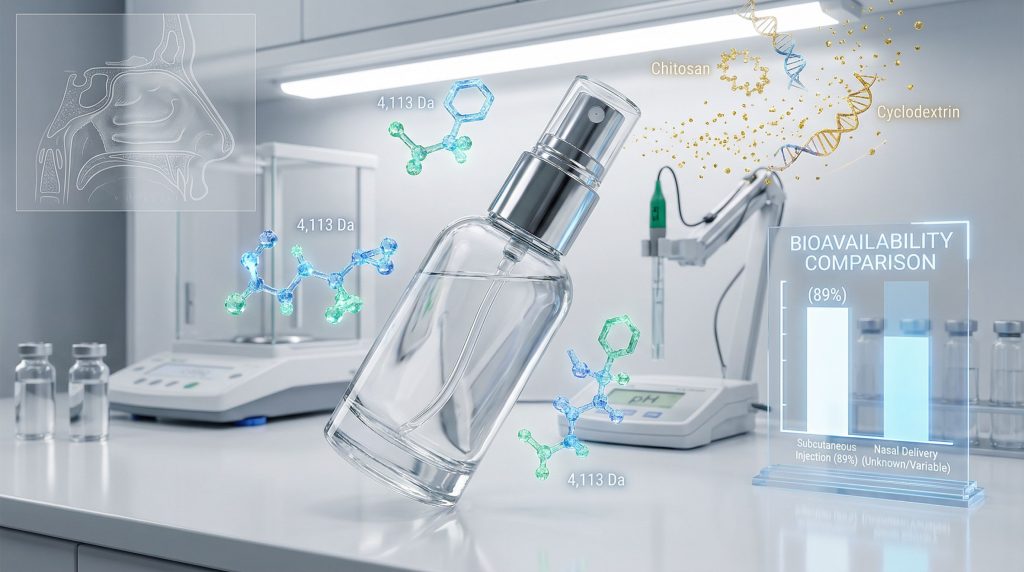
The pharmaceutical industry continues to explore innovative delivery mechanisms that can overcome the limitations of traditional administration routes. Nasal ozempic formulations represent a particularly challenging frontier, as complex peptide molecules face significant absorption challenges when delivered through alternative pathways, requiring sophisticated technological approaches to achieve therapeutic efficacy. Furthermore, industry innovation trends in drug delivery systems are driving increased investment in novel therapeutic approaches.
Intranasal delivery systems represent one frontier where pharmaceutical companies are investing substantial research resources. The nasal cavity's unique physiological properties, including its extensive vascularisation and direct neural pathways, create theoretical opportunities for enhanced drug absorption compared to oral administration routes. However, investors must carefully evaluate investment risk factors before committing to companies developing these experimental technologies.
The Science Behind Nasal Absorption Enhancement
Peptide drugs with high molecular weights typically struggle to penetrate mucosal barriers effectively. Advanced delivery systems employ various enhancement technologies, including permeation enhancers, nanoparticle carriers, and specialised polymer matrices to improve bioavailability. Consequently, data-driven technology approaches are becoming essential for optimising these complex formulations.
Research into mucoadhesive formulations has shown promise in extending contact time between drug molecules and nasal tissues. These systems utilise chitosan-based compounds, cyclodextrin inclusion complexes, and other specialised carriers to facilitate molecular transport across biological membranes.
When big ASX news breaks, our subscribers know first
Current Regulatory Landscape for Nasal Peptide Drugs
The regulatory pathway for nasal peptide formulations requires extensive clinical validation to demonstrate safety and efficacy compared to established delivery methods. Currently, only injectable GLP-1 receptor agonists like semaglutide (Ozempic for diabetes management and Wegovy for weight management) maintain FDA approval for therapeutic applications.
No nasal formulations of semaglutide currently hold regulatory approval in any major market. Clinical development timelines for novel delivery systems typically extend several years, requiring comprehensive bioequivalence studies and safety assessments.
Clinical Trial Requirements
Regulatory authorities require pharmaceutical companies to demonstrate that alternative delivery methods achieve comparable therapeutic outcomes to approved formulations. This process involves:
- Phase I safety and pharmacokinetic studies (12-18 months)
- Phase II dose-optimisation trials (24-36 months)
- Phase III efficacy comparisons (36-48 months)
- Regulatory review and approval processes (12-24 months)
Bioavailability Challenges and Technical Hurdles
The molecular structure of semaglutide presents significant obstacles for nasal ozempic development. At 4,113 daltons molecular weight, the peptide exceeds typical size limitations for effective transmucosal absorption without specialised enhancement technologies.
| Delivery Method | Bioavailability | Clinical Status | Market Availability |
|---|---|---|---|
| Subcutaneous injection | 89% | FDA approved | Widely available |
| Nasal formulation | Under investigation | Experimental only | Not commercially available |
| Oral tablet (Rybelsus) | 0.4-1% | FDA approved | Limited indication |
Manufacturing and Quality Control Considerations
Nasal formulations face unique manufacturing challenges related to dose consistency, particle size distribution, and stability under varying environmental conditions. Unlike injectable products with established manufacturing protocols, nasal delivery systems require specialised equipment and quality control measures.
Compounded nasal preparations, whilst available through some specialty pharmacies, lack standardised manufacturing processes and may exhibit significant batch-to-batch variability in potency and absorption characteristics. In addition, sustainability transformation principles are increasingly influencing pharmaceutical manufacturing practices.
Safety Profile and Side Effect Considerations
Experimental nasal ozempic formulations would likely produce similar systemic side effects to injectable versions, including gastrointestinal symptoms that are well-documented with GLP-1 receptor agonist therapy.
Systemic Effects
- Nausea and vomiting (reported in 20-30% of patients)
- Diarrhoea and constipation
- Gastroparesis risk in susceptible individuals
- Appetite suppression and early satiety
Nasal-Specific Concerns
Intranasal delivery may introduce additional local side effects not observed with subcutaneous administration. These potential complications include chronic rhinitis, nasal congestion, and mucosal irritation from repeated exposure to absorption-enhancing compounds.
Clinical Concern: Long-term nasal administration of peptide drugs with permeation enhancers may cause cumulative mucosal damage, though comprehensive safety data remains limited due to lack of approved products.
Quality control issues with compounded preparations have resulted in reported cases of dosing errors requiring medical intervention, highlighting the importance of standardised manufacturing processes for patient safety.
Companies and Technologies in Development
Several pharmaceutical companies are actively researching nasal delivery technologies for peptide drugs, though most remain in early development stages without established clinical efficacy data. Moreover, energy transition strategies are influencing pharmaceutical companies to adopt more sustainable development approaches.
Tetratherix (ASX: TTX) Market Pivot
Australian biotechnology company Tetratherix announced a strategic pivot toward developing nasal-spray-delivered GLP-1 drugs in March 2026. The company, previously focused on post-surgical skin healing products, indicated plans to leverage its proprietary polymer technologies for intranasal drug delivery applications.
Market reception to this announcement was positive, though the company has not disclosed specific technical details about its polymer-based delivery system or clinical development timelines.
International Development Programs
Swedish company Iconovo AB continues development of its ICOone nasal delivery platform, targeting faster onset profiles for peptide therapeutics. The company's technology focuses on reformulating existing peptide drugs for nasal administration.
Tiziana Life Sciences has initiated research into combination therapies involving nasal anti-CD3 treatments with potential GLP-1 agonist applications, though clinical data remains limited to preclinical animal studies.
Market Dynamics and Investment Implications
The global GLP-1 receptor agonist market represents a substantial commercial opportunity, with annual revenues approaching $18 billion across all approved formulations. Patient preference surveys consistently indicate significant demand for needle-free alternatives to current injection-based therapies.
Commercial Viability Factors
- Patent landscape: Novo Nordisk's semaglutide patents extend through 2031, potentially limiting generic nasal formulation development
- Manufacturing costs: Specialised nasal delivery systems typically require higher production costs than conventional injections
- Insurance coverage: Alternative formulations face reimbursement challenges without demonstrated clinical superiority
Competitive Market Analysis
The success of nasal ozempic delivery systems will ultimately depend on demonstrating clear advantages over existing injectable formulations, whether through improved patient compliance, faster onset of action, or reduced side effect profiles.
Current market leaders including Novo Nordisk, Eli Lilly, and Sanofi maintain significant research investments in alternative delivery technologies, potentially limiting market opportunities for smaller biotechnology companies.
The next major ASX story will hit our subscribers first
Current Access and Availability
Patients seeking nasal semaglutide formulations currently rely on compounding pharmacies that prepare custom preparations based on physician prescriptions. These formulations lack FDA approval and may exhibit significant quality variability. For instance, compound nasal semaglutide preparations require careful consideration of formulation parameters.
Compounded Preparation Limitations
- Typical dosing restrictions (0.2mL daily maximum to prevent nasal drainage)
- Variable potency and stability profiles
- Limited insurance coverage with out-of-pocket costs ranging $200-500 monthly
- Lack of standardised manufacturing protocols
Medical Supervision Requirements
Important: Patients should consult with endocrinologists or other qualified specialists before pursuing experimental nasal formulations, as only FDA-approved injectable semaglutide maintains established safety and efficacy profiles.
Healthcare providers typically recommend proven injectable therapies over experimental alternatives unless patients demonstrate clear contraindications to subcutaneous administration.
Future Development Timeline and Prospects
Commercial availability of approved nasal ozempic formulations likely remains several years away, pending completion of comprehensive clinical development programs and regulatory review processes.
Regulatory Milestone Expectations
The pathway to approval requires systematic progression through established clinical phases:
- Preclinical optimisation (6-12 months)
- Phase I safety studies (12-18 months)
- Phase II dose-finding trials (24-36 months)
- Phase III comparative efficacy studies (36-48 months)
- Regulatory submission and review (12-24 months)
Technical Challenges Requiring Resolution
- Consistent dose delivery across varying nasal physiological conditions
- Long-term mucosal safety validation
- Manufacturing scalability for peptide stability maintenance
- Cost-effective production methods competitive with injection manufacturing
Research Frontiers and Emerging Technologies
Current research focuses on addressing fundamental barriers to nasal peptide delivery through advanced pharmaceutical technologies. Nanostructured lipid carriers show promise in animal studies for improving semaglutide absorption, whilst mucoadhesive polymer systems extend residence time in nasal cavities.
What Are the Most Promising Combination Therapy Approaches?
Preclinical research suggests potential synergistic effects between nasal anti-CD3 treatments and GLP-1 receptor agonists in metabolic disorder management. Early animal studies indicate improved liver homeostasis and reduced systemic inflammation beyond traditional weight loss mechanisms.
These combination approaches represent novel therapeutic strategies that may provide advantages over single-agent treatments, though human clinical validation remains years away.
Investment Risk Assessment and Considerations
Investors evaluating companies developing nasal GLP-1 technologies should consider the substantial technical, regulatory, and commercial risks associated with alternative drug delivery systems.
Key Risk Factors
- Technical feasibility: Achieving bioequivalence to approved injectable formulations
- Regulatory uncertainty: Extended approval timelines with potential for clinical trial failures
- Competitive pressure: Large pharmaceutical companies with superior resources and established market positions
- Patent constraints: Limited freedom to operate until existing semaglutide patents expire
Market Opportunity Assessment
Despite significant challenges, successful development of effective nasal GLP-1 delivery could capture substantial market share given patient preference for non-injectable alternatives. Early market entry advantages may benefit companies demonstrating clear technological superiority and regulatory pathway progress.
This analysis is for informational purposes only and should not be considered investment advice. Potential investors should conduct thorough due diligence and consult qualified financial advisors before making investment decisions involving pharmaceutical development companies.
Want to Capitalise on Breakthrough Medical Technologies?
Just as nasal drug delivery systems are revolutionising pharmaceutical investment opportunities, Discovery Alert's proprietary Discovery IQ model delivers instant notifications when ASX-listed companies announce significant mineral discoveries that could reshape entire sectors. Explore how major discoveries have generated exceptional returns for early investors, then begin your 14-day free trial to position yourself ahead of the market with real-time alerts on the next breakthrough opportunity.