May 22, 2026
Understanding Natural Gas Infrastructure Vulnerabilities During Extreme Weather
Natural gas systems face critical operational challenges when extreme weather pushes infrastructure beyond design parameters. As the us braces for gas freeze-offs ice storm conditions, the mechanics behind these disruptions reveal complex interactions between temperature, pressure, and equipment specifications that create cascading effects throughout the energy supply chain.
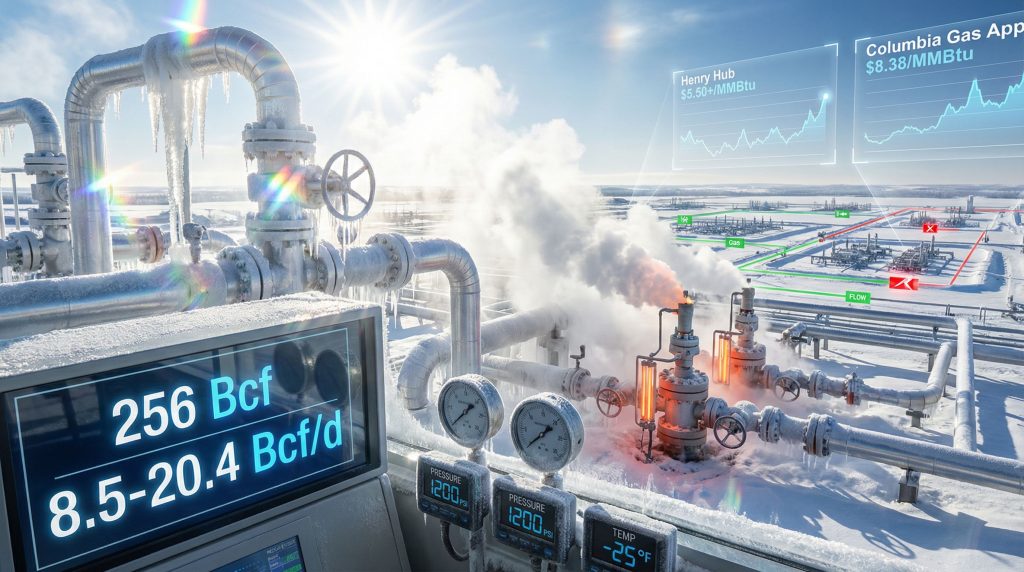
Temperature-driven freeze-offs occur through multiple failure mechanisms across natural gas infrastructure. When ambient temperatures drop rapidly, water vapor naturally present in raw gas streams begins crystallising, forming hydrate structures that block wellheads, gathering lines, and processing equipment. These ice-like formations develop most readily when gas temperatures fall below approximately 40°F at standard pipeline pressures, with undehydrated gas streams particularly vulnerable to freezing.
The Joule-Thomson effect accelerates this process as gas flows through pressure regulation equipment. Natural pressure drops at throttles and wellhead controls create additional cooling, often pushing temperatures below critical thresholds even when ambient air remains above freezing. This phenomenon explains why production can cease even during moderate cold snaps if equipment lacks adequate thermal protection.
Pipeline gathering systems represent another critical vulnerability point. Raw gas from wellheads travels through networks of smaller-diameter pipes before reaching processing facilities. These gathering lines often lack the insulation and heating systems standard on major transmission pipelines, making them susceptible to blockages when water vapour condenses and freezes at pipeline walls.
According to Federal Energy Regulatory Commission analysis following Winter Storm Uri in February 2021, wellhead freeze-offs occurred when ambient temperatures dropped below -10°F in regions unprepared for such conditions. The FERC Technical Conference Report documented that natural gas production in Texas fell by approximately 40% during this event, highlighting the severity of infrastructure vulnerabilities in traditionally warm climates.
Regional Exposure Patterns Across Major Production Basins
Production basins exhibit vastly different vulnerability profiles based on historical climate patterns and infrastructure design standards. The Permian Basin, spanning desert regions of west Texas and southeast New Mexico, produced approximately 4.6 million barrels of oil equivalent per day as of 2024 according to the Energy Information Administration, with natural gas representing roughly 0.9 billion cubic feet daily from associated gas production.
This massive production volume faces significant exposure during rare cold events because infrastructure was designed for mild winter conditions with average temperatures ranging from 25-35°F. Equipment lacks the thermal protection systems standard in northern operations, creating acute vulnerability when temperatures plunge below design specifications.
The Haynesville Shale, located across northeastern Texas and northern Louisiana, presents different risk characteristics. As one of the largest U.S. shale plays by volume, producing approximately 6.5 billion cubic feet daily according to 2024 EIA data, Haynesville operations face challenges from rapid temperature swings. Infrastructure designed for narrow operating ranges between 30-40°F experiences mechanical shock when temperatures drop suddenly to near-zero levels.
In contrast, Appalachian Basin operations benefit from cold-weather design standards reflecting regional climate conditions. The Marcellus Shale alone produces approximately 15-16 billion cubic feet daily, making it one of the nation's largest gas-producing regions. Located across Pennsylvania, Ohio, and West Virginia, these operations regularly handle winter temperatures between 0°F and -20°F.
However, even cold-hardened Appalachian systems face limitations. FERC documentation from the 2021 Uri event showed that extreme temperatures exceeding design specifications disrupted some compressor stations despite winterisation measures. This demonstrates that weatherisation raises operational thresholds but cannot eliminate extreme-event risks entirely.
The Bakken formation in North Dakota and Montana represents the most resilient infrastructure profile. While primarily oil-focused with associated gas production around 0.3-0.4 billion cubic feet daily, Bakken operations incorporate design standards for extreme cold conditions with winter temperatures regularly reaching -30°F to -40°F.
When big ASX news breaks, our subscribers know first
Production Disruption Dynamics and Recovery Timelines
Weather-related production disruptions follow predictable patterns based on temperature severity, duration, and regional infrastructure characteristics. Historical analysis from Winter Storm Uri provides context for understanding current vulnerabilities and expected impacts, particularly relevant as US natural gas forecasts indicate continued weather-related market volatility.
During the February 2021 event, total U.S. natural gas production fell from approximately 90 billion cubic feet daily to 60 billion cubic feet daily at the disruption peak, representing a loss of roughly 30 billion cubic feet daily over seven days according to EIA weekly reports. Peak Texas production losses exceeded 40% of regional output, demonstrating how concentrated disruptions can create national supply impacts.
Recovery velocity depends heavily on equipment restart protocols and system pressure rebuilding requirements. Most wellhead freeze-offs require 3-7 days post-thaw for full production restoration, as operators must carefully restart equipment to prevent mechanical damage from rapid pressure changes. Gathering system repairs often take longer, particularly when ice formation damages pipeline integrity or instrument systems.
The table below illustrates historical basin-specific disruption patterns from Winter Storm Uri:
| Production Basin | Peak Disruption (Bcf/d) | Duration (Days) | Recovery Timeline |
|---|---|---|---|
| Texas (Permian + Haynesville) | 18-20 | 5-7 | 7-10 days |
| Oklahoma/Panhandle | 2-3 | 3-5 | 5-7 days |
| Appalachian regions | 1-2 | 2-3 | 3-5 days |
| Rocky Mountain areas | 1-2 | 1-3 | 2-4 days |
*Source: Federal Energy Regulatory Commission and EIA joint analysis, February-March 2021
Equipment failure patterns during freeze-offs reveal critical infrastructure weak points. Wellhead equipment typically fails first due to direct weather exposure, followed by gathering line blockages and compressor station shutdowns. This sequence creates cascading effects as downstream equipment loses feed gas, amplifying initial production losses.
Pressure maintenance systems face particular stress during cold weather events. As production drops, pipeline pressures decline, reducing the driving force needed to transport remaining gas supplies. This dynamic can extend disruption duration even after weather conditions improve, as system pressure rebuilding requires coordinated restart procedures across multiple operators.
Transportation System Stress and Pipeline Constraints
Major pipeline networks experience severe capacity constraints during extreme weather as reduced production coincides with peak heating demand. The Kinder Morgan El Paso Pipeline System, one of the largest natural gas transmission networks in the United States, carries gas from Southwest basins to California and Mexico markets, operating near capacity utilisation during normal winter peaks according to company investor presentations.
During weather emergencies, this system faces bottleneck conditions as reduced Permian Basin supply meets increased demand from heating loads. The pipeline's southwestern routing makes it particularly vulnerable to regional weather events that simultaneously reduce supply and increase consumption across its service territory.
Interstate pipeline stress indicators include pressure drop rates, flow reductions, and compressor station operational limits. When ambient temperatures fall below equipment design ranges, compressor stations may reduce throughput to prevent mechanical damage, creating additional system constraints beyond production-related supply reductions.
Storage withdrawal acceleration represents another critical dynamic during extreme weather. Normal winter storage draws typically range from 100-120 billion cubic feet weekly according to EIA data. Furthermore, these natural gas prices see historic surge events often trigger increased storage utilisation patterns. During Winter Storm Uri, weekly withdrawals peaked at approximately 150-180 billion cubic feet, reflecting the combined impact of reduced production and increased heating demand.
Salt cavern storage facilities generally provide faster withdrawal rates than depleted reservoir storage, making them particularly valuable during emergency conditions. However, these facilities have limited total capacity compared to reservoir-based storage, creating constraints on sustained high withdrawal rates.
Pipeline operators implement emergency protocols to manage system stress, including:
- Load shedding coordination with electric utilities to prioritise residential heating
- Interruptible service curtailments for industrial customers with alternate fuel capability
- System pressure management through controlled flow restrictions
- Enhanced monitoring of critical pipeline segments and compressor stations
The Federal Energy Regulatory Commission Order 889, implemented in 2020, established enhanced weatherisation standards for natural gas infrastructure. Implementation timelines extended through 2023-2024 for full compliance, with most major interstate pipeline operators reporting greater than 80% compliance with enhanced winterisation standards as of 2024.
Power Grid Emergency Response and Coordination Mechanisms
Grid operators across regions potentially affected by major winter storms activate comprehensive emergency protocols to maintain electric system reliability during natural gas supply disruptions. PJM Interconnection, serving 13 states and Washington D.C. with approximately 65 million residents, typically declares cold-weather alerts when temperatures fall below forecasted thresholds or reserve margins compress below 15%.
According to PJM's 2024-2025 Winter Operations Planning Report, average winter peak load ranges between 150-160 gigawatts. Cold-weather alerts trigger enhanced coordination between natural gas suppliers and electric generators to ensure fuel availability for power production during peak demand periods.
MISO (Midcontinent Independent System Operator) serves 15 states across Midwest and South regions with peak winter loads approaching 140-150 gigawatts. EIA and North American Electric Reliability Corporation data from 2023 indicates MISO experiences particularly tight supply-demand balances during extreme cold due to high heating loads and simultaneous production freeze-offs in regional gas fields.
ERCOT (Electric Reliability Council of Texas) operates the Texas grid serving approximately 90% of the state's 32 million residents. Peak winter loads range from 145-155 gigawatts according to ERCOT's 2024 Winter Capacity Report. The system's experience during Winter Storm Uri led to mandatory winterisation requirements and additional generation procurement to improve cold-weather reliability.
The joint FERC-NERC report analysing February 2021 cold weather outages identified critical coordination failures between natural gas and electric systems:
- Lack of communication between gas and power operators led to cascading equipment failures
- Reserve margin compression in both systems simultaneously created grid instability
- Recovery coordination took 4-6 hours to restore grid stability after gas supply stabilised
Federal intervention authority provides additional emergency response capability. In addition, government intervention authority during energy crises extends beyond traditional regulatory boundaries. The Department of Energy maintains statutory authority under the Natural Gas Act to expedite regulatory approvals, authorise temporary LNG export suspensions to prioritise domestic supply, and coordinate interstate transmission operations. This authority was exercised during Winter Storm Uri in February 2021 and the February 2014 polar vortex event.
Energy Secretary emergency declarations can authorise backup power generation operation and waive environmental restrictions on dual-fuel facilities during supply emergencies. These authorities require formal declarations but can be activated rapidly when grid operators request federal assistance.
Market Pricing Dynamics and Hub-Specific Volatility
Natural gas pricing exhibits extreme volatility during supply disruptions as physical constraints create localised scarcity conditions. Regional trading hubs reflect these dynamics through dramatic price increases that often exceed fundamental supply-demand calculations due to risk premiums and storage withdrawal acceleration. Consequently, commodity volatility trends become increasingly pronounced during weather emergencies.
Hub-specific pricing patterns during extreme weather events demonstrate the fragmented nature of North American gas markets. The Henry Hub in Louisiana serves as the primary pricing benchmark, but regional hubs can diverge dramatically when transportation constraints limit arbitrage opportunities.
Historical price movements during Winter Storm Uri provide context for understanding weather-related volatility:
- Henry Hub prices increased from approximately $2.50/MMBtu to peaks above $5.00/MMBtu
- Waha Hub prices in the Permian Basin swung from negative values to multi-year highs
- Columbia Gas Appalachian Hub experienced increases exceeding 200% as Northeast heating demand surged
Forward curve implications extend beyond immediate weather impacts. February contract premiums reflect anticipated supply tightness, while April and summer contracts often trade at discounts, suggesting markets expect weather normalisation and inventory recovery during the injection season.
LNG export economics face temporary disruption when domestic prices spike above international parity levels. U.S. LNG facilities may curtail exports to capture higher domestic pricing, though contractual obligations limit this flexibility. Export curtailments help moderate domestic price increases by retaining supplies for internal consumption.
Basis differential expansion between production areas and consumption centres reflects transportation constraints during extreme weather. These differentials can reach historically extreme levels when pipeline capacity cannot accommodate both reduced supply and increased demand simultaneously.
Storage inventory levels significantly influence price volatility during weather events. When storage inventories enter heating season below normal levels, markets exhibit heightened sensitivity to supply disruptions. Conversely, above-normal inventories provide buffer capacity that moderates price spikes during short-term disruptions.
How Do Industrial Consumers Respond to Supply Constraints?
Industrial natural gas consumers implement diverse strategies to manage supply constraints and price volatility during extreme weather events. Chemical sector facilities, particularly those along the Gulf Coast, often represent the largest industrial gas consumers due to petrochemical feedstock requirements and process heating needs.
Preventive facility shutdowns provide one response mechanism for industrial operators. Major chemical producers may temporarily halt production to protect equipment from supply interruptions or price spikes that render operations uneconomical. These shutdowns reduce gas demand but can create downstream supply chain disruptions for chemical and plastic products.
Gulf Coast petrochemical facilities face particular exposure during winter weather events due to high gas consumption for both feedstock and fuel applications. Ammonia production, used primarily for fertiliser manufacturing, often curtails operations when gas prices spike above economic thresholds. Methanol production facilities may similarly reduce output or switch to alternative feedstock sources when available.
Power generation fuel switching represents another critical adaptation mechanism. Dual-fuel electric generating facilities can transition from natural gas to oil or coal when gas supplies become constrained or prices exceed alternative fuel economics. This switching capability helps maintain grid reliability while reducing gas demand during supply emergencies.
However, fuel switching faces several practical limitations:
- Environmental regulations may restrict coal plant operations or require additional permits
- Oil supply logistics can be challenging during winter storms that disrupt transportation
- Equipment readiness requires regular maintenance of alternate fuel systems
- Economic dispatch optimisation must balance fuel costs against grid reliability requirements
Renewable energy integration during winter storms presents both opportunities and challenges. Wind and solar generation can reduce reliance on gas-fired power plants, but extreme weather often reduces renewable output when it is needed most. Winter storms typically bring cloud cover that limits solar production, while some wind turbines may shut down in extreme cold conditions.
Load management programs allow grid operators to reduce electricity demand during supply constraints, indirectly reducing gas consumption at power plants. These programs include:
- Interruptible service agreements with large industrial customers
- Emergency demand response programs that compensate consumers for reducing usage
- Rolling blackouts as a last resort to maintain system stability
- Voluntary conservation requests to residential and commercial customers
Infrastructure Resilience and Long-Term Adaptation Strategies
The natural gas industry has implemented substantial infrastructure improvements following lessons learned from Winter Storm Uri and other extreme weather events. These adaptations focus on weatherisation upgrades, operational protocol enhancements, and emergency response coordination to reduce vulnerability during future cold weather emergencies.
Wellhead protection systems represent a primary focus area for infrastructure hardening. Automated heating systems, thermal insulation upgrades, and wind protection enclosures help maintain equipment operability during temperature extremes. Advanced monitoring systems provide real-time temperature and pressure data, enabling operators to take preventive action before equipment failures occur.
Gathering line winterisation involves pipeline insulation, heat trace cable installation, and pump station upgrades to prevent hydrate formation in critical system segments. These modifications are particularly important in southern production regions where infrastructure historically lacked cold-weather protection due to mild climate assumptions.
Compressor station hardening includes backup power systems, equipment enclosures, and enhanced fuel gas conditioning to maintain operations during extreme cold. Cold-weather operational envelope expansion allows compressor stations to operate safely at lower temperatures than original design specifications.
Regulatory framework evolution continues developing enhanced standards for natural gas infrastructure resilience. FERC Order 889 established baseline weatherisation requirements, but ongoing policy development addresses lessons learned from recent weather events. State regulatory agencies also implement additional standards specific to their regional climate risks.
Investment incentive structures help offset the substantial costs associated with infrastructure weatherisation. Cost recovery mechanisms allow pipeline operators and utilities to recover weatherisation expenses through regulated rate structures, providing economic incentives for resilience improvements.
Emergency response coordination has improved significantly through enhanced communication protocols between gas pipeline operators, electric grid managers, and government agencies. Multi-agency coordination centres provide centralised information sharing and resource allocation during emergency conditions.
Storage facility enhancements focus on improving withdrawal capacity during peak demand periods and ensuring reliable operation during extreme weather. Upgrades include additional compression capacity, wellhead winterisation, and enhanced monitoring systems to optimise storage utilisation during emergencies.
The next major ASX story will hit our subscribers first
Market Mechanism Evolution and Supply-Demand Rebalancing
Natural gas markets continue evolving to better handle extreme weather-related supply disruptions through improved price signals, enhanced storage utilisation, and more efficient emergency response mechanisms. These developments aim to reduce the severity of future supply emergencies while maintaining economic efficiency during normal operating conditions. Moreover, global market impacts from weather-related supply disruptions extend far beyond domestic boundaries.
Supply-demand rebalancing following weather events typically requires several distinct phases:
- Immediate response (0-3 days): Emergency protocols, demand curtailments, and storage withdrawals
- Production restoration (3-7 days): Equipment restart procedures and system pressure rebuilding
- System stabilisation (1-2 weeks): Normal operation resumption and inventory assessment
- Long-term recovery (1-3 months): Storage refill planning and infrastructure repairs
Import and export flow adjustments provide additional supply flexibility during domestic disruptions. LNG facilities can temporarily reduce exports to retain supplies for domestic consumption, while pipeline imports from Canada may increase to offset reduced U.S. production. Furthermore, events such as the US braces for gas freeze-offs ice storm situation demonstrate the interconnected nature of regional energy systems.
Forward market development has enhanced price discovery and risk management capabilities for natural gas market participants. Enhanced forward curves provide better visibility into expected supply-demand balances, enabling more efficient investment and operational decisions.
Technology integration continues improving system monitoring and emergency response capabilities. Advanced weather forecasting, real-time production monitoring, and automated equipment controls help operators anticipate and respond to extreme weather events more effectively. However, similar challenges exist across North America, as highlighted by Canada energy challenges during winter weather extremes.
The natural gas infrastructure resilience improvements implemented since Winter Storm Uri represent a substantial evolution in industry preparedness for extreme weather events. While complete elimination of weather-related disruptions remains impractical, enhanced winterisation standards, improved emergency coordination, and better market mechanisms have significantly reduced the industry's vulnerability to future cold weather emergencies.
"The unprecedented nature of current weather patterns requires continuous adaptation of our energy infrastructure and emergency response protocols," according to Federal Energy Regulatory Commission analysis of recent extreme weather events.
Disclaimer: This analysis contains forward-looking assessments based on historical data and industry trends. Actual outcomes during extreme weather events may vary significantly from projections due to the complex interactions between weather patterns, infrastructure performance, and market dynamics. Readers should consult current market data and regulatory guidance when making operational or investment decisions related to natural gas infrastructure and markets.
Looking to Capitalise on Energy Market Volatility?
Discovery Alert's proprietary Discovery IQ model delivers real-time alerts on significant ASX mineral discoveries, including energy and commodity companies positioned to benefit from market disruptions like extreme weather events. Access immediate insights into actionable trading opportunities whilst the market reacts to infrastructure vulnerabilities and supply constraints. Begin your 30-day free trial today to secure your market-leading advantage.