July 21, 2026
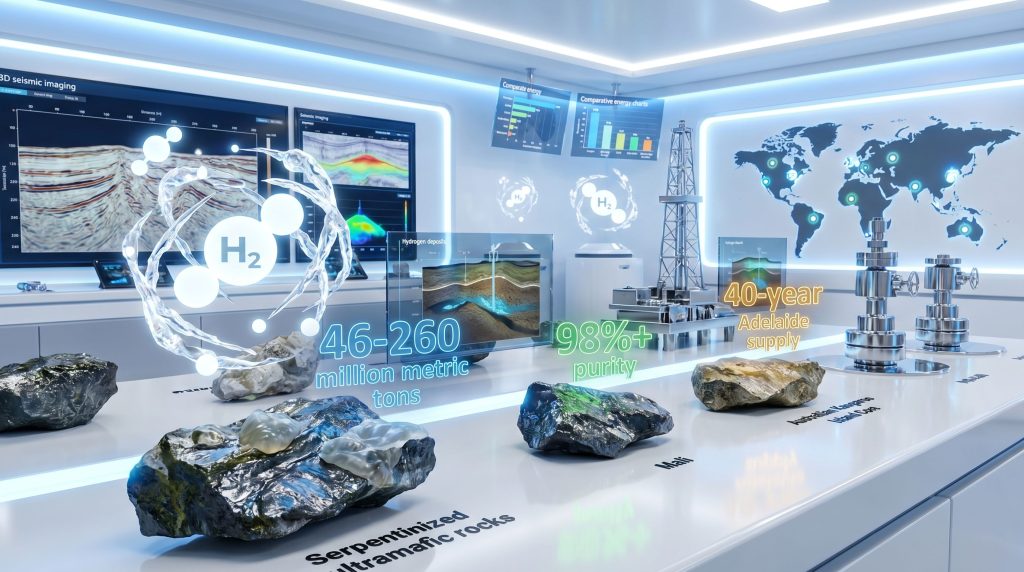
Natural hydrogen discovery represents one of the most promising developments in clean energy exploration, with recent geological breakthroughs revealing underground hydrogen reserves that could revolutionise sustainable energy production. Unlike manufactured hydrogen that requires substantial energy inputs and complex infrastructure, naturally occurring white hydrogen represents a fundamentally different pathway to clean energy production. Advanced seismic surveying technologies are now identifying geological structures capable of trapping hydrogen gas in commercial concentrations, transforming what was once considered geologically improbable into a rapidly expanding exploration frontier.
What Is Natural Hydrogen and Why Does It Matter for Clean Energy?
Understanding White Hydrogen: The Game-Changing Energy Discovery
Natural hydrogen, classified as white hydrogen in the industry's colour-coded terminology, occurs underground in pure form without requiring any manufacturing process. This differs fundamentally from conventional hydrogen production methods: black hydrogen from coal gasification, grey from natural gas without carbon capture, blue from natural gas with carbon capture, and green from water electrolysis powered by renewables.
The significance of natural hydrogen discovery extends beyond simple resource identification. Recent findings in Saskatchewan, Canada, demonstrated hydrogen concentrations of 286,000 parts per million (28.6%) at the Lawson discovery well, sufficient for the gas to behave like a natural gas reservoir and flow naturally to surface under its own pressure. This eliminates the energy-intensive manufacturing processes required for all other hydrogen production methods.
Key characteristics that distinguish white hydrogen include:
• Zero manufacturing carbon footprint during extraction
• Natural pressure systems enabling surface flow without artificial lift
• Co-occurrence with helium, providing additional commercial value
• Geological trapping mechanisms that concentrate hydrogen over geological time
The Science Behind Natural Hydrogen Formation
Natural hydrogen formation occurs through several geological processes, with the most significant being serpentinization and radiolysis. Serpentinization involves water interaction with iron-rich ultramafic rocks, producing hydrogen as a chemical byproduct. According to research published by Yale Environment 360, this process operates continuously in suitable geological environments, suggesting that natural hydrogen represents a renewable resource on human timescales.
The Lawson discovery in Saskatchewan provides insight into hydrogen accumulation mechanisms. The presence of helium detected above the main hydrogen zone indicates stratified subsurface systems where different gases separate according to their density and molecular properties. This geological evidence points to complete subsurface systems rather than isolated gas pockets.
Critical geological conditions for hydrogen accumulation include:
• Ultramafic rock formations containing iron-rich minerals
• Effective cap rock systems preventing upward gas migration
• Structural trapping geometries that focus gas accumulation
• Appropriate depth ranges balancing generation and preservation
When big ASX news breaks, our subscribers know first
How Are Natural Hydrogen Deposits Discovered and Mapped?
Modern Exploration Technologies Transforming Discovery Rates
The transition from 2D to 3d geological modelling represents a fundamental advancement in natural hydrogen exploration. MAX Power Mining Corp.'s experience at the Lawson discovery demonstrates this technological shift dramatically. Initial 2D seismic data identified a drilling target, but subsequent 3D seismic mapping revealed structures approximately 28 square kilometres in extent, with the primary development area covering 14.2 square kilometres.
According to MAX Power Chief Geoscientist Steve Halabura, this technological progression fundamentally changes resource understanding. The 2D seismic provided limited perspective compared to 3D surveying, which revealed substantially larger geological complexes suitable for systematic exploration.
Table: Seismic Survey Technology Comparison
| Survey Type | Coverage Area | Structural Detail | Resource Definition | Cost Efficiency |
|---|---|---|---|---|
| 2D Seismic | Limited lines | Basic geometry | Single targets | Lower upfront cost |
| 3D Seismic | Full area coverage | Detailed structure | Multiple targets | Higher resolution value |
Key Geological Indicators and Target Formations
Natural hydrogen exploration focuses on specific geological indicators that suggest favourable accumulation conditions. The Lawson discovery demonstrated that hydrogen concentrations of 28.6% occur in association with structural features identifiable through seismic mapping.
Primary exploration targets include:
• Structural highs where gas naturally accumulates above water
• Fault systems that may provide migration pathways
• Sedimentary sequences capable of gas trapping
• Basement rock contacts where hydrogen generation occurs
The 3D seismic survey at Lawson identified that optimal drilling targets are positioned 80 to 100 metres vertically above the original discovery well, where hydrogen and helium would thermodynamically concentrate in the upper portions of geological structures.
Where Are the World's Most Significant Natural Hydrogen Discoveries?
Commercial Production Sites Currently Operating
Mali's Bourakebougou field represents the world's only documented commercial natural hydrogen operation, having powered a village for over three decades. While specific production data remains limited in public sources, this operation demonstrates the long-term viability of natural hydrogen extraction and the potential for reservoir regeneration on human timescales.
Major Global Discoveries and Their Potential
Canada's Genesis Trend emerged as a significant natural hydrogen frontier with MAX Power Mining Corp.'s January 2026 discovery. The company has assembled the largest permitted natural hydrogen land package in Canada at approximately 1.3 million acres (521,000 hectares), with an additional 5.7 million acres under application.
The Genesis Trend extends approximately 475 kilometres (295 miles) in length, positioned about 140 kilometres (87 miles) south of Saskatoon, Saskatchewan. The Lawson discovery well achieved hydrogen concentrations reaching 286,000 parts per million, demonstrating commercial-grade occurrence.
Table: Global Natural Hydrogen Discovery Comparison
| Location | Discovery Timeline | Estimated Scale | Concentration | Development Status |
|---|---|---|---|---|
| Mali (Bourakebougou) | 1987 | Village-scale supply | 98%+ | Commercial Production |
| Canada (Genesis Trend) | 2026 | Regional exploration | 28.6% max | Advanced Assessment |
| France (Lorraine Basin) | Recent | Multi-million tonnes | High purity | Exploration Phase |
| Australia (Kangaroo Island) | Ongoing | Metropolitan supply potential | Variable | Development Planning |
What Makes Natural Hydrogen Economically Viable?
Production Cost Advantages Over Manufactured Hydrogen
Natural hydrogen extraction eliminates the energy-intensive processes required for manufactured hydrogen production. Green hydrogen production requires substantial electrical power for water electrolysis, while grey and blue hydrogen production involves natural gas reforming and carbon capture infrastructure.
The Lawson discovery demonstrated natural gas-like flow behaviour, with hydrogen reaching surface under reservoir pressure without artificial lift requirements. This operational characteristic suggests production costs similar to conventional hydrocarbon gas fields rather than the complex manufacturing facilities required for other hydrogen production methods.
Economic advantages include:
• Elimination of electrolysis energy costs (green hydrogen)
• Reduced infrastructure complexity compared to manufacturing facilities
• Natural pressure systems minimising extraction equipment requirements
• Continuous geological generation providing renewable resource characteristics
Market Dynamics and Investment Landscape
The transformation in mining industry evolution has created favourable conditions for natural hydrogen exploration. MAX Power's progression from discovery confirmation to intensive 3D seismic mapping reflects significant capital commitment consistent with positive economic assessment. The company's assembly of a 1.3 million-acre land package and systematic resource evaluation indicate internal determination of commercial viability potential.
The natural hydrogen exploration sector has expanded substantially, with the number of exploration companies growing from approximately 10 to over 50 since 2020. This growth reflects increasing recognition of white hydrogen's potential to provide low-cost, low-carbon hydrogen without the infrastructure complexity of manufactured alternatives.
How Do Exploration Companies Assess Natural Hydrogen Potential?
Technical Evaluation Methodologies
Natural hydrogen resource assessment follows systematic progression from discovery confirmation through comprehensive geological evaluation. MAX Power's methodology at Lawson demonstrates this approach: initial well testing confirmed hydrogen occurrence at commercial concentrations, followed by 3D seismic surveying to map structural extent across 28 square kilometres, then resource modelling with identification of multiple high-priority drilling targets.
CEO Ran Narayanasamy described the evaluation approach as moving beyond single discovery confirmation into fully defined geological frameworks with multiple high-priority targets. The assessment focuses on systematically evaluating continuity, potential volumes, and commercial viability parameters across multiple drilling locations.
Key evaluation parameters include:
• Hydrogen concentration thresholds for commercial viability
• Structural continuity assessment across prospective areas
• Flow characteristic evaluation through pressure testing
• Volumetric modelling based on geological interpretation
Risk Assessment and Development Planning
The presence of helium above the main hydrogen zone at Lawson provides additional commercial parameter assessment beyond hydrogen alone. Furthermore, this dual-gas system offers potential revenue diversification while serving as geological evidence of complete subsurface systems rather than isolated accumulations.
Modern geological logging codes provide standardised frameworks for documenting and assessing natural hydrogen discoveries. Additionally, insights from exploration drilling insights inform systematic approaches to resource evaluation and development planning.
The data is allowing us to move beyond a single discovery well and into a fully defined geological framework with multiple high-priority targets, focusing on systematically evaluating continuity, potential volumes, and the key parameters required for commercial assessment.
What Are the Technical Challenges in Natural Hydrogen Development?
Extraction and Processing Considerations
Natural hydrogen extraction benefits from conventional oil and gas technology adaptation rather than requiring entirely new infrastructure development. The Lawson discovery's demonstration of natural gas-like behaviour suggests that existing wellhead equipment, production infrastructure, and surface facilities can be modified for hydrogen operations.
Technical considerations include:
• Hydrogen compatibility of metallurgy and equipment materials
• Gas separation techniques for hydrogen-helium mixtures
• Storage and transportation infrastructure requirements
• Safety protocols for hydrogen handling and distribution
The 28.6% hydrogen concentration achieved at Lawson eliminates complex upgrading processes that would be required for lower-grade discoveries, enabling direct utilisation of extracted gas with minimal processing.
Reservoir Management and Sustainability
Understanding natural regeneration mechanisms becomes critical for long-term resource management. Mali's 35+ years of continuous production at Bourakebougou suggests that natural hydrogen systems can sustain extraction on human timescales, potentially through ongoing geological processes.
The stratified gas system observed at Lawson, with distinct hydrogen and helium zones, indicates complex subsurface dynamics requiring sophisticated reservoir management approaches to optimise long-term production while maintaining reservoir integrity. Consequently, the application of a structured deposit tiers guide approach helps classify and prioritise natural hydrogen resources based on their commercial potential and development requirements.
The next major ASX story will hit our subscribers first
How Does Natural Hydrogen Compare to Other Clean Energy Sources?
Table: Clean Energy Source Comparison
| Energy Source | Carbon Intensity | Infrastructure Investment | Scalability | Resource Availability |
|---|---|---|---|---|
| Natural Hydrogen | Near-zero extraction | Moderate adaptation | High geological potential | Discovery-dependent |
| Green Hydrogen | Zero operational | High manufacturing | High renewable-limited | Technology-dependent |
| Solar/Wind | Zero operational | High grid integration | High weather-dependent | Widely distributed |
| Nuclear | Very low lifecycle | Very high capital | High uranium-dependent | Proven technology |
Integration with Existing Energy Systems
Natural hydrogen's compatibility with existing gas infrastructure provides significant integration advantages over other clean energy sources requiring entirely new distribution systems. The ability to flow naturally under reservoir pressure eliminates compression requirements typical of manufactured hydrogen systems.
Applications include:
• Direct fuel cell utilisation for electrical power generation
• Industrial process integration replacing manufactured hydrogen
• Transportation sector applications through existing gas networks
• Grid-scale energy storage using geological reservoirs
What Does the Future Hold for Natural Hydrogen Exploration?
Technological Advancement Trends
The progression from discovery confirmation to systematic resource evaluation demonstrates rapidly advancing technical capabilities. MAX Power's experience moving from single well discovery to mapping 28-square-kilometre geological complexes illustrates how advanced surveying technologies are transforming natural hydrogen exploration from speculative venture to systematic resource development.
Emerging technologies include:
• AI-powered geological modelling for improved target identification
• Enhanced drilling techniques optimised for hydrogen-specific applications
• Real-time monitoring systems for production optimisation
• Hybrid renewable integration combining natural hydrogen with other clean energy sources
Global Market Development Projections
The expansion from approximately 10 exploration companies in 2020 to over 50 currently reflects accelerating industry recognition of natural hydrogen's commercial potential. This growth trajectory suggests increasing investment capital availability and improving technical understanding of white hydrogen systems.
Regional development priorities focus on geological provinces with demonstrated hydrogen occurrence, including the North American Midcontinent Rift system, European sedimentary basins, and African rift systems where successful discoveries have been documented. Research from CSIRO has highlighted Australia's potential in this emerging field, particularly in areas with suitable geological formations.
Research and Development Priorities
Critical research areas include improved understanding of hydrogen migration and trapping mechanisms to enhance exploration success rates. The 80-100 metre vertical separation identified at Lawson between the discovery well and optimal drilling targets demonstrates the importance of precise geological modelling for resource development efficiency.
Key research focuses include:
• Enhanced geological modelling for better resource estimation
• Optimised extraction techniques maximising recovery efficiency
• Environmental impact assessment for sustainable development
• Cost reduction strategies improving commercial competitiveness
Frequently Asked Questions About Natural Hydrogen
Is natural hydrogen truly renewable on human timescales?
Scientific evidence suggests that geological processes generating natural hydrogen operate continuously rather than representing finite accumulations like conventional fossil fuels. The serpentinization process involving water and iron-rich rocks produces hydrogen as an ongoing chemical reaction, potentially providing renewable resource characteristics.
Mali's multi-decade production history at Bourakebougou indicates reservoir regeneration capabilities, though specific regeneration rates require further scientific investigation to establish sustainable extraction parameters.
What are the main barriers to widespread natural hydrogen adoption?
Primary challenges include discovery risk and geological uncertainty in identifying commercial accumulations. Unlike conventional energy resources with established exploration methodologies, natural hydrogen discovery requires adapted techniques and improved understanding of trapping mechanisms.
Additional barriers encompass:
• Limited exploration success rate data for statistical modelling
• Regulatory framework development for white hydrogen classification
• Infrastructure adaptation costs for hydrogen-compatible systems
• Market development timelines establishing commercial demand
How does natural hydrogen discovery impact global energy security?
Natural hydrogen discovery could fundamentally alter energy independence dynamics for nations with suitable geology. Countries like Canada, with extensive geological provinces favourable for hydrogen accumulation, may develop domestic clean energy resources reducing reliance on energy imports.
The geographic distribution of natural hydrogen potential differs significantly from conventional energy resources, potentially creating new geopolitical relationships and trade dynamics. Successful development of white hydrogen resources could provide energy security advantages while supporting clean energy transition objectives.
Disclaimer: This analysis includes forward-looking statements and projections based on current geological understanding and limited commercial production data. Natural hydrogen exploration involves significant technical and commercial risks, and potential investors should conduct thorough due diligence and consult with qualified professionals before making investment decisions. Resource estimates and production projections are speculative and subject to substantial uncertainty.
Further Exploration: Readers interested in learning more about natural hydrogen discoveries can explore related educational content through specialised geological and energy sector publications that provide additional technical perspectives on this emerging clean energy resource. Current research continues to expand understanding of white hydrogen systems and their commercial development potential.
Ready to Capitalise on the Next Major Energy Discovery?
Discovery Alert's proprietary Discovery IQ model delivers instant notifications on significant ASX mineral discoveries, including emerging energy commodities, empowering subscribers to identify actionable opportunities ahead of the broader market. Explore how major mineral discoveries can generate substantial returns by visiting Discovery Alert's dedicated discoveries page, showcasing historic examples of exceptional outcomes, then begin your 14-day free trial today to position yourself ahead of the market.