
May 16, 2026
The Multi-Domain Challenge of Naval Operations in Contested Waters
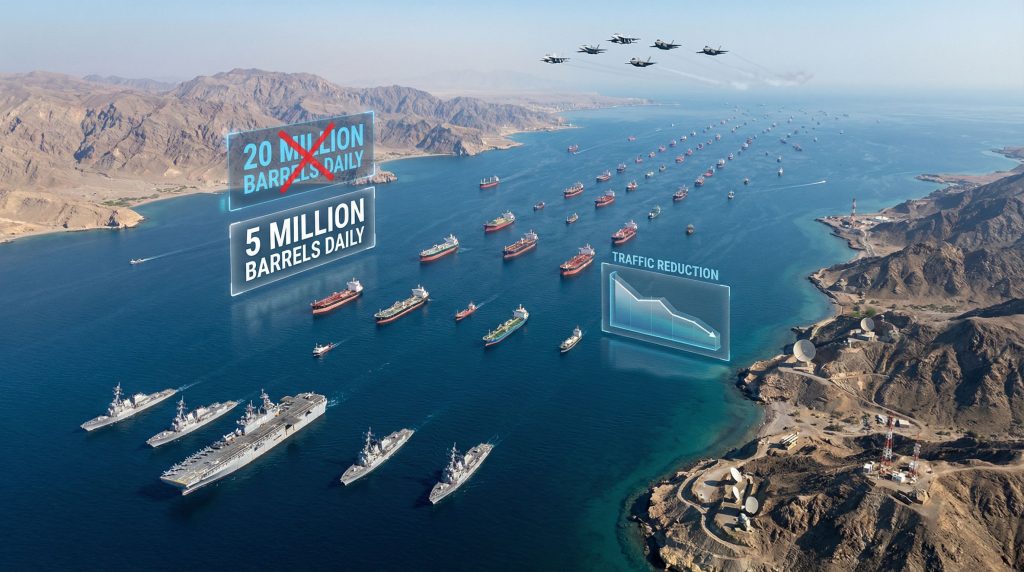
Modern maritime conflicts have evolved far beyond traditional ship-versus-ship engagements, creating complex operational environments where technological superiority alone cannot guarantee success. The Strait of Hormuz exemplifies these new realities, where U.S. military force in Strait of Hormuz operations must navigate sophisticated defensive networks that transform conventional naval advantages into potential vulnerabilities.
Contemporary naval warfare in chokepoint regions involves layered threat matrices that challenge even the most advanced military capabilities. These environments combine traditional naval hazards with cutting-edge defensive technologies, creating operational scenarios that require sustained resource commitments rather than decisive tactical strikes.
When big ASX news breaks, our subscribers know first
Understanding Modern Naval Threat Architecture
Asymmetric Defense Systems
The evolution of coastal defense has fundamentally altered maritime security calculations. Modern naval mines represent a quantum leap from World War II-era devices, incorporating sophisticated sensors, delayed activation mechanisms, and selective targeting capabilities that can distinguish between vessel types and sizes.
These advanced mining systems create persistent area denial capabilities that cannot be quickly neutralised through conventional clearance operations. Military analysts note that comprehensive mine warfare operations require specialised vessels, extended timelines, and continuous surveillance to maintain safe passage corridors.
Cruise and Ballistic Missile Coverage
Shore-based missile systems have expanded their operational reach significantly, with modern platforms capable of engaging targets at ranges exceeding 300 kilometres. This coverage extends well beyond traditional coastal defence perimeters, creating engagement zones that encompass entire strategic waterways.
The proliferation of precision-guided munitions has democratised advanced naval warfare capabilities, allowing regional powers to field systems previously available only to major military forces. These developments have created cost-effective area denial capabilities that challenge traditional naval superiority models.
Fast-Attack Boat Swarm Tactics
Asymmetric naval warfare has embraced swarm tactics using high-speed, low-signature vessels that exploit the limitations of conventional naval defence systems. These platforms leverage speed, numbers, and coordinated attack patterns to overwhelm traditional defensive responses.
The effectiveness of these tactics lies not in individual platform capabilities but in their collective ability to saturate defence systems and create multiple simultaneous threats that exceed response capacity.
Resource Requirements for Sustained Operations
Operational Intensity Analysis
Military experts estimate that maintaining secure passage through contested chokepoints requires unprecedented operational intensity. 24/7 airborne surveillance platforms become essential for threat detection and response coordination, representing a massive resource commitment that must be sustained indefinitely.
Supporting vessel requirements include:
- Specialised mine countermeasure vessels for continuous clearance operations
- Multiple escort ships per commercial convoy
- Advanced electronic warfare platforms for communications disruption
- Rapid response forces positioned for immediate threat engagement
Force Multiplication Challenges
Unlike conventional military operations that seek decisive outcomes, chokepoint security operations require continuous presence and sustained capability maintenance. This operational model strains military resources in ways that traditional naval warfare does not, demanding long-term commitments rather than short-term decisive actions.
The asymmetric nature of these threats means that defensive forces must maintain constant readiness against opponents who can choose the timing and nature of their engagement, creating an inherent strategic disadvantage for conventional naval forces.
Geographic and Strategic Vulnerabilities
Fixed Asset Limitations
Strategic infrastructure presents unique vulnerabilities in contested maritime environments. Unlike naval vessels that can manoeuvre and reposition based on threat assessments, fixed installations such as Kharg Island offer concentrated targets that cannot adapt to changing tactical situations.
Geographic analysis reveals critical constraints:
| Vulnerability Factor | Strategic Impact | Mitigation Complexity |
|---|---|---|
| Proximity to hostile territory | Direct artillery and missile exposure | Requires extensive air defence |
| Fixed positioning | Predictable targeting coordinates | Cannot relocate or disperse |
| Concentrated infrastructure | Single-point-of-failure risks | Limited redundancy options |
| Extended supply lines | Logistics vulnerability | Requires continuous security |
Escalation Risk Assessment
Military intervention scenarios carry inherent escalation dynamics that can expand conflicts beyond their original scope. The seizure of strategic infrastructure such as export terminals could trigger broader regional responses that ultimately increase rather than decrease overall instability.
Regional experts warn that aggressive military actions could prompt retaliatory strikes against allied energy infrastructure throughout the Gulf region, potentially expanding the conflict to include multiple nations and creating cascading economic consequences.
Diplomatic and Strategic Constraints
Absence of Clear Objectives
Current tensions lack defined diplomatic frameworks or negotiation structures that could provide clear end-state objectives for military operations. Without established political goals, military actions risk becoming open-ended commitments without measurable success criteria.
The complexity of regional relationships means that military solutions must account for multiple stakeholder interests, including allied nations whose infrastructure could become targets for retaliation in response to aggressive U.S. actions.
What Challenges Do Regional Partners Face?
Gulf state allies face direct exposure to potential retaliation, creating natural limits on their support for aggressive military interventions. Their energy infrastructure represents high-value targets that adversaries could strike in response to territorial seizures or sustained military pressure.
This dynamic creates a strategic contradiction where allies most affected by supply disruptions are also most vulnerable to escalation. Furthermore, the geopolitical mining landscape has shown similar patterns where resource-dependent nations must balance security considerations with economic interests.
Current U.S. Military Deployments and Capabilities
Marine Expeditionary Response Configuration
Recent Pentagon deployments demonstrate the current approach to regional crisis management. The deployment of 2,500 Marines from the 31st Marine Expeditionary Unit aboard the USS Tripoli (LHA-7) represents a rapid response capability designed for evacuation operations and limited tactical interventions.
This force structure emphasises flexibility and rapid deployment rather than sustained combat operations, reflecting the challenges of maintaining large-scale military presence in contested maritime environments. Military strategists have noted that securing waterways requires far more than just force projection.
Naval Asset Distribution
Current U.S. military force in Strait of Hormuz deployments include:
- Carrier strike groups featuring the USS Abraham Lincoln with F/A-18 Super Hornets and F-35C Lightning II aircraft
- Guided-missile destroyers such as the USS McFaul providing escort services for commercial tankers
- Littoral combat ships optimised for shallow-water operations and coastal patrol missions
- Enhanced airpower including F-15E Strike Eagles positioned at Jordan air bases for regional response
Operational Limitations
Despite advanced capabilities, current deployments face the same fundamental vulnerabilities as commercial shipping. Military vessels operating in confined waters remain subject to the same mine, missile, and swarm attack threats that disrupt commercial traffic.
The operational reality creates a situation where military forces must accept similar risks to those they seek to mitigate for commercial vessels, highlighting the inherent challenges of providing security in heavily contested maritime environments.
The next major ASX story will hit our subscribers first
Alternative Strategic Approaches
Economic Pressure Mechanisms
Non-military approaches to crisis resolution offer potentially more sustainable pathways to conflict de-escalation. Enhanced economic pressure through targeted sanctions, alternative supply route development, and coordinated strategic reserve releases could address supply disruptions without escalating military tensions.
These approaches include:
- Enhanced sanctions targeting Iranian energy sector and financial networks
- Alternative supply route development through overland pipelines and rail connections
- Strategic reserve releases coordinated among International Energy Agency member countries
- Demand reduction initiatives implementing temporary conservation measures
The global economy has already demonstrated resilience in adapting to supply chain disruptions, particularly in how tariff economic implications have reshaped trade patterns and forced diversification strategies.
Multilateral Maritime Security
International burden-sharing arrangements could distribute the costs and risks of maritime security operations among multiple nations with interests in maintaining open shipping lanes. These collaborative approaches could reduce the concentration of military assets from any single nation while maintaining effective security coverage.
Technology deployment offers additional pathways for risk reduction through autonomous surveillance systems, unmanned clearance operations, and distributed sensing networks that could provide security capabilities with reduced human exposure to direct threats.
Long-Term Implications for Global Energy Security
Supply Chain Diversification Acceleration
Extended disruptions in traditional shipping routes could accelerate structural changes in global energy distribution networks. Infrastructure investments in pipeline systems, alternative shipping routes, and regional refining capacity could reduce long-term dependence on vulnerable chokepoints.
These developments might include expanded overland pipeline networks connecting production regions with alternative export terminals, increased regional refining capacity to reduce crude oil transport requirements, and development of floating storage and regasification units to provide supply flexibility. Meanwhile, energy transition challenges continue to influence long-term strategic planning for energy security.
Military Doctrine Evolution
The operational challenges revealed by current conflicts highlight limitations in conventional naval power projection capabilities when applied to contested littoral environments. Future military doctrine development may emphasise autonomous systems, distributed operations, and multi-domain warfare capabilities over traditional concentration-of-force approaches.
Innovation priorities could include unmanned systems for reconnaissance and clearance operations, distributed sensor networks for persistent surveillance, and modular response capabilities that can adapt to evolving threat environments without requiring massive resource commitments.
How Does This Affect Critical Resources?
The disruption of major shipping lanes has broader implications beyond energy markets. The green transition supply chains for renewable energy technologies also depend on secure maritime routes, making chokepoint security a critical factor in climate change mitigation strategies.
Additionally, the ongoing trade war market impact has shown how geopolitical tensions can cascade through global supply networks, creating vulnerabilities that military force alone cannot address.
Strategic Assessment and Future Considerations
The complexity of modern maritime security challenges in strategic chokepoints demonstrates that military superiority alone cannot resolve geopolitical conflicts involving critical infrastructure. The U.S. military force in Strait of Hormuz capabilities, while technologically advanced, face operational and strategic constraints that limit their effectiveness as comprehensive solutions to supply disruption challenges.
Future approaches to regional security may require greater emphasis on economic leverage, technological innovation, and multilateral cooperation over direct military confrontation. The evolution of naval warfare in contested environments suggests that traditional approaches to power projection must adapt to new realities where asymmetric threats can effectively challenge conventional military advantages.
Recent analysis from defence experts indicates that reopening blocked waterways requires sustained commitment and comprehensive strategies that extend beyond immediate military responses.
Disclaimer: This analysis is based on publicly available information and expert commentary from defence policy institutes. Readers should consult additional sources from reputable defence think tanks and energy security research organisations for comprehensive understanding of evolving Middle East security dynamics and their implications for global energy markets.
Looking to Navigate Strategic Resource Markets in an Uncertain World?
Discovery Alert's proprietary Discovery IQ model delivers real-time alerts on significant ASX mineral discoveries, empowering investors to identify critical resource opportunities ahead of volatile market conditions. With geopolitical tensions reshaping global supply chains, securing early insights into major mineral discoveries becomes essential for positioning your portfolio strategically before broader market recognition.