July 18, 2026
Understanding the Strategic Value Behind ERG's Brazilian Iron Ore Venture
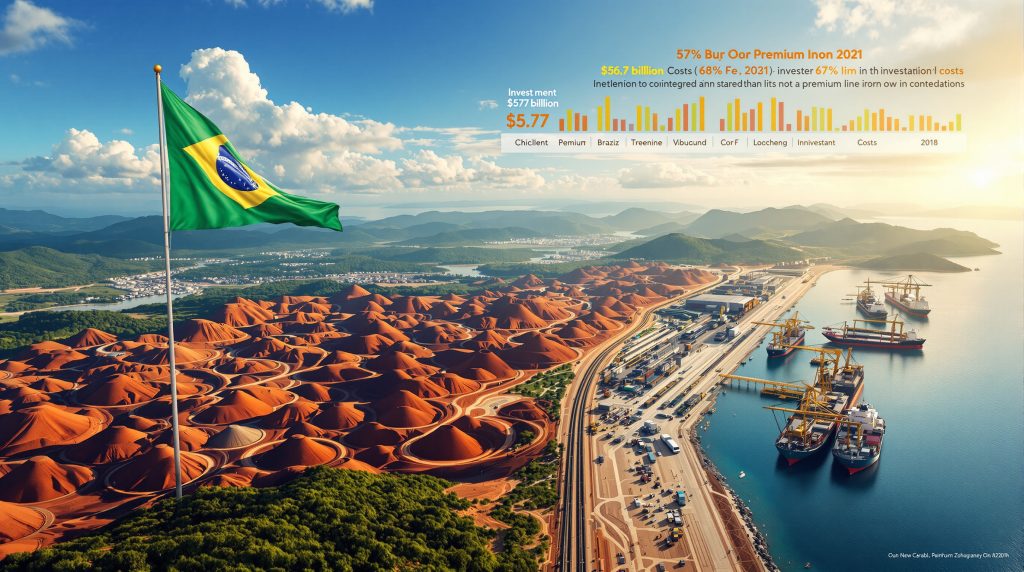
The ongoing negotiations surrounding ERG mulling offers for Brazil iron ore project represent a significant development in the global mining landscape, with Eurasian Resources Group's Bahia Mineração attracting substantial international interest. This comprehensive mining venture combines high-grade reserves with integrated logistics infrastructure, positioning itself as one of Brazil's most strategically valuable mining assets.
Project Overview and Core Assets
Eurasian Resources Group's Bahia Mineração represents one of Brazil's most comprehensive mining infrastructure projects, combining high-grade iron ore reserves with integrated logistics capabilities. The complex encompasses mining operations, a planned deep-water port facility, and critical rail connections designed to streamline ore exports to global steel markets.
Located strategically in Bahia state, the project positions itself as a gateway for premium iron ore exports. The integrated design allows for direct mine-to-ship transportation, eliminating multiple handling stages that typically increase costs and reduce efficiency in traditional mining operations.
With an estimated annual production capacity targeting 26 million tonnes of high-grade iron ore, Bamin stands as a significant addition to Brazil's mining portfolio. The ore quality, featuring 68% iron content, appeals directly to steelmakers seeking low-impurity feedstock for premium steel production processes. Furthermore, current iron ore price trends support premium valuations for high-grade deposits.
Why Multiple Bidders Are Circling This Opportunity
The project's appeal stems from its rare combination of geological quality and infrastructure completeness. High-grade iron ore deposits with integrated transportation solutions represent scarce assets in today's mining landscape, particularly as global steel demand continues emphasizing quality over quantity.
Infrastructure completeness offers potential buyers a turnkey mining operation possibility, reducing the typical development risks associated with greenfield projects. The existing mine structure, combined with planned port and rail facilities, creates a comprehensive export corridor that extends value beyond traditional mining returns.
Regional development incentives from the Brazilian government add another layer of attractiveness. The project serves as a catalyst for economic development in historically underdeveloped areas of Bahia state, aligning investor interests with national development priorities. Additionally, recent rail haulage update developments demonstrate the critical importance of transportation infrastructure in modern mining operations.
When big ASX news breaks, our subscribers know first
Who Are the Key Players Vying for Control?
International Mining Giants in the Mix
Global mining consolidation trends continue driving interest from major international players seeking high-quality, long-life assets. The strategic motivation behind major mining company interest centers on portfolio diversification and access to premium-grade ore sources that command higher market prices.
Brazil Iron Ltd. emerged as an early contender, with reports indicating a substantial bid exceeding $1 billion for project acquisition. This demonstrates the significant valuations being placed on integrated mining-to-export operations, even those requiring substantial additional investment.
The financial capabilities required for completion favour well-capitalised international players with extensive infrastructure development experience. Project requirements spanning mining expansion, railway completion, and port construction demand operational expertise across multiple disciplines.
Brazil's Domestic Mining Champions
Brazilian mining companies leverage proximity advantages and deep market knowledge when evaluating the project's potential. Local players understand regional regulatory environments, community dynamics, and government policy directions that international bidders may find challenging to navigate.
Vale SA, Brazil's mining giant, continues evaluating investment opportunities within the project. The company's existing Brazilian infrastructure and established relationships with government agencies position it favourably for potential involvement, though final investment decisions remain pending comprehensive project assessments.
Government preferences for Brazilian ownership structures in strategic infrastructure projects create additional considerations for international bidders. National economic development priorities often influence selection criteria, particularly for projects involving railway concessions and regional development impacts. Moreover, insights from recent negotiations reveal the complexity of these multi-stakeholder discussions.
What Investment Hurdles Must Potential Buyers Navigate?
Capital Requirements and Financial Modelling
| Investment Component | Estimated Cost (USD) | Timeline | Critical Dependencies |
|---|---|---|---|
| Mining Operations Expansion | $2.1 billion | 2026-2029 | Environmental permits |
| Railway Completion (537km) | $2.8 billion | 2025-2031 | Government concessions |
| Deep-Sea Port Construction | $0.8 billion | 2027-2030 | Maritime approvals |
| Total Infrastructure | $5.7 billion | 6+ years | Multi-agency coordination |
The comprehensive investment requirements reflect the project's integrated nature, with infrastructure components requiring coordinated development across multiple jurisdictions. Railway construction represents the largest single investment component, requiring ongoing government concession approvals and environmental clearances.
Financial modelling must account for extended development timelines and potential cost escalations in Brazil's inflationary environment. Construction projects spanning multiple years face currency fluctuation risks, skilled labour availability challenges, and evolving regulatory requirements that can impact final investment totals.
Regulatory Approval Complexities
Railway concession requirements involve multiple government agencies and extended approval processes. The 537-kilometre railway section requires coordination between federal transportation authorities, state governments, and local municipalities affected by the construction corridor.
Environmental impact assessments encompass mining expansion activities, port development, and railway construction through diverse ecological zones. Brazil's environmental regulatory framework requires comprehensive studies addressing biodiversity impacts, water resource management, and community displacement considerations.
Indigenous land rights considerations add complexity to project boundary determinations and operational planning. Traditional communities in the region require consultation processes and benefit-sharing agreements that can extend approval timelines and modify project designs. This reflects broader industry innovation trends emphasising community engagement and sustainable development practices.
Market Risk Assessment Framework
Iron ore price volatility significantly impacts long-term project economics, with global steel demand cycles affecting revenue projections. Historical price fluctuations between $80-$200 per tonne demonstrate the commodity's susceptibility to economic cycles and supply-demand imbalances.
Competition from established Brazilian iron ore exporters, particularly Vale's extensive operations, creates market positioning challenges for new entrants. Existing players benefit from established customer relationships, proven supply chain reliability, and economies of scale that new operations must overcome.
Global steel demand forecasting involves analysing emerging market industrialisation, developed market infrastructure renewal, and evolving steel production technologies. Green steel initiatives emphasising high-grade ore usage may favour premium suppliers but require substantial market development investments. Current iron ore demand insights suggest continued strong demand for premium-grade materials.
How Does This Deal Compare to Recent Mining Acquisitions?
Benchmarking Against Similar Transactions
Recent iron ore project valuations demonstrate significant premiums for integrated operations combining mining, transportation, and export infrastructure. Comparable transactions in Australia and Brazil show enterprise values ranging from $1.5-3.0 billion for projects with similar production capacities and infrastructure requirements.
Infrastructure-heavy mining deals historically show mixed success rates, with completion timelines frequently extending beyond initial projections. Projects requiring government approvals, environmental clearances, and community agreements face execution risks that can impact final returns and development schedules.
Premium pricing for integrated mining-to-export operations reflects investor appetite for supply chain control and reduced operational dependencies. Companies increasingly value projects offering direct customer access through proprietary transportation and port facilities. However, major players like those implementing a BHP strategic pivot demonstrate careful consideration of capital allocation priorities.
Strategic Value Beyond Pure Mining Returns
Regional infrastructure development creates multiplier effects extending beyond mining operations. The railway connection benefits agricultural exporters, manufacturing facilities, and other mining operations throughout the corridor, generating additional revenue opportunities and government support.
Export corridor creation enhances Brazil's mining competitiveness in global markets while providing redundancy for existing transportation networks. Infrastructure legacy benefits support long-term regional economic development, aligning private investment with public policy objectives.
Government partnership opportunities offer stability advantages for long-term operations. Projects supporting national development priorities typically receive favourable regulatory treatment, financing support, and policy consistency that reduce operational risks.
What Are the Technical Advantages of This Iron Ore Deposit?
Geological Quality and Reserve Assessment
The deposit's 68% iron content positions it among high-grade ore sources globally, reducing processing requirements and transportation costs per unit of contained iron. Premium ore grades command price premiums in markets increasingly focused on efficiency and environmental performance.
Reserve longevity supports multi-decade operations, with geological assessments indicating sufficient ore bodies for extended production campaigns. Long-life assets provide investment stability and justify substantial infrastructure investments required for integrated operations.
Metallurgical properties ideal for premium steel production include low impurity levels and consistent ore characteristics. Steel producers increasingly demand reliable feedstock quality for advanced production processes and environmental compliance requirements.
Processing and Logistics Efficiency Potential
Mine-to-ship transportation optimisation through integrated design eliminates multiple handling stages typical in traditional iron ore operations. Direct rail connections from mining areas to dedicated port facilities reduce logistics costs and improve product quality consistency.
Port capacity alignment with production targets ensures efficient export operations without bottlenecks typical in shared-use facilities. Dedicated port infrastructure provides operational control and customer service advantages that support premium pricing strategies.
Railway gauge compatibility with Brazil's national network enables broader transportation options and potential revenue diversification through third-party cargo services. Standard gauge infrastructure facilitates equipment sharing and maintenance efficiency across the broader railway system.
When Could Production Actually Begin?
Realistic Timeline Projections
Key Milestone Alert: Original 2027 production targets have shifted to late 2031 due to infrastructure investment requirements and regulatory approval timelines extending beyond initial projections.
Phase 1: Investment finalisation and permit acquisition (2025-2026)
• Investor selection and financing completion
• Environmental permit finalisation
• Railway concession approval confirmation
• Community agreement implementations
Phase 2: Infrastructure construction acceleration (2026-2030)
• Railway construction commencement
• Port facility development initiation
• Mining operation expansion activities
• Workforce development and training programmes
Phase 3: Production ramp-up and export commencement (2031-2033)
• Initial production testing and optimisation
• Transportation system integration
• Customer relationship establishment
• Full production capacity achievement
Critical Path Dependencies
Railway construction progress represents the primary production bottleneck, with the 537-kilometre section requiring extensive civil works through challenging terrain. Construction progress depends on weather conditions, equipment availability, and local community cooperation throughout the extended corridor.
Port completion synchronisation with mining operations ensures efficient startup processes and avoids inventory accumulation or transportation delays. Coordinated development scheduling requires ongoing communication between construction teams, equipment suppliers, and operational planning groups.
Workforce development initiatives must begin early in the development process to ensure skilled labour availability for operations commencement. Training programmes for mining, railway, and port operations require lead times extending 12-18 months before operational startup.
The next major ASX story will hit our subscribers first
What Role Will the Brazilian Government Play?
Development Bank Financing Potential
BNDES (Brazilian Development Bank) involvement possibilities focus primarily on infrastructure components supporting broader regional development objectives. The development bank traditionally finances projects creating employment opportunities and enhancing export capabilities in underdeveloped regions.
Government co-investment structures may include direct equity participation, loan guarantees, or infrastructure development contributions that reduce private investor requirements. Public-private partnerships in Brazilian mining projects often combine government infrastructure investment with private operational expertise.
Tax incentive frameworks encourage foreign direct investment through reduced corporate tax rates, accelerated depreciation schedules, and import duty exemptions for equipment and materials. Regional development zones often provide additional benefits for projects creating substantial employment opportunities.
Strategic National Interest Considerations
Export revenue generation priorities align with Brazil's economic development strategy emphasising commodity export diversification and value addition. Iron ore exports contribute significantly to foreign exchange earnings and trade balance improvement objectives.
Regional employment creation addresses historical underdevelopment in interior Bahia state, supporting government objectives for balanced economic growth across geographic regions. Mining projects typically generate direct employment for 2,000-4,000 workers plus indirect economic benefits throughout supply chains.
Infrastructure legacy benefits extend beyond mining operations to support agricultural exports, manufacturing development, and tourism industry growth. Railway and port infrastructure create permanent economic development platforms serving multiple industries over decades.
How Will This Impact Global Iron Ore Markets?
Supply Chain Diversification Benefits
Reduced dependence on traditional Australian and Brazilian suppliers creates market competition benefits for steel producers seeking supply security and price stability. Geographic diversification within Brazil adds redundancy to existing supply chains while maintaining familiar regulatory and business environments.
New export corridor creation enhances overall market competition by providing additional supply route options for global customers. Independent transportation infrastructure reduces reliance on shared-use facilities that can create bottlenecks during high-demand periods.
Premium ore availability supports cleaner steel production technologies requiring high-grade feedstock for environmental compliance and efficiency optimisation. Advanced steel production processes increasingly demand consistent ore quality and low impurity levels.
Competitive Positioning Analysis
Cost structure advantages from integrated operations provide competitive positioning benefits through reduced handling, transportation, and logistics expenses. Direct mine-to-ship transportation eliminates intermediate storage, processing, and handling costs typical in traditional supply chains.
Quality differentiation in increasingly demanding steel markets supports premium pricing strategies and customer loyalty development. Consistent ore characteristics and reliable supply performance create competitive advantages over variable-quality suppliers.
Scalability potential for future expansion phases provides long-term growth opportunities as global steel demand evolves. Infrastructure capacity planning allows for production increases without proportional infrastructure investment requirements.
What Risks Should Investors Consider?
Operational Risk Factors
Investment Caution: Infrastructure-dependent mining projects carry elevated execution risks, particularly when spanning multiple jurisdictions and requiring coordinated development across mining, rail, and port facilities.
Construction cost escalation in Brazil's inflationary environment affects project economics through increased material, labour, and equipment expenses. Historical infrastructure projects in Brazil have experienced cost overruns averaging 20-40% above initial estimates due to inflation and scope changes.
Skilled workforce availability in remote mining regions requires extensive recruitment and training programmes that can delay project timelines and increase operational costs. Competition for experienced mining professionals intensifies as multiple projects compete for limited talent pools.
Weather-related disruptions affect construction timelines through seasonal rainfall patterns and extreme weather events increasingly common in the region. Construction scheduling must account for weather delays that can extend project completion by 6-12 months.
Market and Political Risk Assessment
Iron ore demand cyclicality affects long-term returns through commodity price volatility and customer demand fluctuations. Steel industry cycles typically span 7-10 years, creating revenue uncertainty for projects requiring extended payback periods.
Regulatory changes impacting mining operations or export procedures can affect project viability through modified environmental requirements, taxation changes, or operational restrictions. Brazilian mining regulations continue evolving in response to environmental concerns and community impact considerations.
Currency fluctuation effects on USD-denominated revenues create financial risk through Real-Dollar exchange rate volatility. Brazilian currency historically demonstrates significant fluctuations that can impact project economics and financing costs.
Key Takeaways for Mining Industry Observers
Strategic Implications Summary
Integrated mining projects command premium valuations despite higher execution risks due to supply chain control advantages and reduced operational dependencies. Investors increasingly recognise value in projects offering direct customer access through proprietary infrastructure.
Government partnership importance in large-scale infrastructure development continues growing as projects require regulatory approvals, environmental clearances, and community support spanning multiple jurisdictions. Public-private collaboration models provide risk mitigation and development acceleration benefits.
Quality ore deposits attract multiple bidders in competitive market environments where premium feedstock becomes increasingly valuable for advanced steel production processes. High-grade ore sources provide pricing power and customer loyalty advantages in evolving markets.
Future Industry Trends Indicated
Consolidation continuing around high-quality, long-life assets reflects industry maturation and focus on operational efficiency over expansion. Established mining companies prioritise acquisitions offering immediate production potential and proven reserve bases.
Infrastructure investment requirements favour well-capitalised players capable of managing complex, multi-year development projects across diverse geographic and regulatory environments. Financial capacity requirements eliminate smaller competitors from major project competitions.
Sustainability considerations drive premium pricing for high-grade ore sources supporting cleaner steel production technologies and reduced environmental impact. Environmental performance becomes increasingly important for customer selection and long-term competitiveness.
Disclaimer: This analysis is based on publicly available information and industry benchmarks. Iron ore markets remain subject to significant volatility, and infrastructure projects carry execution risks that may affect actual outcomes. Potential investors should conduct independent due diligence and consult with qualified professionals before making investment decisions.
Want to Discover the Next Major Mining Breakthrough?
Discovery Alert's proprietary Discovery IQ model delivers real-time alerts on significant ASX mineral discoveries, instantly empowering subscribers to identify actionable opportunities ahead of the broader market. Understand why major mineral discoveries can lead to substantial market returns by exploring Discovery Alert's dedicated discoveries page, and begin your 30-day free trial today to position yourself ahead of the market.