July 20, 2026
The global energy landscape faces unprecedented vulnerability when examining how a single maritime chokepoint can trigger worldwide economic disruption. The Strait of Hormuz closure impact on oil prices represents one of the most significant risks to international energy security, with the potential to reshape markets within hours of any disruption. Furthermore, understanding these dynamics becomes crucial as geopolitical tensions continue to escalate around this critical waterway.
Understanding the World's Most Critical Energy Chokepoint
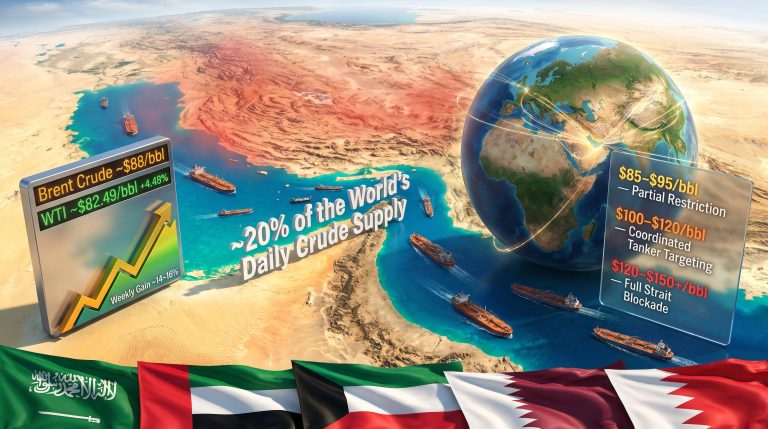
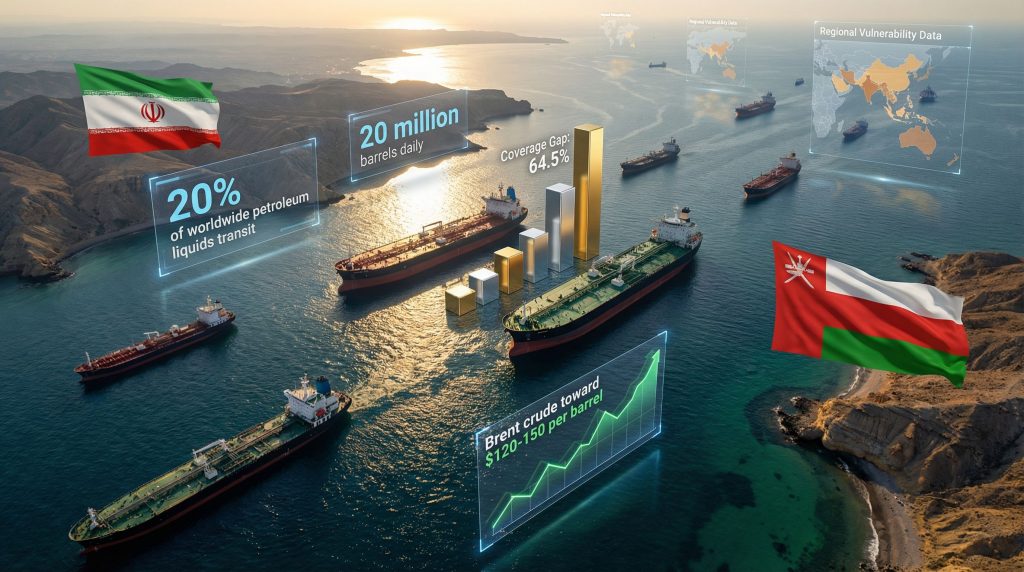
The Strait of Hormuz functions as the paramount maritime bottleneck in global energy infrastructure, channelling approximately 20.9 million barrels per day through a narrow 21-mile passage between Iran and Oman. This volume represents roughly 20% of worldwide petroleum liquids transit, creating an unavoidable dependency for energy-importing nations across Asia and Europe.
Recent events in March 2026 demonstrated the strait's vulnerability when tanker transits collapsed from 24 daily vessels to just 4 vessels following geopolitical escalation. This 83% reduction in shipping activity occurred within 24 hours, validating theoretical models about chokepoint disruption scenarios.
The incident stranded hundreds of tankers loaded with crude oil and liquefied natural gas near regional hubs, particularly around Fujairah in the United Arab Emirates. Consequently, this created immediate ripple effects across global energy markets.
Geographic Monopoly Creates Structural Vulnerability
Unlike major shipping routes offering alternative pathways, the Persian Gulf's geography creates an inescapable funnel for hydrocarbon exports from Saudi Arabia, UAE, Iraq, Kuwait, and Iran. These nations collectively account for over 45% of global seaborne crude trade, making the strait indispensable for Asian markets that consume 60-80% of Gulf oil production.
The physical constraints become more pronounced when considering vessel specifications. Suezmax and Ultra Large Crude Carriers require designated traffic lanes through the strait's narrow channels.
During conflict periods, these navigation requirements create additional complexity as operators must balance economic efficiency against security risks. Moreover, the resulting trade war oil impact adds another layer of complexity to pricing dynamics.
Limited Bypass Infrastructure Capacity
Current pipeline bypass systems provide insufficient coverage for potential strait closures. However, the available alternatives highlight the infrastructure deficit:
Available Pipeline Alternatives:
- Saudi East-West Pipeline: 5.0 mb/d capacity (60% utilisation)
- UAE Abu Dhabi Pipeline: 1.5 mb/d capacity (40% utilisation)
- Iraq-Turkey Pipeline: 0.6 mb/d capacity (70% utilisation)
Total bypass capacity: 7.1 mb/d
Available spare capacity: 3.1 mb/d
Daily strait transit volume: 20.9 mb/d
Coverage gap: 13.8 mb/d (66% of total flow)
This infrastructure deficit means that nearly two-thirds of strait-dependent oil flows lack viable overland alternatives. In addition, this forces reliance on strategic petroleum reserves, demand destruction, or costly maritime rerouting around the Cape of Good Hope.
When big ASX news breaks, our subscribers know first
Immediate Market Response Mechanisms During Disruptions
Oil price volatility during strait closures follows predictable escalation patterns, with markets rapidly incorporating risk premiums based on disruption duration expectations and alternative supply availability. The March 2026 incident provided real-time validation of these pricing dynamics alongside the oil price rally triggered by broader geopolitical concerns.
Price Formation During the March 2026 Closure
Mexican crude export blend pricing demonstrated typical market responses during the four-day strait blockade:
- March 1: Strait closure begins, vessel transits collapse
- March 3: Mexican Mix closes at $66.63/barrel (+5% from previous Friday)
- Price acceleration: Largest single-week surge since October 2025
This $3.17 per barrel increase within 72 hours reflects immediate market pricing of supply disruption concerns. The magnitude remained below theoretical models suggesting $8-12/barrel premiums during Week 1-2 scenarios, indicating either market efficiency improvements or confidence in rapid resolution.
Historical Benchmarking and Context
The March 2026 response (5% price increase) compared closely with the October 2025 Russian sanctions impact (6.3% spike). Therefore, this suggests similar market psychology operates across different geopolitical triggers.
However, the strait closure's geographic concentration created more focused supply concerns than broader sanctions-based disruptions. Furthermore, the incident coincided with significant OPEC production impact decisions affecting global supply balances.
Price Escalation Timeline for Extended Closures:
| Duration | Typical Price Impact | Market Psychology |
|---|---|---|
| Days 1-7 | +$8-15/barrel | Risk premium addition |
| Days 8-30 | +$15-25/barrel | Supply shortage fears |
| Days 31-90 | +$30-50/barrel | Strategic reserve depletion |
| 90+ Days | +$50-80/barrel | Demand destruction begins |
Regional Price Differential Analysis
Asian markets demonstrate the highest sensitivity to strait disruptions due to their concentrated dependence on Gulf crude imports:
Regional Benchmark Responses:
- Brent (Europe): Moderate sensitivity, +$10-20/barrel typical range
- WTI (North America): Lower sensitivity due to domestic production
- Dubai/Oman (Asia): Extreme sensitivity, +$20-35/barrel potential
- Recovery timelines: 1-8 weeks depending on regional supply flexibility
Identifying Nations with Greatest Energy Security Exposure
Asia-Pacific Vulnerability Assessment
Asian economies face the most severe exposure to strait disruptions through their structural dependence on Middle Eastern crude imports. China imports approximately 40% of its oil through the strait, representing roughly 4 million barrels daily from total imports exceeding 10 million barrels per day.
Japan and South Korea demonstrate even higher regional concentration, with 60-80% of crude oil imports sourcing from Persian Gulf producers. This dependency becomes critical given these nations import over 95% of their crude oil requirements.
Consequently, these countries maintain minimal domestic production buffers, making them particularly vulnerable to supply disruptions.
Strategic Petroleum Reserve Coverage:
| Country | Reserve Coverage | Import Dependency | Gulf Share |
|---|---|---|---|
| China | 90 days | 70% | 40% |
| Japan | 150 days | 95% | 75% |
| South Korea | 100 days | 95% | 80% |
| India | 65 days | 85% | 60% |
European Market Resilience Factors
European markets possess greater supply diversification through North Sea production, Norwegian supplies, and Atlantic Basin imports. However, refinery configurations optimised for Middle Eastern crude grades create quality-specific vulnerabilities that pure volume metrics don't capture.
European refineries processing Gulf crude face potential operational disruptions even when alternative volumes remain available. This occurs because different crude grades require distinct refining processes and yield different product slates.
Alternative Supply Routes During Crisis Scenarios
Pipeline Bypass Utilisation Strategies
Saudi Arabia maintains the world's most significant bypass infrastructure through its East-West Pipeline system, theoretically capable of delivering 5 million barrels daily to Red Sea terminals. However, this capacity covers only 25% of the Kingdom's typical strait-dependent exports.
For instance, this leaves 15 million barrels daily without maritime alternatives. The UAE's Abu Dhabi Pipeline provides additional bypass capability, though at significantly lower volumes.
Combined bypass capacity from Gulf producers totals approximately 7 million barrels daily, creating a structural gap of nearly 14 million barrels during full strait closures.
Strategic Petroleum Reserve Coordination
Global emergency reserves theoretically contain sufficient volumes to replace strait flows for extended periods:
Critical Assessment: Combined OECD strategic reserves exceed 1.5 billion barrels, mathematically sufficient to replace strait flows for 75 days. However, practical deployment faces significant operational challenges including release coordination, transportation logistics, crude quality matching, and political decision-making timelines.
Reserve Deployment Challenges:
- Coordination delays: Multi-nation release decisions require 5-10 days
- Transportation bottlenecks: Limited pipeline and tanker capacity from storage sites
- Quality mismatches: Reserve crudes may not match refinery specifications
- Political considerations: Reserve depletion affects national energy security
Economic Recession Transmission Mechanisms
Inflation Propagation Pathways
Energy price shocks propagate through economies via multiple interconnected channels, creating cascading effects beyond direct fuel costs. Furthermore, these impacts extend well beyond the energy sector itself.
Primary Transmission Routes:
- Transportation costs: Immediate increases in logistics and commuting expenses
- Industrial inputs: Higher energy costs for manufacturing and processing
- Agricultural impacts: Fertiliser and machinery cost increases affect food prices
- Consumer behaviour: Spending reallocation away from discretionary purchases
Recession Probability Modelling
Economic analysis suggests closure durations exceeding 30 days create 75% recession probabilities for major importing economies. GDP contractions typically range from 1.5-3% depending on several factors.
These factors include energy intensity, reserve utilisation, and economic diversification. Consequently, nations with high energy consumption per GDP unit face greater impact.
Historical precedent supports these projections: the 1973 oil embargo created similar supply disruptions (approximately 5% of global supply). This triggered recessions across OECD nations lasting 12-18 months.
Investment Opportunities Emerging from Supply Disruptions
Energy Infrastructure Beneficiaries
Strait closure scenarios create immediate value appreciation for companies operating alternative energy infrastructure. Moreover, the complex energy security dynamics create additional investment opportunities across multiple sectors.
Primary Beneficiary Categories:
- Bypass pipeline operators: Capacity premiums increase 200-300% during disruptions
- Strategic reserve developers: Long-term contracts accelerate amid security concerns
- Alternative shipping routes: Freight rates for non-Gulf routes increase substantially
- Renewable energy projects: Acceleration due to energy security considerations
Regional Production Advantages
Non-Gulf oil producers experience significant margin expansion during sustained price elevations:
| Production Region | Breakeven Cost | Crisis Pricing | Margin Expansion |
|---|---|---|---|
| US Shale (Permian) | $45/bbl | $120/bbl | +167% |
| Canadian Oil Sands | $55/bbl | $120/bbl | +118% |
| North Sea | $50/bbl | $120/bbl | +140% |
| Brazilian Offshore | $40/bbl | $120/bbl | +200% |
These margin expansions create substantial cash flow generation opportunities for producers outside the Gulf region. In particular, this benefits those with spare production capacity or development projects awaiting higher price signals.
Technology and Services Acceleration
Crisis scenarios accelerate adoption of energy security technologies:
- Enhanced oil recovery: Techniques to maximise production from existing fields
- Rapid deployment drilling: Technologies enabling faster production increases
- Alternative fuel infrastructure: Accelerated development of hydrogen and biofuel systems
- Energy storage solutions: Grid-scale battery systems reducing petroleum dependency
The next major ASX story will hit our subscribers first
Natural Gas Market Response Dynamics
LNG Export Interruptions
Qatar functions as the world's largest LNG exporter, shipping approximately 75% of production through the Strait of Hormuz. Closure scenarios immediately impact Asian and European gas markets, with TTF futures historically rising 30-40% during Gulf tensions.
The March 2026 strait closure created immediate LNG supply concerns as loaded tankers became stranded near UAE ports. Consequently, these vessels were unable to reach Asian and European buyers.
This physical supply interruption differs from oil markets where strategic reserves provide buffer capacity. Additionally, the situation affects the broader US natural gas forecast as markets seek alternative suppliers.
Regional Gas Price Divergence
European Gas Market Responses:
- Immediate pricing: 25-35% increases within 48 hours of closure
- Storage acceleration: Winter reserve depletion rates increase 40%
- Industrial curtailment: Energy-intensive sectors reduce operations
- Alternative sourcing: Increased reliance on US LNG and pipeline imports
Asian LNG markets demonstrate even higher sensitivity due to limited pipeline alternatives and just-in-time delivery systems. Therefore, spot LNG prices typically increase 50-70% during Gulf disruptions lasting more than one week.
Long-Term Strategic Infrastructure Shifts
Permanent Infrastructure Investment Imperatives
Recurring closure risks would accelerate massive infrastructure investments aimed at reducing chokepoint dependency:
Priority Infrastructure Projects:
- Transcontinental pipelines: New systems connecting alternative supply sources
- Floating LNG infrastructure: Mobile regasification units for emergency capacity
- Strategic reserve expansion: Target coverage extending to 180-day import requirements
- Renewable acceleration: Reduced fossil fuel import dependency through domestic alternatives
These infrastructure investments require 5-15 year development timelines and multi-billion dollar commitments. Therefore, recurring strait disruptions could reshape global energy architecture permanently.
Geopolitical Supply Chain Realignment
Emerging Energy Corridor Development:
- Africa-Asia routes: Red Sea and Indian Ocean alternatives bypassing Gulf supplies
- Arctic shipping expansion: Year-round access to Russian energy exports via Northern Sea Route
- Western Hemisphere integration: Strengthened energy ties between Americas reducing Middle Eastern dependence
- Renewable diplomacy: International cooperation replacing traditional hydrocarbon relationships
Risk Management and Preparedness Strategies
Corporate Risk Mitigation Approaches
Energy-intensive industries develop comprehensive risk management strategies addressing strait closure scenarios:
Industrial Risk Management:
- Supply diversification: Multiple crude suppliers across different regions
- Inventory optimisation: Strategic stockpiling balancing costs against security
- Operational flexibility: Refinery configurations handling multiple crude grades
- Financial hedging: Derivatives strategies protecting against price volatility
National Energy Security Policies
Governments implement multi-layered approaches to strait closure preparation:
- Reserve expansion: Strategic petroleum reserve capacity increases
- Infrastructure development: Bypass pipelines and alternative import terminals
- International coordination: Multilateral agreements for emergency supply sharing
- Demand management: Efficiency programs reducing overall energy consumption
However, effective preparation requires understanding both immediate market responses and long-term structural changes that closures would trigger.
Furthermore, the complexity of these scenarios demands continuous monitoring of emerging geopolitical risks that could trigger future disruptions.
Understanding Strait of Hormuz closure impact on oil prices requires comprehensive analysis of interconnected systems spanning geography, economics, and geopolitics. The March 2026 incident provided concrete validation of theoretical scenarios while demonstrating that even short-duration closures create measurable market impacts.
Successful navigation of these scenarios depends on preparation across multiple dimensions: infrastructure resilience, strategic reserve capacity, supply diversification, and international coordination. While hoping such disruptions never materialise, the perpetual possibility demands continuous readiness within an interconnected yet vulnerable global energy system.
The strait's critical role ensures that Strait of Hormuz closure impact on oil prices will remain a fundamental consideration for energy security planning, investment strategies, and economic policy development across the interconnected global economy.
Looking to Navigate Energy Market Volatility?
Discovery Alert's proprietary Discovery IQ model delivers real-time alerts on significant ASX mineral discoveries, helping investors identify actionable opportunities in energy and commodities sectors as geopolitical events reshape global markets. Explore how major discoveries can generate substantial returns through Discovery Alert's discoveries page, then begin your 14-day free trial to position yourself ahead of market movements.