August 9, 2026
The Invisible Bottleneck Slowing Down Nickel Production
Every tonne of nickel ore leaving an open-pit mine in Indonesia's Central Sulawesi carries with it a trail of analytical data. That data, generated in laboratories through hundreds or thousands of daily sample analyses, determines blending ratios, confirms grade specifications, satisfies buyer contracts, and informs the production schedules that keep an operation financially viable. Yet for much of the industry's history, the systems used to manage that data have lagged significantly behind the analytical instruments generating it.
This disconnect between laboratory throughput capacity and data management infrastructure is not a minor administrative inconvenience. In laterite nickel operations, where ore variability is high and grade differentiation between saprolite and limonite streams is commercially critical, the integrity of assay data functions as a direct input into operational decision-making. When that integrity degrades under volume pressure, the consequences ripple far beyond the laboratory walls.
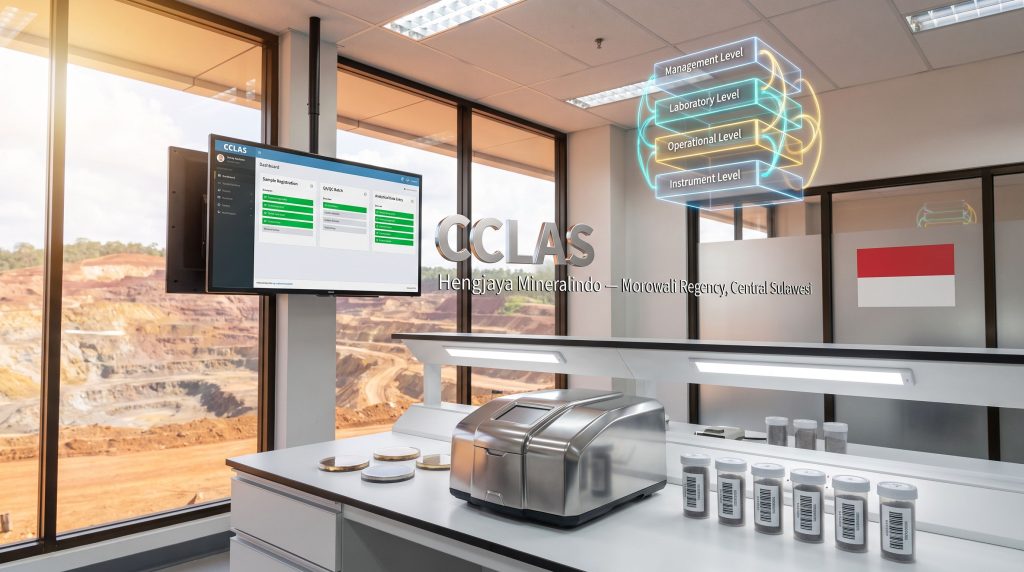
The deployment of Datamine's CCLAS laboratory information management system at PT Hengjaya Mineralindo's Hengjaya nickel mine in Morowali Regency, Central Sulawesi, offers a concrete case study in how mining operations can address this bottleneck through targeted digital infrastructure investment.
When big ASX news breaks, our subscribers know first
Why Laterite Nickel Laboratories Face Unique Analytical Pressure
The Saprolite-Limonite Distinction and Its Analytical Implications
Laterite nickel deposits are fundamentally different in character from the hard-rock sulphide systems that dominate nickel production in regions like Canada and Western Australia. Rather than mineralisation concentrated in discrete sulphide veins, laterite deposits form through long-term weathering of ultramafic rock, creating vertically zoned ore profiles.
The two principal ore types have distinct chemical profiles and end-use destinations:
- Saprolite ore typically carries higher nickel grades, often in the range of 1.5% to 2.5% Ni, and is preferentially fed into rotary kiln electric furnace (RKEF) circuits to produce ferronickel or nickel pig iron
- Limonite ore carries lower nickel grades, generally 0.8% to 1.5% Ni, but higher iron content, making it the preferred feedstock for high-pressure acid leach (HPAL) processing, which targets nickel and cobalt extraction for battery precursor materials
- The distinction between these ore types is not always visually obvious at the mining face, making laboratory confirmation of elemental composition essential before material is dispatched or blended
This dual-stream complexity means that a single operating laterite nickel mine like Hengjaya generates analytical requirements across multiple ore categories simultaneously, each with its own grade thresholds and processing destination criteria. For broader context on how these processing streams fit into the wider picture, brine processing comparison highlights the contrasting challenges faced across different battery materials extraction environments.
The Volume Problem in High-Throughput Nickel Assay Environments
Indonesian nickel operations have scaled at an extraordinary pace over the past decade, driven by demand from the domestic stainless steel and battery materials processing industries concentrated in industrial parks like the Indonesia Morowali Industrial Park (IMIP) in Central Sulawesi. The Indonesian nickel market trends reflect how Indonesia now accounts for more than 50% of global mined nickel supply, according to the United States Geological Survey's most recent mineral commodities summary.
As mine production volumes increase, laboratory sample intake scales proportionally. A mid-to-large laterite operation can generate hundreds to over a thousand samples per shift during peak production campaigns. At these volumes, manual sample tracking, paper-based batch records, and spreadsheet-driven result management systems become structural liabilities rather than functional tools.
"The core risk in manual high-volume laboratory environments is not a single catastrophic error but the gradual accumulation of small inconsistencies that, in aggregate, erode the reliability of an operation's grade control model over time."
Understanding CCLAS: What a Mining-Specific LIMS Actually Does
The Architecture of a Purpose-Built Laboratory Information Management System
The term Laboratory Information Management System (LIMS) is sometimes used interchangeably with generic laboratory software, but this conflation misrepresents what a mining-specific platform like CCLAS actually delivers. Developed by Datamine, a specialist mining technology company, CCLAS is engineered around the specific data workflows, quality assurance requirements, and reporting structures that characterise mineral assay laboratories.
The functional scope of CCLAS covers the complete sample lifecycle from intake to reporting:
| CCLAS Function | What It Replaces | Operational Benefit |
|---|---|---|
| Sample Registration | Paper intake logs, manual spreadsheets | Unique identifiers, systematic digital record from first contact |
| Barcode Printing and Scanning | Manual labelling, handwritten sample IDs | Eliminates transcription errors at sample receipt |
| Analytical Data Entry | Manual result recording from instruments | Structured capture reduces keying errors |
| Automatic QA/QC Batch Creation | Manual reference sample preparation scheduling | Every analytical run validated against control standards automatically |
| Instrument Integration | Manual transcription from instrument printouts | Direct data transfer reduces lag and error risk |
| Structured Reporting | Manually compiled report documents | Standardised outputs generated on demand |
| Audit Trail Management | File-based or no systematic records | Full traceability of every sample action and data modification |
Why Generic Laboratory Software Falls Short in Mining Contexts
Mining laboratories operate under constraints that generic scientific laboratory software was not designed to accommodate. Furthermore, the Indonesian nickel industry challenges amplify these pressures, as rapid production scaling demands systems capable of handling complex, high-frequency analytical workflows. These include:
- Geological sample hierarchy management, where samples must be tracked through submission batches, analytical batches, and QA/QC batches simultaneously while maintaining their relationship to the spatial location from which they were collected
- Multi-method workflow support, where the same sample may require different analytical methods depending on ore type, client requirements, or certification standards
- Mining-specific QA/QC protocols, including the use of certified reference materials (CRMs), field duplicates, laboratory duplicates, and blanks in defined ratios across analytical runs
- Regulatory and contractual reporting structures, where outputs must meet specific format requirements for mine permit conditions, concentrate sales agreements, or processing facility intake specifications
CCLAS is built to accommodate this operational complexity natively, rather than requiring extensive customisation of a platform designed for pharmaceutical, environmental, or research laboratory contexts.
The Hengjaya Mine: Scale, Complexity, and the Case for Automation
Operational Context of PT Hengjaya Mineralindo
PT Hengjaya Mineralindo, a subsidiary of ASX-listed Nickel Industries Limited, operates the Hengjaya Mine as an open-pit laterite nickel operation within Morowali Regency, Central Sulawesi. The operation produces both saprolite and limonite ore grades, feeding into the broader Morowali industrial ecosystem that has transformed Indonesia into one of the world's most consequential nickel processing jurisdictions.
The mine's internal laboratory uses internationally recognised analytical methods, with fuse bead sample preparation combined with X-ray fluorescence (XRF) analysis as the primary analytical approach. Fuse bead preparation involves dissolving ore samples into a homogeneous glass bead using a lithium tetraborate or similar flux, which is then presented to the XRF spectrometer for elemental quantification. This method offers high accuracy and repeatability for major element analysis, including nickel, iron, silica, magnesia, and alumina — all of which are critical parameters for laterite ore characterisation and grade reporting.
The Workflow Pressures That Triggered Systemic Change
As Hengjaya's production activity expanded, the laboratory's sample intake volumes grew to a point where the existing workflow architecture could no longer keep pace. The specific operational pressure points included:
- Escalating sample volumes that outpaced the capacity of manual processing workflows to maintain consistent record quality
- Fragmented data traceability across multiple manual workflow stages, making it difficult to reconstruct the full analytical history of any given sample batch on demand
- Result delivery lag that created information gaps between the laboratory and the mine planning and production scheduling teams that depended on timely assay data
- Audit preparation burden arising from the absence of a centralised, automated data record, requiring significant manual effort to demonstrate data integrity during internal or external review processes
"In high-production nickel operations, the cost of a delayed assay result is not confined to the laboratory. Ore blending decisions, dispatch scheduling, and shipment grade certification all operate downstream of laboratory outputs, meaning that data bottlenecks in the laboratory translate directly into operational inefficiencies at the mine level."
CCLAS Implementation at Hengjaya: A Structured Approach to Workflow Transformation
How the Deployment Was Structured
Hengjaya Mineralindo's selection of CCLAS as its core Hengjaya nickel mine CCLAS laboratory information management system was implemented with system configuration tailored to the site's specific analytical methods, sample volume profile, and reporting requirements. Datamine's after-sales and engineering services team provided hands-on support throughout the transition, covering system configuration, operational troubleshooting, and workflow adjustments during and after the initial deployment phase.
The implementation addressed each of the identified pressure points through a structured set of system capabilities:
- Standardised digital sample registration replaced paper-based intake processes, ensuring every sample received a unique identifier and a traceable digital record from first contact
- Automated QA/QC batch generation eliminated the reliance on individual analysts to schedule and record control sample inclusions, embedding quality validation into every analytical run by default
- Structured analytical data entry pathways reduced the transcription risk inherent in manually recording XRF and other instrument outputs
- Real-time result availability to internal stakeholders removed the communication lag of manual reporting chains, enabling mine planning and production teams to access validated assay data as soon as analytical runs were completed and reviewed
- Standardised reporting outputs for management, QA/QC review, and audit purposes were generated directly from the system, replacing manually compiled documents with consistent, system-verified records
The QA/QC Automation Dimension: Why It Matters More Than It Appears
One of the less-discussed but operationally significant capabilities of CCLAS is its automatic creation of control sample batches. In manual laboratory environments, the insertion of certified reference materials, blanks, and duplicates into analytical runs depends on individual analyst discipline and often on reminders embedded in informal checklists. Under high sample volume conditions, this manual dependency creates systematic QA/QC risk.
Automated batch creation within a system like CCLAS removes this dependency entirely. Control sample insertion becomes a system-enforced process rather than an analyst-dependent one, ensuring that every analytical run generates a validation dataset that can be reviewed for instrument drift, contamination events, or method bias.
For nickel ore destined for RKEF or HPAL processing circuits, this systematic validation is not merely good laboratory practice. Processing facilities operate to precise feed specifications, and inaccurate grade data resulting from inadequate QA/QC management can trigger penalty clauses in supply agreements or require costly ore reblending. Indeed, the broader role of nickel in the energy transition means that data accuracy at the laboratory level has strategic implications well beyond individual mine sites.
Documented Outcomes and the Longer-Term Integration Pathway
What the Implementation Delivered
Following the CCLAS deployment, Hengjaya Mineralindo recorded measurable improvements across several dimensions of laboratory and operational performance:
- Increased laboratory throughput efficiency, with automated workflows enabling the site laboratory to process and validate high sample volumes at the pace required by production operations
- Improved data reliability, through structured entry pathways and embedded QA/QC automation that reduced the incidence of inconsistent or unverifiable analytical records
- Strengthened audit readiness, with a complete system-generated audit trail enabling straightforward demonstration of data integrity during internal and external review processes
- Enhanced operational data availability, giving mine planning, production scheduling, and management reporting functions faster access to validated assay results and reducing decision-making latency
The Expanding Role of LIMS in Mine-Wide Data Architecture
The Hengjaya CCLAS deployment is best understood not as a standalone laboratory upgrade but as a foundational layer within a broader mine data ecosystem. Validated laboratory data does not exist in isolation; it feeds directly into grade control models, resource estimation updates, ore blending algorithms, and commercial reporting obligations. Consequently, Chinese investment in Indonesia nickel operations has further accelerated the push for robust data infrastructure to meet the exacting standards of joint-venture partners and downstream processors.
| Data Ecosystem Layer | Primary Function | CCLAS Contribution |
|---|---|---|
| Instrument Level | Raw analytical output generation | Structured data intake from XRF and other instruments |
| Laboratory Level | Sample management, QA/QC, batch control | Core operational management system |
| Operational Level | Grade control, blending, dispatch planning | Supplies validated, traceable assay data on demand |
| Management and Compliance Level | Reporting, audit, contract compliance | Automated, standardised reporting outputs |
Hengjaya Mineralindo has indicated its intention to deepen CCLAS utilisation beyond the initial deployment scope, with plans to expand laboratory data applications and pursue further system integration connecting laboratory outputs to broader operational workflows. This trajectory aligns with an emerging industry pattern in which LIMS platforms transition from standalone laboratory tools into integrated nodes within mine-wide data management architectures.
The historical data archive accumulated within CCLAS over time will itself become a strategic operational asset, supporting resource estimation refinements, production benchmarking, and long-term compliance documentation in ways that a fragmented manual record system could never enable. For those interested in how Datamine has applied CCLAS across other major mining operations, the Rio Tinto CCLAS case study offers a detailed perspective on implementation outcomes at scale.
The next major ASX story will hit our subscribers first
Frequently Asked Questions
What is CCLAS and who develops it?
CCLAS is a Laboratory Information Management System (LIMS) developed by Datamine, specifically engineered for mining and commercial assay laboratory environments. It manages the complete lifecycle of laboratory samples from initial registration through to validated reporting, replacing fragmented manual workflows with an integrated, auditable digital platform. The Hengjaya nickel mine CCLAS laboratory information management system deployment demonstrates how this platform performs under demanding laterite nickel production conditions.
How does CCLAS support QA/QC in laterite nickel laboratories?
CCLAS automatically generates quality control batches and reference sample sets alongside every analytical run. This removes reliance on individual analyst scheduling of control samples and ensures that validation data is systematically captured for every batch, supporting consistent detection of instrument drift, contamination, or method bias.
What makes fuse bead XRF analysis the preferred method in laterite nickel labs?
Fuse bead preparation dissolves ore samples into a homogeneous glass disc, eliminating the mineralogical matrix effects that can distort direct XRF readings on powdered ore samples. The resulting analytical accuracy for major elements including nickel, iron, silica, magnesia, and alumina makes this method the industry standard for laterite nickel grade determination.
Can CCLAS connect to other mine site data systems?
Yes. CCLAS is designed to support integration with geological database platforms, operational reporting systems, and broader mine data environments. Hengjaya Mineralindo's forward-looking plans include pursuing further system integration to connect validated laboratory data more directly to operational workflows across the mine.
Why is laboratory data management particularly critical in laterite nickel operations?
Laterite deposits exhibit high ore variability across short spatial distances, requiring continuous high-frequency assaying to maintain accurate grade control. Unlike more uniform ore bodies, laterite mines cannot rely on interpolation between widely spaced samples to manage grade risk effectively. This makes the reliability, speed, and traceability of assay data a direct operational priority rather than a secondary administrative function.
Want To Stay Ahead Of Significant ASX Mineral Discoveries?
Discovery Alert's proprietary Discovery IQ model delivers real-time alerts the moment significant ASX mineral discoveries are announced, transforming complex geological and commodity data into actionable investment insights for both short-term traders and long-term investors. Explore historic discovery returns on Discovery Alert's dedicated discoveries page and begin your 14-day free trial today to secure a market-leading edge.