June 4, 2026
How Nigeria's Awodi-07 Discovery Strengthens Continental Energy Leadership
Africa's petroleum landscape continues evolving through strategic exploration initiatives, with Nigeria discovers fresh crude through the recent Awodi-07 well discovery exemplifying the continent's renewed hydrocarbon potential. Located in shallow offshore acreage within the western Niger Delta, this development represents more than a single discovery—it signals Nigeria's systematic approach to consolidating energy sector dominance across Africa.
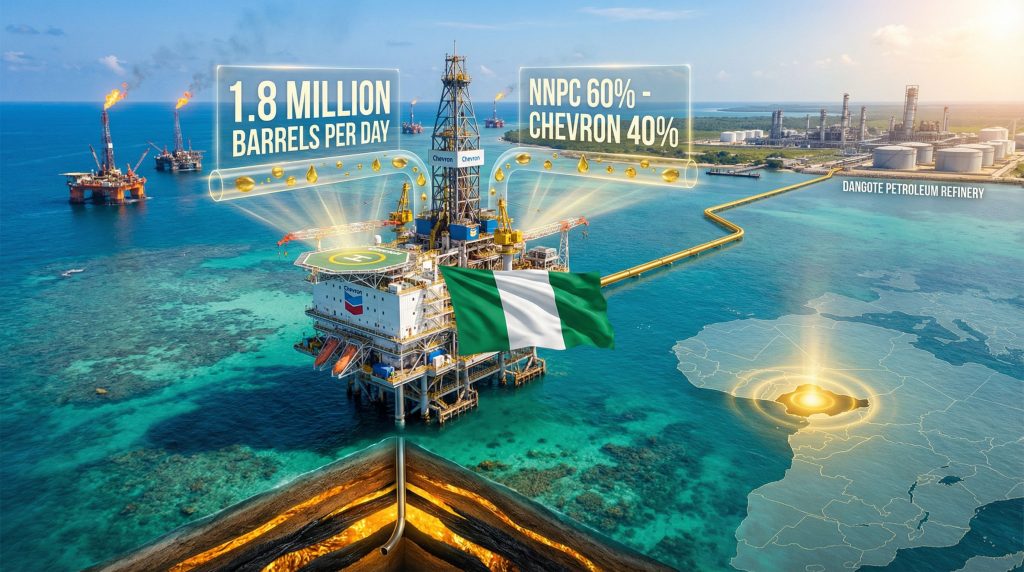
The joint venture between NNPC Limited (60%) and Chevron Nigeria Limited (40%) confirmed multiple hydrocarbon-bearing reservoir zones through November-December 2025 drilling operations. This technical success reinforces Nigeria's position within Africa's competitive oil production hierarchy, particularly as the nation targets sustained output levels of 1.8 million barrels per day throughout 2026.
Technical Significance of Multiple Reservoir Zones
The Awodi-07 discovery confirmed hydrocarbons across multiple reservoir zones, indicating geological complexity typical of Niger Delta formations. These stacked pay formations—distinct hydrocarbon-bearing intervals at different depths—substantially increase field economic viability compared to single-reservoir discoveries.
Shallow offshore environments typically involve water depths under 500 meters, creating significant cost advantages over deepwater alternatives. Development costs generally range from $3-6 per barrel for shallow offshore projects versus $8-15+ for deepwater operations, enhancing commercial attractiveness for discoveries like Awodi-07.
Key Discovery Characteristics:
- Location: Western Niger Delta shallow offshore acreage
- Operational timeline: November-December 2025 drilling campaign
- Geological significance: Multiple hydrocarbon zones confirmed
- Partnership structure: 60% NNPC Limited, 40% Chevron Nigeria Limited
- Expected development timeline: 2027-2029, with first oil potential by 2029-2031
When big ASX news breaks, our subscribers know first
Why Nigeria's Production Recovery Creates African Benchmarks
Nigeria's hydrocarbon sector has demonstrated remarkable resilience, recovering from historical production challenges to achieve consistent output levels between 1.7-1.8 million barrels daily. This recovery trajectory positions the nation favourably against regional competitors, particularly Angola, which continues experiencing declining output from aging infrastructure.
The production recovery reflects multiple operational improvements implemented since 2020. Furthermore, security enhancements reduced pipeline theft by an estimated 20-25%, while resolution of Force Majeure shutdowns at major operators contributed 30-35% of recovery volumes. New upstream projects and improved operational efficiency completed the restoration process.
However, this success comes amid broader market volatility, with the ongoing oil price rally influencing global investment decisions. In addition, OPEC production impact continues shaping regional production strategies across Africa.
African Production Hierarchy Comparison:
| Country | Daily Production (2026) | Primary Assets | Strategic Focus |
|---|---|---|---|
| Nigeria | 1.7-1.8 million bpd | Niger Delta fields | Integrated operations |
| Angola | 1.1 million bpd | Offshore deepwater | Export-focused strategy |
| Ghana | 500,000-600,000 bpd | Jubilee, TEN fields | Emerging development |
| Equatorial Guinea | 80,000-100,000 bpd | Mature fields | Limited expansion |
Regulatory Framework Transformation Under PIA
The Petroleum Industry Act, enacted in September 2021, reformed fiscal terms, operational flexibility, and contract sanctity. These legislative improvements addressed historical investor concerns about regulatory uncertainty, encouraging renewed exploration investment in proven basins like the Niger Delta.
The reformed framework particularly benefits international joint ventures by streamlining operational processes and providing clearer dispute resolution mechanisms. Consequently, this regulatory stability enhances Nigeria's competitive position for attracting exploration capital compared to other African petroleum provinces.
Recovery Attribution Breakdown:
- Security improvements reducing theft: 20-25%
- Force Majeure resolution at major operators: 30-35%
- New upstream projects coming online: 15-20%
- Enhanced maintenance and operational efficiency: 15-20%
What Role Does Downstream Integration Play in Nigeria's Energy Strategy?
Nigeria's energy economics have fundamentally transformed through downstream development, particularly with the $20 billion Dangote Petroleum Refinery achieving operational capacity. This facility processes 650,000 barrels per day, creating Africa's largest petroleum refining operation and the second-largest refinery built globally in the 21st century.
The integration creates unique value propositions within Africa's energy landscape, allowing Nigeria discovers fresh crude to support domestic fuel security rather than export-only strategies. Current operational throughput reached approximately 70% capacity by early 2026, processing 450,000-500,000 barrels daily of actual refined product output.
Economic Impact of Refining Integration
The downstream facility supplies petrol, diesel, and aviation fuel to domestic markets, substantially reducing dependence on costly fuel imports. For instance, Nigeria's historical fuel import costs approximated $8-10 billion annually, making domestic refining capacity strategically valuable for foreign exchange conservation.
Moreover, developments in US oil production decline have created opportunities for African producers to fill market gaps. The NNPC and Chevron's discovery represents a significant boost to Nigeria's production targets.
Refining Capacity Benefits:
- Domestic fuel supply security across product categories
- Foreign exchange savings of $6-8 billion annually
- Reduced transportation costs through local processing
- Enhanced energy security through integrated operations
- Regional export potential for refined products
"The combination of upstream discoveries and downstream processing capabilities creates significant economic multipliers, maximising local value addition while reducing currency exposure and transportation costs."
How Regional Competitors Position Within Africa's Energy Hierarchy
Africa's petroleum production landscape reveals distinct strategic approaches among major producers. Nigeria's integrated upstream-downstream model contrasts sharply with export-focused strategies employed by regional competitors facing different resource and infrastructure constraints.
Angola continues relying heavily on crude exports while battling declining output from aging offshore fields. Production dropped from approximately 1.7 million barrels per day in 2020 to 1.1 million barrels per day by 2026, reflecting field maturity and limited exploration success.
Comparative Strategic Positioning:
Nigeria:
- Integrated upstream-downstream operations
- Domestic refining capacity for fuel security
- Active exploration in proven basins
- Joint venture models with international partners
Angola:
- Export-dependent strategy with declining trends
- Aging deepwater infrastructure requiring investment
- Limited downstream development
- Geological challenges in mature fields
Ghana:
- Emerging offshore development potential
- Limited operational scale compared to Nigeria/Angola
- Focused on specific field developments (Jubilee, TEN)
- Higher per-barrel development costs for deepwater operations
Equatorial Guinea:
- Smaller upstream operations with mature field base
- Market access challenges for sustained growth
- Regulatory stability but limited exploration activity
- Declining production from aging assets
Investment Climate Evolution and Partnership Models
Nigeria's reformed investment environment has created more favourable conditions for international exploration partnerships. The 60-40 NNPC-Chevron structure provides Nigerian state participation while leveraging international technical expertise and capital resources.
This collaborative framework addresses historical concerns about technology transfer and local capability development. Chevron Nigeria Limited brings extensive Niger Delta operational experience, having operated in the basin since the 1960s, creating institutional knowledge valuable for complex offshore development projects.
What Are the Long-Term Implications for Continental Energy Markets?
The Awodi-07 discovery occurs within broader African energy market evolution, where traditional producers face pressure to maximise resource value while adapting to changing global demand patterns. Nigeria's integrated approach provides a framework other African producers might consider for enhancing domestic value addition.
Furthermore, Nigeria discovers fresh crude through systematic exploration continues strengthening the nation's position. The country's January 2026 licensing round targets $10 billion in investment across 50 exploration blocks, demonstrating continued commitment to expanding hydrocarbon reserves.
The success of discoveries like Awodi-07 enhances investor confidence in Nigeria's geological potential, particularly in underexplored offshore areas. However, global oil price movements continue influencing investment timing and project economics across the continent.
Long-Term Strategic Considerations:
- Supply security for domestic and regional markets
- Foreign exchange conservation through import substitution
- Technology transfer through sustained international partnerships
- Infrastructure development supporting broader economic diversification
Geopolitical Implications for West African Energy Security
Nigeria's strengthened energy sector position enhances regional energy security as West African nations seek reliable fuel supplies. The combination of increased production capacity and domestic refining infrastructure positions Nigeria as a potential regional energy hub.
This development reduces collective West African dependence on international fuel imports while creating opportunities for refined product exports to neighbouring markets. The integrated model demonstrates how resource-rich African nations can capture more value from hydrocarbon endowments through strategic downstream investment.
Additionally, OPEC market influence continues shaping Nigeria's strategic positioning within global energy markets, affecting both production quotas and pricing mechanisms.
The next major ASX story will hit our subscribers first
How Does This Discovery Impact Global Energy Supply Dynamics?
Nigeria's enhanced position within global energy supply chains reflects both increased production capacity and improved domestic processing capabilities. The combination reduces crude export dependency through local processing while potentially creating refined product export opportunities to regional markets.
Nigeria discovers fresh crude at a time when global markets face supply uncertainty from various geopolitical factors. The Niger Delta oil discovery represents a significant addition to global proven reserves.
Global Supply Chain Positioning:
- Reduced crude export volumes through domestic refining
- Enhanced regional fuel supply reliability
- Improved operational efficiency through integrated systems
- Strengthened West African energy market influence
Future Exploration Potential and Development Timeline
Nigeria's exploration strategy focuses on proven geological basins where technical expertise and infrastructure support development economics. The Niger Delta remains prospective for additional discoveries, with shallow offshore acreage offering cost advantages over deepwater alternatives.
Typical development timelines for discoveries like Awodi-07 require 12-24 months for appraisal completion, followed by 2-3 years for development planning and construction. Consequently, first oil production generally occurs 3-5 years after initial discovery, positioning Awodi-07 for potential 2029-2031 production startup.
Development Timeline Expectations:
- Appraisal completion: 2026-2027
- Development planning and sanctioning: 2027-2028
- Construction and installation: 2028-2030
- First oil production: 2029-2031 estimated timeline
The discovery reinforces Nigeria's strategic advantages within Africa's competitive petroleum landscape, combining geological potential with regulatory improvements and downstream integration capabilities. This multi-faceted approach creates sustainable competitive advantages that extend beyond single project developments, positioning Nigeria for continued continental energy sector leadership through the next decade.
Investment and development timelines are subject to technical, commercial, and regulatory approvals. Production estimates reflect industry-standard development cycles and may vary based on specific project characteristics and market conditions.
Looking to Capitalise on Energy Discovery Opportunities?
Discovery Alert's proprietary Discovery IQ model delivers real-time alerts on significant ASX mineral discoveries, instantly empowering subscribers to identify actionable opportunities ahead of the broader market. Begin your 30-day free trial today at Discovery Alert and secure your market-leading advantage.