June 15, 2026
Africa's Bauxite Giant Rewrites the Rules of Resource Ownership
The global aluminium supply chain rests on a surprisingly narrow geographic foundation. A handful of countries control the overwhelming majority of the world's bauxite reserves, and among them, one nation stands in a category of its own. Guinea holds more bauxite than any other country on Earth, yet for decades the financial rewards of that endowment have flowed disproportionately outward. Processing margins, pricing power, and industrial employment have accumulated elsewhere, while Guinea exported raw ore at prices largely set in markets thousands of kilometres away.
That structural imbalance is now the target of deliberate policy intervention. The creation of Nimba Mining Company in Guinea represents the most concrete expression yet of a broader ambition to capture more of the aluminium value chain domestically, and to do so through a fully state-owned operator with a diversified mandate extending well beyond bauxite.
When big ASX news breaks, our subscribers know first
From Concession Withdrawal to National Champion: The Policy Logic Behind NMC
The chain of events that produced Nimba Mining Company began in July 2025, when Guinea's government withdrew a bauxite mining concession from Emirates Global Aluminium following a prolonged dispute centred on the company's obligations to construct an alumina refinery within the country. The withdrawal was not an impulsive act. It reflected a hardening position within Guinean policy circles that raw mineral exports alone were no longer an acceptable endpoint for the country's resource wealth.
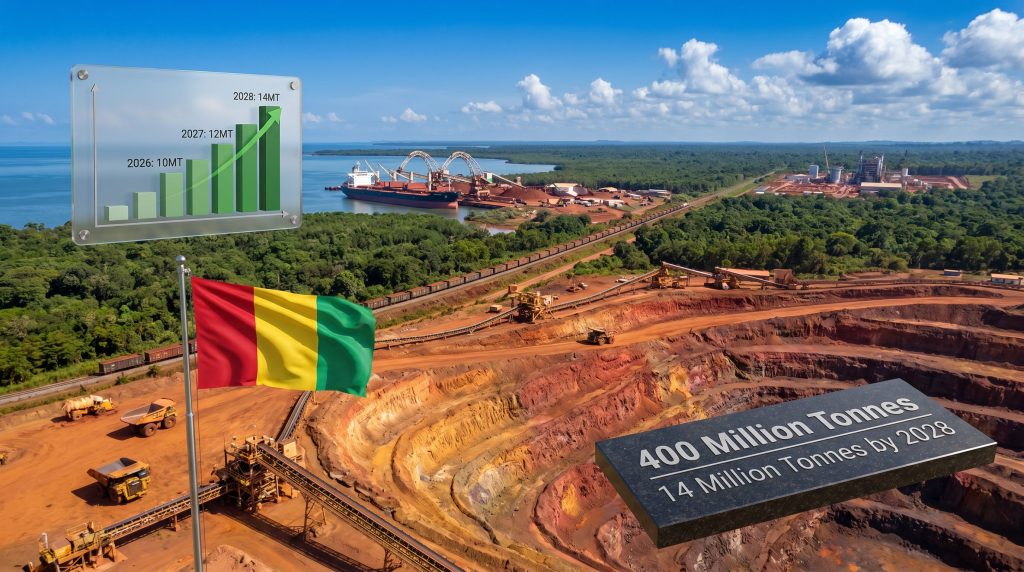
Established by presidential decree in August 2025, Nimba Mining Company became Guinea's first fully state-owned domestic mining enterprise. The company was granted operational control of the Tinguilinta bauxite mine in the Tanéné sub-prefecture of the Boké region, a zone that has served as the geographic core of Guinea's bauxite industry for generations. The mine holds an estimated 400 million tonnes of bauxite deposits, placing it among the most consequential single mineral assets on the continent.
Furthermore, bauxite production leaders such as Guinea are increasingly asserting greater control over how their resources are extracted and valued. Guinea accounts for roughly one-third of global bauxite supply, and the decision to place a deposit of this scale under direct state control carries implications not just for Guinea's fiscal revenues, but for the pricing and supply dynamics of the global aluminium industry.
The Tinguilinta Mine: Scale, Infrastructure, and Operational Scope
When NMC's CEO Patrice L'Huillier assumed the role in September 2025, he arrived at a mine that had been dormant for nearly a year. The immediate assessment proved more encouraging than many industry observers might have expected. Facilities at the Tinguilinta site and connected port infrastructure were found to be in generally sound condition, having avoided the kind of significant deterioration that typically afflicts idled industrial operations. That finding was operationally decisive: it meant a structured restart plan with a precise timeline was immediately feasible.
The Tinguilinta operation is integrated across three core asset categories:
- Mining operations at the Tinguilinta site in the Boké region, with reserves estimated at approximately 400 million tonnes
- Rail-based transportation infrastructure connecting extraction points to export facilities
- Kamsar port facilities, a historically significant export node for Guinea's bauxite sector, giving NMC control from pit to vessel loading
This vertical integration from extraction to shipment is not a trivial structural feature. In commodity markets, companies that control their own logistics corridors are insulated from third-party bottlenecks and better positioned to negotiate export terms. For a newly established state enterprise, having inherited a functional integrated asset base from day one accelerated NMC's commercial credibility considerably.
At launch, the company mobilised approximately 500 direct and indirect employees, with expansion plans intended to generate substantially larger employment across the Boké region over time. Operations were structured around international ESG standards from the outset, with a zero-accident safety record maintained since commencement.
A Restart Timeline That Redefined Industry Expectations
The speed of NMC's operational restart has attracted attention well beyond Guinea's borders. Industry observers familiar with the complexity of reactivating large-scale mining operations will appreciate just how unusual the timeline was.
The Ministry of Mines had set a target of restarting operations before October 31, 2025. Two months after NMC's creation by presidential decree, that target was met precisely: the first barge was loaded on October 31, 2025. A formal government ceremony followed on November 4, 2025. By November, the company had completed its first bauxite shipment of 200,000 tonnes. Commercial operations were officially launched on December 20, 2025.
L'Huillier has described this restart as ranking among the fastest ever achieved in the global mining industry for an operation of comparable scale, as reported by Ecofin Agency. Three factors underpinned the achievement:
- The physical condition of inherited facilities, which required no major remediation before resuming production
- The commitment of Guinean workers who had endured nearly a year of enforced inactivity and mobilised quickly once operations resumed
- Coordinated institutional support from Guinea's Ministry of Mines and Presidential Cabinet, which provided the administrative conditions for an accelerated restart
What this timeline also reveals is something less obvious but strategically important: Guinea possesses a functional mining workforce with the technical capacity to restart complex operations at pace. That human capital base is an underappreciated competitive asset.
NMC's Production Ramp-Up Schedule: 2025 to 2028
| Year | Production Target | Key Milestone |
|---|---|---|
| 2025 | 1 million tonnes | Achieved via stockpiles; full mining resumed December 2025 |
| 2026 | 10 million tonnes | Monthly target of 1 million tonnes from June 2026 |
| 2027 | 12 million tonnes | Continued subcontracting expansion |
| 2028 | 14 million tonnes | Full operational capacity |
To support this trajectory, NMC signed its first mining subcontracting agreement in January 2026 with Chinese firm CHICO, followed in February 2026 by a second agreement with Guinean company IBS Group, which specialises in blasting and crushing operations. The IBS Group agreement covers a minimum of 32 million tonnes over an initial five-year term, providing a structural production commitment that underpins NMC's ramp-up projections. An interim monthly production target of 700,000 tonnes was set for April 2026, with the threshold of one million tonnes per month expected from June 2026 onward.
Investors and analysts should note that forward-looking production targets are subject to execution risk, equipment availability, subcontractor performance, and commodity market conditions. These figures represent management guidance, not guaranteed outcomes.
Guinea's Bauxite Market Position: Pricing Power and the Opacity Problem
Understanding NMC's commercial strategy requires understanding a structural anomaly in the global bauxite market. Guinea is the world's single largest bauxite supplier, with export volumes reaching 182 million tonnes in 2024, up from 125 million tonnes in 2023, representing year-on-year growth of approximately 46% (Ecofin Agency, May 2026). Despite this dominance, the prices at which Guinean bauxite has historically been sold have been largely determined on Chinese commodity markets, with limited pricing transparency available to Guinean authorities or domestic producers.
This dynamic has a direct fiscal consequence. When the seller of an irreplaceable commodity cannot independently observe or influence the price being set for that commodity, a structural revenue gap emerges. Guinea has been operating in exactly this position for much of its bauxite export history. The major bauxite mines operating across the country highlight just how significant this pricing gap has become over time.
The policy response currently underway involves developing a national bauxite reference price index. Because every bauxite transaction in Guinea is subject to government approval, authorities already possess real-time visibility into transaction prices across the primary buyer markets of China and India, as well as shipping cost trends. NMC is actively contributing operational and commercial data to support the construction of this index, providing granular market intelligence that strengthens its technical foundation.
Alongside the pricing index, Guinea's Ministry of Mines is exploring a quota-based export regulation framework, an approach that was presented publicly at the International Bauxite Conference in Miami. The logic is supply-side: by moderating export volumes in periods of price weakness, Guinea could exert greater influence over the price received for its ore. NMC's leadership has indicated that quota implementation is unlikely to derail its growth trajectory, with the 14 million tonne annual target remaining the operational objective.
The combination of a national pricing index and a quota framework, if implemented effectively, would represent a fundamental shift in how Guinea captures value from its dominant market position. Whether these mechanisms achieve their intended fiscal impact will depend heavily on institutional capacity and enforcement consistency.
The EGA Dispute: Commercial Interdependence as a Path to Resolution
The concession dispute with Emirates Global Aluminium remains an unresolved variable in Guinea's mining landscape. EGA's concession was withdrawn in July 2025 following a prolonged disagreement over Guinea's requirement that the company construct an alumina refinery within the country. Speculation regarding international arbitration proceedings has circulated, while separate media reporting has pointed toward parallel negotiations aimed at an amicable resolution.
NMC occupies an indirect but interested position in these developments. As confirmed by L'Huillier in an interview with Ecofin Agency, the company is not a direct party to negotiations between the Guinean government and EGA, though it monitors the situation closely. The commercial logic pulling toward settlement is difficult to ignore. EGA's Abu Dhabi refining operations depend on Guinean bauxite as a primary feedstock, and Guinea has a documented strategic interest in maintaining credible, long-term international partnerships rather than extended litigation.
The interdependence between EGA's processing capacity and Guinea's geological endowment creates a structural incentive for pragmatic resolution. An extended dispute, by contrast, would impose costs on both sides without resolving the underlying question of Guinea's legitimate expectation that concession holders contribute to domestic value creation. Indeed, this mirrors broader debates among aluminium mining companies worldwide regarding their social and industrial obligations in host nations.
The status of EGA-Guinea negotiations remains unresolved as of the time of writing. Readers with commercial or investment interests in this matter should monitor official announcements from both parties.
The next major ASX story will hit our subscribers first
Gold, Copper, and the Architecture of Diversification
One of the less-anticipated dimensions of NMC's strategy is how quickly the company has moved to build a portfolio beyond bauxite, even before its core operation has reached full production scale. This sequencing is deliberate rather than premature. Guinea's government has defined NMC's mandate explicitly as an integrated and diversified national mining company, not a single-commodity operator, and the diversification strategy is structured around two simultaneous vectors.
The first vector is commodity breadth. Beyond bauxite, NMC's expansion targets include gold and base metals, particularly copper. The second vector is processing depth, building local transformation capacity so that Guinea captures industrial margins rather than raw-material margins. This approach closely parallels the alumina processing strategy pursued by major international operators seeking greater vertical integration.
The most concrete expression of the diversification strategy to date is a partnership with Australia's Resolute Mining to co-develop gold exploration projects in eastern Guinea. The partnership brings together NMC's institutional relationships, terrain knowledge, and operational expertise with Resolute's technical exploration capabilities. Combined exploration investment is targeted at approximately $10 million per year from 2026.
A notable and underreported detail within this partnership is the talent pool it draws upon. Guinea has a generation of mining engineers who built their careers in the gold sectors of neighbouring countries, including Senegal, Côte d'Ivoire, and Mali. Many of these professionals are actively being recruited back to Guinea to support NMC's gold programme, representing a repatriation of technical expertise that strengthens the domestic industry's long-term foundations.
Regional Context: Why Guinea Is Attracting Displaced Capital
The broader regional environment is amplifying Guinea's investment attractiveness in ways that extend beyond its geological merits. Security and regulatory instability in parts of the Sahel, particularly Mali, have prompted mining companies to reassess their West African operational footprints. Guinea and Côte d'Ivoire are emerging as preferred repositioning destinations, offering comparatively stable political and security environments for long-term capital deployment.
NMC's leadership views this regional repositioning dynamic as an active structural tailwind, and has indicated that the company intends to be a central participant in attracting both capital and technical talent that may be leaving less stable jurisdictions.
The 2030 Alumina Refinery Vision: Where Processing Meets Sovereignty
The most ambitious dimension of NMC's strategic roadmap is also the one with the longest time horizon: the construction of an alumina refinery capable of processing Tinguilinta's bauxite ore into aluminium oxide before it leaves Guinea's borders.
The commercial rationale is straightforward. Alumina, the intermediate product between raw bauxite and finished aluminium, commands significantly higher export prices than unprocessed ore. Guinea currently exports the vast majority of its bauxite without capturing this processing premium. Guinea's government has set a national target of constructing between five and six alumina refineries by 2030, and Nimba Mining Company in Guinea is positioned to contribute at least one of those facilities.
Feasibility studies for a refinery near the Tinguilinta site have been launched. Importantly, this is not a greenfield concept: preliminary site assessments were conducted in the early 2010s, providing a technical baseline that accelerates the current planning process. Engineering study contracts are expected to be announced in the near term.
Project Execution Timeline
| Phase | Duration | Projected Completion |
|---|---|---|
| Engineering and Feasibility Studies | Approximately 18 months | Around 2027 |
| Construction | 2 to 3 years | Around 2029 to 2030 |
| First Production | Subject to study outcomes | Target: 2030 |
The targeted refinery capacity is approximately one million tonnes per year of alumina output. L'Huillier has emphasised that the priority is rigorous and sustainable execution alongside Guinean partners and authorities, rather than simply being first to produce.
The primary execution constraint identified by NMC's leadership is not capital or site selection. It is access to highly specialised human resources: mine planning engineers, automation specialists, and refinery process engineers. These professionals are scarce globally and in high international demand, creating competitive pressure on Guinea's ability to attract and retain them domestically. Addressing this talent bottleneck is an active strategic focus for the company.
The alumina refinery project remains at the feasibility and engineering study stage. Projected timelines and capacity figures represent current planning assumptions and are subject to revision as studies progress. This should not be interpreted as confirmed project approval or committed capital expenditure.
Guinea's Investment Case in 2026: Structural Advantages and Key Risks
Taken together, the emergence of Nimba Mining Company in Guinea as a vertically integrated, diversified state operator reflects a coherent national strategy for converting geological endowment into sustainable industrial development. For investors and industry observers assessing Guinea's mining sector, the structural picture involves a set of genuine advantages alongside risks that require clear-eyed assessment.
Structural advantages:
- World-class bauxite reserves with globally dominant supply scale
- Significant gold, iron ore, and emerging base metals potential beyond bauxite
- A defined national mining strategy with explicit value-addition objectives
- A functional, experienced mining workforce capable of rapid operational mobilisation
- A comparatively stable political and security environment relative to several Sahelian peers
- An institutional track record, demonstrated through NMC's own restart timeline, of delivering on stated operational objectives
Key risk factors:
- Specialised human capital shortages in technical mining disciplines, particularly for refinery-scale projects
- Continued uncertainty regarding the resolution timeline and terms of the EGA concession dispute
- Commodity price volatility in bauxite markets, partially addressed by the pricing index and quota framework initiatives
- Institutional capacity constraints inherent in any newly formed state enterprise navigating rapid operational scaling
This section presents a structural assessment for informational purposes only and does not constitute financial or investment advice. Readers considering investment exposure to Guinea's mining sector should seek independent professional advice and conduct their own due diligence.
Frequently Asked Questions About Nimba Mining Company in Guinea
What is Nimba Mining Company?
Nimba Mining Company is a fully state-owned Guinean enterprise established by presidential decree in August 2025. It operates the Tinguilinta bauxite mine in the Boké region and holds a mandate to develop as a diversified national mining company across bauxite, gold, and base metals.
Where is NMC's Primary Operation Located?
The Tinguilinta mine sits in the Tanéné sub-prefecture of Guinea's Boké region, the country's principal bauxite-producing zone and one of the most mineral-rich areas in West Africa.
What Are NMC's Production Targets?
NMC is targeting 10 million tonnes of bauxite exports in 2026, scaling to 12 million tonnes in 2027 and 14 million tonnes in 2028, with monthly production expected to exceed one million tonnes from June 2026.
What Is NMC's Partnership with Resolute Mining?
NMC has partnered with Australia's Resolute Mining to conduct gold exploration in Guinea, with a combined exploration investment target of approximately $10 million per year beginning in 2026.
Is NMC Building an Alumina Refinery?
Feasibility studies are underway for a refinery targeting approximately one million tonne per year of alumina output near the Tinguilinta site. Engineering study contracts are expected to be announced shortly, with a target first-production date of around 2030, subject to study outcomes and construction progress.
Want to Track the Next Major Mineral Discovery Before the Market Does?
Discovery Alert's proprietary Discovery IQ model delivers real-time alerts on significant ASX mineral discoveries — instantly turning complex data across 30+ commodities into actionable investment insights for both short-term traders and long-term investors. Explore how historic discoveries have generated extraordinary returns, then start your 14-day free trial at Discovery Alert to position yourself ahead of the market.