
June 9, 2026
The global critical minerals landscape has reached an unprecedented inflection point where supply chain vulnerability intersects with accelerating technological transformation. Traditional industrial metals that once served straightforward applications in steel production and basic manufacturing now underpin the most sophisticated technologies driving modern civilization. Among these strategic materials, one element stands uniquely positioned at the convergence of defence critical materials systems, quantum computing infrastructure, next-generation energy storage, and artificial intelligence hardware requirements.
This intersection of critical dependency and concentrated supply creates extraordinary market dynamics that few mining developments can address effectively. The technical barriers to entry, specialised processing requirements, and decades-long lead times for new production capacity have historically protected established producers whilst creating strategic vulnerabilities for consuming nations and industries.
Understanding Niobium's Industrial Irreplaceability
Metallurgical Properties Driving Strategic Importance
Niobium's position as an irreplaceable industrial material stems from its unique atomic structure and resulting physical properties. The metal exhibits exceptional strength-to-weight ratios when alloyed with steel, creating high-strength low-alloy compositions that cannot be replicated through alternative materials. These metallurgical characteristics enable steel structures to achieve superior performance with reduced material volumes, particularly critical in aerospace and defence applications where weight optimisation directly impacts operational capabilities.
The superconductivity applications represent perhaps the most technically demanding use case for niobium. Unlike other metals that require extreme cooling to achieve superconducting states, niobium maintains these properties at relatively higher temperatures, making it essential for MRI machine manufacturing and emerging quantum computing systems. The metal's ability to conduct electricity without resistance at specific temperature thresholds cannot be substituted, creating absolute dependency for these high-technology sectors.
Advanced battery technology development has identified niobium as a transformative additive for lithium-ion systems. Technical research indicates that incorporating approximately 2 percent niobium oxide into battery compositions can enable 6-minute charging cycles whilst extending operational life by 200 percent and supporting 10,000 charge-discharge cycles. These performance enhancements address fundamental limitations in current battery technology, particularly thermal management and cycle degradation that plague existing energy storage systems.
Defence and Aerospace Applications
Military and aerospace specifications require materials capable of withstanding extreme temperature variations, mechanical stress, and corrosive environments over extended operational periods. Niobium-enhanced superalloys serve these demanding applications in jet engine components, rocket propulsion systems, and defensive armour systems. The metal's thermal stability and corrosion resistance make it indispensable for components operating in high-temperature, high-stress environments where material failure carries catastrophic consequences.
Modern defence systems increasingly rely on advanced electronics and sensor technologies that require superconducting components for optimal performance. Radar systems, electronic warfare equipment, and precision guidance systems depend on niobium-based superconductors for their operational effectiveness. The strategic implications of secure niobium supply extend beyond material costs to national security considerations and defence capability maintenance.
Emerging Technology Sector Demand
Artificial intelligence and data centre infrastructure development creates expanding demand for niobium in specialised electronic components and cooling systems. High-performance computing systems generate significant heat loads requiring advanced thermal management solutions, where niobium's thermal properties provide essential performance advantages. The rapid expansion of AI processing capabilities and cloud computing infrastructure translates into sustained demand growth for these specialised applications.
Furthermore, the transition towards renewable energy systems has intensified focus on critical minerals energy security, with niobium playing an increasingly vital role in next-generation energy storage solutions.
When big ASX news breaks, our subscribers know first
Global Supply Chain Vulnerability Assessment
Market Concentration Analysis
Current global niobium production exhibits extraordinary concentration, with approximately 90 percent of supply originating from Brazilian operations. This level of market concentration represents one of the highest dependency ratios among critical minerals, creating systemic risks for consuming industries and importing nations. The production base consists primarily of two major Brazilian facilities and one Canadian operation, with minimal production from other global sources.
The United States imports 100 percent of its niobium requirements, highlighting the complete dependency on foreign sources for this strategic material. Similar import dependencies exist across European nations, Japan, and other industrialised countries that rely heavily on advanced manufacturing and defence technologies. This dependency pattern creates vulnerability to supply disruptions, price manipulation, and geopolitical leverage by producing nations.
Pricing Dynamics and Market Structure
Current market pricing reflects both the concentrated supply structure and growing demand from technology sectors. Ferroniobium trades at approximately $40,000 per tonne for standard grades containing roughly 65 percent niobium content. Refined niobium products command premium pricing near $60,000 per tonne, reflecting the additional processing requirements and higher purity specifications demanded by aerospace and electronics applications.
The pricing structure demonstrates significant volatility potential given the limited supplier base and inelastic demand from critical applications. Unlike commodity metals with multiple production sources and substitution possibilities, niobium pricing can experience dramatic fluctuations based on individual facility operational status or geopolitical developments affecting major producing regions.
Strategic Stockpiling and Supply Security
National strategic stockpile policies increasingly recognise niobium as a critical material requiring supply security measures. However, the specialised nature of niobium applications means that stockpiled material must meet specific grade and form requirements for different end uses. Raw niobium concentrates cannot substitute for refined ferroniobium or high-purity metal forms required by electronics and aerospace manufacturers.
The development of alternative supply sources becomes strategically critical for nations seeking to reduce dependency on concentrated production regions. In addition, Australia's critical minerals strategy emphasises the importance of diversifying supply chains through strategic partnerships and alternative sourcing options. This strategic imperative creates opportunities for new production projects that can demonstrate reliable, long-term supply capabilities with appropriate quality specifications for demanding industrial applications.
Kanyika's Geological Profile and Resource Characteristics
What Makes the Kanyika Deposit Significant?
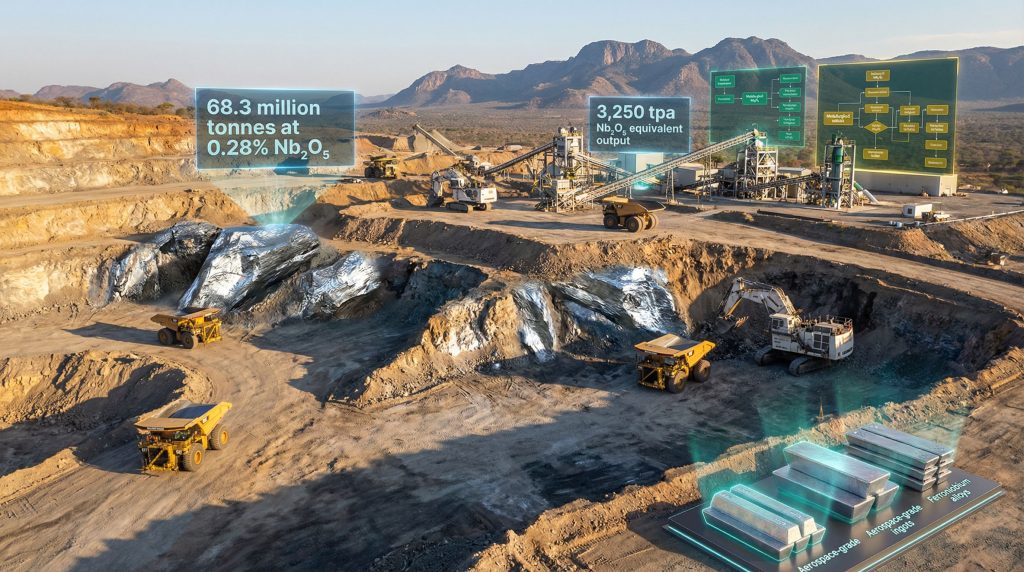
The Kanyika niobium project contains a JORC-compliant mineral resource of 68.3 million tonnes at 0.28 percent niobium pentoxide (Nb₂O₅), positioning it among significant global niobium deposits. This resource scale supports a projected 23-year mine life based on planned production rates, providing long-term supply stability for potential customers and strategic security for importing nations.
The geological setting within the Mozambique Orogenic Belt provides favourable characteristics for niobium extraction and processing. The deposit's near-surface mineralisation patterns reduce stripping requirements and enable cost-effective open-pit extraction methods. Low strip ratios translate directly into reduced operating costs and improved project economics compared to deeper deposits requiring extensive waste removal.
Mineralisation Characteristics and Processing Advantages
Kanyika's pyrochlore-hosted niobium mineralisation exhibits characteristics conducive to conventional beneficiation techniques. The mineral composition allows for efficient gravity separation and magnetic concentration processes, targeting concentrate grades of 30-35 percent Nb₂O₅. These processing specifications align with industry standards for downstream refining and meet quality requirements for major end-use applications.
The deposit's mineralisation distribution across four distinct zones provides operational flexibility and grade control opportunities during mining. This geological configuration enables selective mining techniques to optimise feed grades to the processing facility whilst managing waste generation and environmental impacts.
| Resource Parameter | Specification | Strategic Advantage |
|---|---|---|
| Total Resource | 68.3 million tonnes | 23-year mine life |
| Grade | 0.28% Nb₂O₅ | Commercially viable |
| Strip Ratio | Low | Reduced operating costs |
| Concentrate Grade | 30-35% Nb₂O₅ | Industry-standard quality |
Co-Product and By-Product Potential
Beyond primary niobium production, Kanyika offers significant co-product recovery opportunities. The project targets 150-160 MT tantalum pentoxide annually as a secondary product, adding revenue diversification and improving overall project economics. Tantalum applications in electronics and aerospace create synergistic market positioning with niobium end-use sectors.
Additional by-product potential includes uranium, zircon, and rare earth elements, though specific recovery rates and economic viability require further technical development. These by-products could provide additional revenue streams and further enhance the project's strategic value proposition for critical mineral supply diversification.
Technical Production Specifications and Processing Strategy
Integrated Processing Facility Design
The Kanyika niobium project incorporates a 1.5 million tonnes per annum (Mtpa) concentrator designed for multi-stage beneficiation of niobium-bearing ore. The processing strategy emphasises low-energy crushing and gravity separation methodologies, followed by magnetic and flotation concentration techniques to achieve target concentrate specifications.
The integrated approach includes on-site refinery capabilities, enabling production of finished niobium products rather than requiring concentrate sales to third-party processors. This vertical integration strategy addresses supply chain traceability concerns and captures additional value through downstream processing margins.
Phased Production Timeline
Phase 1 production targets 3,250 tonnes per annum (tpa) Nb₂O₅ equivalent output with first oxide production scheduled for Q4 2027. This initial production phase provides cash flow generation whilst completing full facility construction and optimisation. The phased approach reduces initial capital requirements and enables operational experience development before full-scale production.
Phase 2 expansion to full 1.5 Mtpa capacity targets completion by 2029, representing the project's full production potential. The expansion timeline aligns with anticipated market demand growth and provides flexibility to adjust production scaling based on market conditions and operational performance.
Quality Control and Aerospace Standards
Production specifications target aerospace and defence grade requirements, necessitating rigorous quality control systems throughout the processing chain. These standards include contamination control, consistent chemical composition, and documented traceability from ore extraction through final product delivery.
The quality control framework addresses growing customer requirements for conflict-free sourcing and supply chain transparency. Complete on-site processing enables documentation of material handling and processing stages, meeting due diligence requirements for technology and defence sector customers.
Supply Chain Diversification and Strategic Positioning
Geographic and Geopolitical Advantages
Malawi's location provides stable regulatory environment and favourable mining conditions compared to many African mining jurisdictions. The country's established mining code, environmental regulatory framework, and community engagement requirements create predictable operational conditions for long-term mining development.
The conflict-free sourcing designation addresses growing corporate responsibility requirements across technology and defence supply chains. Major manufacturers increasingly require documented proof of ethical sourcing and conflict-free mineral procurement, creating competitive advantages for producers in stable jurisdictions.
Transportation and Logistics Infrastructure
Regional transportation infrastructure provides access to international markets through established port facilities in Mozambique and Tanzania. Multiple transportation corridor options reduce logistics risks and provide operational flexibility for product delivery to global customers.
The landlocked location requires coordination with neighbouring countries for export logistics, but established regional trade relationships and infrastructure development initiatives support reliable transportation access. Road, rail, and port infrastructure improvements continue enhancing connectivity and reducing transportation costs.
Customer Diversification Strategy
The project's production specifications enable supply to multiple end-use sectors, reducing dependency on individual customers or market segments. Aerospace manufacturers, defence contractors, electronics companies, and steel producers represent distinct customer categories with different technical requirements and procurement patterns.
Long-term offtake agreements provide production certainty and financing support whilst ensuring customers have secure supply access. The diversified customer approach reduces market concentration risks and provides pricing optimisation opportunities across different application segments.
Economic Projections and Financial Framework
Capital Investment and Operating Cost Structure
Initial capital expenditure estimates range $200-300 million for processing plant construction, infrastructure development, and pre-production activities. This capital requirement includes concentrator facilities, refinery equipment, power systems, transportation infrastructure, and community facilities necessary for sustained operations.
Operating cost projections target $15-20 per kilogram Nb₂O₅ including labour, energy, consumables, and maintenance expenses. These cost estimates position Kanyika competitively against established global producers whilst providing margins for sustained profitability across commodity price cycles.
Transportation costs add approximately $2-4 per kilogram for delivery to major markets, reflecting the landlocked location and multi-modal transportation requirements. Infrastructure improvements and operational optimisation can reduce these transportation cost components over time.
Revenue Projections and Market Pricing
Based on current market pricing and production targets, the 23-year mine life projects total revenue potential of approximately $5.6 billion. This revenue calculation assumes sustainable pricing levels and consistent production output aligned with market demand growth projections.
Price sensitivity analysis indicates significant revenue upside potential if niobium pricing appreciates due to supply constraints or accelerated demand growth from emerging technology applications. Conversely, the project maintains economic viability even under conservative pricing assumptions due to favourable operating cost structure.
Investment Returns and Financing Structure
The project's economic returns depend on successful completion of construction phases, achievement of production targets, and maintenance of favourable market pricing. The long-term nature of niobium supply contracts and strategic customer relationships support predictable revenue streams for financing evaluation.
Financing strategies may incorporate offtake agreements, strategic partnerships, and government support given the project's strategic mineral designation. The combination of commercial financing and strategic partner involvement can optimise capital structure and reduce development risks.
The next major ASX story will hit our subscribers first
Infrastructure Development and Operational Framework
Site Development and Construction Progress
Construction activities commenced in January 2026 with early works including site preparation, access road development, and utility infrastructure installation. The construction timeline coordinates multiple work streams including earthworks, facility construction, equipment installation, and commissioning activities.
Water supply systems and power infrastructure represent critical path items requiring early completion to support ongoing construction and future operations. Regional power grid connections and backup generation systems ensure reliable energy supply for processing operations and community facilities.
Environmental and Social Compliance Framework
Environmental and Social Impact Assessment (ESIA) implementation addresses biodiversity protection, water resource management, air quality control, and community impact mitigation. The comprehensive framework ensures compliance with IFC/Equator Principles and international environmental standards.
Community Development Agreement funding mechanisms provide sustained benefits for local communities through education, healthcare, infrastructure, and economic development programmes. These commitments extend throughout the mine life and include post-closure community support provisions.
Workforce Development and Training Programmes
Operational workforce requirements span mining, processing, maintenance, laboratory, and administrative functions requiring diverse skill sets and experience levels. Training programmes develop local workforce capabilities whilst incorporating expatriate technical expertise during initial operational phases.
Skills development initiatives coordinate with regional educational institutions and vocational training programmes to create sustainable employment opportunities and technology transfer benefits. The workforce development approach aims to maximise local employment whilst maintaining operational efficiency and safety standards.
Market Impact and Strategic Implications
Global Market Share and Competition Dynamics
Kanyika's production capacity represents significant additional global supply that could capture meaningful market share from existing Brazilian producers. The project's production timeline coincides with anticipated demand growth from technology sectors, positioning new supply to meet expanding market requirements rather than displacing existing consumption.
Competitive positioning emphasises supply security, traceability, and customer service rather than primarily cost-based competition. The strategic value proposition addresses customer concerns about supply concentration and geopolitical risks associated with current producer concentration.
Technology Sector Supply Chain Impact
The project's contribution to critical mineral supply chain diversification supports technology sector growth and innovation. Reduced dependency on concentrated supply sources enables technology manufacturers to expand production capabilities and develop new applications without supply security concerns.
Battery technology advancement and artificial intelligence infrastructure development depend on reliable niobium supply for optimal performance characteristics. Secure supply access enables accelerated technology deployment and commercial scaling of advanced applications currently constrained by material availability concerns.
Strategic Mineral Policy Implications
Kanyika's development aligns with national critical mineral policies emphasising supply chain resilience and strategic independence. The project provides concrete progress toward reducing import dependency and enhancing national security for consuming nations seeking alternative supply sources.
Furthermore, establishing a critical minerals reserve becomes increasingly important for nations developing comprehensive mineral security strategies. Regional development implications extend beyond individual project benefits to broader African mining sector advancement and technology transfer opportunities.
The successful development of complex processing technologies creates expertise and infrastructure that can support additional mining projects and industrial development initiatives. Consequently, projects like Kanyika contribute to broader efforts of establishing a critical raw materials facility network that can enhance global supply chain resilience.
According to recent analysis from Mining Technology, the project's development timeline positions it advantageously to address growing market demand from strategic sectors requiring secure niobium supply.
Please note: The information presented in this analysis contains forward-looking statements and projections based on current market conditions and technical assessments. Actual results may vary significantly due to changes in commodity prices, operational performance, regulatory requirements, and market demand. This analysis is for informational purposes only and does not constitute investment advice. Potential investors should conduct independent due diligence and consult with qualified financial advisors before making investment decisions.
Ready to Invest in the Next Critical Mineral Discovery?
Discovery Alert instantly alerts investors to significant ASX mineral discoveries using its proprietary Discovery IQ model, turning complex mineral data into actionable insights. Understand why historic discoveries can generate substantial returns by visiting Discovery Alert's dedicated discoveries page, showcasing historic examples of exceptional outcomes.