May 12, 2026
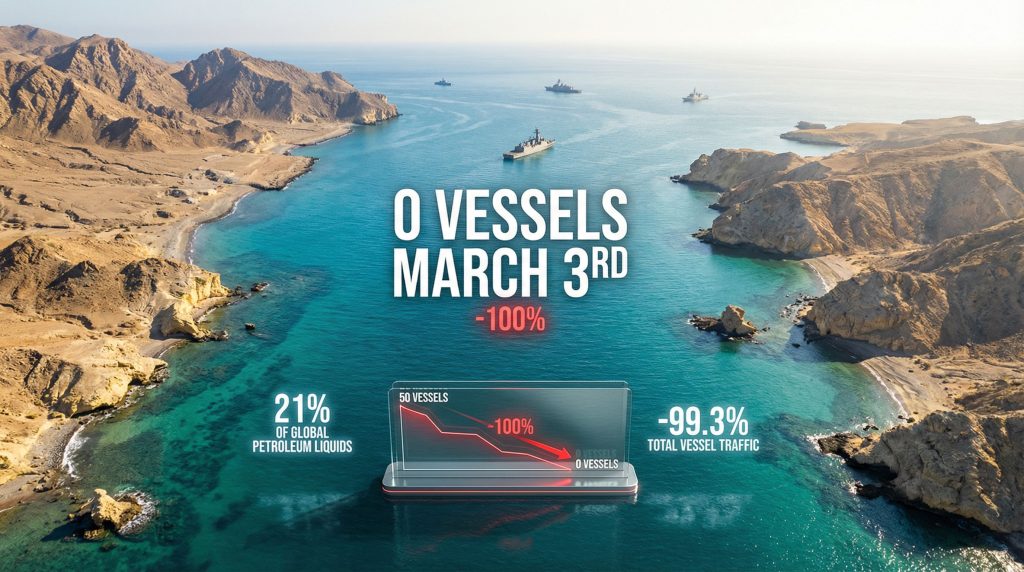
The global energy sector confronts escalating vulnerabilities as geopolitical tensions increasingly target critical maritime chokepoints, with the recent period marking a dramatic escalation when no tankers crossed Hormuz on 3 March. This unprecedented shutdown of one of the world's most vital energy arteries demonstrates how rapidly commercial confidence can collapse under security threats. Furthermore, such disruptions reveal fundamental weaknesses in supply chain architecture that extend far beyond immediate shipping concerns, affecting regional price discovery and tariffs impact investment markets.
Understanding how these chokepoint dependencies operate reveals critical infrastructure weaknesses that demand comprehensive risk mitigation frameworks. In addition, the interconnected nature of global energy systems means that single-point failures create cascading effects throughout multiple markets simultaneously.
The Economics of Chokepoint Dependency
Maritime petroleum transport operates through a network of strategic passages where geography creates natural bottlenecks. These chokepoints concentrate massive volumes of energy flows through relatively narrow waterways, creating single points of failure that can dramatically impact global markets within hours.
The concentration of energy flows through these passages creates asymmetric vulnerability patterns. When a major chokepoint faces disruption, the immediate impact extends beyond simple supply reduction to encompass complex market psychology dynamics that amplify price volatility and reshape trader behaviour patterns.
Critical Infrastructure Vulnerability Analysis
Recent data from the Joint Maritime Information Center reveals the dramatic scale of chokepoint dependency. During the March 2026 Strait of Hormuz disruption, daily vessel traffic collapsed from 138 ships to just one vessel within a four-day period, with tanker crossings dropping from 50 vessels to zero.
| Transit Metric | February 28, 2026 | March 1, 2026 | March 2, 2026 | March 3, 2026 | Impact |
|---|---|---|---|---|---|
| Tanker Crossings | 50 vessels | 3 vessels | 3 vessels | 0 vessels | -100% |
| Total Vessel Traffic | 138 vessels | — | — | 1 vessel | -99.3% |
| Cargo Ship Movements | 98 vessels | 18 vessels | 7 vessels | 1 vessel | -99.0% |
| Regional Price Premium | Baseline | — | — | +15-20% | Significant |
Source: Joint Maritime Information Center, reported by Argus Media, March 4, 2026
This systematic collapse demonstrates how rapidly commercial confidence can erode when security concerns override economic incentives. The progression from partial reduction to complete cessation occurred over just four days, indicating that market participants make binary risk assessments rather than gradual adjustments during crisis scenarios.
Insurance Market Dynamics During Infrastructure Threats
War risk coverage represents a critical component of maritime transport economics that becomes severely compromised during geopolitical tensions. Major re-insurers announced complete withdrawal of war-risk coverage throughout the Middle East effective March 5, 2026, creating immediate operational barriers to resumed transit.
According to Sean Kline, president of the Chamber of Shipping of America, naval escorts provide insufficient risk mitigation: "Transiting this region is ultimately a decision for the ship operator because even with naval escorts, there is still significant risk involved."
Alternative insurance mechanisms face fundamental limitations when physical security threats persist. Alpman Ilker, head of petroleum and tanker analysis at Odin shipbroking firm, noted that financial protection cannot address direct military targeting: "Insurance may incentivise a few to start transiting but the Iranians will likely attack and then traffic will again cease transit."
The asymmetric nature of modern threats complicates traditional risk assessment frameworks. Naval analyst Joshua Tallis from the Center for Naval Analyses emphasised that Iranian military capabilities present multidimensional challenges including sea and airborne drones plus naval mines, which create persistent vulnerability even when conventional naval forces are neutralised.
When big ASX news breaks, our subscribers know first
Maritime Security Cascades Through Global Energy Systems
Supply chain disruptions propagate through interconnected energy markets via multiple transmission mechanisms that amplify initial shocks. The March 2026 chokepoint closure demonstrates how single-point failures create system-wide instability affecting price discovery, logistics planning, and investment decision-making across multiple time horizons.
However, the crisis also highlighted how oil price rally under tariffs can compound supply disruption effects, creating compounded volatility scenarios that challenge traditional risk management approaches.
Real-Time Market Response Mechanisms
Energy markets exhibit rapid price adjustment patterns when critical infrastructure faces threats. Front-month Ice gasoil futures posted gains of $122.50/ton on March 3 alone, following $133.75/ton increases in the previous session, reaching levels not seen since 2022.
Regional refined product markets experienced dramatic price volatility:
- Rotterdam Marine Gasoil: $957.50/ton delivered (up $242.25/ton from February 27)
- Antwerp MGO: $967.50/ton delivered (up $254.50/ton from February 27)
- UK Continent-West Africa MR tanker rates: $52.86/ton (WS275) versus $39.40/ton (WS205) pre-conflict
These price movements reflect both immediate supply concerns and forward-looking risk premiums as market participants price in extended disruption scenarios. The speed of adjustment indicates sophisticated real-time risk assessment capabilities within energy trading systems.
Technology Infrastructure Degradation
Modern maritime operations depend heavily on satellite-based navigation and communication systems that become compromised during military conflicts. Global Navigation Satellite System (GNSS) jamming throughout the Strait of Hormuz, Gulf of Oman, and Arabian Gulf created multiple operational challenges:
- Positional offsets in vessel location data
- Automatic Identification System anomalies affecting tracking accuracy
- Intermittent signal degradation disrupting navigation capability
- Compromised safety protocols for high-risk zone operations
The Joint Maritime Information Center advised vessels to minimise predictable patterns and reduce time spent at anchor or pier-side in high-risk areas. This operational guidance reflects how technology vulnerabilities force fundamental changes in maritime logistics practices.
Secondary Market Impacts and Producer Responses
Infrastructure disruptions create ripple effects throughout interconnected energy systems. Iraq experienced a nationwide power outage on March 4 caused by sudden gas supply reduction to the Rumaila power plant in Basrah, demonstrating how chokepoint closures affect domestic energy security across the region.
QatarEnergy declared force majeure during the disruption period, while other regional producers implemented emergency protocols to manage supply chain interruptions. These responses illustrate how individual company actions aggregate to create system-wide supply constraints.
Alternative Supply Chain Adaptation Strategies
Energy supply chains demonstrate remarkable flexibility when confronted with infrastructure disruptions, rapidly deploying alternative routing strategies and activating backup capacity across multiple regions. These adaptive mechanisms reveal both the resilience and limitations of current global energy architecture.
Nevertheless, US–China trade war effects continue to complicate alternative routing strategies, as geopolitical tensions create additional layers of supply chain complexity beyond physical infrastructure constraints.
Cape Route Economics and Distance Penalties
Alternative maritime routes require substantial additional sailing distances that fundamentally alter shipping economics. Cape of Good Hope routing adds approximately 6,000 nautical miles for Asian deliveries compared to Suez Canal transit, creating significant time and cost penalties that reshape arbitrage opportunities.
Extended voyage distances necessitate:
- Increased vessel deployment for equivalent cargo throughput
- Higher fuel consumption affecting freight rate calculations
- Extended cargo delivery timelines impacting inventory management
- Modified contract terms accommodating longer transit periods
Despite these constraints, European gasoline cargoes continued loading for West Africa during the March disruption. Trading firm Vitol booked a 37,000-ton gasoline cargo from Lavera for West Africa, indicating that arbitrage economics remained attractive despite elevated Medium Range tanker rates.
Regional Production Capacity Activation
Alternative supply sources activated rapidly to compensate for disrupted trade flows. Nigeria's Dangote refinery demonstrated how regional capacity can partially offset chokepoint closures through accelerated production ramp-up.
Dangote Refinery Operational Status (March 2026):
- Total capacity: 650,000 barrels/day
- Residual Fluid Catalytic Cracker: 218,000 b/d (running at ~90% capacity)
- Motor spirit block units: Operational but below full capacity following January maintenance
- Production focus: Gasoline and refined product optimisation
The refinery's primary gasoline production unit returned to near-full operation after being offline since December 2025, highlighting how dormant capacity can be reactivated during supply emergencies. This pattern suggests that global refining networks maintain more spare capacity than commonly assumed.
Market Price Discovery Under Supply Uncertainty
Regional fuel markets experienced significant price volatility as alternative supply chains activated. Nigerian gasoline flat prices increased to 875 naira/litre on March 2, representing a 14% increase from approximately 750 naira/litre on February 17.
Benchmark non-oxygenated gasoline values rose 12% over the same period to $728.75/ton, demonstrating how global price discovery mechanisms adjust to reflect alternative supply chain costs and risks.
Geopolitical Risk Reshapes Energy Infrastructure Investment
Chokepoint vulnerabilities drive fundamental shifts in energy infrastructure investment patterns as stakeholders seek to minimise single-point-of-failure dependencies. These strategic realignments affect everything from pipeline development priorities to refinery location decisions and storage capacity expansion programmes.
For instance, energy security concerns increasingly drive investment decisions as stakeholders recognise the strategic importance of diversified supply chains and alternative energy sources.
Strategic Infrastructure Resilience Planning
Energy companies increasingly prioritise supply chain diversification strategies that reduce chokepoint exposure through multiple routing options and redundant infrastructure networks. This approach requires substantial capital allocation toward backup systems and alternative transport mechanisms.
Investment frameworks now systematically evaluate:
- Dual-route supply architecture minimising single chokepoint dependencies
- Strategic petroleum reserve capacity expansion requirements
- Technology solutions including satellite tracking, predictive analytics, and route optimisation
- Alternative energy source development reducing traditional supply chain reliance
Policy Response and Diplomatic Coordination
Government responses to chokepoint disruptions reveal evolving approaches to energy security management. The US Development Finance Corporation received orders to offer political-risk insurance for ships transporting commodities through the Middle East Gulf, representing novel policy intervention in maritime risk management.
However, market participants expressed scepticism about insurance-based solutions. As Noam Raydan, senior fellow at the Washington Institute, assessed: "Given the nature of the war, risks remain high in the strait as long as Iran keeps threatening ships."
This perspective indicates that diplomatic resolution of underlying geopolitical tensions remains more important than financial risk-transfer mechanisms for sustainable supply chain operation. According to Al Jazeera's reporting, the Iranian Revolutionary Guard Corps announced complete control of the Strait of Hormuz, emphasising the persistent nature of the security threat.
Emergency Response Protocol Evolution
International coordination mechanisms demonstrate increasing sophistication in managing chokepoint disruptions. The Joint Maritime Information Center provided real-time vessel tracking data and security guidance, while national governments coordinated strategic petroleum reserve activation protocols.
Key Response Capabilities Include:
-
Immediate Response (0-7 days)
- Emergency petroleum reserve activation
- Alternative route capacity utilisation
- Naval security asset deployment
-
Medium-term Adaptation (1-6 months)
- Supply contract renegotiation
- Alternative supplier relationship development
- Infrastructure investment acceleration
-
Long-term Structural Adjustments (6+ months)
- Permanent supply chain architecture modifications
- Strategic reserve capacity expansion
- International cooperation framework enhancement
Technology Innovation Responds to Supply Chain Fragility
Advanced monitoring and predictive technologies emerge as critical tools for managing chokepoint vulnerabilities and maintaining supply chain visibility during crisis periods. These technological solutions address both immediate operational needs and long-term resilience planning requirements.
Digital Infrastructure for Supply Chain Management
Modern energy trading operations depend heavily on real-time data streams that become compromised during military conflicts. The March 2026 GNSS jamming incidents highlighted critical vulnerabilities in satellite-based systems that underpin contemporary maritime logistics.
Technology Adaptation Strategies:
- Redundant positioning systems reducing satellite dependency
- Enhanced vessel tracking through multiple data sources
- Predictive analytics for route optimisation under uncertainty
- Digital twin modelling for supply chain resilience planning
These innovations represent substantial investment priorities as energy companies seek to maintain operational visibility when traditional monitoring systems face degradation or complete failure.
Alternative Energy Development Acceleration
Supply chain disruptions create renewed urgency around energy source diversification that reduces traditional petroleum transport dependencies. Investment flows toward renewable energy infrastructure accelerate during chokepoint crisis periods as stakeholders recognise strategic vulnerabilities in hydrocarbon supply chains.
However, alternative energy systems face their own infrastructure dependencies and supply chain vulnerabilities that require systematic risk assessment. Critical mineral supply chains for battery materials and renewable energy equipment create new chokepoint scenarios that may prove equally problematic.
Consequently, energy export challenges remain significant as countries seek to balance traditional hydrocarbon exports with emerging renewable energy trade opportunities.
Long-Term Structural Market Changes
Chokepoint disruptions catalyse permanent shifts in global energy trade patterns that persist long after immediate crises resolve. These structural adaptations reflect strategic learning processes that reshape investment priorities, supply chain architecture, and international cooperation frameworks.
Investment Flow Reallocation
Capital allocation patterns demonstrate clear preference shifts toward chokepoint-independent infrastructure following major supply disruptions. Pipeline development projects gain priority over maritime transport solutions, while regional refinery capacity expansion receives increased funding relative to crude oil import infrastructure.
Strategic Investment Themes:
- Overland transport networks bypassing maritime chokepoints
- Regional processing capability reducing finished product import dependency
- Strategic storage expansion providing buffer capacity during disruptions
- Technology integration enhancing supply chain visibility and flexibility
International Cooperation Framework Development
Chokepoint vulnerabilities drive evolution in international energy security cooperation as individual national strategies prove insufficient for managing global supply chain risks. Coordinated strategic petroleum reserve deployment and shared intelligence gathering represent emerging models for collective risk management.
The March 2026 crisis demonstrated both capabilities and limitations of existing cooperation mechanisms, suggesting requirements for enhanced coordination protocols and shared infrastructure development programmes.
The next major ASX story will hit our subscribers first
Building Resilient Energy Supply Systems
The March 3rd no tankers crossed Hormuz incident provides crucial insights into critical infrastructure vulnerabilities that require systematic risk mitigation approaches. Strategic scenario modelling reveals that single-point-of-failure dependencies create cascading risks throughout interconnected energy systems.
Future energy security strategies must incorporate multiple redundancy layers including diversified supply routes, enhanced diplomatic coordination mechanisms, and technology-enabled supply chain visibility. The rapid collapse of commercial confidence during the March disruption demonstrates that market psychology factors can amplify physical infrastructure risks beyond purely technical considerations.
Key Strategic Imperatives:
- Multi-modal transport architecture reducing chokepoint concentration risks
- Regional production capacity development enabling supply chain substitution
- Advanced monitoring technology maintaining visibility during crisis periods
- International cooperation frameworks coordinating emergency response mechanisms
- Investment diversification toward chokepoint-independent infrastructure
The systematic nature of modern chokepoint vulnerabilities requires comprehensive risk management approaches that address technical, financial, and geopolitical factors simultaneously.
Effective energy security planning must recognise that individual company or national strategies prove insufficient for managing global supply chain risks that transcend traditional organisational and geographic boundaries. Coordinated approaches that combine technological innovation, infrastructure diversification, and diplomatic engagement offer the most promising pathways toward resilient energy supply systems.
Disclaimer: This analysis is based on publicly available information and industry reports. Energy market conditions and geopolitical situations can change rapidly. Readers should consult current market data and professional advisors before making investment or operational decisions. The scenarios and projections discussed represent analytical frameworks rather than predictions of future events.
Looking for Investment Opportunities in Energy Security Infrastructure?
Discovery Alert's proprietary Discovery IQ model delivers real-time alerts on significant ASX mineral discoveries, including critical minerals essential for energy infrastructure and supply chain resilience. Explore why major mineral discoveries can lead to substantial market returns by visiting Discovery Alert's dedicated discoveries page, showcasing historic examples of exceptional outcomes, then begin your 14-day free trial to position yourself ahead of the market.