August 21, 2026
Domestic lithium supply chain vulnerabilities have exposed North America to significant strategic risks as electric vehicle adoption accelerates. North America's first commercial lithium refining facility represents a pivotal development in addressing these dependencies, utilising advanced electrochemical technology to process lithium materials locally rather than relying on overseas refineries.
Understanding the Strategic Significance of Domestic Lithium Processing
The establishment of electrochemical lithium refining capabilities represents a fundamental shift toward supply chain sovereignty in critical mineral processing. Unlike traditional chemical precipitation methods that dominate Asian operations, electrochemical approaches offer enhanced operational flexibility and potential environmental advantages through reduced chemical waste streams.
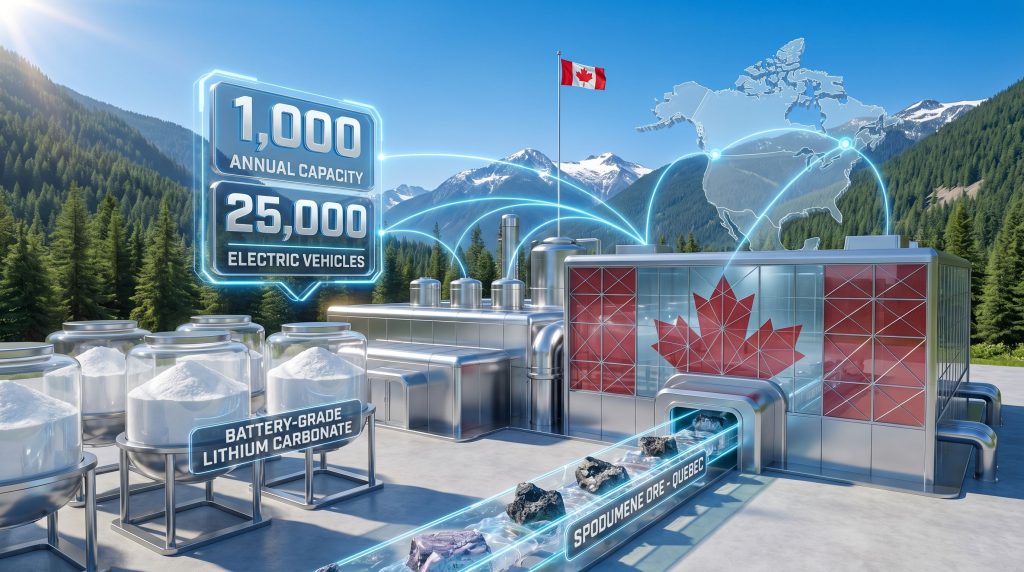
Furthermore, this critical minerals strategy demonstrates how nations can reduce dependence on concentrated overseas processing. North America's first commercial lithium refining facility utilises proprietary electrochemical technology to process 1,000 tonnes annually, supporting approximately 25,000 electric vehicles per year. This capacity represents roughly 2% of current continental EV battery demand, establishing a foundation for scaled expansion across the region.
Processing Method Comparison Analysis
| Processing Factor | Electrochemical Method | Traditional Chemical |
|---|---|---|
| Energy Efficiency | Higher theoretical efficiency | Lower overall efficiency |
| Feedstock Flexibility | Multiple lithium sources | Limited compatibility range |
| Environmental Impact | Reduced waste streams | Higher chemical reagent usage |
| Capital Requirements | Moderate infrastructure needs | High initial investment |
| Operational Flexibility | Easier production adjustments | Complex modification processes |
The electrochemical processing approach enables modular scalability, allowing operators to expand capacity incrementally by adding processing cells rather than constructing entirely new chemical plants. This flexibility proves particularly valuable for matching production capacity with evolving market demand patterns, particularly within the broader energy transition and security framework.
When big ASX news breaks, our subscribers know first
Strategic Supply Chain Vulnerabilities Before Domestic Processing
North America's dependence on overseas lithium processing created multiple strategic weaknesses that threatened energy security objectives. Raw lithium materials required international shipping to Asian refineries, introducing extended lead times and transportation risks that complicated supply chain planning for battery manufacturers.
Key vulnerability factors included:
- Overseas Processing Dependency: 85% of global lithium refining concentrated in Asia
- Extended Supply Chains: 3-4 month processing and shipping cycles
- Currency Exchange Risks: Lithium pricing volatility amplified by exchange rate fluctuations
- Quality Control Limitations: Reduced oversight of product specifications and consistency
- Geopolitical Exposure: Supply disruption risks from international trade tensions
The absence of commercial lithium refining infrastructure meant North American battery manufacturers paid premium costs for imported battery-grade lithium carbonate while accepting longer inventory cycles and reduced supply chain visibility. These challenges align with broader concerns about battery metals investment risks in an unstable global market.
Economic impact analysis reveals:
- International shipping expenses: $200-400 per tonne lithium carbonate equivalent
- Currency hedging costs: 2-5% of contract value annually
- Extended inventory carrying costs: 20-30% additional working capital requirements
- Import duty exposure: Variable tariff rates affecting cost competitiveness
Technical Innovation Behind Electrochemical Processing
Electrochemical lithium refining employs electrical potential differences to separate and purify lithium compounds, offering theoretical advantages over incumbent chemical precipitation methods. The proprietary technology demonstrates enhanced feedstock adaptability, enabling processing of various lithium-bearing materials including spodumene concentrates, brines, and recycled battery materials.
Technical advantages of electrochemical processing:
- Modular Architecture: Scalable cell-based design allowing incremental capacity expansion
- Reduced Chemical Inputs: Lower sulfuric acid and hydrochloric acid consumption compared to traditional methods
- Enhanced Purity Control: Precise electrical parameter control enabling consistent product quality
- Operational Flexibility: Faster production rate adjustments responding to demand fluctuations
Processing Efficiency Considerations
While specific performance metrics for the proprietary technology remain undisclosed, industry research indicates electrochemical methods theoretically offer:
- Energy consumption potentially 15-25% lower than chemical precipitation
- Water usage reduction of 30-50% compared to traditional brine processing
- Chemical waste stream reduction through electrical separation processes
- Processing time acceleration for batch operations
Disclaimer: Specific performance claims require independent technical validation and may vary based on feedstock characteristics and operating conditions.
The technology's ability to process multiple feedstock types positions operators to adapt supply sourcing strategies based on market conditions, raw material availability, and cost optimisation requirements. This flexibility supports the broader mining trends and innovation movement toward more sustainable processing methods.
Mine-to-Cathode Integration Strategy
The integration of Quebec spodumene operations with British Columbia electrochemical refining creates North America's first complete lithium value chain, eliminating overseas processing dependencies. This vertical integration model captures value across multiple supply chain stages while reducing transportation costs and lead times.
Integrated supply pathway components:
- Raw Material Extraction: Quebec lithium mining operations producing spodumene concentrates
- Mineral Processing: Spodumene conversion to lithium hydroxide or carbonate feedstock
- Electrochemical Refining: Battery-grade lithium production in British Columbia
- Direct Battery Supply: Shortened supply chains to North American battery manufacturers
Partnership Structure Analysis
The memorandum of understanding with Élévra secures spodumene feedstock from Quebec mining operations, establishing supply chain control from raw material extraction through final product delivery. This partnership structure reduces exposure to spot market pricing volatility while ensuring consistent feedstock quality and delivery schedules.
Partnership benefits include:
- Supply Security: Long-term feedstock agreements reducing market exposure
- Quality Assurance: Direct control over raw material specifications
- Cost Optimisation: Elimination of third-party trading margins
- Inventory Management: Coordinated production planning across supply chain stages
This approach provides valuable lithium brine market insights into how vertical integration can strengthen regional supply chains while reducing dependence on volatile international markets.
Scaling Scenarios: Capacity Expansion Analysis
The planned Eastern Canada facility targeting 500,000 electric vehicles annually represents a 20x capacity increase from current operations, suggesting aggressive market expansion strategies. This scaling trajectory indicates strong confidence in North American EV demand growth and domestic processing economic viability.
Scaling implications:
- Market Positioning: Intent to capture significant North American battery mineral market share
- Technology Validation: Successful proof-of-concept enabling commercial expansion
- Investment Confidence: C$21-million federal support demonstrating government strategic priorities
- Supply Chain Dominance: Potential to influence continental lithium pricing and availability
Government Support Framework
Federal funding through the Critical Minerals Research, Development and Demonstration Programme indicates national recognition of lithium processing strategic importance. This public-private partnership model reduces investment risk while accelerating technology commercialisation timelines.
Government support objectives:
- Energy Security: Domestic critical mineral processing capabilities
- Economic Development: High-value manufacturing job creation
- Technology Leadership: Advanced processing technology development
- Supply Chain Resilience: Reduced dependence on overseas processing
Global Competitive Positioning
North America's emergence in commercial lithium refining challenges established Asian processing dominance while creating new supply chain options for battery manufacturers. The electrochemical processing approach offers differentiated capabilities compared to incumbent chemical methods employed by major Asian refineries.
Current global capacity distribution:
- Asia: Dominant position with established chemical processing infrastructure
- Australia: Emerging direct lithium extraction technologies
- South America: Brine processing focus in lithium triangle region
- North America: New electrochemical processing capabilities
Competitive Advantages
Domestic processing eliminates several cost disadvantages affecting North American battery manufacturers:
- Transportation Costs: Elimination of transpacific shipping expenses
- Lead Time Reduction: 3-4 month supply chain acceleration
- Currency Risk Mitigation: Domestic pricing in local currency
- Quality Control Enhancement: Direct oversight of processing operations
The proximity to major North American automotive manufacturing centres provides additional logistical advantages, enabling just-in-time delivery models and reduced inventory carrying costs for battery producers. According to Mangrove's official announcement, this strategic positioning addresses critical gaps in the continental supply chain.
The next major ASX story will hit our subscribers first
Investment and Market Implications
The successful commercialisation of electrochemical lithium processing creates multiple investment themes across the critical minerals value chain. Technology licensing potential, feedstock supply partnerships, and specialised equipment manufacturing represent emerging opportunities in the expanding domestic processing sector.
Investment opportunity categories:
- Processing Technology: Intellectual property licensing and technology transfer
- Mining Operations: Quebec spodumene production expansion
- Equipment Manufacturing: Specialised electrochemical processing equipment
- Logistics Infrastructure: Domestic transportation and storage capabilities
Market Dynamic Changes
Domestic refining capacity introduction affects lithium market dynamics through:
- Price Stability: Reduced dependence on overseas pricing mechanisms
- Supply Competition: Alternative sourcing options for battery manufacturers
- Quality Differentiation: Enhanced product specification control
- Market Access: Improved supply chain transparency and reliability
Market risk considerations:
- Feedstock Availability: Sufficient raw material supply to support expansion
- Technology Scaling: Maintaining processing efficiency at larger operational scales
- Cost Competitiveness: Achieving price parity with established overseas processors
- Regulatory Stability: Consistent government policy support for critical minerals
Future Scenario Modelling: 2030 Projections
Success of North American lithium refining could trigger broader supply chain regionalisation trends, reducing global interdependence while creating regional processing hubs. The demonstration of commercial viability may encourage similar developments in allied nations seeking supply chain independence.
Potential continental capacity scenarios:
- Conservative Development: 15% of North American demand met domestically by 2030
- Moderate Expansion: 35% domestic supply coverage with multiple facilities
- Aggressive Scaling: 60% supply independence through widespread adoption
Technology Transfer Implications
Canadian expertise in electrochemical lithium processing could become an exportable technology, creating opportunities for international licensing agreements and strategic partnerships. European nations and other allied countries seeking supply chain independence may pursue similar processing capabilities.
Global influence potential:
- Technology Export: Canadian processing expertise to international markets
- Alliance Building: Coordinated critical mineral strategies among allied nations
- Supply Chain Regionalisation: Reduced dependence on concentrated Asian processing
- Innovation Leadership: Advanced processing technology development and deployment
Risk Assessment and Mitigation Strategies
Several factors could limit the success of expanded North American lithium processing, requiring proactive risk management strategies. Feedstock availability, technology scaling challenges, and international competitive pressures represent primary concerns for long-term viability.
Primary risk factors:
- Raw Material Security: Ensuring adequate spodumene and brine feedstock supplies
- Technology Performance: Maintaining efficiency advantages at commercial scale
- Market Competition: Competing against established low-cost overseas processors
- Policy Continuity: Sustaining government support across political cycles
Strategic Risk Mitigation
Recommended mitigation approaches:
- Supply Diversification: Multiple feedstock supplier relationships across North America
- Continuous Innovation: Ongoing research and development investment in processing technology
- Strategic Partnerships: Industry collaboration and knowledge sharing initiatives
- Policy Advocacy: Active engagement with government stakeholders on critical mineral policy
In addition, Canadian government support demonstrates the policy commitment necessary for sustained development in this sector.
The establishment of North America's first commercial lithium refining facility represents more than industrial development—it signals a strategic transformation toward supply chain sovereignty in critical minerals. The electrochemical processing approach demonstrates technological innovation while planned capacity expansion to 500,000 vehicle support indicates serious commitment to continental energy security objectives.
This development positions North America to reduce overseas processing dependence while establishing leadership in next-generation lithium refining technologies. Success of this initiative could catalyse broader reshoring of critical mineral processing, fundamentally altering global supply chain dynamics in the battery materials sector and strengthening domestic manufacturing competitiveness.
Disclaimer: This analysis contains forward-looking projections and industry assessments that involve uncertainties and risk factors. Readers should conduct independent research and due diligence before making investment decisions related to lithium processing or critical mineral companies.
Looking to Capitalise on Critical Minerals Opportunities?
Discovery Alert's proprietary Discovery IQ model delivers real-time alerts on significant critical minerals discoveries across the ASX, instantly empowering subscribers to identify actionable opportunities ahead of the broader market. Understand why major mineral discoveries can lead to substantial market returns by exploring Discovery Alert's dedicated discoveries page, showcasing historic examples of exceptional outcomes, then begin your 14-day free trial today to position yourself ahead of the market.