June 30, 2026
Norwegian energy sector dynamics reveal critical structural vulnerabilities that extend far beyond traditional production metrics. As global energy markets face unprecedented geopolitical pressures, the architectural framework governing Norway no spare oil or gas capacity exposes fundamental tensions between maximum economic recovery and strategic flexibility. Furthermore, understanding these regulatory mechanisms provides essential insight into European energy security constraints and the limitations of current policy frameworks. However, this situation also highlights broader energy security factors that influence global supply chain stability.
Understanding Norway's Strategic Energy Position
Norway's energy infrastructure operates within a unique regulatory environment that prioritises sustained output optimisation over emergency response capacity. The Norwegian continental shelf has evolved into a precision-engineered system designed for maximum throughput rather than flexible response to market disruptions.
Current Production Framework:
| Metric | 2026 Status | Strategic Impact |
|---|---|---|
| Total Liquids Production | 2.176 million bpd | Maximum sustainable rate achieved |
| Gas Export Volume | 355.1 Msm³/day | 30% of EU-UK demand satisfied |
| Reserve Capacity Buffer | 0% available | No emergency response capability |
| Export Allocation | 95% of crude production | Minimal domestic consumption |
The regulatory architecture reflects deliberate policy choices that emerged following the 2022 energy crisis. Norwegian authorities restructured continental shelf operations to replace Russian supply disruptions, creating what industry analysts describe as a 'zero-slack system' where all productive capacity serves contractual obligations.
European Supply Integration:
Norway's position as Europe's primary non-Russian energy supplier creates binding operational constraints. The country maintains supply relationships that absorb 70-80% of crude exports and more than 30% of combined EU and UK gas demand. This level of integration means Norwegian production schedules directly influence European energy security planning.
February 2026 production data illustrates both the system's precision and its limitations. Total liquids output reached 2.176 million bpd, exceeding Norwegian Offshore Directorate forecasts by 4%. However, this outperformance represents optimisation of existing capacity rather than discovery of additional reserves.
Maintenance Coordination Constraints:
The Norwegian system operates through coordinated maintenance windows that create predictable seasonal variations. First-half 2026 gas production averages approximately 337 Msm³/day, rising to 348 Msm³/day post-maintenance in the second half. This scheduling approach maximises long-term field productivity while eliminating flexibility for crisis response.
Industry experts note that Norway no spare oil or gas capacity becomes particularly evident when examining the 262,000 bpd year-over-year increase in February 2026 oil production, which reflects enhanced recovery techniques rather than expanded capacity. The Norwegian Offshore Directorate's forecasting accuracy, with production exceeding expectations by 5.7% for crude oil, demonstrates sophisticated resource management within existing constraints.
When big ASX news breaks, our subscribers know first
What Regulatory Mechanisms Govern Norwegian Production Capacity?
Norwegian energy regulation operates through a dual-agency framework where the Norwegian Offshore Directorate manages operational optimisation while the Ministry of Petroleum and Energy sets strategic capacity allocation policies. This structure prioritises sustained economic recovery over emergency response capabilities.
Maximum Sustainable Rate Management:
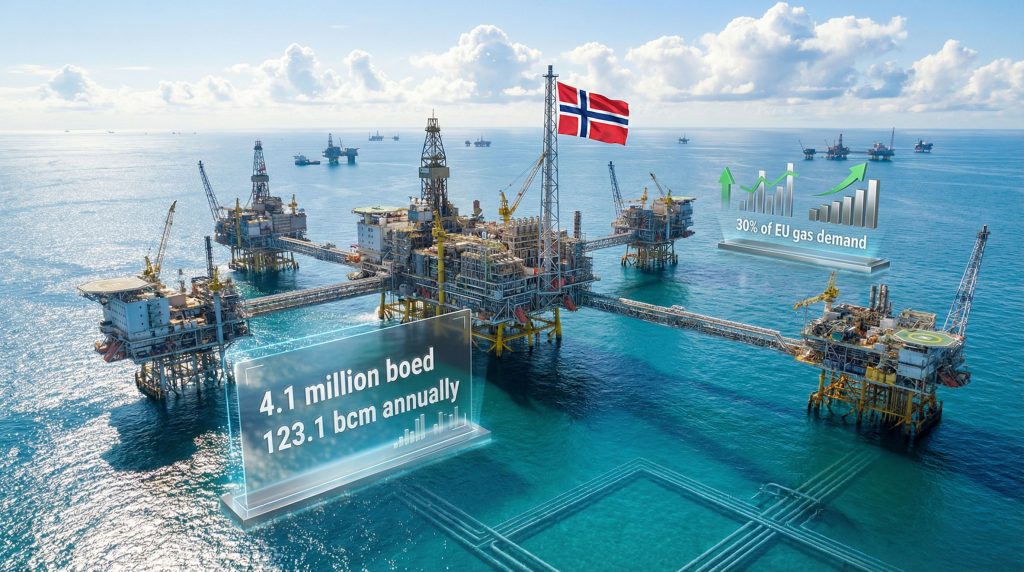
The continental shelf operates at a 4.1 million boed maximum sustainable rate, representing full utilisation of existing infrastructure. Unlike other major producing regions that maintain 5-15% spare capacity, Norwegian policy commits 100% of sustainable output to long-term supply agreements.
Production Optimisation Protocols:
- Field-level coordination: Individual field maintenance schedules align with regional production targets
- Infrastructure sharing: Subsea tie-backs and pipeline capacity maximise existing field productivity
- Recovery enhancement: Advanced techniques extract additional volumes from mature fields
- Quality control: Production specifications meet European refinery requirements
The Norwegian Offshore Directorate employs sophisticated forecasting models that predicted February 2026 crude production within 5.7% accuracy. However, actual production exceeded forecasts, indicating the system operates above baseline projections rather than maintaining strategic reserves.
Regulatory Incentive Structure:
Norwegian tax policy creates powerful incentives for capacity optimisation rather than expansion:
| Policy Mechanism | Capacity Impact | Strategic Effect |
|---|---|---|
| Uplift Deductions | Maximises existing field recovery | Eliminates spare capacity incentives |
| Special Petroleum Tax | Optimises current production | Discourages reserve maintenance |
| Depreciation Schedules | Extends field operational life | Prioritises throughput over flexibility |
Emergency Response Limitations:
Current regulations provide no framework for emergency capacity deployment. The 2022 energy crisis demonstrated Norwegian ability to surge production by 10% through maintenance deferral and optimisation acceleration. Consequently, these emergency measures have been institutionalised into baseline operations, eliminating future flexibility and contributing to broader global oil decline trends.
Gas production fell 2.1% below February 2026 forecasts despite crude outperformance, illustrating the technical constraints within optimised systems. The Norwegian Offshore Directorate attributes this variation to field-specific maintenance requirements that cannot be deferred without long-term productivity impacts.
Coordinated Maintenance Framework:
Norwegian regulation requires systematic maintenance coordination across the continental shelf. Summer 2026 maintenance schedules reduce first-half production but enable higher second-half output through infrastructure optimisation. This approach maximises annual recovery while creating predictable supply variations.
The regulatory framework reflects a fundamental policy choice: sustained maximum output over crisis response capability. Norwegian authorities prioritise long-term field productivity and European supply reliability rather than maintaining strategic flexibility for emergency situations.
How Do European Energy Security Policies Impact Norwegian Capacity?
European energy security requirements have fundamentally restructured Norwegian capacity allocation, creating binding supply commitments that eliminate traditional producer flexibility. The post-2022 energy architecture treats Norwegian production as critical infrastructure for European stability rather than market-responsive commodity supply.
Supply Security Framework:
European policy frameworks now incorporate Norwegian supply as baseline security infrastructure. Long-term contracts secured following the 2022 Russian supply disruption commit Norwegian producers to sustained maximum output. These agreements function as de facto capacity reservation systems that eliminate spot market availability.
Crisis Response Capacity Exhaustion:
The March 2026 Strait of Hormuz crisis, which reduced traffic by 95%, illustrates current system limitations. Brent crude surpassed $100/barrel as markets sought stable supply alternatives. However, Norwegian producers could not respond with additional volumes, marking a fundamental shift from historical crisis management capabilities and reflecting similar patterns seen in oil price surge insights.
According to Reuters, Equinor CEO Anders Opedal's statement that the company maintains zero spare oil or gas capacity reflects broader policy constraints. Norwegian continental shelf operators have contractually committed all sustainable production to European buyers, creating structural inflexibility during supply shocks.
Long-term Contract Architecture:
European energy security policies encouraged long-term contractual relationships that lock in Norwegian capacity:
- Take-or-pay provisions: European buyers guarantee volume offtake regardless of market conditions
- Price stability mechanisms: Contracts provide revenue certainty for Norwegian operators
- Supply security clauses: Agreements prioritise European delivery over spot market opportunities
- Maintenance coordination: Contract terms accommodate Norwegian infrastructure requirements
Export-First Policy Implementation:
Norwegian energy policy explicitly prioritises export revenue and European energy security over domestic reserve maintenance. This framework reflects economic optimisation where European market premiums exceed domestic consumption value, creating powerful incentives for full capacity utilisation.
The policy choice produces 95% crude export rates and positions Norway as Europe's primary gas supplier, satisfying 30% of combined EU-UK demand. However, this integration creates strategic vulnerability where Europe's most reliable supplier cannot respond to additional crisis demands.
Geopolitical Supply Dependencies:
European energy security policies treat Norwegian supply as replacement for Russian volumes lost in 2022. The 10% production surge Norway achieved during that crisis is now incorporated into baseline European supply planning, eliminating the emergency capacity that enabled the original response.
Current Norwegian production of 355.1 Msm³/day gas and 1.97 million bpd crude oil reflects full utilisation to meet European commitments. The 262,000 bpd year-over-year increase demonstrates optimisation within existing constraints rather than capacity expansion for future emergencies.
Policy Trade-offs and Strategic Vulnerabilities:
The export-first framework creates a structural contradiction: Europe's energy security depends entirely on Norway no spare oil or gas capacity production that cannot expand during crises. European policy encourages maximum Norwegian utilisation while maintaining no alternative supply sources with comparable reliability and volume capability.
Norwegian gas production forecasts for 2026 show seasonal variation from 337 Msm³/day in the first half to 348 Msm³/day post-maintenance, but no provision for emergency increases beyond scheduled optimisation. This predictability serves long-term European planning while eliminating crisis response flexibility.
Investment Policies and Future Capacity Constraints
Norwegian investment policy allocates NOK 255-256 billion ($25.5-27 billion) for 2026 continental shelf development, focusing on productivity optimisation rather than capacity expansion. This investment framework reflects regulatory priorities that emphasise maximum economic recovery from existing fields over strategic reserve development.
Capital Allocation Framework:
Current investment policies direct resources toward 17 ongoing field development projects designed to maintain the 4.1 million boed plateau through enhanced recovery and subsea tie-back infrastructure. This approach extends existing field productivity rather than creating additional capacity for emergency response.
Investment priorities include:
- Enhanced recovery systems: Advanced injection and extraction technologies
- Subsea infrastructure: Tie-back capabilities connecting smaller fields to existing platforms
- Pipeline optimisation: Increased throughput capacity for existing production
- Maintenance technology: Reduced downtime through predictive maintenance systems
Technology Investment Impact:
Norwegian investment in enhanced oil recovery technology contributed to February 2026 production exceeding forecasts by 106,000 bpd. However, this technological optimisation serves committed export volumes rather than creating spare capacity for crisis response.
The 4% total liquids outperformance against Norwegian Offshore Directorate projections demonstrates successful investment in field optimisation. Yet these gains are immediately allocated to European supply commitments, maintaining the zero-spare-capacity operational model.
Regulatory Incentives for Current vs. Future Capacity:
Norwegian tax policy provides powerful incentives for immediate production optimisation over long-term capacity development:
| Investment Category | Tax Treatment | Capacity Effect |
|---|---|---|
| Field Enhancement | Immediate deduction | Optimises current output |
| New Field Development | Depreciated over field life | Replaces declining production |
| Infrastructure Expansion | Special petroleum tax relief | Maintains plateau production |
| Emergency Capacity | No specific incentives | Economically discouraged |
Decline Management Strategy:
Investment policy recognises that Norwegian continental shelf production will enter decline post-2027, requiring strategic decisions about capacity management during the transition phase. Current policies prioritise maximum economic recovery during the plateau period rather than maintaining flexibility for the decline phase.
In addition, the 17 active development projects aim to sustain 4.1 million boed through 2027, after which natural field decline will reduce Norwegian capacity regardless of investment levels. This timeline creates policy urgency around current optimisation while limiting long-term strategic planning for spare capacity development, particularly as nations face various energy transition challenges.
Geopolitical Risk and Norwegian Capacity Limitations
Current geopolitical tensions expose fundamental weaknesses in Norwegian capacity policy, particularly the inability to respond to major supply disruptions. The March 2026 Middle East crisis demonstrates how European energy security depends entirely on baseline Norwegian production with zero emergency response capability.
Middle East Crisis Response Constraints:
The 95% reduction in Strait of Hormuz traffic created immediate demand for alternative supplies, with Brent crude exceeding $100/barrel. Norwegian producers received numerous requests for additional volumes but could not accommodate any emergency offtake due to full capacity utilisation under existing contracts.
This situation contrasts sharply with the 2022 crisis response, when Norway deployed 10% surge capacity through maintenance deferral and production acceleration. That emergency capability has been permanently allocated to long-term European contracts, eliminating future crisis response options.
Strategic Vulnerability Assessment:
Norwegian energy policy creates a critical vulnerability where Europe's most stable supplier cannot respond to supply shocks. This constraint becomes particularly problematic during simultaneous crises affecting multiple supply sources:
- Russian supply permanently disrupted since 2022
- Middle East supply intermittently threatened by regional conflicts
- Norwegian surge capacity exhausted through contractual commitments
- Alternative suppliers limited by infrastructure and political constraints
Policy Framework Inflexibility:
Current Norwegian regulatory frameworks provide no mechanism for emergency capacity deployment. Unlike strategic petroleum reserves maintained by consuming nations, Norway maintains no production reserves for crisis response. The optimisation-focused policy structure actively discourages spare capacity maintenance.
February 2026 production data shows Norwegian crude output at 1.97 million bpd with 355.1 Msm³/day gas production, representing full utilisation of sustainable capacity. The 262,000 bpd year-over-year increase reflects enhanced recovery from existing fields rather than expandable capacity for future emergencies.
European Energy Security Dependencies:
European policy makers recognise the strategic vulnerability created by Norwegian capacity constraints. However, alternative policy frameworks require significant infrastructure investment and geopolitical coordination that extends beyond Norwegian regulatory authority, particularly considering broader OPEC production impact on global supply dynamics.
For instance, Oil Price reports that "Norway's steady output masks the complete absence of spare capacity", highlighting how the current crisis underscores the policy trade-off between economic optimisation and strategic flexibility.
The next major ASX story will hit our subscribers first
Regulatory Outlook and Policy Reform Requirements
Future Norwegian energy policy must address the fundamental tension between maximum economic recovery and strategic flexibility requirements. Current regulatory frameworks optimise existing field productivity while eliminating crisis response capabilities that may become critically important during the projected post-2027 production decline phase.
2026-2030 Policy Evolution Pressures:
Norwegian regulators face mounting pressure to balance sustained maximum output with emerging energy security requirements. The 4.1 million boed plateau maintenance through 2027 requires continued optimisation investment while policy makers consider post-plateau capacity management strategies.
Potential Policy Framework Modifications:
Future regulatory reforms may need to incorporate emergency response protocols:
- Strategic reserve requirements: Mandating 5-10% spare capacity maintenance
- Flexible maintenance scheduling: Crisis-responsive infrastructure management
- Emergency contract provisions: Legal frameworks for temporary supply increases
- Regional coordination mechanisms: North Sea producer cooperation agreements
Long-term Capacity Management:
The projected production decline after 2027 creates policy urgency around sustainable capacity management. Norwegian authorities must develop frameworks that maintain European energy security during the transition from plateau to decline phases.
Investment policy reforms could incentivise strategic flexibility through:
| Policy Mechanism | Capacity Impact | Implementation Timeline |
|---|---|---|
| Emergency Capacity Tax Credits | 5-10% reserve maintenance | 2027-2028 |
| Crisis Response Fund | Rapid maintenance deferrals | 2026-2027 |
| Regional Coordination Framework | Collective North Sea reserves | 2028-2030 |
| Technology Investment Incentives | Enhanced recovery flexibility | 2026-2030 |
European Policy Coordination Requirements:
Norwegian capacity constraints require coordinated European policy responses that extend beyond individual producer regulation. Future frameworks may need to incorporate strategic petroleum reserves, alternative supply development, and demand management protocols that reduce dependence on maximised Norwegian output.
The current zero spare capacity situation represents a policy choice that prioritises immediate economic optimisation over strategic flexibility. However, ongoing geopolitical tensions and projected production decline phases may require fundamental regulatory architecture reforms to maintain European energy security.
Norway no spare oil or gas capacity serves as a critical case study in the trade-offs between economic optimisation and strategic flexibility. As Europe's primary reliable energy supplier operates at full capacity utilisation, future policy frameworks must balance continued economic recovery with the strategic reserve capabilities that may prove essential during compound crisis scenarios.
Note: This analysis reflects regulatory frameworks and production constraints as of March 2026. Norwegian energy policy continues evolving in response to geopolitical developments and European energy security requirements. Investment decisions and capacity allocation policies may change based on emerging strategic priorities and market conditions.
Looking to capitalise on energy sector developments?
Discovery Alert's proprietary Discovery IQ model delivers real-time notifications on significant ASX mineral discoveries, including critical energy transition minerals that could benefit from global supply constraints like those affecting Norwegian energy production. Start your 14-day free trial at Discovery Alert today and position yourself ahead of market developments in the energy and resources sector.