
June 11, 2026
The Hidden Fragility Inside North America's Automotive Aluminium Supply Chain
Most supply chain crises don't announce themselves in advance. They emerge from the intersection of physical concentration, technical complexity, and qualification barriers that quietly accumulate over years of specialisation. The North American automotive aluminium sector carries exactly this kind of embedded vulnerability, one that the Novelis Oswego hot mill restart brought into sharp focus for manufacturers, investors, and procurement teams across the industry.
When a single facility serves as the dominant source of a technically irreplaceable input, the consequences of its loss extend far beyond a temporary production gap. They expose how deeply the modern automotive supply chain has traded resilience for efficiency, and how slowly that trade-off can be reversed once disruption takes hold.
When big ASX news breaks, our subscribers know first
Why Oswego Occupied an Irreplaceable Position in US Automotive Manufacturing
The Concentration Problem in Flat-Rolled Aluminium Production
Not all aluminium is equal, and nowhere is this more apparent than in the specifications required for automotive-grade flat-rolled aluminium products. The alloy compositions, surface finish tolerances, mechanical properties, and formability characteristics demanded by automotive OEMs represent the product of years of joint development between rolling mills and vehicle manufacturers. These relationships embed technical knowledge into production processes that simply cannot be relocated or replicated quickly.
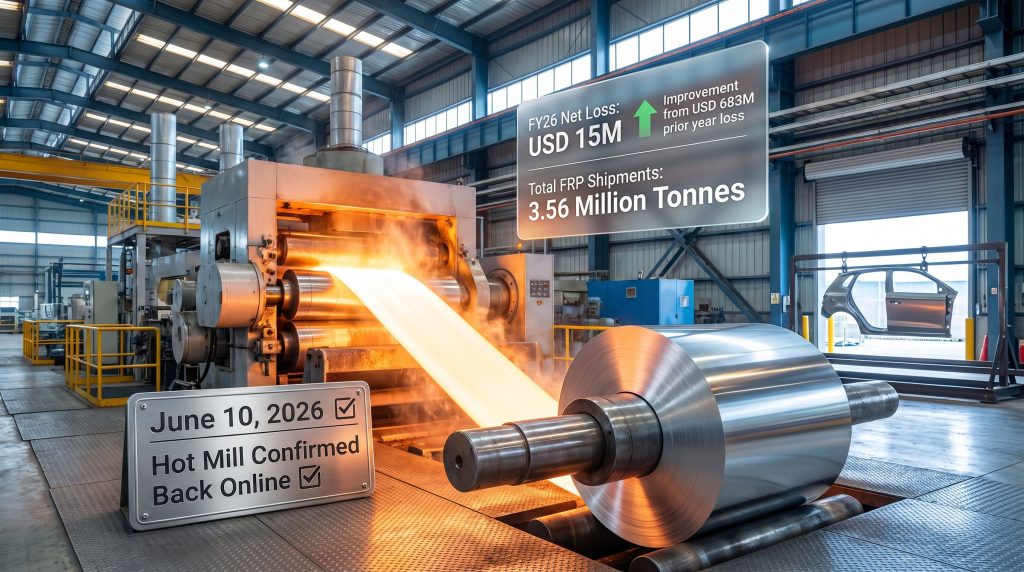
The Novelis Oswego hot mill restart, confirmed on June 10, 2026, brought an end to a nine-month disruption that illustrated precisely this problem. As the largest aluminium hot rolling facility supplying the US automotive sector, Oswego's extended outage created supply chain stress that touched vehicle assembly plants across multiple manufacturers. The facility's specialisation in high-strength, lightweight alloys used in body panels, structural components, doors, and hoods made it a production node with no straightforward substitute.
What makes automotive-grade aluminium FRP so difficult to source from alternative suppliers is the qualification process itself. Before any rolling mill can supply material for use in vehicle production, it must complete an OEM validation cycle that typically spans twelve to eighteen months. This process includes materials testing, stamping trials conducted at the automaker's facilities, and crashworthiness evaluations that feed into vehicle certification programmes. During an unplanned disruption, this timeline cannot be compressed, which means supply gaps cannot be closed simply by placing new orders with competing mills.
The critical constraint in automotive aluminium supply is not production capacity, it is the qualification architecture that determines which capacity is permitted to supply which vehicles. This distinction is frequently underestimated by observers outside the sector.
How Automotive Aluminium Differs from Standard Grades
Understanding the Oswego situation requires clarity on what separates automotive-grade aluminium from commodity flat-rolled products. The key differentiators include:
- Yield strength requirements: Automotive applications typically demand yield strength in the range of 150 to 300 MPa, compared to 50 to 100 MPa for standard commercial grades, depending on the alloy series in use.
- Elongation characteristics: High formability is essential for stamping operations, requiring elongation values of 15 to 25%, a range that enables complex panel geometries without cracking or thinning.
- Surface finish precision: Paint shop specifications in automotive manufacturing impose strict surface quality requirements, with automated vision systems scanning for defects during production at line speeds incompatible with standard quality processes.
- Thickness consistency: Roll gap control must maintain tolerances within fractions of a millimetre under high-temperature operating conditions to meet the dimensional accuracy required for automated assembly.
- Alloy traceability: In safety-critical components, full material traceability from casting to finished sheet is mandatory, requiring documentation systems embedded in production workflows.
These requirements collectively explain why the Oswego facility's extended shutdown was not simply a matter of reduced tonnes in the market. It was, furthermore, a disruption to a specific technical pipeline with no short-term bypass.
A Chronology of Two Fires and a Delayed Recovery
September 2025: The First Incident and Its Downstream Effects
The disruption began in September 2025 when a fire broke out at the Scriba facility within Oswego County, causing structural damage to the roof and hot mill infrastructure. The plant was shut down immediately, and initial assessments pointed to significant damage requiring weeks of repair work. Novelis moved quickly to advance its restart target, with December 2025 identified as an accelerated recovery milestone that represented a substantial compression of the original 2026 timeline.
The automotive supply chain began absorbing the impact almost immediately. Automakers reliant on Oswego for high-specification aluminium sheet had to work with their procurement teams to assess buffer inventory positions and identify any alternative sourcing that could bridge the gap, however limited that might be given qualification constraints.
November 2025: A Second Emergency Resets the Clock
Before full recovery from the September incident could be completed, a second, more severe fire broke out at the Oswego plant in November 2025. The four-alarm emergency response reflected the scale of the event, which compounded damage to equipment that had already been partially repaired. Critically, replacement components ordered after the September fire were exposed to additional thermal stress before installation, requiring a second round of procurement with extended lead times.
The sequencing of these two events created a compounding disruption dynamic that significantly extended the total outage well beyond initial estimates. The November fire effectively reset portions of the recovery effort, stretching the full restart timeline from the December 2025 target through to mid-2026.
The Restart Timeline: From Estimate to Confirmation
The following table summarises how the recovery timeline evolved across the nine-month disruption cycle:
| Milestone | Target / Actual Date | Status |
|---|---|---|
| Initial restart target (post-September fire) | December 2025 | Advanced from 2026 estimate |
| Revised expectation following November fire | Early 2026 | Delayed by second incident |
| Updated commissioning forecast | Late Q2 2026 | Progressing faster than expected |
| Hot mill confirmed back online | June 10, 2026 | Achieved ahead of schedule |
The earlier-than-anticipated June 10 confirmation reflected Novelis's decision to implement round-the-clock repair schedules with multiple crews working concurrently across different sections of the facility. This operational intensity ultimately delivered a restart that arrived before the end-of-June target the company had communicated to customers and investors.
How Novelis Managed Supply Continuity During the Outage
Global Network Activation as a Crisis Tool
A key element of Novelis's response was the mobilisation of its international rolling and finishing network to redirect production toward automotive customers experiencing shortfalls. This strategy leveraged the company's geographic diversity, using facilities outside the US to fulfil orders that would ordinarily have been processed at Oswego.
Third-party sourcing arrangements supplemented this internal redeployment, with Novelis working across industry channels to secure additional material for high-priority automotive programmes. Cross-functional teams coordinated directly with customers to triage requirements, prioritising supply allocation toward the most time-sensitive production needs.
Keeping Unaffected Operations Running
An important operational nuance during the outage was that not all production at Oswego stopped. The hot mill was the primary damaged component, but several related processes continued operating throughout the disruption period, including:
- Recycling operations, which maintained Novelis's aluminium scrap processing capability
- Casting activities, preserving the ability to produce aluminium billets and slab inputs
- Cold rolling and finishing lines, which could process material supplied from other hot mills in the network
This partial operational continuity reduced the total production gap, allowed the facility to retain its workforce in meaningful roles, and kept portions of the customer supply relationship active during recovery.
Quantifying the Financial Damage
The full financial impact of the Oswego disruption was reflected in Novelis's FY26 results, which captured the consequences of both fire events across the annual reporting period:
| Financial Metric | FY26 Result | Year-on-Year Change |
|---|---|---|
| Estimated shipment reduction | ~145 kilotonnes | Fire-related impact |
| Adjusted EBITDA impact | ~USD 104 million | Negative |
| Net loss | USD 15 million | Improvement from USD 683 million loss prior year |
| Total FRP shipments | 3.56 million tonnes | Down 5% year-on-year |
Despite the fires inflicting significant operational and financial damage, the improvement in net loss from USD 683 million to USD 15 million year-on-year signals that the underlying business retained meaningful structural strength throughout the disruption period.
The sharp contrast between the two annual loss figures reflects factors beyond the fire events themselves, suggesting that the pre-disruption trajectory of the business had been improving, and that the fires represented an extraordinary interruption rather than a symptom of structural deterioration.
Scenario Analysis: What the Restart Means for Key Stakeholders
Scenario One: Automotive OEM Supply Normalisation
The restart of the Novelis Oswego hot mill does not produce an immediate return to pre-disruption supply volumes. Restarting a hot mill after extensive damage and recalibration requires a methodical ramp-up phase during which output gradually increases toward full utilisation. For automotive customers, this means the recovery plays out over months rather than days.
The qualification dynamic adds further complexity. Any automotive programmes that were temporarily supplied from alternative mills during the outage may require re-qualification procedures before Oswego material can be reintroduced into those production lines. This bureaucratic and technical requirement extends the practical timeline for full supply normalisation beyond the date of mechanical restart.
Ford Motor Company, identified as a notable Novelis customer, saw its shares gain approximately 1% following the restart announcement, reflecting market relief at the resolution of a significant supply risk rather than an expectation of immediate operational improvement.
Scenario Two: Hindalco's Investment Narrative
For Hindalco Industries Limited, the Indian parent company of Novelis, the restart announcement produced a more muted market response. Hindalco's share price moved from INR 1,039.3 (approximately USD 10.86) at the close of the June 10 session to INR 1,033.1 (approximately USD 10.79) by mid-morning on June 11, representing a decline of 0.6%.
This divergence between the positive response at the customer level and the slightly negative reaction at the parent company level is instructive. It suggests that equity markets had already priced in the restart event itself, and that investor attention has now shifted toward a more demanding question: how quickly can Novelis restore volume, recover lost revenue, and demonstrate that the operational framework has been strengthened to prevent recurrence?
The longer-term investment thesis for Hindalco through Novelis centres on structural demand growth for low-carbon metals demand from electric vehicle platforms, a theme that remains intact regardless of the Oswego disruption timeline.
Scenario Three: North American FRP Market Dynamics
The extended Oswego outage temporarily tightened the US automotive aluminium supply market in ways that may have lasting effects on procurement strategy across the industry. Buyers who experienced supply shortfalls during the outage period have strong incentives to reassess their supplier concentration and inventory buffer policies, even if the Oswego restart resolves the immediate constraint.
This recalibration effect could generate modest demand for additional qualification work with secondary suppliers. Furthermore, it could create a longer-term structural shift toward slightly more diversified sourcing in the automotive aluminium sector. Whether this represents a meaningful change to market structure or simply a temporary adjustment in procurement behaviour remains to be observed as supply normalises through the second half of 2026.
The broader context is also shaped by US aluminium tariffs that have already altered procurement dynamics for North American manufacturers, making domestic supply reliability an even more pressing strategic priority.
Novelis's Forward Strategy: Beyond the Restart
Bay Minette: Building New Domestic Capacity
Running in parallel with the Oswego recovery effort, Novelis has been advancing commissioning work at its new recycling and rolling facility in Bay Minette, Alabama. This facility represents a strategic expansion of domestic recycled aluminium capacity and is designed to reduce reliance on primary aluminium while supporting the low-carbon product offerings that automotive customers increasingly require as part of their own sustainability commitments.
Bay Minette complements Oswego's role in the US automotive supply chain by increasing total domestic capacity and providing a degree of geographic diversification that reduces the systemic risk associated with concentrating production in a single facility. The commissioning progress at Bay Minette is therefore directly relevant to how the market evaluates Novelis's long-term supply reliability profile.
Standardised Operating System: A Systemic Response to Disruption
One of the more strategically significant responses to the Oswego disruption has been Novelis's accelerated rollout of a standardised operating system across its global facility network. This initiative aims to establish consistent operational frameworks across facilities in different regions, with objectives that include enhanced production efficiency, improved supply reliability, and more consistent delivery of product quality specifications.
For automotive customers with zero-tolerance quality requirements, operational standardisation carries direct commercial value. It signals that the production processes generating their certified materials are managed according to unified protocols rather than facility-specific practices that may vary in discipline and documentation. Indeed, the approach mirrors strategies adopted by other aluminium industry leaders seeking to build operational resilience at scale.
The Electric Vehicle Demand Trajectory
The long-term demand context underpinning Novelis's strategic investments is the continued growth of electric vehicle production and its implications for aluminium content per vehicle. EV platforms typically incorporate more aluminium than comparable internal combustion engine vehicles, driven by the need to offset battery weight through structural lightweighting and to manage thermal performance in battery enclosures and cooling systems.
This trajectory creates a structural tailwind for high-specification aluminium FRP producers over the medium and long term. The aluminium flat-rolled products market is projected to continue expanding toward 2032, with automotive and EV applications representing the fastest-growing end-use segments. Novelis's positioning as a sustainable, recycled-content aluminium solutions provider aligns directly with the sourcing preferences emerging from major automotive OEMs as they pursue carbon reduction targets across their supply chains. In addition, broader efforts such as aluminium operations decarbonisation across the industry signal the direction of travel for the entire sector.
The next major ASX story will hit our subscribers first
What Investors and Customers Should Watch During the Ramp-Up Phase
Production Volume Recovery as the Primary Indicator
The restart announcement resolves uncertainty about whether the Novelis Oswego hot mill would return to operation, but the more commercially relevant question is how quickly it returns to full utilisation. Key metrics to monitor during the ramp-up phase include:
- Monthly shipment volumes and the rate at which they converge toward pre-disruption levels
- Capacity utilisation rates reported in Novelis's quarterly operational disclosures
- Customer order fulfilment timelines and any indication of ongoing allocation constraints
- Progress on re-qualification activities for automotive programmes that shifted to alternative supply during the outage
Community and Workforce Dimensions
Novelis's public acknowledgement of support received from the Oswego community during the recovery period reflects an understanding that industrial restarts involve social and workforce dimensions alongside mechanical and operational ones. Reintegrating the workforce at full production scale requires not only physical readiness of the facility but also the reactivation of shift structures, safety protocols, and training programmes that were modified during the partial-operations period.
The company reaffirmed its commitment to being a long-term employer and community partner in the Oswego region, a signal that the restart is intended as a permanent return to full operations rather than a transitional phase ahead of further structural changes.
Steve Fisher, President and CEO of Novelis, described the restart as an important step forward for operations and most significantly for customers, expressing deep appreciation for the flexibility and partnership shown by customers, alongside the extraordinary collective effort from employees, suppliers and industry peers that sustained supply continuity throughout the disruption period.
Frequently Asked Questions: Novelis Oswego Hot Mill Restart
What is the Novelis Oswego hot mill and why does it matter?
The Novelis Oswego hot mill is the largest aluminium rolling facility supplying the US automotive sector, producing flat-rolled aluminium products used in vehicle body panels, hoods, doors, and structural components. Its specialised production capabilities and OEM qualifications make it a critical and difficult-to-substitute node in the North American automotive aluminium supply chain.
When did the Oswego hot mill officially restart?
The hot mill was confirmed back online on June 10, 2026, ahead of the previously communicated end-of-June 2026 target date.
What caused the Oswego shutdown?
Two separate fire incidents disrupted the facility. The first occurred in September 2025 at the Scriba facility within Oswego County, damaging the roof and hot mill. The second occurred in November 2025 at the main Oswego plant, triggering a four-alarm emergency response that compounded damage from the earlier incident.
What was the financial impact on Novelis?
The disruptions reduced estimated shipments by approximately 145 kilotonnes and impacted Adjusted EBITDA by around USD 104 million. FY26 net loss totalled USD 15 million, representing a significant improvement from the USD 683 million net loss recorded in the prior year. Total FRP shipments declined approximately 5% year-on-year to 3.56 million tonnes.
How did Novelis maintain supply during the outage?
The company activated its global network of hot rolling and finishing facilities, arranged third-party sourcing to bridge gaps for critical automotive programmes, and continued unaffected operations including recycling, casting, cold rolling, and finishing lines at Oswego.
What comes next for Novelis operationally?
The company is focused on the gradual ramp-up of Oswego production toward full utilisation, continued commissioning of the Bay Minette recycling and rolling facility in Alabama, and the rollout of a standardised operating system across its global network. The Alcoa aluminium strategy offers an instructive parallel for how major producers are structuring long-term operational resilience in this evolving market environment.
Key Takeaways for Industry Observers and Investors
The Novelis Oswego hot mill restart closes a nine-month chapter of operational disruption, but the more important story now is what happens in the months that follow. Several strategic conclusions are worth retaining:
- The dual fire events exposed a structural vulnerability in North American automotive aluminium supply that OEM procurement strategies will likely address through increased supplier qualification activity and revised buffer inventory policies.
- The earlier-than-expected restart reflects genuine operational urgency but does not translate into immediate supply normalisation, given the ramp-up requirements and re-qualification timelines inherent in automotive-grade production.
- Market reactions at both the customer and parent company level confirm that investors have moved past the restart announcement itself and are now evaluating the pace and completeness of volume recovery.
- Bay Minette and the standardised operating system rollout represent Novelis's structural response to the vulnerabilities the Oswego fires revealed, signals that the company is investing in resilience rather than simply restoring the pre-disruption status quo.
- The long-term demand environment, driven by EV platform growth and low-carbon aluminium requirements from automotive OEMs, remains supportive of Novelis's strategic positioning beyond the immediate operational recovery narrative.
This article contains forward-looking statements and scenario analysis related to production recovery, market dynamics, and operational strategy. Such projections are inherently uncertain and should not be interpreted as financial advice. Readers are encouraged to conduct independent research and consult qualified advisers before making investment or procurement decisions based on the information presented here.
For ongoing coverage of the global aluminium flat-rolled products market and downstream sector developments, industry tracking resources are available at AL Circle.
Want to Stay Ahead of the Next Major ASX Minerals Discovery?
Discovery Alert's proprietary Discovery IQ model delivers real-time alerts on significant ASX mineral discoveries, transforming complex data across more than 30 commodities into clear, actionable insights for investors at every level of experience. Explore how historic discoveries have generated substantial returns and begin your 14-day free trial today to position yourself ahead of the broader market.