August 6, 2026
The global battery metals sector stands at a critical juncture where geopolitical tensions, supply chain vulnerabilities, and technological innovation converge to reshape processing infrastructure fundamentals. The Nth Cycle Trafigura offtake agreement represents a watershed moment in this transformation, demonstrating how Western entities are collaborating to reduce dependence on concentrated refining capabilities while establishing new commercial frameworks for distributed processing technologies. Furthermore, this partnership signals the commodities trading sector's recognition that supply chain diversification has evolved from a risk management consideration to a competitive advantage in an increasingly fragmented global marketplace.
The recent surge in distributed processing capabilities represents a fundamental shift from the traditional model of massive, centralised refineries toward smaller, more flexible facilities that can operate closer to feedstock sources. This technological evolution coincides with growing recognition that current supply chain architecture leaves Western economies exposed to potential disruption, creating both market opportunities and strategic imperatives for alternative processing solutions.
Strategic Context Behind the Nth Cycle Trafigura Deal
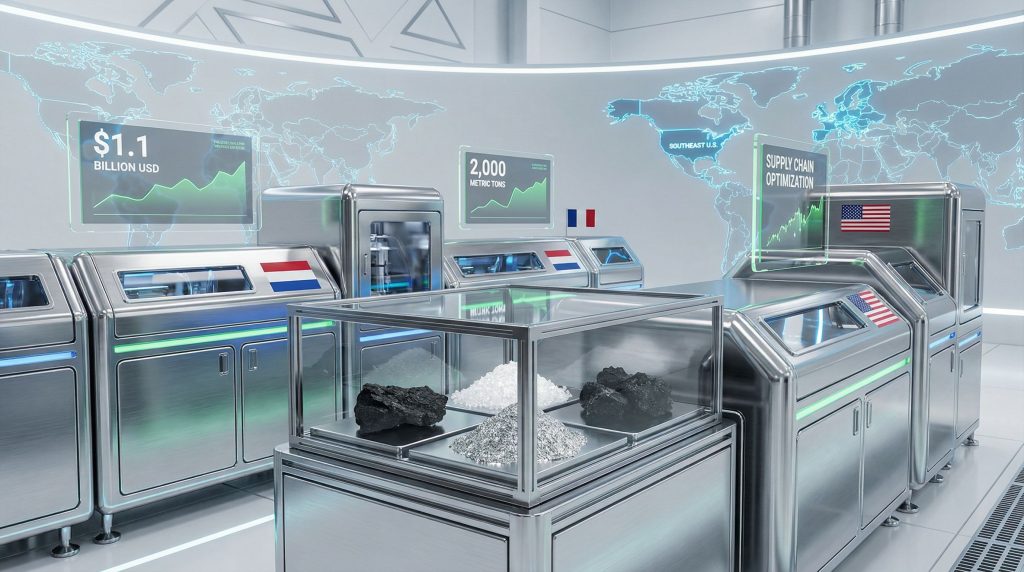
The $1.1 billion Nth Cycle Trafigura offtake agreement announced in March 2026 signals a fundamental transformation in how battery metals markets approach supply chain security and processing infrastructure. This binding 10-year commitment represents what industry participants characterise as the largest multi-metal commercial agreement between a recycled feedstock supplier and critical minerals refiner, establishing new benchmarks for long-term supply partnerships in the sector.
The agreement's structure demonstrates sophisticated risk allocation between technology provider and commodities trader, with Trafigura committing to purchase 2,000 metric tons of contained nickel in mixed hydroxide precipitate form, 1,500 metric tons of lithium carbonate, and processing of approximately 12,000 metric tons of black mass feedstock over the contract duration. These volumes provide revenue certainty for facility expansion while securing Trafigura's access to domestically refined battery materials.
Market Validation Through Strategic Partnership
The timing and venue of the agreement's announcement during the inaugural Indo-Pacific Energy Security Ministerial and Business Forum in Tokyo underscores the alignment between commercial interests and government policy priorities. This high-profile setting demonstrates how private sector partnerships are increasingly viewed through the lens of strategic resource security rather than purely commercial transactions.
Trafigura's commitment reflects the commodities trading sector's recognition that supply chain diversification has become a competitive advantage. As Daniel von Arx, global head of battery metals at Trafigura, emphasised the critical relationship between refining capabilities and minerals security, noting that without processing infrastructure, critical minerals remain inaccessible to end markets.
Implications for Western Supply Chain Architecture
The deal establishes a template for how Western entities can collaborate to reduce dependence on concentrated processing capabilities. By creating predictable demand for domestically processed materials, such agreements enable the capital formation necessary for alternative refining infrastructure while providing offtakers with supply chain transparency and reduced geopolitical exposure.
This partnership model addresses the chicken-and-egg problem that has historically constrained domestic refining development: refiners require guaranteed offtake to justify facility investment, while consumers need assured supply to commit to alternative sources. The 10-year binding structure provides the temporal stability necessary for both parties to make substantial capital commitments.
When big ASX news breaks, our subscribers know first
Technical Innovation in Modular Battery Metals Processing
Traditional battery metals refining infrastructure represents one of the most capital-intensive and time-consuming aspects of the entire supply chain, requiring massive centralised facilities that can take five or more years to construct and billions of dollars in upfront investment. These constraints have historically favoured established processing centres, particularly in regions with lower labour costs and less stringent environmental regulations.
Revolutionary Approach to Capital Efficiency
Nth Cycle's Oyster platform fundamentally challenges this paradigm through modular design principles that dramatically reduce both capital requirements and deployment timelines. The technology claims to achieve:
- 70% reduction in capital intensity compared to traditional refineries
- Sub-2-year deployment timelines versus 5+ years for conventional facilities
- Competitive operating margins at 5-10x smaller operational scales
- Electricity and water-based processing replacing chemical-intensive methods
These specifications address the primary barriers that have prevented distributed refining infrastructure development, potentially enabling processing capabilities to be deployed closer to feedstock sources rather than requiring material shipment to distant centralised facilities.
Black Mass Processing Innovation
The technology specifically targets black mass, the powder-like mixture of shredded lithium-ion battery components produced during recycling operations. This material represents a concentrated source of valuable metals but requires sophisticated processing to extract individual elements in marketable forms.
The Oyster system's electro-extraction methodology selectively recovers nickel, cobalt, copper, and rare earth elements from complex feedstocks, converting raw materials into intermediate products like mixed hydroxide precipitate that can subsequently be refined into battery-grade specifications. In addition, this approach aligns with ongoing battery recycling breakthrough developments that are transforming how the industry approaches material recovery and processing.
Scalability and Deployment Advantages
Unlike conventional refineries that require dedicated greenfield sites and extensive permitting processes, the modular approach is designed for integration with existing industrial facilities. This deployment strategy reduces regulatory complexity while leveraging established utilities, transportation links, and workforce availability.
The ability to operate economically at smaller scales enables processing capacity to be distributed geographically, reducing transportation costs for feedstock materials while creating multiple processing nodes rather than single points of failure. This distributed model aligns with supply chain resilience objectives while potentially offering superior economics through proximity to material sources.
Geopolitical Drivers of Supply Chain Reshoring
The concentration of critical metals refining capacity has become one of the most significant strategic vulnerabilities facing Western industrial economies. With 85% of global refining capacity historically concentrated in China, democratic allies find themselves dependent on a single nation for access to processed materials essential for defence systems, renewable energy infrastructure, and advanced manufacturing capabilities.
Strategic Vulnerability Assessment
Current supply chain architecture requires that most mined or recycled material must be shipped abroad for processing before returning as finished metals, creating multiple potential disruption points. This geographic concentration exposes Western supply chains to:
- Trade policy disruptions and export restrictions
- Transportation bottlenecks affecting material flows
- Quality and specification control challenges
- Technology transfer requirements for market access
- Strategic leverage during geopolitical tensions
The recognition of these vulnerabilities has elevated critical metals processing from a commercial consideration to a national security priority, driving policy initiatives across multiple Western governments. Consequently, this strategic shift has accelerated initiatives for European critical minerals supply diversification.
Policy Response Framework
Government responses have focused on creating incentives for domestic processing capability development while reducing regulatory barriers to facility deployment. The Netherlands National Growth Fund's $8.2 million grant supporting Nth Cycle's European operations demonstrates how policy mechanisms are being deployed to encourage supply chain diversification.
These initiatives reflect broader recognition that market forces alone may be insufficient to overcome the cost advantages and established infrastructure of concentrated processing centres. Strategic intervention through grants, loan guarantees, and regulatory streamlining aims to level competitive dynamics while advancing supply chain security objectives.
Project SHIELD and Defence Integration
The Southeast U.S. facility designation as "Project SHIELD – Strategic Hub for Industrial Electro-Extraction & Logistics Defence" explicitly incorporates defence terminology into commercial infrastructure planning. This naming convention signals the integration of commercial battery metals processing with broader defence industrial base considerations.
The facility's target industries include grid-scale energy storage, AI data centre infrastructure, defence manufacturing applications, and transportation electrification, demonstrating how dual-use technologies are being positioned to serve both commercial and strategic requirements simultaneously.
Commercial Structure and Market Impact
The Nth Cycle Trafigura offtake agreement establishes new precedents for how battery metals supply partnerships are structured, priced, and executed. The $1.1 billion total value spread across multiple product streams and a 10-year commitment period provides insights into how the industry is addressing long-term supply security requirements.
Contract Specifications and Volume Commitments
| Product Stream | Annual Volume | Total Commitment | Form Factor |
|---|---|---|---|
| Contained Nickel | 200 metric tons/year | 2,000 metric tons | Mixed Hydroxide Precipitate |
| Lithium Carbonate | 150 metric tons/year | 1,500 metric tons | Battery Grade |
| Black Mass Processing | 1,200 metric tons/year | 12,000 metric tons | Feedstock Input |
| Contract Duration | 10 years binding | $1.1B total value | Multiple products |
These volumes establish baseline production targets for facility expansion while providing Trafigura with substantial exposure to domestically processed battery materials. The multi-product structure diversifies both revenue streams and commodity price exposure compared to single-metal agreements.
Revenue Certainty for Technology Scaling
The binding nature of the agreement provides the revenue visibility necessary for facility financing and technology scaling. Unlike spot market transactions or short-term contracts, the 10-year commitment enables long-term capital planning and provides collateral for debt financing of expansion projects.
This structure addresses one of the primary constraints facing emerging refining technologies: the need to demonstrate sustainable demand before investors will commit to scale-up capital. By securing offtake commitments from an established commodities trader, technology providers can access broader financing options while reducing execution risk.
Strategic Positioning in Battery Materials Trading
Trafigura's participation signals the commodities trading sector's recognition that supply chain diversification represents a competitive advantage in battery materials markets. As traditional trading relationships become subject to geopolitical tensions, traders are seeking alternative supply sources that offer greater strategic stability.
The agreement positions Trafigura as a conduit between emerging domestic processing capabilities and end-use markets, potentially enabling the trader to offer customers supply chain transparency and reduced geopolitical exposure as value-added services beyond commodity provision. Furthermore, this development reflects broader trends in the battery metals investment landscape where strategic partnerships are becoming increasingly critical.
European Market Development and Regulatory Alignment
The planned Netherlands facility represents Nth Cycle's entry into European battery materials processing, leveraging both financial incentives and regulatory frameworks that favour recycled content in electric vehicle manufacturing. The €7.5 million Netherlands National Growth Fund grant demonstrates how European policy mechanisms are being deployed to encourage circular economy development within critical materials sectors.
EU Circular Economy Integration
European Union regulations promoting recycled metals in electric vehicle manufacturing create structural demand for domestic processing capabilities that can provide transparent supply chain documentation. These requirements extend beyond simple recycled content mandates to encompass traceability, environmental impact assessment, and social responsibility verification throughout the supply chain.
The Netherlands facility positioning within existing industrial infrastructure enables compliance with stringent European environmental regulations while leveraging established logistics networks for feedstock collection and product distribution. This approach demonstrates how modular processing technologies can integrate with existing industrial ecosystems rather than requiring completely new infrastructure development.
Regional Processing Network Development
The European facility forms part of a broader trend toward regional processing networks that serve continental markets rather than relying on global commodity flows. This geographic distribution strategy reduces transportation costs, environmental impact, and supply chain complexity while enabling more responsive customer service and technical support.
Regional processing capabilities also enable customisation of product specifications for local market requirements, potentially commanding premium pricing compared to standardised global commodities. European automotive manufacturers increasingly value supply chain transparency and reduced carbon footprint, creating market opportunities for domestically processed materials.
Technology Transfer and Industrial Development
The global deployment of modular refining technologies represents a significant shift in how industrial capabilities are transferred between regions and scaled across markets. Unlike traditional technology transfer models that require substantial local adaptation and workforce development, modular approaches enable more rapid capability deployment while maintaining technical standardisation.
What Are the Operational Timelines for Facility Development?
Nth Cycle's expansion strategy targets site selection completion during 2026 with operations beginning in 2028 for both South Carolina and Netherlands facilities. This timeline demonstrates the accelerated deployment capabilities that modular technologies claim to offer compared to traditional refining infrastructure.
The integration with existing industrial sites reduces both capital requirements and regulatory complexity while leveraging established infrastructure for utilities, transportation, and workforce availability. This approach enables technology providers to focus resources on core processing capabilities rather than ancillary facility development.
Scaling Challenges and Market Adaptation
Despite technological advantages, modular processing faces scaling challenges related to feedstock availability, product standardisation, and market acceptance. The transition from pilot-scale operations to commercial production requires demonstration of consistent product quality, reliable throughput, and competitive cost structure across diverse operating conditions.
Market acceptance of domestically processed materials may require premium pricing to offset higher production costs compared to established processing centres. However, supply chain security considerations and regulatory requirements may justify these cost differentials for strategic customers willing to pay for reduced geopolitical exposure.
The next major ASX story will hit our subscribers first
Risk Assessment and Market Vulnerabilities
While the Nth Cycle Trafigura offtake agreement represents significant progress toward supply chain diversification, multiple risks and vulnerabilities remain within the broader battery metals processing ecosystem. Understanding these challenges provides context for evaluating the long-term sustainability of distributed refining initiatives.
Feedstock Availability and Quality Variability
The success of recycling-focused processing facilities depends on consistent access to high-quality feedstock materials. Black mass composition varies significantly based on battery chemistry, age, collection methods, and preprocessing techniques, potentially affecting processing efficiency and product quality.
Competition for recycled feedstock may intensify as processing capacity expands, potentially driving up input costs and reducing processing margins. Additionally, the growth of direct recycling technologies that bypass black mass production could reduce feedstock availability for electro-extraction processes.
How Do Technology Risks Affect Operational Scaling?
Modular refining technologies remain relatively unproven at commercial scale across diverse operating conditions. Technical challenges related to:
- Equipment reliability and maintenance requirements
- Process optimisation for varying feedstock compositions
- Product quality consistency across multiple facilities
- Workforce training and technical support deployment
These operational risks could affect facility performance and economic viability, particularly during the critical early operational periods when customers are evaluating product quality and supply reliability.
Market Competition and Pricing Dynamics
As domestic processing capacity expands, competitive dynamics may shift toward price competition rather than supply chain security premiums. Established processing centres may respond to market share threats through aggressive pricing, technological advancement, or strategic partnerships that challenge the economic viability of alternative processing locations.
Additionally, improvements in traditional refining efficiency or reductions in Chinese processing costs could erode the competitive position of modular technologies, particularly if geopolitical tensions diminish and supply chain security concerns become less prominent in customer decision-making.
Investment Implications and Market Outlook
The Nth Cycle Trafigura agreement provides valuable insights into how investors and market participants are positioning for the evolving battery metals supply chain landscape. The $1.1 billion commitment represents substantial capital allocation toward alternative processing infrastructure, signalling confidence in both technology viability and market demand for diversified supply sources.
Capital Market Response and Financing Trends
The agreement's structure demonstrates how offtake commitments can serve as collateral for project financing, enabling technology companies to access debt markets and reduce equity dilution during scaling phases. This financing model may become increasingly common as the sector matures and investors develop familiarity with modular processing technologies.
Strategic partnerships between technology providers and established commodities traders offer mutual benefits: traders gain access to differentiated supply sources while technology companies acquire market credibility and distribution capabilities. These relationships may accelerate market penetration compared to independent technology scaling efforts.
Long-Term Market Structure Evolution
The trend toward distributed processing capabilities suggests potential fundamental changes in battery metals market structure. Rather than price discovery occurring primarily at major processing centres, regional processing networks may develop distinct pricing dynamics based on local supply and demand conditions.
This market evolution could create arbitrage opportunities between regions while reducing the correlation between processing costs and final product pricing. However, investors must consider broader developments in battery-grade lithium refining capabilities and competitive dynamics when evaluating processing assets.
Strategic Positioning for Energy Transition
As global electrification accelerates, the strategic value of domestic processing capabilities may exceed purely financial returns. Companies and governments that successfully develop alternative processing infrastructure may enjoy competitive advantages in sectors ranging from electric vehicles to renewable energy storage, defence systems, and advanced manufacturing.
This strategic dimension suggests that traditional financial analysis may undervalue processing capabilities that provide supply chain security, technology control, and industrial base strengthening. Investors may need to incorporate geopolitical risk assessment and strategic optionality into valuation frameworks for critical materials processing assets. Moreover, the evolving landscape of securing lithium supply chains presents additional considerations for long-term strategic planning.
Investment Disclaimer: This analysis contains forward-looking statements and speculative assessments regarding technology deployment, market development, and commercial viability. Battery metals processing involves significant technical, operational, and market risks that could materially differ from projections presented. Readers should conduct independent due diligence and consider professional advice before making investment decisions based on this information.
The transformation of battery metals supply chains through distributed processing technologies represents both unprecedented opportunity and substantial uncertainty. While agreements like the Nth Cycle Trafigura partnership signal growing market confidence in alternative processing solutions, the ultimate success of these initiatives will depend on operational execution, market acceptance, and the evolving geopolitical landscape that drives supply chain security considerations.
Ready to Capitalise on the Next Battery Metals Breakthrough?
Discovery Alert's proprietary Discovery IQ model delivers real-time alerts on significant battery metals discoveries, instantly empowering subscribers to identify actionable opportunities ahead of the broader market. Begin your 14-day free trial today and secure your market-leading advantage in this rapidly evolving sector.