June 21, 2026
Tanzania's energy sector presents significant opportunities as the country seeks to harness its substantial natural gas reserves for economic development. The Ntorya natural gas project Tanzania exemplifies this potential, representing a strategic onshore development that could transform regional energy dynamics. Furthermore, the project's development timeline and infrastructure requirements highlight the complex interplay between resource development, energy transition challenges, and economic growth objectives across East Africa.
Resource Architecture and Production Engineering Assessment
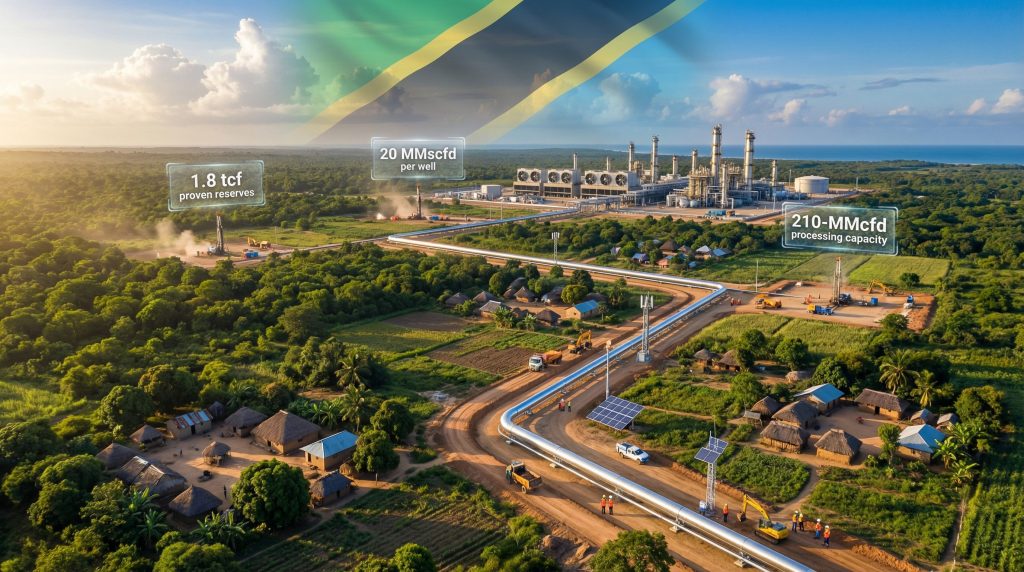
The Ntorya natural gas project Tanzania represents a compelling case study in proven reserve development within East Africa's evolving energy sector. Located in Tanzania's Mtwara Region, this onshore gas field demonstrates the geological characteristics that distinguish commercially viable reserves from exploration prospects. The field's 1.8 trillion cubic feet (tcf) of proven reserves have been validated through comprehensive well testing programs, with each producing well achieving 20 million cubic feet per day (MMscfd) during sustained production tests.
This production performance places Ntorya within the tier of commercially viable gas developments that can support dedicated infrastructure investment. The consistency of output across multiple wells reduces reservoir risk and provides confidence for long-term development planning. Beyond the proven reserves, the field carries significant exploration upside, with contingent resource estimates suggesting 3.45 tcf of gas initially in place (GIIP) based on updated geological assessments.
Regional Context and Competitive Positioning
Tanzania's natural gas sector encompasses both offshore and onshore developments, with Ntorya representing a strategic complement to the country's larger LNG export ambitions. The field's onshore location provides advantages in terms of development speed and infrastructure integration compared to deepwater projects that require extensive subsea systems and floating production facilities.
The proven reserve base positions Ntorya favourably within East Africa's gas development landscape. While neighbouring countries like Mozambique host much larger offshore discoveries measured in tens of trillions of cubic feet, onshore developments like Ntorya offer different value propositions: faster time to market, lower development costs per unit of production, and direct access to domestic markets. Moreover, this positioning supports broader energy security outlook considerations across the region.
Technical Performance Metrics and Engineering Specifications
Well productivity analysis reveals consistent performance characteristics across the field's development program. The 20 MMscfd per well production rate achieved during testing phases indicates good reservoir quality and effective completion techniques. This output level supports economic development scenarios even with modest well counts, reducing the drilling requirements and associated capital expenditure compared to lower-productivity reservoirs.
The geological setting demonstrates favourable characteristics for continued development. Rock properties, fluid composition, and reservoir pressure support sustained production profiles necessary for long-term commercial viability. Gas quality specifications meet pipeline transmission standards, eliminating the need for complex treating facilities that can significantly impact project economics.
When big ASX news breaks, our subscribers know first
Infrastructure Integration and Transportation Strategy
The development of gas transportation infrastructure represents a critical component of the Ntorya natural gas project Tanzania, connecting field production to processing facilities and end markets. The project centres on a 35-kilometre pipeline system designed to transport gas from wellhead facilities to the existing 210-MMcfd Madimba processing plant. This infrastructure approach leverages existing processing capacity whilst creating dedicated transmission capability for field development.
Pipeline engineering specifications reflect modern design standards optimised for onshore gas transmission. The system incorporates advanced control systems, monitoring infrastructure, and safety protocols essential for reliable long-term operations. Capacity design provides significant headroom for future field expansion, with processing plant capacity exceeding initial field production by substantial margins.
Engineering, Procurement, and Construction Strategy
The project's EPC contract structure demonstrates international best practices in energy infrastructure development. China Petroleum Pipeline Corporation and China Petroleum Technology & Development Corporation received the primary construction contract in July 2025, bringing extensive experience in pipeline system installation and commissioning. These contractors have established track records in African energy infrastructure projects, providing technical capabilities and execution experience relevant to the Ntorya development.
Line pipe manufacturing has been completed according to project specifications, with delivery to Tanzania scheduled for late January 2026. This timeline alignment with field development activities demonstrates coordinated project execution designed to minimise critical path delays. Advanced procurement of long-lead items reduces schedule risk and supports the targeted third-quarter 2026 commissioning timeline.
Community Impact and Local Development
The pipeline corridor traverses 11 villages in the Mtwara Region, creating both opportunities and challenges for local communities. Civil works contracts awarded to local construction companies demonstrate commitment to local content development and economic participation. These arrangements provide employment opportunities and capability building within Tanzania's domestic energy services sector.
Infrastructure development includes comprehensive site preparation activities: well-pad construction, access road development, and facility preparation for production operations. The conversion of the original Ntorya-3 well site to a gas field base provides centralised operations control and demonstrates efficient utilisation of existing infrastructure.
Development Timeline and Project Execution Framework
Critical path analysis reveals a tightly coordinated development schedule designed to achieve third-quarter 2026 commissioning of the integrated production and transportation system. The project's execution framework balances multiple parallel work streams: well development, pipeline installation, processing plant preparation, and systems integration.
January 2026 represents a crucial milestone convergence, with line pipe delivery, principal drilling contract awards, and civil works commencement all scheduled for this timeframe. This coordination minimises schedule risk by ensuring that critical dependencies align and resource allocation supports efficient execution across all project components.
Well Development and Drilling Program
The field development program encompasses multiple well work activities designed to bring production capacity online in alignment with pipeline commissioning. Ntorya-2 well completion represents the primary production source for initial operations, with principal contracting described as "well advanced" by operator ARA Petroleum Tanzania.
Chikumbi-1 drilling operations require drilling rig procurement and well-pad preparation. Tender evaluation for drilling services continues, with all necessary casings, tubulars, and wellheads positioned on-site to support rapid deployment once contracts are finalised. This equipment positioning demonstrates proactive logistics management and reduces procurement-related delays.
Ntorya-1 workover operations provide additional production capacity through rehabilitation of existing well infrastructure. Combined with new well completions, this multi-well approach creates production flexibility and reservoir management options essential for optimised field development.
Equipment Procurement and Risk Mitigation
Strategic equipment procurement demonstrates sophisticated risk management across multiple project components. The positioning of critical wellhead equipment, tubulars, and completion materials on-site provides protection against supply chain disruptions and import logistics challenges common in African energy projects.
Drilling rig procurement through competitive tendering ensures access to appropriate equipment whilst maintaining cost discipline. The evaluation of multiple rig options provides flexibility to select equipment optimised for the specific drilling requirements of Ntorya field geology and well design parameters.
Partnership Structure and Execution Capabilities
The Ntorya development consortium brings together complementary capabilities essential for successful project execution. ARA Petroleum Tanzania serves as operator, providing technical leadership and project management expertise. The company's operational focus on bringing Ntorya-2 into production demonstrates hands-on management of critical development activities.
Aminex PLC contributes as development partner, with specific expertise in logistics coordination and equipment management. The company's confirmation that all necessary drilling equipment is positioned on-site reflects effective procurement management and operational planning. This partnership approach leverages specialised capabilities whilst maintaining coordinated project execution.
State Participation and Strategic Alignment
Tanzania Petroleum Development Corporation (TPDC) represents state participation in the development, ensuring alignment with national energy policy objectives. TPDC's role in awarding the EPC contract demonstrates government support for the project whilst maintaining oversight of major contracting decisions.
This partnership structure balances private sector operational expertise with state participation, creating a framework that supports both commercial objectives and national energy security goals. The integration of international contractors with local content requirements demonstrates commitment to technology transfer and domestic capability development.
International Contracting and Technology Integration
The selection of Chinese engineering and construction contractors reflects strategic considerations beyond cost optimisation. These contractors bring extensive experience in pipeline systems and processing plant integration, with proven capabilities in challenging operational environments. Technology transfer opportunities through these partnerships support long-term domestic capability building within Tanzania's energy sector.
Contract structuring includes provisions for local workforce training and equipment maintenance capabilities, ensuring sustainable operational support beyond project commissioning. This approach creates lasting infrastructure for continued energy development activities across the region.
Economic Impact and Energy Security Implications
The Ntorya natural gas project Tanzania represents more than an individual field development; it serves as a catalyst for broader economic transformation within the Mtwara Region and Tanzania's national energy portfolio. Gas production from Ntorya supports multiple strategic objectives: domestic energy security, industrial development opportunities, and regional energy market participation.
Power generation applications represent immediate market opportunities for gas production. Tanzania's electricity sector relies heavily on hydroelectric generation, creating vulnerability to seasonal variations and drought conditions. Natural gas provides reliable baseload power generation capability, supporting grid stability and industrial development requirements.
Industrial Development and Value Chain Integration
Natural gas availability creates opportunities for industrial development across multiple sectors. Fertiliser production, cement manufacturing, and petrochemical development all benefit from reliable gas supply at competitive pricing. The Ntorya development provides the foundation for industrial cluster development that can transform regional economic diversification efforts.
Processing plant capacity at 210 MMscfd provides significant headroom for industrial development beyond initial field production. This excess capacity supports additional field developments and industrial demand growth without requiring immediate infrastructure expansion. Consequently, this capacity creates opportunities to address energy export challenges facing the region.
Rural Energy Access and Community Development
Gas infrastructure development creates opportunities for expanded energy access in rural communities across the pipeline corridor. Distributed generation systems powered by natural gas can provide reliable electricity to communities currently relying on inefficient and expensive alternatives.
Economic multiplier effects from infrastructure development, employment creation, and increased energy reliability contribute to broader development goals beyond the immediate project scope. These impacts support Tanzania's rural development objectives and poverty reduction strategies through improved energy access and economic opportunities.
Risk Assessment and Market Dynamics
Commercial development of the Ntorya natural gas project Tanzania involves multiple risk categories that require comprehensive management strategies. Technical risks include reservoir performance sustainability, equipment reliability, and operational challenges associated with onshore gas development in East Africa.
Market risks encompass domestic gas pricing dynamics, competition from alternative energy sources, and evolving regulatory frameworks. Tanzania's natural gas pricing policies balance development incentives with domestic energy affordability objectives, creating both opportunities and constraints for commercial development.
Operational Risk Management Framework
Well productivity sustainability represents a key technical risk requiring ongoing reservoir management. The 20 MMscfd per well production rate demonstrated during testing provides confidence for initial development phases, but long-term productivity maintenance requires sophisticated reservoir management techniques.
Pipeline integrity and maintenance requirements create ongoing operational responsibilities that affect long-term project economics. The 35-kilometre transmission system requires regular inspection, maintenance, and potential expansion capabilities to support field development evolution.
Market Access and Pricing Considerations
Domestic gas market development provides primary revenue opportunities for Ntorya production. Tanzania's industrial development policies support gas utilisation for power generation, manufacturing, and export-oriented industries. Market pricing mechanisms balance development incentives with domestic energy affordability objectives.
Regional export opportunities represent potential upside scenarios for gas production beyond domestic market requirements. East African regional integration initiatives support cross-border energy trade, creating additional market access options for surplus production capacity. For investors evaluating this opportunity, understanding broader investment strategy insights becomes essential.
The next major ASX story will hit our subscribers first
Strategic Implications for East African Energy Markets
The successful development of the Ntorya natural gas project Tanzania carries implications beyond the immediate project scope, influencing regional energy market dynamics and investment patterns across East Africa. The project demonstrates viable commercial models for onshore gas development that can be replicated across similar geological settings throughout the region.
Regional supply chain integration opportunities emerge from successful project execution. Equipment suppliers, service providers, and technical contractors develop capabilities that support additional energy developments across East Africa. This capability building creates competitive advantages for future project development and regional energy sector growth.
Investment Climate and Demonstration Effects
Successful commissioning and operation of the Ntorya development provides demonstration effects for international investors evaluating East African energy opportunities. The project showcases effective partnership structures, regulatory frameworks, and execution capabilities that reduce perceived risks for additional investments.
Technology transfer and local content development models established through the Ntorya project create templates for future energy developments. These models balance international expertise with domestic capability building, supporting sustainable energy sector development across the region. However, regional dynamics also reflect broader shifts, including the recent Venezuela PDVSA policy shift, which influences global energy investment patterns.
Regional Energy Security and Economic Integration
Natural gas development contributes to regional energy security objectives by diversifying supply sources and reducing import dependencies. The success of projects like Ntorya supports East African Community energy cooperation frameworks and regional integration initiatives.
Cross-border infrastructure development opportunities emerge from successful domestic projects. Pipeline interconnections, processing facility sharing, and regional gas trading mechanisms become more viable as individual country developments demonstrate commercial success and operational reliability. For instance, recent developments show how the Ntorya-Madimba gas pipeline strengthens Tanzania's energy security position.
Disclaimer: This analysis is based on publicly available information and industry reporting. Gas field development involves significant technical and commercial risks. Resource estimates, production forecasts, and development timelines are subject to change based on operational experience, market conditions, and regulatory developments. Investors should conduct independent due diligence and consider professional advice before making investment decisions.
Ready to Capitalise on the Next Major Energy Discovery?
Discovery Alert's proprietary Discovery IQ model delivers real-time notifications on significant ASX energy and mineral discoveries, empowering subscribers to identify actionable opportunities ahead of the broader market. Begin your 30-day free trial today and position yourself to capitalise on the next transformative discovery before it becomes mainstream knowledge.