June 30, 2026
Nuclear energy's complex relationship with public perception reveals fundamental tensions between scientific evidence and psychological responses that shape modern energy policy decisions. Despite maintaining one of the strongest safety records among large-scale electricity generation technologies, why nuclear energy is feared remains a multifaceted question involving historical accidents, invisible threats, and institutional trust challenges that extend far beyond technical risk assessments.
Understanding this paradox requires examining how catastrophic events, media narratives, and cognitive biases create persistent anxiety around nuclear technology even as climate urgency increases demand for low-carbon energy solutions.
Historical Context: The Nuclear Paradox in Global Energy Markets
The global energy transition presents a fascinating contradiction that challenges conventional risk assessment frameworks. While statistical evidence consistently demonstrates nuclear power ranks among the safest large-scale energy production methods available, public perception remains overwhelmingly negative across most developed nations. This disconnect between quantitative safety data and qualitative fear responses represents one of the most significant psychological barriers to carbon-neutral energy deployment in modern industrial societies.
Understanding why nuclear energy generates such profound anxiety requires examining multiple interconnected factors spanning physics, psychology, history, and institutional trust. The technology that promised unlimited clean energy in the 1950s has become arguably the most psychologically complex energy choice facing policymakers today.
When big ASX news breaks, our subscribers know first
The Fundamental Physics Behind Nuclear Fear
Nuclear fission operates through controlled atomic splitting, where neutrons bombard uranium-235 nuclei at extreme velocities, releasing tremendous energy from minimal fuel quantities. This process generates approximately 2-3 million times more energy per unit mass than chemical combustion, enabling a single reactor to power hundreds of thousands of homes continuously for decades.
Energy Density and Risk Amplification
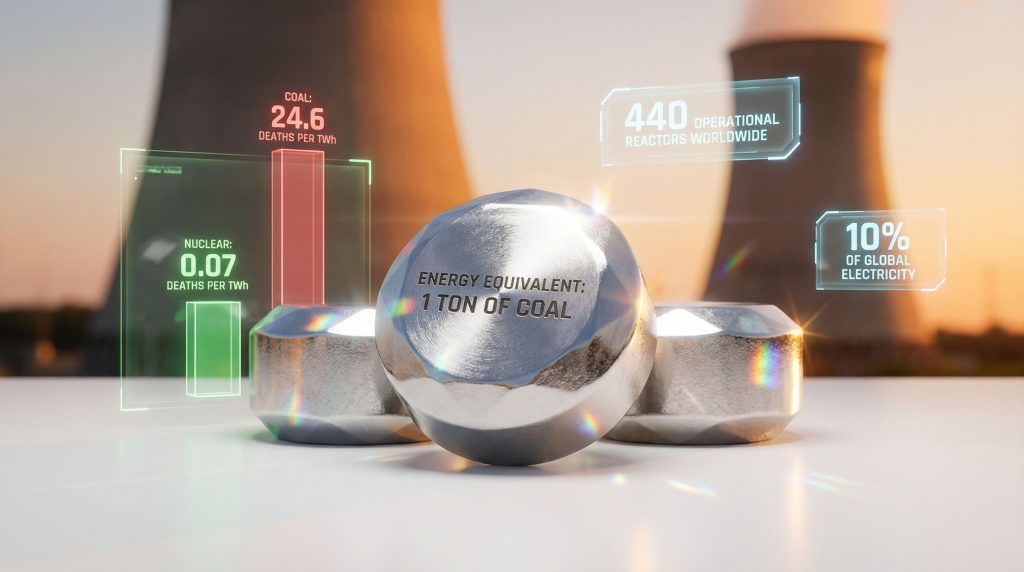
The extraordinary energy concentration that makes nuclear economically attractive simultaneously amplifies perceived catastrophic potential. A uranium fuel pellet weighing approximately 7 grams contains energy equivalent to one ton of coal or 149 gallons of oil, creating an intuitive sense that such concentrated power must carry proportionally concentrated risks.
This energy density comparison reveals why nuclear facilities generate different psychological responses than conventional power plants. While coal plants process thousands of tons of fuel daily with visible environmental impacts, nuclear plants operate with fuel loads measured in tons that remain sealed within reactor cores for years, creating an aura of mysterious, invisible power.
The Dual-Use Technology Legacy
Nuclear technology's military origins create an inescapable association between peaceful electricity generation and weapons capability. The same uranium enrichment processes, reactor designs, and fuel cycle technologies that power cities also enable weapons production, embedding proliferation concerns directly into civilian energy infrastructure.
Current Global Nuclear Infrastructure:
- 442 operational reactors across 33 countries
- Approximately 10.4% of worldwide electricity generation
- 58 reactors under construction globally
- Zero operational carbon emissions during electricity generation
This dual-use characteristic distinguishes nuclear from all other energy technologies. Solar panels cannot be weaponised, wind turbines pose no proliferation risks, and natural gas infrastructure, while strategically important, does not enable mass destruction capabilities.
Historical Accidents and Psychological Scarring
Three major nuclear accidents fundamentally shaped global public perception, each demonstrating different failure modes and creating lasting psychological imprints that statistical safety records cannot easily overcome.
Chernobyl: The Defining Catastrophe
The April 26, 1986 Chernobyl disaster established nuclear power's catastrophic narrative in global consciousness. Despite causing approximately 31 direct deaths according to the United Nations Scientific Committee on the Effects of Atomic Radiation (UNSCEAR), the accident created:
- 2,600-square-kilometre exclusion zone (larger than Luxembourg)
- 116,000 immediate evacuees with 220,000+ additional relocations
- Long-term contamination affecting agricultural production across Europe
- Economic damages exceeding $235 billion in constant dollars
The accident resulted from a flawed reactor design (RBMK) combined with serious operator errors during a safety test. The reactor lacked a proper containment structure, and its design included positive void coefficient characteristics that made it inherently unstable under certain conditions.
Furthermore, when operators disabled safety systems during the test, a power surge caused steam explosions that destroyed the reactor core and initiated a graphite fire that dispersed radioactive materials across the atmosphere.
Three Mile Island: Communication Breakdown and Trust Erosion
The March 28, 1979 Three Mile Island incident in Pennsylvania demonstrated how partial meltdowns could occur even in Western reactor designs with multiple safety systems. While the containment building successfully prevented significant radiation release, the accident revealed:
- Operator confusion during emergency response procedures
- Inadequate instrumentation for monitoring core conditions
- Communication failures between plant operators and regulatory authorities
- Media amplification of worst-case scenarios during the crisis
The accident released approximately 43,000 curies of radioactive iodine-131 equivalent to the atmosphere, though average public radiation exposure remained minimal (approximately 1 millirem compared to 300+ millirem annual background radiation). The incident's impact stemmed more from eroded confidence in nuclear safety systems and regulatory oversight than from actual health consequences.
Fukushima: Modern Technology Meets Natural Disaster
The March 11, 2011 Fukushima Daiichi accident demonstrated that even advanced reactor designs could experience catastrophic failures under extreme circumstances. Following a magnitude 9.0 earthquake and subsequent tsunami, the facility experienced:
- Three reactor meltdowns (Units 1, 2, and 3)
- 154,000 evacuees from surrounding areas
- Ongoing contaminated water management challenges
- Economic costs exceeding $200 billion including decommissioning and compensation
The accident sequence began when the tsunami overwhelmed seawalls and flooded backup diesel generators, eliminating power for cooling system pumps. Without adequate cooling, reactor cores overheated, leading to hydrogen explosions and radioactive releases. However, while reactor containment structures largely held, spent fuel pools at higher elevations posed additional challenges.
Fukushima Radiation Release Comparison:
- Cesium-137: Approximately 10-40% of Chernobyl levels
- Iodine-131: Roughly 10% of Chernobyl release
- Direct deaths: Zero from radiation exposure
- Cancer projections: WHO estimates minimal long-term health impacts
Psychological Mechanisms Driving Nuclear Fear
Nuclear technology triggers several well-documented cognitive biases and psychological mechanisms that amplify perceived risks beyond statistical realities.
The Invisible Threat Syndrome
Radiation's undetectable nature creates unique anxiety patterns compared to visible environmental hazards. Unlike industrial pollution, chemical spills, or air quality degradation, radioactive contamination cannot be sensed through human senses, requiring specialised detection equipment and expert interpretation.
This invisibility prevents intuitive risk assessment and forces dependence on technical authorities for safety information. When institutional trust erodes, as occurred after major accidents, people cannot independently verify official safety claims, creating persistent uncertainty and worst-case thinking.
Catastrophic Versus Chronic Risk Assessment
Human psychology struggles to properly weight low-probability, high-consequence events against high-probability, low-consequence risks. Nuclear accidents represent the classic catastrophic risk profile: extremely rare but potentially severe consequences.
Energy Source Death Rates (per TWh generated):
| Energy Source | Annual Deaths | Accident Types | Public Fear Level |
|---|---|---|---|
| Coal | 24.6 | Air pollution, mining accidents | Low |
| Oil | 18.4 | Refinery accidents, transport | Low |
| Natural Gas | 2.8 | Pipeline explosions, leaks | Low |
| Hydroelectric | 1.4 | Dam failures, construction | Low |
| Nuclear | 0.07 | Reactor accidents, radiation | Very High |
| Wind | 0.04 | Construction, maintenance | Very Low |
| Solar | 0.02 | Installation, manufacturing | Very Low |
Source: Our World in Data analysis of energy production fatalities
This statistical comparison reveals the profound disconnect between actual safety records and perceived danger. Coal power causes hundreds of times more deaths per unit energy through air pollution and mining accidents, yet generates minimal public fear compared to nuclear technology.
Involuntary Risk Exposure and Control
Nuclear fear intensifies because exposure involves several psychological factors that increase anxiety:
- Lack of personal control: Individuals cannot influence nuclear plant operations or safety decisions
- Geographic proximity: Living near facilities creates helplessness regarding potential accidents
- Intergenerational consequences: Radiation exposure and waste storage affect future generations
- Technical complexity: Most people cannot evaluate nuclear safety claims independently
- Irreversible contamination: Unlike other industrial accidents, radioactive contamination can persist for decades
Research consistently shows that voluntary, familiar, and controllable risks are more readily accepted than involuntary, unfamiliar, and uncontrollable ones. Nuclear technology maximises anxiety-producing characteristics whilst minimising psychological comfort factors.
The Nuclear Waste Dilemma: Time, Space, and Trust
Nuclear waste management represents perhaps the most challenging aspect of nuclear acceptance, involving unprecedented timescales that exceed human institutional memory and requiring technologies that must function across geological timescales.
The Temporal Challenge
High-level radioactive waste from nuclear reactors contains isotopes with varying decay rates:
- Iodine-131: 8-day half-life (medical concern during accidents)
- Cesium-137: 30-year half-life (primary contamination concern)
- Strontium-90: 29-year half-life (bone-seeking isotope)
- Plutonium-239: 24,110-year half-life (weapons-usable material)
- Uranium-235: 703 million-year half-life (naturally occurring)
The 10,000-year storage requirement frequently cited for nuclear waste represents the time needed for high-level waste radioactivity to decay to background levels. This timespan exceeds recorded human civilisation, creating concerns about institutional continuity and technological understanding across millennia.
Global Waste Inventory and Storage Status
Current Worldwide Spent Fuel Accumulation:
- 370,000 tonnes of spent nuclear fuel globally
- 14,000 tonnes generated annually
- Finland: World's first operational deep geological repository (Onkalo, 2025)
- Sweden: Repository under development (operational target 2030s)
- United States: 90,000+ tonnes stored at reactor sites
Most nuclear waste remains in temporary storage at reactor facilities in spent fuel pools or dry cask storage systems. While these interim solutions have proven safe for decades, they were not designed as permanent solutions and require ongoing maintenance and security.
The Reprocessing Alternative and Proliferation Concerns
Spent nuclear fuel retains approximately 95-96% of its original uranium content plus newly created plutonium, making it a valuable energy resource rather than pure waste. Advanced reprocessing technologies can extract usable uranium and plutonium for new fuel fabrication, potentially reducing waste volumes by 85% whilst extending uranium resources.
However, reprocessing separates weapons-usable plutonium from other materials, raising proliferation concerns. Countries with civilian reprocessing capabilities (France, United Kingdom, Japan, India, China) operate under strict international safeguards, but the technology remains sensitive from a security perspective.
Global Reprocessing Capacity:
- France (La Hague): 1,700 tonnes per year
- United Kingdom (Sellafield): 900 tonnes per year (closing operations)
- Japan (Rokkasho): 800 tonnes per year (delayed startup)
- China: Expanding capacity for domestic fuel cycle
- Russia: Commercial reprocessing services
Media Influence and Cultural Narratives
Popular culture and news media coverage have profoundly shaped nuclear energy perception through selective emphasis on dramatic scenarios whilst largely ignoring routine safe operations.
Hollywood's Nuclear Narrative
Entertainment media consistently portrays nuclear technology through catastrophic lenses:
- The China Syndrome (1979): Reactor meltdown thriller released weeks before Three Mile Island
- Silkwood (1983): Plutonium contamination and corporate cover-up drama
- The Day After (1983): Nuclear war aftermath viewed by 100+ million Americans
- Chernobyl (2019): HBO's acclaimed but dramatised disaster series
- Dark (2017-2020): German series linking nuclear accidents to apocalyptic scenarios
These productions, whilst often based on factual scenarios, emphasise worst-case outcomes over statistical probabilities. The China Syndrome's fictional California reactor meltdown scenario eerily paralleled the Three Mile Island accident, creating a sense that fiction predicted reality and validating fears about nuclear safety.
News Coverage Patterns and Bias
Media coverage of nuclear energy exhibits several consistent patterns that amplify negative perception:
- Event-driven reporting: Accidents and incidents receive extensive coverage whilst decades of safe operation go unreported
- Technical complexity: Journalists often lack nuclear engineering expertise, leading to oversimplified or inaccurate explanations
- Sensational headlines: Terms like "nuclear," "radiation," and "meltdown" generate higher audience engagement
- False balance: Anti-nuclear activists often receive equal coverage with nuclear scientists despite consensus on safety
A 2019 analysis of nuclear energy coverage in major newspapers found that 75% of articles focused on accidents, waste problems, or regulatory issues, whilst only 15% discussed operational safety records or climate benefits. This coverage pattern creates availability bias, where easily recalled negative events dominate risk assessment.
The next major ASX story will hit our subscribers first
Environmental Movement Divisions and Evolution
The environmental movement's relationship with nuclear energy has evolved significantly since the 1960s, creating internal tensions between climate goals and traditional anti-nuclear positions.
Historical Environmental Opposition
Environmental opposition to nuclear power emerged from multiple concerns:
- 1960s nuclear weapons testing: Atmospheric weapons tests created initial radiation concerns
- Local environmental impacts: Thermal pollution from cooling water discharge
- Uranium mining: Environmental degradation and worker safety issues
- Waste disposal: Long-term environmental contamination risks
- Renewable alternatives: Positioning nuclear as unnecessary given wind/solar potential
Organisations like Greenpeace, Friends of the Earth, and the Sierra Club established strong anti-nuclear positions during the 1970s that persist today, despite changing climate science understanding.
Climate Change and Nuclear Reconsideration
Climate change urgency has fractured environmental consensus on nuclear power, creating pro-nuclear climate positions among some environmental scientists and organisations:
Pro-Nuclear Climate Arguments:
- Immediate decarbonisation: Nuclear provides large-scale, low-carbon electricity immediately
- Baseload reliability: Complements variable renewable energy sources
- Proven scalability: France, Sweden demonstrate nuclear can power entire economies
- Lifecycle emissions: Nuclear lifecycle carbon emissions comparable to renewables
- Land use efficiency: Nuclear requires minimal land area compared to renewables
Anti-Nuclear Climate Arguments:
- Construction timelines: New nuclear projects take 10-15+ years to complete
- Economic competitiveness: Renewable costs declining faster than nuclear
- Waste unsolved: Long-term waste storage remains technically and politically challenging
- Safety risks: Climate benefits do not justify accident and proliferation risks
- Grid flexibility: Renewable plus storage provides more flexible grid management
Notable Climate Scientists Supporting Nuclear:
- Dr. James Hansen (NASA climatologist)
- Dr. Kerry Emanuel (MIT atmospheric scientist)
- Dr. Tom Wigley (climate modeller)
- Dr. Ken Caldeira (Carnegie Science)
These scientists argue that meeting Paris Agreement targets requires all low-carbon technologies, including nuclear expansion alongside renewable deployment. Furthermore, they emphasise that critical minerals and energy security considerations make nuclear power an essential component of energy independence.
International Approaches to Nuclear Risk Communication
Different countries have developed varying strategies for managing nuclear public acceptance, demonstrating how cultural, political, and institutional factors influence technology adoption.
France: Normalisation Through Energy Dominance
France generates approximately 70% of electricity from nuclear power, the highest percentage globally, through a deliberate national strategy initiated in the 1970s following oil crises:
- Standardised reactor design: Primarily Pressurised Water Reactors (PWR) reducing complexity
- State ownership: Électricité de France (EDF) maintains public control over nuclear operations
- Educational integration: Nuclear science included in national school curricula
- Transparent communication: Regular public information campaigns about nuclear operations
- Economic benefits: Lower electricity costs compared to neighbouring countries
French public acceptance of nuclear power consistently polls above 60%, demonstrating how successful deployment and transparent communication can normalise nuclear technology. The standardised approach also reduced construction costs and timelines compared to countries building multiple reactor designs.
Germany: The Energiewende Experiment
Germany's decision to phase out nuclear power by 2022 (completed in 2023) represents the most significant nuclear exit by a major industrial economy:
- Post-Fukushima acceleration: Immediate shutdown of 8 older reactors in 2011
- Renewable investment: Over €500 billion invested in wind and solar capacity
- Grid modernisation: Smart systems and storage to manage renewable intermittency
- Energy security trade-offs: Increased reliance on Russian natural gas (pre-2022 Ukraine war)
- Economic costs: Highest electricity prices in Europe
The Energiewende (energy transition) demonstrates an alternative pathway emphasising renewables over nuclear, though it has required substantial public investment and created energy security vulnerabilities exposed during the Ukraine conflict. This has created significant energy transition challenges similar to those faced by other industrialised nations.
Japan: Rebuilding Trust After Crisis
Post-Fukushima Japan faces unique challenges rebuilding nuclear acceptance whilst maintaining energy security:
- Enhanced safety standards: New Nuclear Regulation Authority with independence from promotion agencies
- Local consent requirements: Municipal and prefectural governments must approve reactor restarts
- Stress testing: Comprehensive safety assessments for all existing reactors
- Alternative energy development: Increased LNG imports and renewable energy targets
- Economic pressures: Energy costs affecting industrial competitiveness
Only 33 of 54 reactors have been approved for restart under new safety standards, with many facing continued local opposition despite meeting technical requirements. This demonstrates how institutional trust, once lost, requires years to rebuild even with enhanced safety measures.
Economic Factors and Market Psychology
Nuclear power faces significant economic challenges that compound public acceptance problems and create investor scepticism about technology viability.
Construction Cost Escalation and Schedule Delays
Recent nuclear construction projects have experienced substantial cost overruns and timeline extensions:
Major Project Examples:
- Vogtle Units 3&4 (Georgia, USA): $35 billion final cost versus $14 billion original estimate
- Hinkley Point C (UK): £26 billion cost for 3,200 MW capacity
- Flamanville 3 (France): €19.1 billion versus €3.3 billion initial budget
- Olkiluoto 3 (Finland): 18 years construction time versus 4 years planned
These cost escalations stem from multiple factors including enhanced safety requirements post-Fukushima, lack of construction experience, regulatory changes during construction, and supply chain challenges for specialised nuclear components.
Financing Challenges and Risk Allocation
Nuclear projects require massive upfront capital investment with long payback periods, creating financing difficulties:
- Capital intensity: $6,000-12,000+ per kilowatt installed capacity
- Construction risk: Cost overruns and delays affect investor returns
- Regulatory risk: Changing safety requirements during construction
- Political risk: Government policy changes affecting project viability
- Market risk: Competition from lower-cost natural gas and renewables
Traditional utility financing models struggle with these risk profiles, leading to government backing or state ownership for most new nuclear projects globally.
Competitive Economics Against Alternatives
Nuclear power competes in electricity markets against technologies with different cost structures:
Levelised Cost Comparison (USD/MWh, 2024):
- Natural gas combined cycle: $45-70
- Onshore wind: $30-60
- Utility solar: $25-50
- Nuclear (new construction): $90-150
- Coal: $65-120
These comparisons favour renewable technologies in many markets, though nuclear provides different value propositions including baseload reliability, capacity factor advantages, and grid stability services not captured in simple cost comparisons. Additionally, factors such as Russian uranium ban impact and uranium market volatility continue to affect nuclear economics.
Security Concerns in the Modern Era
Post-September 11, 2001 security considerations have added new dimensions to nuclear power concerns, involving terrorism, cybersecurity, and proliferation risks.
Physical Security and Terrorism Threats
Nuclear facilities present potential targets for terrorist attacks seeking to cause radiological dispersal or economic disruption:
- Aircraft impact assessments: Reactor containment structures designed to withstand commercial aircraft impacts
- Armed response forces: Enhanced on-site security personnel with military-grade equipment
- Perimeter defences: Multiple security barriers and detection systems
- Coordination protocols: Integration with federal law enforcement and military response capabilities
The U.S. Nuclear Regulatory Commission requires nuclear facilities to defend against "design basis threats" including multiple well-armed attackers with inside knowledge. These security requirements add operational costs but have demonstrated effectiveness, with no successful attacks on nuclear facilities despite their high symbolic value.
Cybersecurity Vulnerabilities
Modern nuclear plants rely increasingly on digital control systems, creating new attack vectors for sophisticated adversaries:
- Industrial control systems: SCADA and distributed control systems managing reactor operations
- Air-gapped networks: Physical separation of safety systems from internet-connected systems
- Regulatory requirements: Cybersecurity regulations requiring protection of critical digital assets
- State-sponsored threats: Nation-state actors with advanced persistent threat capabilities
The 2010 Stuxnet attack on Iranian nuclear facilities demonstrated how cyber weapons could target nuclear infrastructure, prompting enhanced cybersecurity measures at civilian nuclear facilities globally.
Radiological Dispersal Concerns
"Dirty bomb" scenarios involve conventional explosives combined with radioactive materials to create contamination and psychological terror:
- Material sources: Medical isotopes, industrial radiation sources, research reactor materials
- Psychological impact: Fear and evacuation responses exceeding actual health consequences
- Economic disruption: Contamination cleanup costs potentially reaching billions
- Detection capabilities: Radiation monitoring networks and first responder training
Whilst dirty bombs would likely cause minimal direct radiation casualties, their psychological and economic impacts could be substantial, particularly in dense urban areas.
Behavioural Economics and Risk Perception Research
Understanding why nuclear energy is feared requires examining specific cognitive biases and decision-making mechanisms that influence technology acceptance.
Availability Heuristic and Memory Effects
People assess nuclear risks based on easily recalled information rather than comprehensive probability analysis:
- Memorable accidents: Chernobyl and Fukushima dominate mental models of nuclear risk
- Media amplification: Dramatic events receive disproportionate coverage and recall
- Personal experience: Direct exposure to nuclear facilities affects individual risk assessment
- Cultural narratives: National stories about nuclear technology shape collective memory
Research demonstrates that vivid, emotionally charged events have outsized influence on risk perception regardless of their statistical frequency. Chernobyl's visual imagery of abandoned cities creates powerful mental associations that statistical safety data cannot easily overcome.
Probability Neglect and Catastrophic Thinking
When potential consequences seem catastrophic, people systematically ignore actual probabilities in favour of worst-case scenario thinking:
- Low-probability, high-consequence events: Nuclear accidents fit this psychological pattern perfectly
- Emotional override: Fear responses dominate rational probability calculations
- Worst-case focus: Attention concentrates on maximum possible damage rather than expected outcomes
- Precautionary bias: "Better safe than sorry" mentality regardless of costs
This psychological mechanism explains why our fear of radiation far exceeds the threat and why nuclear power generates more fear than statistically more dangerous activities like driving automobiles or living near coal power plants.
Social Proof and Authority Effects
Nuclear attitudes are heavily influenced by social consensus and institutional credibility:
- Peer opinions: Community consensus affects individual risk assessment
- Expert authority: Trust in scientists, regulators, and plant operators
- Political leadership: Government positions influence public opinion formation
- International examples: Other countries' nuclear policies provide social validation
- Institutional trust: General confidence in regulatory agencies and safety oversight
Countries with high institutional trust (like Finland and France) show greater nuclear acceptance, whilst countries with low government credibility face persistent nuclear scepticism regardless of safety records.
Advanced Reactor Technologies and Future Acceptance
Next-generation nuclear designs attempt to address traditional safety and economic concerns through innovative engineering approaches and enhanced safety features.
Small Modular Reactors (SMRs)
SMR designs offer potential advantages over traditional large-scale reactors:
- Reduced capital costs: Factory manufacturing versus on-site construction
- Enhanced safety: Passive safety systems requiring no human intervention
- Deployment flexibility: Smaller electrical capacity suitable for distributed generation
- Modular expansion: Incremental capacity additions as demand grows
Leading SMR Development Programmes:
- NuScale Power: 77 MW modules, approved by U.S. NRC
- Rolls-Royce SMR: 470 MW capacity, UK government support
- China National Nuclear Corporation: ACP100 demonstration project
- Russian RITM-200: Floating nuclear power plant deployment
SMRs potentially address psychological concerns by reducing perceived catastrophic potential whilst maintaining nuclear's carbon advantages.
Advanced Fuel Cycles and Waste Reduction
Next-generation reactor designs explore alternative fuel cycles that could dramatically reduce waste concerns:
- Thorium fuel cycle: Abundant thorium resources with reduced long-lived waste
- Fast breeder reactors: Consuming existing plutonium stockpiles whilst generating new fuel
- Molten salt reactors: Online fuel reprocessing reducing waste volumes
- Fusion technology: Ultimate nuclear technology without fission waste issues
These technologies remain primarily experimental but offer pathways to address fundamental waste management concerns that drive public opposition.
Autonomous Operation and Safety Systems
Advanced reactors incorporate passive safety features that operate without human intervention:
- Gravity-driven cooling: Natural circulation eliminating pump requirements
- Negative temperature coefficients: Physics-based shutdown during overheating
- Underground deployment: Natural radiation shielding and security enhancement
- Walk-away safe designs: Automatic shutdown and cooling without operator action
These design improvements directly address public concerns about human error and external events that caused historical accidents.
Climate Urgency and Nuclear Renaissance Potential
Growing recognition of climate change urgency is reshaping nuclear energy discussions among policymakers and environmental advocates.
Carbon Pricing and Economic Competitiveness
Carbon pricing mechanisms make nuclear more economically attractive relative to fossil fuel alternatives:
- European Emissions Trading System: Carbon prices reaching €80+ per tonne CO2
- California cap-and-trade: Valuing nuclear's zero operational emissions
- Social cost of carbon: Economic analyses including climate damage costs
- Grid reliability value: Compensating baseload power during renewable intermittency
As carbon prices increase globally, nuclear's zero operational emissions become increasingly valuable economic assets.
Energy Security and Geopolitical Considerations
Recent geopolitical events have highlighted energy security benefits of domestic nuclear power:
- Russian energy weaponisation: European dependence on fossil fuel imports creates vulnerability
- Supply chain resilience: Nuclear fuel can be stockpiled for years versus monthly fossil fuel deliveries
- Strategic autonomy: Domestic nuclear capabilities reduce foreign energy dependence
- Critical mineral requirements: Renewable technologies require rare earth elements concentrated in few countries
Energy security considerations may override traditional nuclear concerns as geopolitical tensions increase. Consequently, this has contributed to US uranium market disruption as nations prioritise energy independence.
Generational Attitude Shifts
Younger demographics demonstrate different nuclear risk-benefit calculations compared to older generations:
- Climate prioritisation: Viewing nuclear as necessary climate solution
- Technology optimism: Greater confidence in advanced reactor designs
- Comparative risk assessment: Better understanding of relative energy source dangers
- Global perspective: Learning from international nuclear success stories
Polling data consistently shows greater nuclear acceptance among younger voters who prioritise climate action over traditional safety concerns.
Effective Communication Strategies for Nuclear Acceptance
Successfully addressing nuclear fear requires sophisticated communication approaches that acknowledge legitimate concerns whilst providing accurate risk context and institutional trust-building.
Transparency and Proactive Engagement
Effective nuclear communication demands consistent information sharing before problems arise:
- Real-time data: Public access to radiation monitoring and operational status
- Plain language explanations: Avoiding technical jargon in public communications
- Community involvement: Local participation in safety oversight and emergency planning
- Regular updates: Consistent information flow during normal operations, not just emergencies
- Independent verification: Third-party confirmation of safety claims and monitoring data
Countries with high nuclear acceptance typically maintain transparent, ongoing communication rather than defensive responses to criticism.
Comparative Risk Frameworks
Contextualising nuclear risks relative to familiar activities helps public understanding:
- Energy source mortality rates: Quantified death rates per unit energy across technologies
- Everyday risk analogies: Comparing nuclear risks to driving, flying, medical procedures
- Quantitative visualisations: Clear statistical presentations with uncertainty ranges
- Benefit-risk analysis: Balancing safety concerns against climate and health benefits
Radiation Exposure Comparisons (annual mSv):
- Natural background radiation: 2.4 mSv globally (varies by location)
- Medical X-rays: 0.1-10 mSv per procedure
- Airline crew occupation: 2-5 mSv additional exposure
- Living near nuclear plant: 0.01 mSv additional exposure
- Chernobyl exclusion zone: 1-5 mSv current levels
These comparisons demonstrate that routine nuclear operations add minimal radiation exposure compared to medical procedures or natural background variation. Furthermore, understanding nuclear power reactor safety helps contextualise these exposure levels within comprehensive safety frameworks.
Building Institutional Trust Through Independence
Long-term nuclear acceptance requires trustworthy institutions with demonstrable independence:
- Regulatory separation: Independent oversight agencies separate from industry promotion
- Scientific integrity: Maintaining credible technical expertise without political interference
- Stakeholder inclusion: Diverse voices in policy processes including critics and local communities
- International cooperation: Learning from global best practices and safety culture development
- Accountability mechanisms: Clear consequences for safety violations or inadequate performance
Institutional trust building requires years of consistent, transparent performance and cannot be achieved through public relations campaigns alone.
Nuclear Energy's Path Forward: Integration Challenges and Opportunities
Nuclear technology's future role in global energy systems depends on successfully bridging the gap between expert risk assessments and public understanding whilst addressing legitimate concerns about economics, waste management, and institutional accountability.
The persistence of nuclear fear despite strong safety records demonstrates that rational risk assessment alone cannot drive technology acceptance. Psychological factors, historical experiences, media narratives, and institutional trust play equally important roles in shaping public attitudes toward complex technologies.
Addressing nuclear anxiety requires acknowledging that public concerns often reflect legitimate questions about long-term institutional responsibility, democratic participation in technology choices, and intergenerational equity rather than simple irrationality or ignorance. In addition, effective nuclear communication must engage with these deeper concerns whilst providing accurate technical information and transparent decision-making processes.
The climate imperative adds urgency to nuclear acceptance discussions, but cannot substitute for addressing fundamental trust and communication challenges. Whether nuclear technology can overcome its fearsome reputation will depend on demonstrating not just technical safety, but institutional reliability and democratic accountability over timescales that exceed typical political and corporate planning horizons.
Future energy system planning must account for both statistical realities and psychological realities, recognising that successful technologies require not just technical performance but social acceptance. Nuclear energy's ultimate contribution to climate solutions will depend as much on effective risk communication and trust-building as on reactor design and safety engineering.
Could Your Investment Portfolio Benefit from Nuclear Energy's Next Chapter?
Discovery Alert's proprietary Discovery IQ model delivers real-time alerts on significant uranium and energy transition discoveries across the ASX, instantly empowering subscribers to identify actionable opportunities ahead of the broader market. Explore why major mineral discoveries can lead to substantial market returns by visiting Discovery Alert's dedicated discoveries page, showcasing historic examples of exceptional outcomes, and begin your 30-day free trial today to position yourself ahead of the market.