August 6, 2026
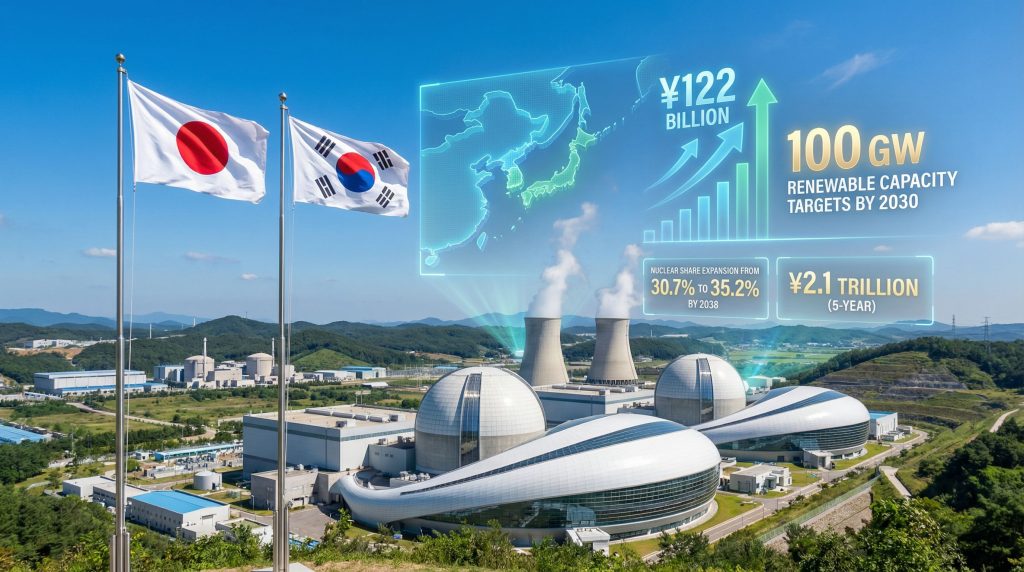
The nuclear energy renaissance across Northeast Asia represents a fundamental restructuring of regional power economics, driven by converging pressures from artificial intelligence infrastructure demands, carbon neutrality commitments, and strategic energy independence objectives. This transformation extends far beyond traditional energy planning, encompassing industrial competitiveness strategies and long-term economic positioning within global supply chains. Furthermore, the US Senate uranium ban has intensified focus on secure uranium supply chains, while Japan and South Korea accelerate nuclear growth to address these emerging challenges.
Strategic Energy Independence Reshapes Regional Economics
Energy security calculations have become increasingly sophisticated across Northeast Asia, with nuclear baseload capacity emerging as a critical component of national economic resilience. The economic rationale extends beyond simple electricity generation, encompassing strategic positioning for energy-intensive industries and technological sovereignty objectives.
Key Economic Drivers:
- Industrial competitiveness through stable electricity pricing
- Reduced exposure to fossil fuel price volatility
- Strategic positioning for AI and data centre infrastructure
- Carbon neutrality alignment with international trade requirements
Japan's approach centres on maximising existing infrastructure while developing next-generation reactor technologies. The strategy involves extending operational lifespans of current facilities and integrating nuclear capacity with industrial development zones designed to attract energy-intensive manufacturing.
South Korea has adopted a dual-track expansion model, combining large-scale reactor construction with small modular reactor development programmes. This approach aims to balance immediate capacity needs with longer-term technological leadership objectives in advanced nuclear systems.
When big ASX news breaks, our subscribers know first
Artificial Intelligence Demand Catalyses Nuclear Investment
The exponential growth in artificial intelligence infrastructure has created unprecedented electricity demand projections, fundamentally altering power generation investment calculations. Nuclear baseload capacity offers the consistent, high-volume electricity supply required for large-scale data centre operations and AI processing facilities.
AI Infrastructure Power Requirements:
- Continuous 24/7 high-capacity electricity supply
- Minimal grid disruption tolerance for training operations
- Scalable power infrastructure for expanding computational needs
- Geographic proximity to reduce transmission losses
Regional governments are positioning nuclear capacity expansion as essential infrastructure for maintaining technological competitiveness in AI development and deployment. This strategic calculation extends beyond energy policy into broader economic development and international competitiveness frameworks.
The integration of nuclear power with AI infrastructure planning represents a significant shift from traditional energy sector approaches. Consequently, power generation decisions now incorporate technology sector growth projections and strategic positioning considerations.
Economic Framework Analysis: Japan's Nuclear Capacity Strategy
Japan's nuclear expansion strategy operates within a comprehensive economic framework designed to support both energy security and industrial competitiveness objectives. The approach combines capacity maximisation at existing facilities with targeted investments in advanced reactor technologies.
Capacity Optimisation Initiatives:
- Operational life extensions beyond standard 40-year limits
- Enhanced maintenance scheduling to maximise availability factors
- Integration with regional industrial development zones
- Coordination with renewable energy capacity for grid stability
The economic model emphasises leveraging existing nuclear infrastructure investments while developing capabilities for next-generation reactor technologies. This dual approach aims to provide immediate capacity increases whilst building technological leadership positions in advanced nuclear systems.
In addition, regional economic zones are being developed around nuclear facilities to maximise the industrial competitiveness benefits of stable, high-capacity electricity supply. These zones target energy-intensive industries including advanced manufacturing, data processing, and materials production.
South Korea's Dual-Track Nuclear Development Model
South Korea has implemented a comprehensive nuclear expansion strategy that balances immediate capacity requirements with long-term technological development objectives. The approach encompasses both traditional large-scale reactor construction and innovative small modular reactor programmes.
Large-Scale Reactor Programme:
- Two major reactor projects targeting 2.8 GWe total capacity
- Construction timeline extending to 2038
- Integration with existing nuclear infrastructure
- Enhanced utilisation rates across the reactor fleet
Small Modular Reactor Development:
- 700 MW capacity targets through advanced reactor technologies
- Regulatory framework development for accelerated deployment
- Technology export potential for international markets
- Reduced construction timelines compared to traditional reactors
The regulatory environment has been restructured to support accelerated nuclear development, with specialised legislation designed to streamline approval processes while maintaining safety standards. This approach aims to reduce development timelines and enhance project economics.
Middle East Tensions Accelerate Energy Security Calculations
Geopolitical volatility in Middle Eastern energy supplies has fundamentally altered risk assessment frameworks for Northeast Asian energy planning. Nuclear capacity expansion has emerged as a strategic hedge against supply disruption risks and price volatility in global energy markets.
Furthermore, recent developments in the region have highlighted the importance of critical minerals energy security and understanding uranium market volatility patterns.
Energy Security Risk Factors:
- Supply chain disruption potential in fossil fuel imports
- Price volatility impact on industrial competitiveness
- Strategic vulnerability to geopolitical pressure
- Long-term availability concerns for traditional energy sources
The economic calculation extends beyond immediate energy costs to encompass strategic resilience and long-term industrial competitiveness. Nuclear capacity provides domestic energy production capability that reduces exposure to international supply chain vulnerabilities.
Emergency response protocols have been enhanced to maximise nuclear capacity utilisation during periods of supply disruption. This includes optimised maintenance scheduling and accelerated restart procedures for facilities that have completed safety upgrades.
Why Are Asian Nations Prioritising Nuclear Expansion Now?
The convergence of multiple factors has created an unprecedented opportunity for Japan and South Korea accelerate nuclear growth initiatives. These nations recognise that nuclear power provides a unique combination of benefits that align with current strategic priorities.
"The nuclear renaissance in Asia is being driven by the perfect storm of AI demand, energy security concerns, and climate commitments," according to regional energy analysts. This convergence has fundamentally altered the economic calculus for nuclear investment.
However, the rapid expansion plans must navigate complex challenges, including public acceptance, regulatory frameworks, and substantial capital requirements. The success of these programmes will likely influence global nuclear development trends.
The next major ASX story will hit our subscribers first
Global Nuclear Market Implications
The coordinated nuclear expansion across Northeast Asia represents one of the largest regional capacity additions in global nuclear development since the initial deployment phase of nuclear power. This scale of development has significant implications for international nuclear markets and supply chains.
| Market Segment | Impact Assessment | Timeline |
|---|---|---|
| Uranium Supply | Increased demand pressure | 2026-2030 |
| Nuclear Technology | Enhanced innovation investment | 2025-2035 |
| Construction Services | Regional capacity constraints | 2027-2040 |
| Skilled Workforce | Training and development needs | Ongoing |
The scale of planned capacity additions requires substantial increases in uranium supply, nuclear component manufacturing, and specialised construction services. These requirements are driving investment in expanded supply chain capabilities and workforce development programmes.
For instance, examining US uranium production insights reveals how global supply chains are adapting to increased demand. Additionally, understanding uranium investment strategies becomes crucial as markets respond to this expansion.
International nuclear technology cooperation has increased significantly, with joint development programmes for advanced reactor designs and standardised component systems. This cooperation aims to reduce costs and accelerate deployment timelines through shared development expenses and standardised approaches.
Economic Challenges and Risk Assessment
The nuclear expansion programmes face substantial economic and operational challenges that could impact successful implementation. These risks require careful management to ensure projects deliver expected economic benefits whilst maintaining safety and regulatory compliance.
Financial Risk Factors:
- High capital requirements for large-scale construction projects
- Technology development uncertainties in advanced reactor programmes
- Regulatory approval timelines and associated costs
- Public acceptance and social licence considerations
Operational Implementation Challenges:
- Skilled workforce availability for rapid capacity expansion
- Supply chain capacity for concurrent large-scale projects
- Grid integration requirements for substantial capacity additions
- Coordination with renewable energy development programmes
Cost overrun risks represent a significant concern given the historical performance of large-scale nuclear construction projects. Risk management strategies include standardised reactor designs, modular construction approaches, and enhanced project management frameworks.
The competitive landscape with renewable energy technologies continues to evolve, requiring ongoing economic analysis to ensure nuclear investments remain cost-effective relative to alternative low-carbon electricity generation options.
How Will This Impact Global Energy Markets?
The nuclear expansion programmes across Northeast Asia are positioning the region for fundamental changes in energy economics and industrial competitiveness. The scale and coordination of these programmes suggest a strategic transformation rather than incremental capacity additions.
Current market dynamics show that nuclear power is gaining attention as energy security concerns mount globally. This trend extends beyond Asia to influence worldwide energy investment decisions.
Strategic Economic Positioning:
- Energy-intensive industry attraction through stable electricity pricing
- Technology export opportunities in advanced nuclear systems
- Reduced vulnerability to international energy market volatility
- Enhanced negotiating position in international energy trade
The integration of nuclear expansion with broader economic development strategies indicates a comprehensive approach to regional competitiveness enhancement. This includes coordination with infrastructure development, industrial policy, and international trade positioning.
Regional cooperation potential exists for coordinated nuclear development programmes, technology sharing agreements, and integrated energy system planning. Such cooperation could enhance economic benefits whilst reducing individual national investment requirements and risks.
Long-Term Regional Energy Economics
The success of these nuclear expansion programmes will likely influence global nuclear development trends, particularly in regions facing similar energy security challenges and industrial competitiveness pressures. The Northeast Asian model may serve as a framework for coordinated nuclear development in other regions seeking energy independence and industrial advantages through nuclear baseload capacity.
Furthermore, as Japan and South Korea accelerate nuclear growth, their experiences will provide valuable insights for other nations considering similar expansions. The coordination between these programmes demonstrates how regional cooperation can enhance individual national objectives.
The long-term implications extend beyond energy generation to encompass industrial competitiveness, technological leadership, and strategic positioning in global supply chains. Nuclear capacity expansion represents a foundational investment in future economic competitiveness.
This analysis is based on publicly available information and should not be considered as investment advice. Nuclear energy investments involve substantial risks and uncertainties that could affect project economics and implementation timelines. Readers should conduct independent research and consult qualified professionals before making investment decisions.
Seeking Exposure to Nuclear Energy Growth?
Discovery Alert's proprietary Discovery IQ model delivers real-time alerts on significant uranium and nuclear-related discoveries across the ASX, instantly empowering subscribers to identify actionable opportunities ahead of the broader market. Understand why major mineral discoveries can lead to substantial returns by exploring Discovery Alert's dedicated discoveries page, showcasing historic examples of exceptional outcomes.