June 19, 2026
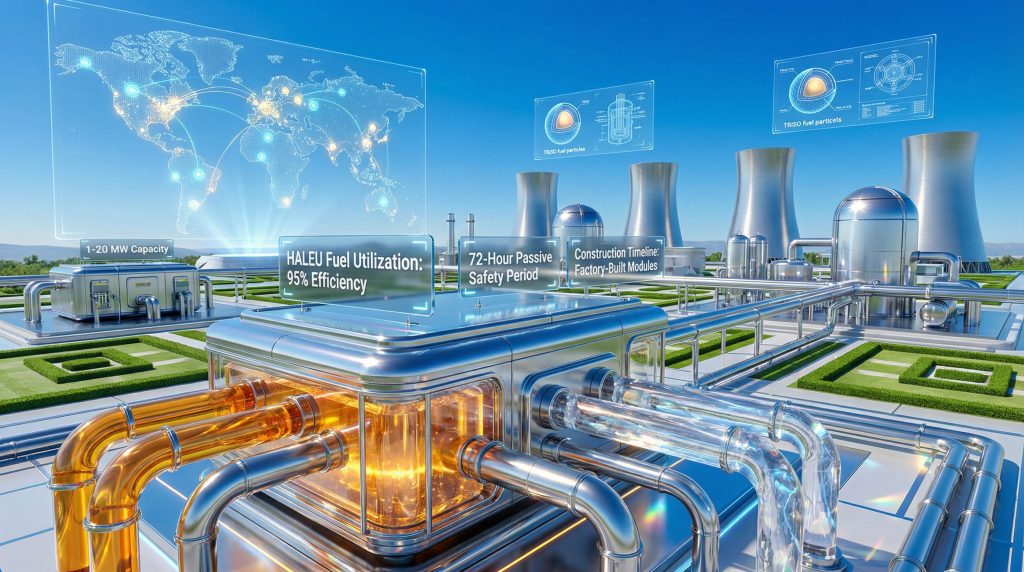
Nuclear engineering stands at a pivotal transformation point, driven by technological innovations that promise to redefine how societies generate baseload electricity. This shift represents more than incremental improvements to existing reactor designs; it encompasses fundamental changes to cooling systems, safety mechanisms, fuel utilisation, and economic models that could reshape global energy infrastructure over the coming decades. Furthermore, the emergence of advanced reactors addresses many limitations associated with conventional nuclear technologies.
Revolutionary Cooling Systems Redefining Nuclear Operations
Advanced reactors distinguish themselves through cooling technologies that extend far beyond conventional water-based systems. These innovations enable higher operating temperatures, improved thermal efficiency, and enhanced safety characteristics compared to traditional light-water reactor designs.
Sodium-cooled fast reactors operate using liquid sodium as the primary heat transfer medium, achieving temperatures exceeding 500°C while maintaining atmospheric pressure conditions. This technology eliminates the high-pressure systems required in water-cooled designs, reducing mechanical stress on reactor components and piping systems.
High-temperature gas-cooled reactors utilise helium as an inert coolant, enabling outlet temperatures approaching 950°C. These extreme operating conditions make process heat applications viable for industrial manufacturing, steel production, and chemical synthesis that require temperatures beyond what conventional nuclear plants can provide.
Molten salt reactor designs circulate fluoride or chloride salt mixtures that remain liquid across wide temperature ranges without phase changes. These systems operate at low vapour pressure, eliminating explosive steam formation risks while enabling online fuel processing and fission product management.
Lead-cooled reactor concepts leverage liquid lead's excellent neutron economy and natural circulation characteristics. Lead coolant absorbs fewer neutrons compared to water, enabling more efficient fuel utilisation and extended core lifetimes.
| Coolant Type | Operating Temperature | Key Advantage | Primary Challenge |
|---|---|---|---|
| Liquid Sodium | 500-650°C | Superior heat transfer | Chemical reactivity |
| Helium Gas | 750-950°C | Inert properties | High pressure systems |
| Molten Salt | 600-800°C | Low vapour pressure | Material corrosion |
| Liquid Lead | 400-600°C | Neutron transparency | Heavy metal toxicity |
When big ASX news breaks, our subscribers know first
Modular Manufacturing Transforming Nuclear Construction
The shift toward factory-manufactured reactor components represents a fundamental departure from traditional site-built nuclear construction methodologies. This approach addresses historical challenges of cost overruns, schedule delays, and quality control issues that have plagued large nuclear projects.
Standardised component production in controlled manufacturing environments enables rigorous quality assurance protocols that exceed field construction capabilities. Factory settings provide climate control, precision tooling, and systematic inspection procedures that enhance component reliability and reduce construction variability.
Transportation logistics for modular reactor systems require specialised heavy-lift equipment and route planning to deliver reactor vessels, steam generators, and containment modules to installation sites. These components typically weigh 200-800 tons and require coordination with transportation infrastructure agencies.
Site preparation requirements for modular installations focus on foundation systems, utility connections, and crane installation rather than extensive on-site fabrication. This approach can reduce construction timelines from 7-10 years to 3-5 years for certain reactor designs. Moreover, the implementation of U.S. uranium production technologies has shown promising results for supporting these next-generation reactor programmes.
Factory manufacturing enables quality control standards that consistently exceed field construction capabilities, reducing defect rates and enhancing component reliability across reactor systems.
Autonomous Safety Mechanisms Eliminating Human Intervention
Advanced reactors incorporate passive safety systems designed to function without electrical power, operator actions, or mechanical equipment for extended periods following accident scenarios. These systems rely on fundamental physical principles rather than engineered safety features requiring active intervention.
Gravity-driven cooling systems utilise elevated water tanks or cooling circuits that provide heat removal through natural circulation when normal cooling systems become unavailable. These designs eliminate dependencies on pumps, electrical systems, or operator responses during emergency conditions.
Natural convection heat removal leverages density differences in heated coolant to establish circulation patterns that transport decay heat from reactor cores to heat sinks without mechanical assistance. This phenomenon continues operating regardless of external power availability or equipment failures.
Negative temperature coefficient reactivity represents an inherent physics-based safety feature where increasing fuel temperatures automatically reduce nuclear reaction rates. This self-regulating characteristic prevents runaway reaction scenarios without control rod insertion or operator intervention.
Walk-away safe reactor designs can maintain safe shutdown conditions for 72 hours or longer without any human actions or external power sources. These systems demonstrate safety through fundamental physics rather than engineered barrier systems. Additionally, understanding nuclear reactor technology fundamentals provides crucial insight into these innovative safety mechanisms.
- Decay heat removal through natural circulation
- Reactivity control through temperature feedback
- Containment pressure relief via passive venting
- Emergency core cooling without pumped systems
- Fuel temperature limits through material properties
Economic Models Driving Commercial Viability
Advanced reactor economics depend on capital cost reductions, construction time improvements, and revenue diversification beyond traditional electricity generation markets. These financial models must compete with renewable energy costs while providing baseload reliability services. However, recent uranium market volatility has impacted investor confidence in nuclear technologies.
Microreactors (1-20 MW) target specialised markets including remote communities, military installations, industrial facilities, and off-grid applications. These systems emphasise transportability, rapid deployment, and minimal site preparation requirements rather than economies of scale.
Small modular reactors (20-300 MW) pursue cost reduction through factory mass production, standardised designs, and incremental capacity additions that match load growth patterns. Economic viability depends on achieving learning curve cost reductions through series production.
Large advanced reactors (300+ MW) compete directly with conventional nuclear plants and renewable plus storage combinations for utility-scale baseload generation. These designs must demonstrate competitive levelised costs while providing grid stability services.
| Reactor Category | Target Market | Capital Cost Focus | Revenue Model |
|---|---|---|---|
| Micro (1-20 MW) | Off-grid, specialised | High per-MW, low absolute | Premium applications |
| SMR (20-300 MW) | Distributed generation | Learning curve reduction | Baseload + flexibility |
| Large (300+ MW) | Utility baseload | Direct cost competition | Grid-scale generation |
Industrial process heat applications represent significant revenue opportunities for high-temperature reactor designs. Steel manufacturing, petroleum refining, chemical synthesis, and cement production require process temperatures exceeding 400°C that conventional nuclear plants cannot provide economically.
Hydrogen production integration enables nuclear plants to participate in emerging hydrogen economy markets through high-temperature electrolysis or thermochemical water splitting. These processes can utilise excess reactor thermal capacity during low electricity demand periods.
Desalination coupling provides additional revenue streams in water-scarce regions where nuclear plants can simultaneously generate electricity and produce fresh water through thermal desalination processes powered by reactor waste heat.
Technical Performance Comparisons Across Reactor Types
Different advanced reactors technologies demonstrate varying operational characteristics, fuel utilisation efficiency, and maintenance requirements that influence commercial deployment strategies and market positioning.
High-Temperature Gas-Cooled Reactor Capabilities
TRISO fuel particle technology consists of uranium oxide kernels surrounded by multiple ceramic and carbon layers that contain fission products at temperatures exceeding 1,600°C. This fuel design provides inherent safety through physical containment rather than engineered barrier systems.
Helium coolant advantages include chemical inertness, transparency to neutrons, and compatibility with high-temperature materials. However, helium's low density requires pressurised systems operating at 5-9 MPa to achieve adequate heat removal rates.
Thermal efficiency improvements reach 45-50% compared to 33-35% for light-water reactors due to higher operating temperatures enabling more efficient thermodynamic cycles. These improvements translate to reduced fuel consumption and waste generation per unit of electricity produced.
Refuelling cycle optimisation extends to 18-24 months between fuel replacements compared to 12-18 months for conventional reactors. Extended cycles reduce operational complexity and improve capacity factors through reduced outage time.
Sodium-Cooled Fast Reactor Specifications
Fast neutron spectrum benefits enable fuel utilisation efficiency approaching 95% compared to 5% for thermal spectrum reactors. This dramatic improvement reduces uranium mining requirements and extends fuel resource availability by decades.
Fast reactors can consume transuranic elements produced by conventional reactors, effectively burning long-lived radioactive waste while generating electricity.
Actinide burning capabilities transform long-lived radioactive isotopes into shorter-lived or stable elements through neutron bombardment. This process reduces high-level waste storage requirements from 10,000 years to approximately 300 years.
Breeding ratio calculations for advanced fast reactor designs achieve values of 1.1-1.3, meaning they produce more fissile material than they consume. This characteristic enables sustainable nuclear fuel cycles without continued uranium mining.
Plutonium management in closed fuel cycles eliminates proliferation concerns through continuous recycling within reactor systems rather than separating pure plutonium through reprocessing facilities.
Molten Salt Reactor Innovation Pathways
Liquid fuel advantages enable continuous fuel processing, online fission product removal, and precise reactivity control without mechanical fuel assemblies. These capabilities simplify reactor operations and reduce maintenance requirements.
Online fuel processing removes neutron-absorbing fission products continuously during operation, maintaining optimal reactor performance without shutdown periods for fuel management activities.
Thorium fuel cycle integration utilises abundant thorium resources that exceed uranium availability by 3-4 times globally. Thorium breeding produces fissile uranium-233 through neutron absorption without generating transuranic waste elements.
Corrosion management in high-temperature salt environments requires specialised materials including hastelloy alloys, graphite components, and ceramic containment systems designed for extended operation in chemically aggressive conditions.
Supply Chain Challenges Facing Advanced Nuclear Deployment
Advanced reactor commercialisation depends on establishing reliable supply chains for specialised materials, components, and fuel products that differ significantly from conventional nuclear supply networks. Furthermore, the U.S. Senate ban on Russian uranium has created additional supply chain complications for Western reactor programmes.
High-assay low-enriched uranium (HALEU) contains 5-20% uranium-235 compared to 3-5% for conventional reactor fuel. Current global HALEU production capacity remains insufficient for widespread advanced reactor deployment, creating potential bottlenecks in commercial rollout timelines.
Specialised materials for extreme operating environments include corrosion-resistant alloys, high-temperature ceramics, and neutron-transparent structural components. These materials require qualified suppliers meeting nuclear quality assurance standards.
Quality assurance standards for safety-critical components involve extensive testing, documentation, and traceability requirements that exceed conventional manufacturing practices. Establishing qualified supplier networks requires significant investment and time.
| Critical Component | Key Requirement | Supply Challenge |
|---|---|---|
| HALEU Fuel | 5-20% enrichment | Limited production capacity |
| Reactor Vessels | High-temperature alloys | Qualified forge capability |
| Control Systems | Nuclear-grade electronics | Obsolescence management |
| Graphite Moderators | Nuclear purity standards | Limited supplier base |
International supply chain resilience requires diversified sourcing strategies to avoid dependencies on single countries or suppliers for critical reactor components. Recent geopolitical tensions highlight vulnerabilities in global nuclear supply networks, particularly regarding critical raw materials supply chains essential for reactor manufacturing.
The next major ASX story will hit our subscribers first
Workforce Development for Advanced Nuclear Technologies
The transition to advanced reactors technologies requires workforce training programmes that bridge traditional nuclear expertise with new technological competencies in materials science, advanced manufacturing, and digital control systems.
Traditional nuclear expertise in radiation protection, reactor physics, and thermal hydraulics provides foundational knowledge transferable to advanced reactor technologies. However, specific design differences require additional training programmes.
New technology competencies include high-temperature materials behaviour, molten salt chemistry, gas-cooled system operations, and advanced fuel handling procedures specific to each reactor type.
Regulatory knowledge for advanced reactors involves understanding evolving licensing frameworks, risk-informed regulation principles, and technology-neutral safety criteria being developed by nuclear regulatory agencies.
Manufacturing capabilities require workforce skills in factory production methods, modular assembly techniques, and quality control procedures adapted from other advanced manufacturing industries.
- Nuclear engineering fundamentals
- Advanced materials science knowledge
- Digital instrumentation and control systems
- Factory manufacturing procedures
- Regulatory compliance frameworks
- Project management for modular construction
Regulatory Framework Evolution for Advanced Nuclear
Nuclear regulatory agencies worldwide are adapting licensing processes to accommodate advanced reactor designs that differ fundamentally from light-water reactor safety analysis methodologies.
Risk-informed performance-based regulation emphasises demonstrating safety through quantitative risk assessment rather than prescriptive design requirements developed for specific reactor technologies. This approach enables innovation while maintaining safety standards.
Technology-neutral safety criteria establish performance objectives for safety functions without mandating specific design solutions. Advanced reactors can demonstrate compliance through alternative approaches suited to their unique characteristics.
Staged licensing approaches enable prototype deployment and demonstration projects before full commercial licensing. This pathway reduces regulatory uncertainty while providing operational experience for safety validation.
International regulatory harmonisation efforts coordinate safety standards and licensing approaches across multiple countries to facilitate advanced reactor export markets and shared technology development programmes. Furthermore, regulatory bodies are increasingly consulting resources such as advanced nuclear reactor technologies to understand emerging innovations.
Advanced reactor siting flexibility includes underground installations, reduced emergency planning zones, and co-location with industrial facilities due to inherent safety characteristics.
Environmental and siting considerations for advanced reactors include reduced water usage requirements, smaller physical footprints, and enhanced safety characteristics that enable deployment closer to population centres compared to conventional nuclear plants.
Grid Integration and Modernisation Applications
Advanced reactors offer operational flexibility capabilities that complement renewable energy integration while providing grid stability services essential for electrical system reliability.
Load-following capabilities enable reactor power output modulation to match electrical demand variations and compensate for renewable energy intermittency. This operational mode differs from traditional baseload nuclear operation.
Frequency regulation services utilise rapid power output adjustments to maintain grid frequency stability as renewable generation fluctuates. Advanced reactor control systems can respond within seconds to grid operator signals.
Energy storage integration combines nuclear generation with battery systems, pumped hydro, or hydrogen production to optimise grid services and revenue generation across different market conditions.
Baseload versus flexible operation represents an economic trade-off between maximum electricity production and grid service revenue opportunities. Advanced reactors can optimise this balance through operational flexibility.
Microreactor Applications in Specialised Markets
Military base power supply requirements emphasise energy security, resilience, and independence from commercial electrical grids. Microreactors provide reliable power without fuel delivery vulnerabilities during extended operations.
Remote mining operations require reliable electricity generation in locations lacking grid connections. Microreactors eliminate diesel fuel transportation costs and provide consistent power for processing equipment.
Arctic community applications combine electricity generation with heating services in extreme cold climates where energy costs significantly impact community viability and economic development.
Space exploration systems adapt terrestrial microreactor technologies for lunar bases, Mars missions, and deep space applications requiring long-duration power generation without maintenance capabilities.
- Remote industrial operations
- Military installations
- Island communities
- Emergency backup power
- Space exploration missions
Nuclear Waste Management Through Advanced Technologies
Advanced reactor designs offer significant improvements in radioactive waste management through enhanced fuel utilisation, waste burning capabilities, and simplified disposal requirements.
Fuel utilisation efficiency improvements reduce uranium ore consumption by factors of 10-100 compared to once-through fuel cycles used in conventional reactors. Higher efficiency translates to proportionally less mining and milling waste generation.
Transuranics consumption in fast reactor designs eliminates long-lived radioactive elements that dominate high-level waste storage challenges. These reactors consume existing plutonium and minor actinide inventories while generating electricity.
Waste volume reduction through advanced fuel cycles decreases high-level waste requiring geological disposal by 80-95%. Reduced waste volumes lower repository costs and extend storage facility lifetimes.
| Fuel Cycle Type | Fuel Utilisation | Waste Characteristics | Storage Duration |
|---|---|---|---|
| Once-through | 1-5% | High transuranic content | 10,000+ years |
| Recycling | 10-30% | Reduced actinide inventory | 1,000-3,000 years |
| Breeding | 60-95% | Minimal long-lived waste | 300-500 years |
| Thorium | 80-90% | No transuranic production | 300-500 years |
Closed fuel cycle integration enables continuous recycling of fissile and fertile materials within reactor systems, eliminating waste stream separation and reducing proliferation risks associated with plutonium handling.
Global Deployment Prospects and Market Penetration
International advanced reactor development programmes demonstrate varying approaches to technology maturation, regulatory approval, and commercial deployment strategies across different national contexts.
Generation IV International Forum coordinates collaborative research among 13 countries developing six advanced reactor concepts. This multilateral cooperation accelerates technology development while sharing costs and technical expertise.
National demonstration programmes in the United States, Canada, United Kingdom, and other countries provide government funding for prototype construction and operational testing. These programmes reduce private sector risk while validating commercial viability.
Commercial deployment timelines vary significantly by technology maturity, regulatory readiness, and market conditions. Early commercial deployments are expected in the late 2020s for certain small modular reactor designs.
Export market potential for advanced reactor technologies depends on international regulatory acceptance, financing mechanisms, and technology transfer agreements. Countries with established nuclear programmes may export reactor designs and fuel cycle services.
Market penetration scenarios consider competition with renewable energy plus storage, natural gas generation, and conventional nuclear technologies. Advanced reactors must demonstrate cost competitiveness while providing unique value propositions.
- Early adopter markets emphasising energy security
- Technology demonstration phases validating performance
- Cost reduction trajectories through learning curves
- Competitive positioning against renewable alternatives
- International export opportunities and partnerships
Hypothetical deployment pathways suggest initial commercial applications in specialised markets including remote communities, industrial process heat, and grid stability services before widespread utility adoption.
Investment Strategies and Financial Considerations
Advanced reactor investment opportunities span technology development, manufacturing infrastructure, fuel cycle services, and operational projects across different risk and return profiles. Consequently, developing a comprehensive investment strategy 2025 requires careful consideration of nuclear sector opportunities and risks.
Government incentive programmes provide loan guarantees, tax credits, and cost-sharing partnerships that reduce private sector financial risk during technology demonstration phases. These mechanisms enable private investment in unproven technologies.
Private investment strategies focus on companies with differentiated technologies, experienced management teams, and clear pathways to commercial revenue. Investment stages range from research and development through commercial deployment.
Power purchase agreements for advanced reactor projects require long-term contracts that provide revenue certainty for capital-intensive nuclear investments. These agreements must account for regulatory approval timelines and construction schedules.
Market psychology factors influencing advanced reactor investments include nuclear industry reputation, regulatory predictability, and competition from renewable energy cost trends. Investor sentiment toward nuclear technologies varies significantly across regions and investor types.
The advanced reactors sector represents a fundamental transformation in nuclear technology with potential implications for global energy infrastructure, climate change mitigation, and energy security. While technical and economic challenges remain, continued development progress suggests these technologies may play significant roles in future energy systems.
This analysis is based on publicly available information and represents general educational content. Readers should consult qualified professionals for investment advice and conduct independent research before making financial decisions related to nuclear energy investments.
Ready to Capitalise on Nuclear Energy's Renaissance?
Discovery Alert's proprietary Discovery IQ model delivers real-time alerts on significant ASX mineral discoveries, including uranium and critical materials powering advanced reactor technologies. Position yourself ahead of the market by exploring Discovery Alert's discoveries page to see how major mineral finds have generated exceptional returns, then begin your 14-day free trial to access actionable investment opportunities as they emerge.