June 27, 2026
The nuclear energy sector's expanding global footprint has intensified demand for specialised materials that can withstand extreme operational conditions while maintaining precise performance specifications. Advanced reactor technologies, particularly those designed for next-generation nuclear systems, require graphite components that exceed traditional industrial standards across multiple critical parameters. These materials must demonstrate exceptional purity levels, structural integrity under radiation exposure, and consistent performance characteristics that ensure reactor safety and operational efficiency.
Understanding the technical requirements that distinguish nuclear-grade graphite from conventional industrial variants reveals the sophisticated engineering principles underlying modern reactor design. The qualification process for these materials involves comprehensive testing protocols that validate performance across thermal, mechanical, and neutronics properties under conditions that simulate decades of reactor operation.
Critical Purity Thresholds and Material Specifications
Nuclear-grade graphite operates under exceptionally stringent purity requirements that far exceed those of standard industrial applications. The foundation of these specifications centres on achieving what industry professionals term "five-nines" purity, representing 99.999% carbon content with precisely controlled impurity concentrations. This threshold reflects the nuclear industry's zero-tolerance approach to materials that could compromise reactor neutronics or structural integrity.
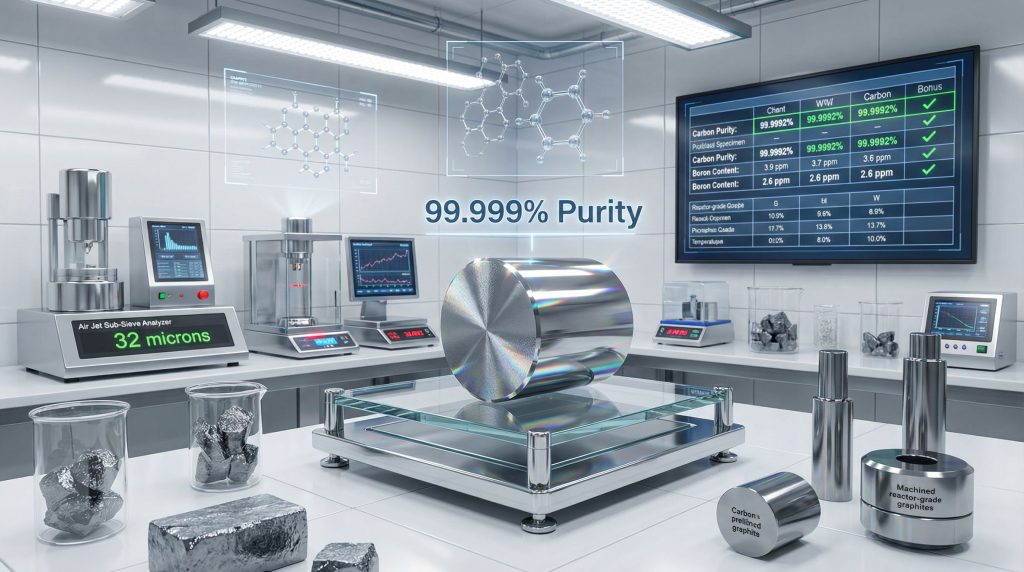
Zentek graphite nuclear standard testing has demonstrated that Albany deposit material achieves 99.9992% carbon purity, surpassing the baseline five-nines classification. This performance level positions the material among the highest-purity natural graphite sources documented for nuclear applications. The significance of these purity levels extends beyond simple composition metrics to encompass fundamental reactor physics principles governing neutron behaviour within the reactor core.
Boron concentration represents perhaps the most critical impurity parameter in nuclear graphite specification. Boron atoms possess an exceptionally high neutron absorption cross-section, meaning even trace quantities can significantly interfere with controlled nuclear reactions. The material must maintain boron concentrations well below 3 parts per million (ppm) to prevent neutron poisoning effects that would compromise reactor criticality control.
Testing results for Albany graphite revealed boron concentrations of 2.6 ppm, providing a substantial safety margin below the industry threshold. Furthermore, these findings align with nuclear-grade graphite testing standards that validate material performance across multiple parameters. This measurement represents the total boron content rather than equivalent boron concentration (EBC), which accounts for other neutron-absorbing impurities through standardised calculation methodologies.
Physical Property Requirements for Reactor Integration
Beyond chemical purity, nuclear-grade graphite must satisfy demanding physical property specifications that ensure reliable performance under reactor operating conditions. Density requirements typically range between 1.7 to 2.0 grams per cubic centimetre, balancing mechanical strength with thermal management capabilities. Higher density generally correlates with improved structural properties but may compromise thermal conductivity characteristics essential for heat removal.
Porosity specifications directly influence both mechanical properties and thermal performance. Open porosity must remain below 20% to prevent structural degradation under irradiation, while total porosity affects thermal conductivity and neutron moderation characteristics. The crystalline structure of natural graphite provides inherent advantages in achieving optimal porosity distributions compared to synthetic alternatives.
Electrical conductivity parameters serve dual purposes in reactor applications, supporting both operational monitoring systems and emergency shutdown procedures. Minimum conductivity requirements typically exceed 25,000 siemens per meter at room temperature, with specifications for conductivity retention under elevated temperatures and radiation exposure. These parameters ensure reliable electrical performance throughout the reactor's operational lifetime.
Mechanical strength specifications encompass compressive strength exceeding 100 MPa and flexural strength above 40 MPa to withstand thermal cycling and radiation-induced dimensional changes. These requirements reflect the challenging environment within reactor cores, where materials experience temperature gradients exceeding 1000°C and neutron fluences that fundamentally alter material properties over time.
When big ASX news breaks, our subscribers know first
Comprehensive Testing Methodologies for Nuclear Qualification
Nuclear graphite qualification employs multi-stage testing protocols that progressively validate material performance from raw material characterisation through finished component verification. This comprehensive approach ensures materials meet specifications not only in isolation but when integrated into reactor-representative configurations under realistic operating conditions.
The qualification framework begins with detailed powder characterisation using specialised analytical techniques. Air Jet Sub-Sieve Analysers measure particle size distribution with particular attention to D50 median diameter specifications, typically targeting 30-35 microns for optimal processing characteristics. Albany graphite testing confirmed a 32-micron median particle size, falling within the optimal range for subsequent processing operations.
Independent laboratory testing represents a crucial validation step that provides third-party verification of material properties. Consequently, this approach eliminates potential bias from manufacturer testing while ensuring compliance with nuclear industry quality assurance standards. The testing protocols must demonstrate statistical significance and reproducibility across multiple sample batches to establish material consistency.
Component-Level Performance Validation
Moving beyond powder characterisation, nuclear qualification requires component-level testing that validates material performance in finished reactor components. This stage proves particularly critical because material properties can change significantly during the manufacturing process, as graphite powders are formed into blocks through high-temperature and high-pressure processing.
Testing of Albany graphite incorporated up to 3% material content blended with standard industry graphite inputs to produce test components. This blend ratio reflects practical implementation strategies where new graphite sources supplement existing supply chains rather than completely replacing established materials. The testing confirmed that Albany material maintained nuclear-grade performance benchmarks when integrated into finished components.
Three graphite bricks underwent comprehensive characterisation including:
• Mechanical strength testing under standardised load conditions
• Density measurements using precision gravimetric techniques
• Electrical conductivity assessment across temperature ranges
• Chemical purity verification in finished component form
• Dimensional stability evaluation under thermal cycling
The multi-parameter approach ensures that no single property improvement occurs at the expense of other critical characteristics. Nuclear applications demand simultaneous optimisation across all performance metrics, creating complex engineering challenges that require sophisticated material solutions.
American Energy Technologies Co., serving as the testing partner, brings specialised expertise in ultra-high-purity graphite qualification for nuclear applications. Their approval status with the Department of Defense and naval reactor programmes provides institutional credibility and access to specialised testing equipment designed specifically for nuclear material qualification.
Natural Versus Synthetic Graphite in Nuclear Applications
The distinction between natural and synthetic graphite sources extends far beyond simple origin classification to encompass fundamental differences in crystalline structure, purity potential, and supply chain characteristics that significantly impact nuclear applications. Natural graphite's geological formation processes create unique advantages that synthetic production methods struggle to replicate consistently.
Albany graphite originates from a rare igneous-hosted, fluid-derived geological environment that naturally concentrates carbon while excluding many impurities problematic for nuclear applications. This formation mechanism produces graphite with exceptional crystallinity and purity levels that would require extensive processing to achieve through synthetic routes.
Crystalline Structure Advantages in Nuclear Systems
Natural graphite's crystalline structure provides inherent benefits for neutron moderation applications. The well-ordered carbon lattice structure facilitates optimal neutron slowing without excessive absorption, while maintaining structural integrity under radiation exposure. Synthetic graphite production often creates less perfect crystalline arrangements that may compromise neutron physics performance.
The fluid-derived formation of Albany graphite creates particularly favourable characteristics. During geological formation, hydrothermal fluids naturally purify the carbon structure while promoting large-scale crystal growth. This process produces material with fewer grain boundaries and structural defects compared to synthetic alternatives that rely on high-temperature manufacturing processes.
Natural graphite processing typically requires fewer high-energy transformation steps than synthetic production, potentially offering both environmental and economic advantages. However, while synthetic graphite production requires petroleum coke or coal tar precursors processed at temperatures exceeding 2500°C, natural graphite purification relies primarily on chemical and physical separation techniques.
Supply Chain Security and Geographic Considerations
North American natural graphite sources provide strategic supply chain advantages for nuclear applications where material security and quality consistency represent critical concerns. Current reliance on foreign synthetic graphite sources creates potential vulnerabilities in supply continuity for defense and energy infrastructure applications.
The designation of graphite as part of critical minerals energy security frameworks reflects recognition of supply chain concentration risks. Natural graphite deposits like Albany in northern Ontario offer domestic supply alternatives that reduce dependence on foreign sources while providing materials meeting the most demanding nuclear specifications.
Transportation and processing infrastructure advantages exist for North American sources, particularly those positioned near existing industrial centres. Albany's location in northern Ontario provides access to established mining infrastructure, electrical power systems, and transportation networks essential for large-scale material production.
Performance Metrics and Qualification Standards
Albany graphite's nuclear qualification results demonstrate performance characteristics that meet or exceed established industry benchmarks across all critical parameters. The comprehensive testing programme validated material properties through both laboratory analysis and component-level integration testing, providing confidence in real-world nuclear application performance.
| Performance Parameter | Industry Standard | Albany Graphite Result | Qualification Status |
|---|---|---|---|
| Carbon Purity | 99.99% minimum | 99.9992% | Exceeds Standard |
| Boron Content | <3 ppm maximum | 2.6 ppm | Compliant |
| Particle Size (D50) | 30-35 microns | 32 microns | Optimal Range |
| Component Integration | Maintain properties in blends | Validated up to 3% content | Successful |
The performance data demonstrates that Zentek graphite nuclear standard qualification encompasses both raw material properties and finished component characteristics. This dual validation approach provides confidence that material properties translate effectively from laboratory measurements to practical reactor applications.
Testing confirmed that Albany graphite maintains nuclear-grade performance when integrated with standard industry materials at blend ratios up to 3%. This compatibility characteristic enables gradual supply chain integration without requiring complete replacement of existing material sources or manufacturing processes.
Advanced Reactor Applications and Future Requirements
Next-generation nuclear technologies place increasingly demanding requirements on graphite materials as reactor designs push toward higher operating temperatures and more compact configurations. High-temperature gas-cooled reactors (HTGRs) operate at temperatures exceeding 1000°C, requiring graphite with enhanced thermal stability and minimal dimensional changes under extreme conditions.
Small modular reactor (SMR) designs emphasise factory manufacturing and standardised components that demand exceptional material consistency across production batches. Natural graphite sources like Albany may offer advantages in batch-to-batch uniformity compared to synthetic alternatives that depend on complex manufacturing processes with multiple variable parameters.
In addition, these developments align with U.S. nuclear fuel policies that prioritise domestic supply chain security for critical nuclear materials. Advanced reactor designs also incorporate graphite in reflector assemblies, control rod components, and structural elements beyond traditional moderator applications.
Quality Assurance and Continuous Monitoring Systems
Nuclear material qualification extends beyond initial testing to encompass comprehensive quality management systems that ensure consistent performance throughout production and deployment. These systems must provide full traceability from raw material extraction through final component installation in reactor systems.
Statistical process control methodologies govern production monitoring, requiring continuous verification that material properties remain within specified tolerances. Sampling protocols must account for natural variation in geological materials while maintaining confidence in nuclear-grade specifications across all production batches.
Documentation requirements for nuclear applications exceed those of conventional industrial materials, with detailed records required for material provenance, processing parameters, testing results, and quality assurance reviews. These records support regulatory compliance and enable rapid response to any material performance issues that might arise during reactor operation.
Regulatory Framework and Certification Pathways
Nuclear material certification involves multiple regulatory bodies with oversight responsibilities for different aspects of material qualification and application. The Nuclear Regulatory Commission establishes fundamental safety requirements, while Department of Defense standards govern materials for naval reactor programmes and defense applications.
Independent testing laboratory accreditation ensures that qualification testing meets rigorous technical standards and provides results acceptable to regulatory authorities. Testing facilities must demonstrate competence in nuclear material characterisation and maintain quality systems that support regulatory compliance.
Material suppliers must establish quality management systems that comply with nuclear industry standards such as NQA-1, which governs quality assurance requirements for nuclear facility applications. These standards encompass all aspects of material production from raw material control through final product delivery.
Strategic Implications for North American Nuclear Supply Chains
The successful qualification of Albany graphite for nuclear applications represents a significant development in North American critical materials security. Domestic sources of nuclear-grade graphite reduce dependence on foreign suppliers while potentially offering superior environmental profiles compared to synthetic alternatives.
Canada's Critical Minerals Innovation Fund support for Albany graphite development reflects governmental recognition of the strategic importance of secure supply chains for nuclear materials. For instance, this support facilitates infrastructure development necessary for large-scale production of nuclear-grade materials from natural sources.
The nuclear energy sector's projected expansion, driven by climate change mitigation requirements and energy security considerations, will increase demand for nuclear-grade graphite across multiple reactor technologies. These developments mirror broader uranium market trends that reflect growing nuclear sector requirements.
Ontario's established mining infrastructure and proximity to major industrial centres provide logistical advantages for nuclear material production and distribution. The province's experience with uranium mining and nuclear technology development creates a supportive regulatory and technical environment for graphite production expansion.
The next major ASX story will hit our subscribers first
Future Research Directions and Technology Development
Continued development of Albany graphite for nuclear applications will likely focus on optimising processing techniques to maximise yield while maintaining purity specifications. Research into selective beneficiation methods could enhance material recovery while minimising environmental impact through reduced processing waste.
Advanced characterisation techniques may reveal additional performance advantages of natural graphite in nuclear applications. Detailed studies of radiation damage mechanisms, thermal cycling behavior, and long-term dimensional stability could further differentiate natural graphite performance from synthetic alternatives.
Furthermore, these research directions align with the broader critical minerals pivot strategies being implemented across North America. Integration studies with various reactor designs will validate material performance across the full spectrum of nuclear applications.
Collaboration with reactor designers and nuclear technology developers will ensure that material properties align with evolving requirements for advanced nuclear systems. However, these initiatives must also consider the development of a comprehensive strategic minerals reserve to support long-term nuclear sector growth.
What Does This Mean for the Nuclear Industry?
The successful nuclear qualification of Zentek graphite nuclear standard materials represents a significant milestone in securing North American nuclear supply chains. This development provides reactor designers and operators with access to domestic sources of ultra-high-purity graphite that meets the most demanding nuclear specifications.
The qualification results demonstrate that natural graphite sources can compete effectively with synthetic alternatives while offering potential advantages in supply chain security and environmental sustainability. These findings support the strategic importance of developing domestic critical materials capabilities for nuclear applications.
Moreover, the successful integration testing confirms that new graphite sources can supplement existing supply chains without requiring complete replacement of established materials or manufacturing processes. This compatibility reduces implementation risks while enabling gradual supply chain diversification.
Disclaimer: This analysis is based on publicly available information and testing results as reported. Nuclear material applications require extensive regulatory review and approval processes. Investment decisions should consider comprehensive due diligence and professional consultation regarding technical, regulatory, and market risks.
Looking to invest in nuclear energy supply chains?
Discovery Alert's proprietary Discovery IQ model delivers real-time alerts on significant nuclear materials and critical minerals discoveries, instantly empowering subscribers to identify actionable opportunities ahead of the broader market. Understand why major mineral discoveries can lead to substantial returns by exploring historic examples of exceptional outcomes, then begin your 30-day free trial today to secure your market-leading advantage.