May 14, 2026
The global nuclear industry faces a critical challenge that extends far beyond active operations: managing the environmental legacy of decades of uranium extraction and processing activities. Complex engineering solutions and innovative remediation technologies have evolved to address contamination spanning multiple environmental media, from groundwater systems to surface soils across vast geographic areas. Understanding these technical approaches provides essential insight into how specialised restoration projects transform hazardous industrial sites into productive land suitable for community use, with remediation of uranium legacy sites requiring sophisticated nuclear waste disposal methodologies.
Understanding Contamination Patterns and Risk Assessment Frameworks
Uranium extraction activities generate distinctive contamination signatures that require specialised assessment methodologies. These sites typically contain radioactive materials with extremely long persistence periods, including uranium-238 with a half-life of 4.5 billion years and radium-226 with a 1,600-year half-life, necessitating institutional controls spanning multiple generations.
Comprehensive Site Classification Systems
Environmental engineers categorise contaminated areas based on specific operational histories and contamination patterns:
- Abandoned extraction facilities including open-pit and underground mining infrastructure
- Processing waste repositories containing mill tailings and chemical processing residues
- In-situ leach contamination zones where solution mining affected groundwater quality, though modern in-situ leaching benefits include reduced surface disturbance
- Groundwater plume migration corridors extending contamination beyond original sites
- Downstream sediment deposits in floodplains and water bodies
Radiological and Chemical Risk Quantification
Modern assessment protocols evaluate multiple exposure pathways through sophisticated modelling approaches. Research demonstrates that radon-222 gas emanation from uranium tailings can reach levels 100-1,000 times higher than natural background radiation in poorly managed sites. Contaminant migration through groundwater systems occurs at rates of 10-100 metres per year, depending on geological conditions, pH levels, and carbonate complex formation.
Heavy metal contamination extends beyond uranium to include arsenic, molybdenum, and selenium, creating complex multi-contaminant scenarios requiring integrated waste management solutions. Natural background radiation typically measures 2-3 mSv per year, while contaminated sites can expose populations to significantly elevated levels without proper remediation of uranium legacy sites.
When big ASX news breaks, our subscribers know first
Site Characterisation Technologies and Assessment Protocols
Effective remediation depends on comprehensive site characterisation using advanced survey technologies and risk-based prioritisation frameworks. The International Atomic Energy Agency has established standardised assessment protocols through its Coordination Group for Uranium Legacy Sites, providing practical guidance on remediation strategies and expert mission support since 2012.
Advanced Survey and Monitoring Technologies
Modern site assessment employs sophisticated detection and mapping systems:
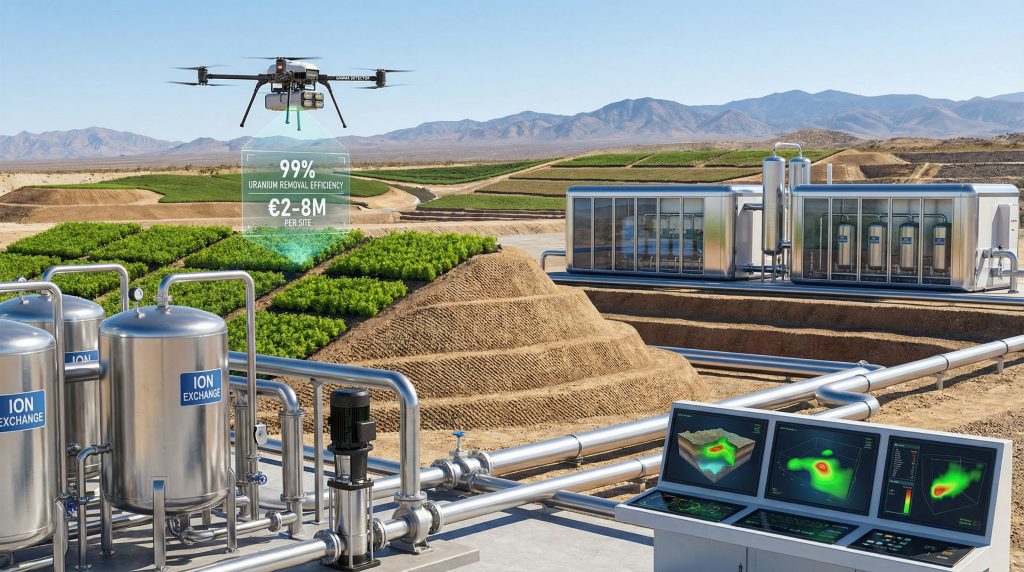
- Gamma radiation mapping using drone-mounted detectors for comprehensive aerial surveys
- Hydrogeological modelling predicting groundwater flow patterns and contamination migration
- Geochemical sampling protocols for soil and sediment analysis across contaminated areas
- 3D subsurface imaging techniques mapping waste material distribution and geological structures, with 3D geological modelling improving stakeholder engagement
Risk-Based Site Prioritisation
International frameworks utilise multi-criteria decision analysis incorporating environmental, social, and economic risk factors. The ALARA principle (As Low As Reasonably Achievable) guides exposure reduction strategies, while stakeholder engagement protocols ensure community participation in technical planning decisions.
Site characterisation typically represents 10-15% of total remediation budgets, reflecting the critical importance of comprehensive initial assessment. Furthermore, future land use scenario modelling helps determine appropriate cleanup standards and long-term monitoring requirements.
Engineering Solutions for Physical Contamination Removal
Physical remediation employs diverse engineering approaches tailored to specific site conditions and contamination characteristics. Cost-effectiveness analysis guides selection between containment strategies and complete material removal, with budgets varying significantly based on site complexity and regulatory requirements.
Tailings and Waste Management Systems
| Technique | Application Scope | Effectiveness Rate | Typical Cost Range |
|---|---|---|---|
| Engineered Cover Systems | Tailings pile isolation | 95%+ long-term containment | €2-8 million per site |
| Consolidation and Reshaping | Waste pile stabilisation | Permanent stability solution | €1-5 million per site |
| Off-site Material Relocation | High-risk contamination | Complete source removal | €10-50 million per site |
Engineered cover systems represent the most widely deployed containment technology, utilising multi-layer barriers to prevent radon gas emission and precipitation infiltration. These systems incorporate drainage layers, low-permeability barriers, and vegetation establishment for long-term performance.
Structural Decommissioning Protocols
Systematic demolition of contaminated processing facilities requires specialised protocols addressing both radiological safety and waste management considerations. These approaches benefit from mine reclamation innovation techniques:
- Sequential demolition planning minimising contamination spread during building removal
- Equipment decontamination using mechanical and chemical cleaning methods
- Waste classification systems optimising disposal pathway selection and costs
- Site preparation protocols enabling transition to alternative productive land uses
Advanced Water Treatment and Bioremediation Technologies
Groundwater contamination presents particular challenges in agricultural regions where contaminated water could affect irrigation systems and drinking water supplies. Multiple treatment technologies address both dissolved uranium and associated heavy metals through chemical, physical, and biological processes.
Chemical Treatment Systems
Proven water treatment approaches achieve high removal efficiencies through established engineering processes:
- Pump-and-treat operations utilising ion exchange resins for selective uranium removal
- Permeable reactive barriers providing in-situ groundwater plume control
- Chemical precipitation techniques achieving 99%+ uranium removal in controlled applications
- Hydraulic containment systems preventing contaminant migration to sensitive receptors
Ion exchange technology proves particularly effective for uranium removal, with specialised resins designed for selective extraction from complex groundwater chemistry conditions.
Emerging Bioremediation Applications
Technical Innovation: Bacterial bioreduction processes can convert soluble uranium U(VI) to immobile U(IV), achieving up to 99% removal efficiency under optimal laboratory conditions, though field applications require careful management of environmental variables.
Biological treatment systems offer cost-effective alternatives for specific contamination scenarios:
- Microbial uranium immobilisation through metabolic reduction processes
- Phytoremediation systems using hyperaccumulator plant species for metal extraction
- Biosorption technologies utilising chitosan and bio-derived materials
- Natural attenuation monitoring for passive remediation in low-risk areas
Research demonstrates that specialised bacterial communities can effectively immobilise uranium through metabolic processes, converting mobile forms to stable, immobile compounds in soil and groundwater systems.
Long-Term Stewardship and Monitoring Strategies
Successful remediation of uranium legacy sites requires decades of continued oversight through institutional control programmes and performance verification systems. Modern approaches focus on enabling productive land reuse while maintaining protection of human health and environmental resources.
Institutional Control Implementation
Comprehensive stewardship programmes incorporate multiple oversight mechanisms:
- Land use restriction enforcement through legal and regulatory frameworks
- Monitoring network design providing early warning of performance degradation
- Maintenance scheduling for engineered barrier systems and treatment infrastructure
- Emergency response planning addressing extreme weather events and system failures
Extended monitoring programmes guide future activities focusing on monitoring, maintenance, record keeping, and continuous stakeholder engagement toward safe and beneficial use of remediated land. These programmes typically extend 30+ years beyond active remediation completion.
Performance Verification Protocols
Ongoing verification ensures long-term remedy effectiveness through systematic data collection and analysis:
- Annual radiation surveys documenting contamination level trends over time
- Groundwater quality monitoring at compliance boundaries and downgradient locations
- Cover system integrity assessments evaluating barrier performance and maintenance needs
- Ecological restoration metrics tracking vegetation establishment and habitat recovery
International Regulatory Frameworks and Coordination Mechanisms
Global remediation efforts operate within complex international frameworks involving multiple regulatory bodies, funding organisations, and technical support mechanisms. These frameworks provide standardised approaches while accommodating regional variations in environmental conditions and regulatory requirements.
Regulatory Standards and Compliance Requirements
International standards establish consistent approaches to uranium legacy site management through established technical guidance and safety requirements. The International Atomic Energy Agency provides comprehensive safety standards for uranium legacy site management, while national frameworks adapt these standards to local conditions and regulatory structures.
Cross-border coordination protocols address transboundary contamination affecting shared water resources, requiring diplomatic cooperation alongside technical coordination. Furthermore, stakeholder engagement requirements emphasise transparency measures and community participation in decision-making processes.
Multi-Stakeholder Coordination Models
Effective international cooperation requires coordination between diverse organisations and funding mechanisms:
- International Atomic Energy Agency providing technical guidance and coordination
- European Bank for Reconstruction and Development funding major remediation programmes
- Bilateral government agreements supporting targeted remediation projects
- Regional economic councils facilitating cross-border cooperation and resource sharing
Technical assistance programmes deliver capacity building initiatives for developing nations, while specialised training programmes develop local expertise in remediation technologies and long-term stewardship approaches.
The next major ASX story will hit our subscribers first
Regional Success Stories and Implementation Lessons
Real-world remediation projects provide valuable insights into effective implementation strategies and common challenges encountered during large-scale cleanup programmes. Analysis of completed projects reveals important factors contributing to successful outcomes and sustainable long-term management.
Central Asian Remediation Programme Results
The multi-national Central Asian remediation programme demonstrates coordinated international cooperation addressing remediation of uranium legacy sites across three countries. This programme encompasses sites containing approximately 800 million cubic metres of radioactive and toxic mining waste accumulated over 50 years of uranium extraction operations.
| Country | Completion Status | Programme Investment | Implementation Period |
|---|---|---|---|
| Kyrgyzstan | 2 sites completed, 1 ongoing | EUR113M+ total programme | 2017-2032 |
| Uzbekistan | 2 sites completed | Portion of total programme | 2017-2025 |
| Tajikistan | 1 partially completed, 1 pending | EUR15.6M bilateral addition | Ongoing to 2032+ |
Four high-priority sites have achieved successful remediation, enabling local communities to use previously contaminated land safely. The most complex site requires remediation operations continuing until 2032, demonstrating that technical complexity significantly extends project timelines beyond standard estimates.
Funding and Implementation Challenges
Cost escalation represents a common challenge in large-scale remediation programmes. Original cost estimates of EUR85 million increased to EUR113 million, representing a 33% increase based on final contract values and refined technical assessments.
Additional bilateral funding mechanisms provide supplementary resources for lower-priority sites, with EUR21.4 million allocated for specific Kyrgyz sites and EUR15.6 million for Tajik locations through government-to-government agreements.
Climate Adaptation and Technological Innovation
Contemporary remediation approaches increasingly incorporate climate resilience considerations and emerging technologies to enhance long-term performance under changing environmental conditions. Innovation focuses on cost-effective solutions suitable for resource-limited settings while maintaining technical effectiveness.
Climate-Resilient Design Integration
Environmental restoration systems must withstand evolving climate conditions over multi-decade operational periods:
- Extreme weather resistance for engineered cover systems and containment barriers
- Enhanced erosion control addressing changing precipitation patterns and intensity
- Temperature variation management ensuring containment performance across seasonal extremes
- Flood-resistant infrastructure protecting vulnerable remediation systems from water damage
Arid and semi-arid regions face particular challenges from increased temperature variation and modified precipitation patterns affecting vegetation establishment and cover system performance.
Cost-Effective Innovation Deployment
Technical innovations focus on reducing long-term operational costs while maintaining remediation effectiveness:
- Scaled bioremediation applications adapted for resource-limited implementation settings
- Remote monitoring systems reducing personnel requirements and surveillance costs over decades
- Modular treatment systems enabling flexible adaptation to changing site conditions
- Predictive modelling tools optimising maintenance scheduling and resource allocation
These innovations prove particularly valuable for developing nations with limited technical infrastructure and financial resources for long-term stewardship programmes.
Persistent Challenges in Global Uranium Legacy Management
Despite significant technical advances and successful remediation projects, substantial challenges continue to complicate global uranium legacy site management efforts. These obstacles span technical, financial, and governance dimensions requiring continued international cooperation and innovation.
Technical and Financial Barriers
Fundamental limitations continue to constrain remediation effectiveness and programme sustainability:
- Insufficient characterisation data in remote locations limiting accurate cost estimation and technical planning
- Limited technical capacity in affected developing nations requiring extensive capacity building programmes
- Funding gap awareness requiring continued international solidarity and donor commitment
- Long-term stewardship sustainability spanning multiple decades beyond active remediation completion
Extended project timelines, with the most complex sites requiring 15+ years for completion, challenge traditional project financing and organisational continuity approaches.
Stakeholder and Governance Complexities
Successful remediation depends on effective engagement with diverse stakeholder groups and navigation of complex governance structures:
- Community participation in technically complex decision-making processes
- Cross-border coordination for shared river basins and regional environmental systems
- Multi-donor programme coordination avoiding duplication while maintaining comprehensive coverage
- Integration with regional development balancing environmental restoration with economic development priorities
These challenges require sustained diplomatic and technical cooperation extending well beyond typical project timelines, with some institutional control programmes spanning multiple generations.
Frequently Asked Questions About Uranium Legacy Site Remediation
How long does typical site remediation require for completion?
Complete remediation timelines vary significantly based on site complexity, contamination extent, and technical challenges. High-priority Central Asian sites demonstrate that complex remediation can require 15+ years for completion, with ongoing monitoring extending 30+ years for institutional control phases. Simple containment projects may complete within 5-7 years, while complex multi-media contamination scenarios require extended implementation periods. However, the UNDP stakeholder engagement approach emphasises community participation throughout these extended timeframes.
What factors determine total remediation cost estimates?
Primary cost drivers include contaminated material volume, site accessibility, required engineering complexity, regulatory standards, and long-term stewardship requirements. Initial cost estimates frequently increase during implementation, with the Central Asian programme experiencing 33% cost growth from original projections. Site characterisation typically represents 10-15% of total budgets, while long-term monitoring and maintenance can exceed initial cleanup costs over multi-decade timeframes.
Can remediated sites support safe agricultural or development activities?
Successfully remediated sites can support various productive land uses including agriculture and development, provided remediation meets established safety standards and appropriate monitoring continues. Completed Central Asian sites now enable local communities to use previously contaminated land safely, demonstrating that proper remediation of uranium legacy sites can restore productive use. Ongoing monitoring remains essential to verify continued protection of human health and environmental resources.
What role do international organisations play in remediation funding and technical support?
International cooperation provides essential funding, technical expertise, and coordination mechanisms for large-scale remediation programmes. The International Atomic Energy Agency coordinates technical guidance and capacity building, while organisations like the European Bank for Reconstruction and Development provide major programme funding. Bilateral agreements between governments supplement multilateral programmes, addressing specific sites and regional priorities through direct cooperation mechanisms.
Disclaimer: This analysis presents general information about uranium legacy site remediation technologies and approaches. Specific remediation decisions should always be based on detailed site characterisation, regulatory requirements, and consultation with qualified environmental professionals. Cost estimates and technical performance data may vary significantly based on site-specific conditions and implementation approaches. Long-term effectiveness depends on continued monitoring and maintenance of remediation systems over multi-decade timeframes.
Looking to Invest in Uranium and Nuclear-Related Opportunities?
Discovery Alert's proprietary Discovery IQ model delivers instant notifications on significant uranium and energy mineral discoveries across the ASX, enabling subscribers to identify high-potential opportunities ahead of broader market awareness. With the nuclear industry's growing focus on sustainable practices and innovative remediation technologies, early identification of companies developing advanced uranium extraction and environmental solutions could prove highly rewarding for informed investors.