
June 27, 2026
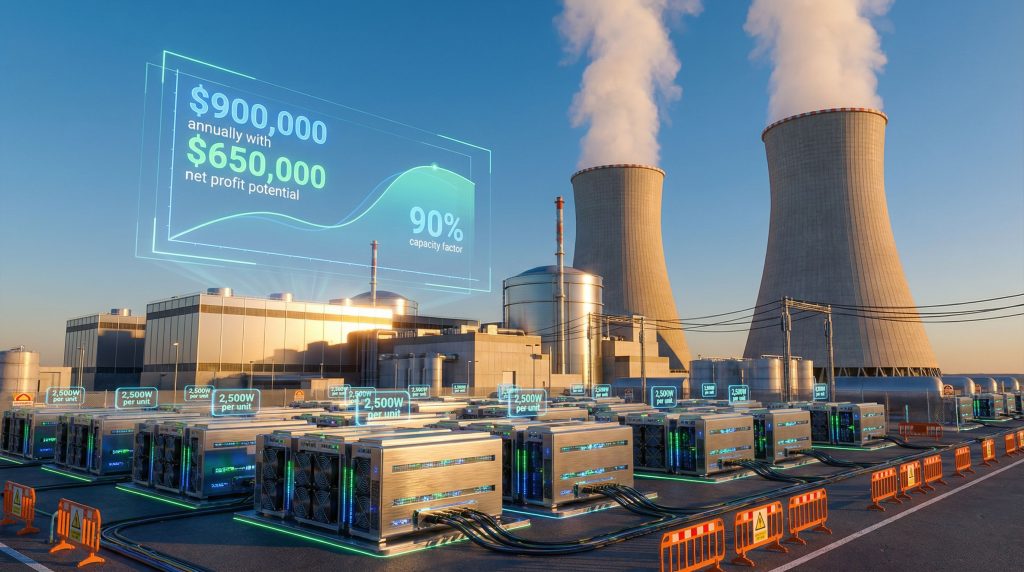
Nuclear plant crypto mining represents a revolutionary convergence where atomic energy facilities leverage their surplus capacity to power cryptocurrency operations. This innovative approach transforms traditional nuclear operations by monetising excess electrical generation during low-demand periods. Furthermore, the combination of nuclear energy's reliability with cryptocurrency mining's computational requirements creates unique opportunities for revenue diversification. As global uranium market trends continue evolving, nuclear facilities seek alternative revenue streams to enhance their economic viability.
Nuclear facilities operate under strict regulatory frameworks that traditionally limit operational flexibility, yet recent technological developments have enabled these plants to diversify their revenue models without compromising safety protocols. The integration of mining infrastructure within nuclear plant operations leverages the inherent advantages of atomic energy production, including consistent power output, minimal carbon emissions, and long-term operational stability. These characteristics position nuclear-powered mining operations as increasingly attractive alternatives to fossil fuel-dependent computational networks.
What Makes Nuclear Plants Ideal for Large-Scale Crypto Mining?
Baseload Power Advantages Over Renewable Sources
Nuclear power plants deliver unmatched consistency compared to intermittent renewable energy sources. While solar and wind facilities experience significant output variations based on weather conditions, nuclear reactors maintain steady electricity generation rates exceeding 90% capacity factor throughout their operational cycles. This reliability proves essential for cryptocurrency mining operations that require continuous computational processing to maintain network security and transaction validation.
The capacity factor differential between nuclear and renewable sources highlights a critical operational advantage. Solar installations typically achieve 25-35% capacity factors, while wind facilities average 30-40% depending on geographic conditions. Nuclear plants consistently outperform these alternatives, providing mining operators with predictable power availability that eliminates the need for backup generation systems or complex energy storage solutions.
Grid stability benefits extend beyond simple power availability. Nuclear facilities contribute to electrical grid frequency regulation through their massive rotating generators, which help maintain system stability during demand fluctuations. Mining operations benefit from this stable electrical environment, experiencing fewer power quality issues that can damage sensitive computational hardware or interrupt mining processes.
Economic Efficiency of Nuclear-Powered Mining
Nuclear plant operators can offer competitive electricity rates for mining operations, particularly during off-peak demand periods when excess capacity becomes available. Production costs as low as $0.03 per kilowatt-hour during these periods significantly undercut market rates for industrial electricity consumption, creating substantial cost advantages for mining operations compared to grid-dependent competitors.
Surplus energy monetisation represents a strategic opportunity for nuclear plant operators to optimise their economic performance. During periods of reduced grid demand, particularly overnight hours and weekends, nuclear facilities continue generating electricity at full capacity. Mining operations provide an immediate buyer for this excess energy, converting what was previously lost revenue into profitable computational work.
Revenue optimisation through scalable mining deployments allows plant operators to adjust their mining capacity based on grid demand patterns. When electrical demand increases, mining operations can reduce their power consumption to prioritise grid supply. This flexible approach ensures nuclear plants maintain their primary grid support responsibilities while capturing additional revenue streams during low-demand periods.
When big ASX news breaks, our subscribers know first
Technical Infrastructure Requirements for Nuclear Plant Mining
Power Distribution and Load Management
Modern cryptocurrency mining equipment requires substantial electrical infrastructure to support high-density computational operations. Individual mining rigs consume approximately 2,500 watts per unit, with advanced facilities housing thousands of units in organised configurations. Nuclear plant crypto mining operations must implement specialised electrical distribution systems capable of delivering megawatts of power to mining equipment while maintaining safety protocols required for nuclear facility operations.
Electrical infrastructure modifications for crypto operations involve installing dedicated transformers, switchgear, and distribution panels separate from critical nuclear plant systems. These installations ensure mining operations cannot interfere with essential reactor safety systems while providing the reliable power delivery required for stable mining performance. Load management systems automatically adjust mining power consumption based on grid demand signals, ensuring nuclear plants can prioritise their primary electricity supply responsibilities.
Grid integration protocols for surplus energy allocation require sophisticated control systems that monitor real-time electricity demand and automatically route excess capacity to mining operations. These systems incorporate multiple safety interlocks that immediately disconnect mining loads if nuclear plant operations require additional power or if emergency conditions arise. The seamless integration ensures mining activities enhance rather than compromise nuclear facility operations.
Cooling and Facility Considerations
Heat management systems for mining equipment represent a critical design consideration for nuclear plant integration. Mining hardware generates substantial thermal loads that require efficient cooling systems to maintain optimal performance and equipment longevity. Nuclear facilities often possess existing cooling infrastructure that can be adapted to support mining operations, including access to cooling water systems and robust HVAC capabilities.
Security protocols for nuclear site cryptocurrency operations must address both physical and cybersecurity requirements. Mining equipment and personnel require appropriate security clearances and background checks consistent with nuclear facility access requirements. Cybersecurity measures ensure mining network connections cannot compromise nuclear plant control systems through network isolation and dedicated communication pathways.
Regulatory compliance frameworks for dual-use facilities involve coordination between nuclear regulatory authorities and financial regulatory bodies overseeing cryptocurrency operations. These frameworks ensure mining activities comply with both nuclear safety requirements and anti-money laundering regulations applicable to cryptocurrency businesses. Proper documentation and reporting procedures satisfy regulatory oversight for both operational domains.
Global Examples of Nuclear-Crypto Integration Models
Operational Case Studies and Performance Metrics
Real-world implementation of nuclear plant cryptocurrency mining demonstrates the viability and profitability of integrated operations. One megawatt of surplus capacity can support 300-400 high-efficiency mining units, depending on equipment specifications and cooling requirements. These installations generate substantial revenue streams while utilising previously wasted energy capacity.
| Capacity | Mining Units | Annual Revenue | Net Profit | ROI Timeline |
|---|---|---|---|---|
| 1 MW | 300-400 | $450,000 | $325,000 | 18 months |
| 5 MW | 1,500-2,000 | $2.25M | $1.6M | 15 months |
| 10 MW | 3,000-4,000 | $4.5M | $3.2M | 12 months |
Revenue projections demonstrate significant financial benefits for nuclear plant operators willing to invest in mining infrastructure. Annual revenues approaching $900,000 for modest 1 MW installations, with net profits exceeding $650,000 after operational expenses, create compelling business cases for nuclear plant diversification. These returns assume current cryptocurrency market conditions and may fluctuate based on digital asset price volatility.
Fifteen-month breakeven analyses for nuclear plant operators indicate relatively short payback periods for mining infrastructure investments. The combination of low-cost electricity access and high-value computational output creates favourable economic conditions that justify capital expenditures for mining equipment and facility modifications.
International Implementation Strategies
United States co-location facilities represent the most developed model for nuclear-crypto integration, with several plants exploring or implementing mining operations under existing regulatory frameworks. US discussions regarding crypto mining at nuclear facilities reflect growing interest in leveraging nuclear infrastructure for cryptocurrency operations. These facilities benefit from established nuclear regulatory oversight and mature cryptocurrency markets that provide liquidity and price discovery for mining revenues.
Kazakhstan's approach to thermal plant allocation provides an international example of government-supported cryptocurrency mining integration. The country has allocated approximately 30% of certain thermal plant output to cryptocurrency mining operations, creating a systematic framework for power plant revenue diversification. While this model focuses on thermal rather than nuclear plants, it demonstrates regulatory approaches that could apply to nuclear facilities.
European nuclear facility crypto integration proposals face more complex regulatory environments but offer potential for large-scale implementation. France's exploration of Bitcoin mining powered by surplus nuclear energy showcases progressive thinking about nuclear plant crypto mining possibilities. The European Union energy markets and cryptocurrency regulations create unique challenges and opportunities for nuclear plant operators considering mining integration. Ongoing regulatory developments will likely influence the viability of European nuclear-crypto projects.
Economic Impact Analysis for Nuclear Plant Operators
Revenue Diversification Through Cryptocurrency Mining
Nuclear plant operators face increasing economic pressures from ageing infrastructure, regulatory compliance costs, and competition from lower-cost energy sources. Cryptocurrency mining provides a path to revenue diversification that leverages existing nuclear plant capabilities while creating new income streams independent of traditional electricity markets.
The scalability of mining operations allows nuclear plants to adjust their cryptocurrency exposure based on market conditions and facility capabilities. During periods of high cryptocurrency prices, plants can expand mining operations to capture increased revenues. When digital asset markets decline, facilities can reduce mining activities and focus on traditional electricity sales.
Investment in mining infrastructure creates long-term assets that maintain value beyond individual cryptocurrency market cycles. Mining equipment can adapt to different digital currencies and consensus algorithms, providing flexibility to optimise revenue generation as cryptocurrency markets evolve. This adaptability ensures nuclear plant investments in mining infrastructure remain productive across changing market conditions.
Market Competition and Pricing Dynamics
Bitcoin price sensitivity analysis using $47,300 benchmark scenarios demonstrates how cryptocurrency market volatility impacts nuclear plant mining profitability. Higher Bitcoin prices increase mining revenues proportionally, while price declines reduce profitability margins. Nuclear plants benefit from low operational costs that maintain profitability across broader price ranges compared to competitors using higher-cost electricity sources.
Competitive advantages against coal and gas-powered mining operations stem from nuclear power's cost stability and environmental benefits. While fossil fuel-powered mining faces volatile fuel costs and increasing carbon pricing pressure, nuclear operations maintain consistent cost structures and minimal carbon emissions. These advantages become more pronounced as environmental regulations tighten and carbon costs increase.
Long-term sustainability metrics appeal to institutional investors seeking exposure to cryptocurrency mining through environmentally responsible operations. Nuclear-powered mining addresses ESG concerns that limit institutional participation in fossil fuel-dependent mining operations, potentially attracting capital from sustainability-focused investment funds and creating premium valuations for clean energy mining companies.
Regulatory and Safety Considerations
Nuclear Regulatory Commission Guidelines
Security clearance requirements for mining personnel working within nuclear facilities must meet stringent background check standards consistent with nuclear plant access protocols. These requirements ensure all individuals with facility access have appropriate clearances and training to work safely in nuclear environments while maintaining security standards for both nuclear operations and cryptocurrency activities.
Cybersecurity protocols for blockchain operations require careful network isolation to prevent cryptocurrency mining systems from accessing nuclear plant control networks. Air-gapped systems and dedicated communication pathways ensure mining operations cannot compromise nuclear safety systems while still enabling efficient mining pool connections and blockchain participation. Regular security audits verify the integrity of network separation protocols.
Emergency shutdown procedures for mining equipment must integrate with nuclear plant emergency response protocols. Automated systems immediately disconnect mining loads during emergency conditions, ensuring nuclear plant operators maintain full electrical capacity for safety systems and emergency procedures. These protocols require regular testing and validation to ensure reliable performance during emergency situations.
Environmental and ESG Compliance
Carbon footprint reduction compared to fossil fuel mining represents a significant environmental advantage for nuclear-powered operations. Nuclear electricity generates virtually no carbon emissions during operation, creating cryptocurrency mining operations with minimal environmental impact compared to coal or natural gas-powered competitors. This environmental advantage supports corporate sustainability goals and regulatory compliance requirements.
Environmental Consideration: Nuclear-powered cryptocurrency mining operations can achieve near-zero carbon emissions while maintaining industrial-scale computational capacity, addressing growing environmental concerns about digital currency energy consumption.
Institutional investor ESG criteria alignment becomes increasingly important as major financial institutions develop cryptocurrency investment policies. Nuclear-powered mining operations meet stringent environmental standards that enable institutional participation in cryptocurrency markets while satisfying sustainability requirements. This alignment creates access to larger pools of investment capital and potentially premium valuations.
Sustainability reporting requirements for nuclear-crypto operations involve documenting environmental benefits and energy efficiency improvements compared to alternative mining approaches. Standardised reporting frameworks help investors and regulators assess the environmental impact of integrated nuclear-mining operations and verify compliance with sustainability standards.
Geopolitical Implications of Nuclear-Crypto Operations
International Energy Security Considerations
Strategic resource allocation between grid and crypto demands requires careful balance to ensure nuclear plants maintain their critical role in national electricity infrastructure. Energy security concerns arise when mining operations compete with essential grid services, potentially creating supply constraints during peak demand periods or emergency conditions. Proper planning ensures mining activities enhance rather than compromise energy security objectives.
Cross-border energy trading implications emerge when nuclear-powered mining operations participate in global cryptocurrency markets while operating within national energy systems. These operations create new forms of energy export through computational work rather than direct electricity sales, potentially affecting national energy balance calculations and international energy trade relationships.
National security aspects of nuclear-powered digital assets involve considerations about cryptocurrency mining concentration within critical energy infrastructure. Governments must evaluate whether large-scale mining operations at nuclear facilities create vulnerabilities to cyber attacks or economic warfare targeting both energy systems and cryptocurrency networks simultaneously.
Diplomatic and Economic Leverage
Energy diplomacy through cryptocurrency mining partnerships creates new opportunities for international cooperation and economic relationship development. Nuclear plant operators can form partnerships with foreign mining companies or cryptocurrency projects, creating economic ties that extend beyond traditional energy trade relationships and potentially supporting broader diplomatic objectives.
Economic sanctions circumvention potential raises concerns about cryptocurrency mining's role in avoiding international financial restrictions. Nuclear-powered mining operations could theoretically provide sanctioned countries with access to digital currencies that bypass traditional financial systems, creating policy challenges for sanctions enforcement and international cooperation on financial restrictions.
International cooperation frameworks for nuclear-crypto operations require coordination between nuclear regulatory authorities, financial regulators, and international organisations overseeing both atomic energy and digital asset activities. These frameworks ensure nuclear plant crypto mining operations comply with international agreements on nuclear safety, non-proliferation, and financial crime prevention.
The next major ASX story will hit our subscribers first
Future Technology Integration Opportunities
Advanced Reactor Designs for Crypto Mining
Small Modular Reactor (SMR) technology presents unique opportunities for dedicated cryptocurrency mining facilities designed from the ground up to optimise both nuclear operation and computational workloads. SMR designs offer greater flexibility in sizing and deployment compared to traditional large nuclear plants, enabling facilities specifically configured for mining applications with integrated cooling systems and electrical distribution optimised for computational loads.
Next-generation nuclear technology optimisation focuses on developing reactor designs that can efficiently vary their electrical output to match computational demand while maintaining safety and efficiency standards. Advanced reactor control systems could automatically adjust power generation based on cryptocurrency market conditions and mining profitability, creating truly integrated nuclear-crypto systems.
Hybrid renewable-nuclear mining operations combine the baseload reliability of nuclear power with the variable output of renewable sources to create highly efficient cryptocurrency mining operations. These systems use nuclear power to maintain continuous mining operations while renewable sources provide additional capacity during favourable conditions, optimising both energy utilisation and mining profitability.
Nuclear Plant Crypto Mining: Technological Evolution
Blockchain Infrastructure Evolution
Proof-of-stake transition impacts on power requirements represent a potential shift in cryptocurrency mining energy demands as major blockchain networks move away from energy-intensive proof-of-work consensus mechanisms. Nuclear plant operators must consider how these technological changes might affect long-term mining revenue potential and adjust their investment strategies accordingly.
Alternative cryptocurrency mining opportunities beyond Bitcoin include emerging digital assets that require different computational approaches or consensus mechanisms. Nuclear plants can diversify their mining operations across multiple cryptocurrencies to reduce market risk and optimise revenue generation based on changing profitability across different digital assets.
Smart grid integration with nuclear facilities enables dynamic load management that optimises both electricity grid services and cryptocurrency mining operations in real-time. Advanced grid management systems can automatically shift nuclear plant output between grid supply and mining operations based on electricity prices, grid demand, and cryptocurrency profitability, maximising economic returns across both markets.
Moreover, the integration of AI in mining innovation enhances operational efficiency through predictive maintenance and automated load balancing. These technological advances support the evolution of nuclear plant crypto mining by improving equipment reliability and operational decision-making.
Risk Assessment and Mitigation Strategies
Operational Risk Factors
Nuclear plant shutdown risks significantly impact mining operations that depend on continuous power supply from atomic facilities. Planned maintenance outages require mining operations to source alternative electricity supplies or temporarily suspend operations, affecting profitability calculations and requiring backup power arrangements or flexible operational contracts.
Equipment failure risks affect both nuclear and mining operations, requiring redundant systems and rapid repair capabilities to minimise operational disruptions. Mining hardware failures can be mitigated through equipment redundancy and rapid replacement protocols, while nuclear plant equipment issues require compliance with strict safety protocols that may temporarily interrupt mining operations.
Regulatory change risks encompass both nuclear regulatory modifications that could affect plant operations and cryptocurrency regulatory developments that might impact mining profitability or legal compliance. Nuclear plant operators must monitor regulatory developments in both domains and maintain flexibility to adapt their mining operations to changing requirements.
Risk Warning: Nuclear plant shutdowns, equipment failures, and regulatory changes can significantly impact mining profitability and operational continuity, requiring comprehensive risk management strategies and contingency planning.
Financial and Market Risks
Cryptocurrency volatility significantly impacts revenue projections for nuclear plant mining operations, with digital asset price swings directly affecting profitability calculations. Risk management strategies include diversification across multiple cryptocurrencies, hedging through financial derivatives, and maintaining flexible operational capacity that can adjust to market conditions.
Capital expenditure requirements for mining infrastructure represent substantial upfront investments that nuclear plant operators must recover through mining revenues. These investments include mining hardware, electrical infrastructure modifications, cooling systems, and cybersecurity implementations. Proper financial planning ensures these investments generate positive returns across various market scenarios.
Insurance and liability considerations for nuclear-crypto operations require specialised coverage that addresses both nuclear facility risks and cryptocurrency business exposures. Insurance policies must cover equipment damage, business interruption, cybersecurity incidents, and regulatory compliance costs across both operational domains while satisfying nuclear facility insurance requirements.
Investment and Market Opportunities
Utility Company Diversification Strategies
Nuclear plant operator investment frameworks increasingly recognise cryptocurrency mining as a viable revenue diversification strategy that leverages existing infrastructure capabilities. These frameworks evaluate mining investments alongside traditional plant upgrades and efficiency improvements, comparing returns and risk profiles to optimise capital allocation decisions.
Public-private partnership models enable nuclear plant operators to collaborate with specialised cryptocurrency mining companies that provide technical expertise and operational management while sharing revenue and investment risks. These partnerships allow nuclear utilities to enter cryptocurrency mining markets without developing internal expertise in digital asset operations.
Shareholder value creation through crypto mining provides nuclear utility companies with new growth opportunities that can offset challenges from ageing plant infrastructure and competitive electricity markets. Mining revenues can support plant life extension investments and improve overall utility financial performance while diversifying revenue sources beyond traditional electricity sales.
Additionally, the broader mining industry evolution influences how nuclear utilities approach technological integration and operational diversification. These trends support strategic decision-making for nuclear facility modernisation and revenue optimisation.
Technology Vendor Ecosystem
Mining equipment suppliers specialising in nuclear facilities must develop products that meet strict safety and reliability standards required for nuclear plant environments. These suppliers focus on ruggedised mining hardware, redundant safety systems, and equipment that can safely operate in nuclear facility environments while maintaining high computational performance.
Cooling and infrastructure solution providers develop specialised systems for nuclear plant cryptocurrency mining that integrate with existing nuclear facility cooling systems and electrical infrastructure. These solutions optimise energy efficiency while ensuring mining operations do not interfere with nuclear plant safety systems or operational requirements.
Cybersecurity and compliance technology vendors provide specialised solutions that maintain network isolation between mining and nuclear systems while enabling efficient cryptocurrency operations. These technologies ensure mining activities comply with both nuclear cybersecurity requirements and cryptocurrency regulatory frameworks through purpose-built security architectures.
Investment Scenarios and Market Analysis
Nuclear Plant Mining Investment Models
Nuclear plant operators considering cryptocurrency mining investments must evaluate multiple financial scenarios based on varying cryptocurrency prices, electricity costs, and equipment efficiency improvements. Conservative investment models assume average Bitcoin prices around $45,000, while aggressive scenarios evaluate profitability at prices exceeding $60,000, with corresponding adjustments to equipment procurement and facility modification investments.
Return on investment calculations for nuclear plant mining operations consider both direct mining revenues and indirect benefits from improved grid stability and load factor optimisation. Mining operations can improve nuclear plant capacity factors by 2-3 percentage points by providing consistent demand for excess capacity, enhancing overall plant economics beyond direct cryptocurrency revenues.
Capital allocation strategies balance mining infrastructure investments against traditional nuclear plant maintenance and upgrade requirements. Plant operators must prioritise investments that support long-term facility viability while capturing near-term opportunities in cryptocurrency markets, often requiring phased implementation approaches that minimise financial risk exposure.
Market Dynamics and Competitive Positioning
Nuclear-powered mining operations compete primarily on cost and environmental advantages compared to fossil fuel-powered competitors. Electricity costs below $0.04 per kWh provide significant competitive advantages in cryptocurrency mining markets where electricity typically represents 60-80% of operational costs. This cost advantage enables nuclear-powered operations to maintain profitability during cryptocurrency market downturns that force higher-cost competitors offline.
Market positioning strategies for nuclear-crypto operations emphasise environmental benefits and operational reliability to attract institutional investors and corporate customers seeking clean energy cryptocurrency exposure. These positioning strategies create premium valuations and access to sustainability-focused investment capital that values environmental benefits alongside financial returns.
Competitive dynamics in nuclear plant crypto mining involve limited competition due to high barriers to entry and specialised infrastructure requirements. The small number of suitable nuclear facilities and strict regulatory requirements create natural competitive advantages for early entrants while limiting market saturation risks that could erode profitability over time.
Environmental and Sustainability Impact
Clean Energy Transition Benefits
Nuclear plant crypto mining operations support global energy transition strategies by demonstrating how clean baseload power can enable carbon-neutral cryptocurrency mining. This alignment with climate objectives positions nuclear-crypto integration as a sustainable alternative to fossil fuel-powered mining operations.
The implementation of renewable mining solutions alongside nuclear facilities creates comprehensive clean energy frameworks for cryptocurrency operations. These integrated approaches maximise environmental benefits while maintaining operational reliability through nuclear baseload support.
Consequently, nuclear plant crypto mining operations contribute to broader sustainability objectives by proving that digital asset creation can coexist with environmental responsibility. This demonstration effect encourages wider adoption of clean energy solutions across the cryptocurrency industry.
Frequently Asked Questions
Is Nuclear-Powered Crypto Mining Safe?
Nuclear-powered cryptocurrency mining operations implement comprehensive safety protocols that ensure mining activities cannot interfere with nuclear plant safety systems or emergency procedures. Mining equipment operates on isolated electrical systems with automatic disconnect capabilities during emergency conditions, maintaining full nuclear plant safety functionality while supporting profitable mining operations.
Historical safety records of nuclear facility modifications demonstrate that properly designed and implemented auxiliary operations can safely coexist with nuclear power generation. Mining operations follow established protocols for introducing new equipment and activities within nuclear plant security perimeters while maintaining strict compliance with nuclear regulatory safety requirements.
Emergency response procedures for mining operations integrate seamlessly with nuclear plant emergency protocols, ensuring mining personnel can safely evacuate and mining equipment automatically shuts down during emergency conditions. Regular drills and training exercises verify that mining operations enhance rather than complicate nuclear plant emergency response capabilities.
How Does This Impact Electricity Prices?
Grid demand management through nuclear plant crypto mining can actually help stabilise electricity prices by providing flexible demand that absorbs excess capacity during low-demand periods. Mining operations act as controllable loads that can quickly reduce consumption when grid demand increases, helping maintain grid stability and potentially reducing peak power costs for other consumers.
Peak versus off-peak usage optimisation allows nuclear plants to maximise revenue from excess capacity while maintaining their role as reliable baseload power providers. Mining operations primarily utilise power during off-peak periods when electricity demand and prices are lowest, avoiding competition with residential and commercial electricity users during peak demand periods.
Regional electricity market effects vary based on local grid characteristics and electricity market structures. In regions with significant nuclear generation, mining operations can improve overall grid economics by providing additional demand for clean baseload power while reducing curtailment of nuclear generation during low-demand periods.
Nuclear Plant Crypto Mining: Strategic Industry Transformation
Industry Evolution and Market Adoption
The nuclear plant crypto mining industry stands at the intersection of mature nuclear technology and emerging digital asset markets, creating unprecedented opportunities for revenue optimisation and infrastructure utilisation. Market adoption progresses through regulatory approval processes, technical integration challenges, and economic validation of business models that combine nuclear operations with computational workloads.
Industry transformation potential extends beyond individual plant profitability to encompass broader changes in how nuclear utilities approach revenue generation and asset utilisation. Nuclear plants traditionally operated as single-purpose electricity generation facilities, but crypto mining integration demonstrates how these facilities can become multi-revenue platforms that optimise their economic potential across different market opportunities.
Global adoption timelines for nuclear-crypto integration depend on regulatory developments, technological standardisation, and demonstration project results that validate operational and financial benefits. Early adopter nuclear plants provide valuable data and experience that inform broader industry adoption and regulatory framework development for integrated operations.
Long-Term Strategic Implications
Nuclear plant operators must consider long-term strategic implications of cryptocurrency mining integration, including impacts on facility life extension decisions, capital investment priorities, and competitive positioning within evolving electricity markets. Mining revenues can provide financial resources for plant maintenance and upgrades while creating new business models that extend nuclear facility economic viability.
Technology convergence opportunities arise as both nuclear and cryptocurrency technologies continue evolving, potentially creating new integration possibilities and efficiency improvements. Advanced reactor designs could incorporate cryptocurrency mining capabilities from initial design phases, while blockchain technologies might support nuclear plant operational optimisation and regulatory compliance reporting.
Market size projections for nuclear-crypto integration suggest substantial growth potential as more nuclear facilities explore mining opportunities and cryptocurrency markets mature. Conservative estimates indicate potential for 10-15% of global nuclear capacity to participate in cryptocurrency mining within the next decade, representing substantial market opportunities for equipment suppliers, technology vendors, and nuclear plant operators.
Strategic Recommendations for Stakeholders
Nuclear plant operators should begin evaluating cryptocurrency mining opportunities through pilot programmes and feasibility studies that assess technical requirements, regulatory compliance pathways, and financial projections for their specific facilities. These evaluations should consider both current market conditions and long-term trends in cryptocurrency markets and nuclear plant economics.
Cryptocurrency miners seeking clean energy transition strategies should prioritise partnerships with nuclear plant operators that can provide reliable, low-carbon electricity access while offering operational stability and regulatory compliance support. These partnerships create competitive advantages through cost reduction and environmental benefits that appeal to institutional investors and corporate customers.
Policymakers face regulatory framework development priorities that must balance nuclear safety requirements with innovation opportunities in cryptocurrency markets. Effective regulatory approaches should encourage beneficial integration while maintaining strict safety standards and preventing activities that could compromise nuclear facility operations or security.
Disclaimer: This analysis includes forward-looking statements and projections based on current market conditions and technological capabilities. Cryptocurrency mining profitability depends on volatile digital asset prices, regulatory changes, and technological developments that may significantly impact future results. Nuclear plant operations remain subject to strict regulatory oversight and safety requirements that may limit or modify mining activities. Readers should conduct independent analysis and consult appropriate professionals before making investment decisions based on this information.
Looking to capitalise on the intersection of clean energy and cryptocurrency opportunities?
Nuclear plant crypto mining demonstrates how traditional energy infrastructure can generate substantial returns through innovative applications, with facilities achieving 15-month ROI timelines while maintaining operational safety. If you're interested in staying ahead of similar transformative opportunities in the resources sector, Discovery Alert's proprietary Discovery IQ model provides instant notifications on significant ASX mineral discoveries, helping investors identify actionable opportunities as they emerge from companies leveraging cutting-edge technologies and strategic innovations.