
May 14, 2026
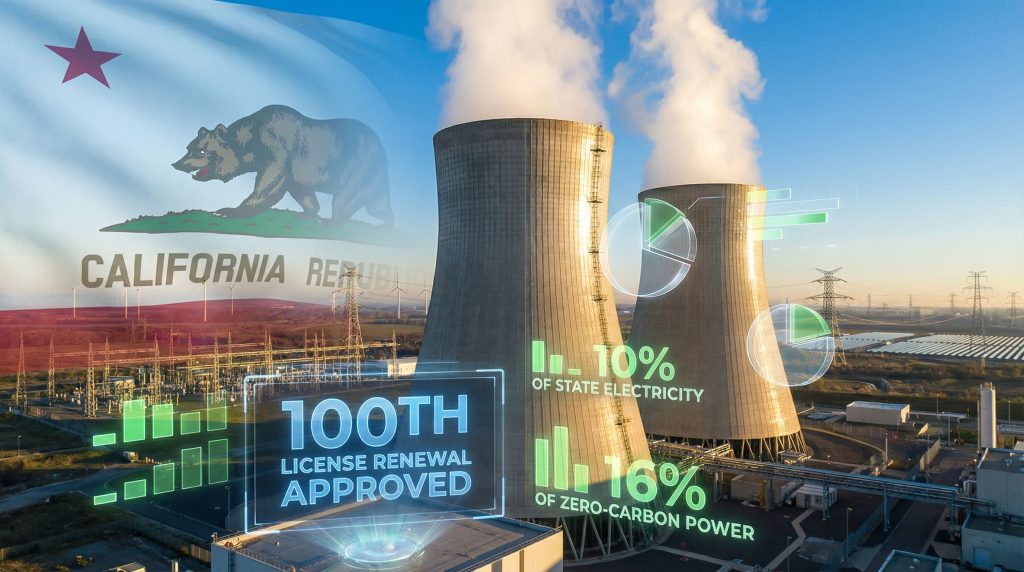
America's nuclear regulatory landscape represents one of the most complex energy governance frameworks in the world, where federal oversight intersects with state energy independence goals across multiple jurisdictional layers. The intricate balance between national energy security priorities and local environmental protection mandates creates a dynamic regulatory environment that influences both immediate operational decisions and long-term strategic energy planning. Understanding this regulatory ecosystem becomes particularly crucial as the nation navigates competing demands for reliable baseload power, climate commitments, and technological innovation in the energy sector.
Understanding the Federal Nuclear Regulatory Framework
The Nuclear Regulatory Commission operates within a comprehensive regulatory structure that has evolved significantly since its establishment, developing standardised processes for evaluating nuclear facility operations and safety systems. The NRC approves Diablo Canyon license renewal as part of a broader pattern of facility assessments that examine aging management programs, environmental impacts, and continued operability of critical safety infrastructure.
Federal nuclear regulation involves a multi-layered approval process that coordinates between various governmental levels. The primary framework includes:
- Federal oversight through NRC safety evaluation and licensing authority
- State-level coordination involving environmental protection agencies and utility commissions
- Regional compliance with water quality boards and coastal management authorities
- Local integration with municipal planning and emergency response protocols
The regulatory evaluation process follows established protocols outlined in 10 CFR Part 54, which governs license renewal requirements for nuclear power plants. These standards require comprehensive aging management assessments, environmental qualification reviews, and structural integrity evaluations before approving extended operational periods.
Safety evaluation standards encompass multiple technical domains, including reactor pressure vessel integrity, steam generator performance, and containment structure durability. Furthermore, the NRC's Standard Review Plan provides detailed guidance for evaluating these systems across their extended operational lifecycles.
Regulatory Approval Process Components
The comprehensive assessment methodology incorporates multiple technical evaluation areas that examine long-term operational capabilities. The NRC's approval process requires detailed analysis of safety-related systems and structures.
System integrity evaluations focus on critical components including reactor vessels, steam generators, and containment systems. These assessments examine material degradation, fatigue analysis, and environmental qualification requirements throughout extended operational periods.
When big ASX news breaks, our subscribers know first
What Are the Economic Implications of Extended Nuclear Operations?
Nuclear licence renewals present compelling economic advantages compared to new construction projects, with capital investment requirements significantly lower than building replacement facilities. The cost differential between extending existing plant operations and constructing new nuclear capacity often exceeds billions of dollars per facility.
Current uranium market volatility provides additional context for nuclear economic planning. Recent pricing data shows:
| Metric | Value | Context |
|---|---|---|
| End-of-March uranium spot price | $84.25 per pound | Down from $86.95 in February |
| January peak price | $94.28 per pound | Two-month high before decline |
| Year-over-year increase | 29% higher | Compared to April 2025 |
| Uranium futures | $84.30 per pound | As of April 1, 2026 |
The federal government has committed $2.7 billion over the next 10 years to expand uranium enrichment capabilities, reflecting strategic recognition of nuclear fuel as a critical national resource. This investment parallels classifications given to lithium and rare earth minerals, indicating long-term policy support for nuclear infrastructure.
Grid stability economics benefit substantially from extended nuclear operations, as these facilities provide consistent baseload power that operates at 85-95% capacity factors. This reliability contrasts sharply with intermittent renewable sources that typically achieve 25-40% capacity factors, requiring backup power generation or energy storage systems.
Technology sector demand has emerged as a significant driver for nuclear expansion, with multiple data center operators signing contracts for small modular reactor development. These power-intensive facilities require reliable electricity supply that nuclear baseload generation can provide more consistently than variable renewable sources.
The strategic classification of uranium as a critical resource, combined with institutional investor interest in nuclear assets, helps remove supply from the market and protects against downside risk in energy planning scenarios.
Additionally, the U.S. uranium import ban has created new market dynamics that favour domestic nuclear fuel production capabilities. This policy shift emphasises the importance of maintaining operational nuclear facilities to support energy security objectives.
Why Do Federal and State Nuclear Policies Sometimes Conflict?
The jurisdictional complexity of nuclear regulation creates inherent tension between federal licensing authority and state energy policy autonomy. While the NRC maintains exclusive federal control over nuclear safety and operational licensing, states retain significant authority over energy portfolio composition, environmental standards, and resource planning decisions.
Federal authority encompasses:
- Nuclear safety evaluation and operational licensing
- Radioactive materials management and security protocols
- Interstate commerce regulation of nuclear fuel transportation
- Emergency response coordination for radiological incidents
State regulatory control includes:
- Energy portfolio planning and renewable energy targets
- Water quality oversight and coastal zone management
- Utility rate-setting and grid integration planning
- Environmental protection standards beyond federal minimums
California's regulatory framework demonstrates this complexity through multiple agency involvement in nuclear oversight. The California Public Utilities Commission, State Lands Commission, and Coastal Commission each maintain distinct regulatory roles, while the Central Coast Regional Water Quality Control Board oversees water intake and discharge permits under Clean Water Act requirements.
Multi-agency coordination challenges arise when federal approvals must integrate with state environmental timelines and local permitting processes. Nuclear facilities require extensive water management for cooling operations, bringing them under regional water board jurisdiction for Section 401 water quality certification.
Legislative authority at the state level can create operational limitations even when federal licensing approvals are granted. This dynamic illustrates the complex relationship between national energy security priorities and state-specific environmental protection goals.
However, effective investment strategy components must account for these regulatory complexities when evaluating nuclear energy investments.
How Do Nuclear Licence Extensions Affect National Clean Energy Goals?
Extended nuclear operations play a crucial role in national decarbonisation strategies by maintaining existing zero-carbon electricity generation capacity without requiring new construction timelines or capital investments. Nuclear facilities provide continuous clean energy output that complements intermittent renewable sources while avoiding the carbon emissions associated with natural gas backup generation.
Baseload power reliability from nuclear sources supports grid stability as renewable energy integration increases. Unlike solar and wind resources that fluctuate with weather conditions, nuclear plants can maintain consistent output levels that help balance supply and demand across regional transmission networks.
Federal climate commitments benefit from nuclear licence renewals through several mechanisms:
- Avoided emissions from maintaining zero-carbon generation capacity
- Grid flexibility supporting higher renewable energy penetration
- Energy security reducing dependence on fossil fuel backup systems
- Carbon intensity reduction in regional electricity markets
The integration of extended nuclear operations with renewable energy expansion creates synergistic effects for clean energy portfolio development. Nuclear baseload capacity provides grid stability that enables higher levels of variable renewable integration without requiring extensive energy storage investments or natural gas peaking facilities.
Investment incentives from the Inflation Reduction Act support nuclear facility operations through production tax credits and other financial mechanisms that improve the economic competitiveness of zero-carbon electricity generation.
In addition, current energy security trends highlight the strategic importance of maintaining domestic nuclear capacity as part of broader energy independence initiatives.
Climate Policy Integration
The NRC approves Diablo Canyon license renewal decision aligns with broader federal climate policy objectives that prioritise maintaining existing zero-carbon generation capacity. This regulatory approach supports national emissions reduction targets while providing grid stability for renewable energy integration.
Furthermore, decarbonisation trends benefits demonstrate how nuclear energy contributes to broader industrial decarbonisation strategies across multiple economic sectors.
What Are the Long-Term Implications for Nuclear Industry Policy?
The regulatory precedent established through recent licence renewal approvals creates standardised frameworks that can streamline future nuclear facility assessments. These procedural developments reduce regulatory uncertainty for facility operators and investors while maintaining rigorous safety evaluation standards.
Licence renewal standardisation benefits from accumulated experience in evaluating aging management programs, environmental impacts, and safety system performance across extended operational periods. The NRC's Generic Environmental Impact Statement for Licence Renewal provides established methodologies that reduce review timelines while ensuring comprehensive assessment protocols.
Environmental review evolution incorporates updated assessment methodologies that address contemporary environmental protection standards and technological improvements in safety systems. Modern environmental evaluations integrate climate change considerations, advanced monitoring technologies, and improved understanding of ecological impacts from nuclear facility operations.
Regulatory efficiency improvements include:
- Streamlined environmental assessment procedures
- Standardised safety evaluation criteria
- Enhanced inter-agency coordination protocols
- Digital documentation and review processes
Industry investment planning benefits from increased regulatory predictability, as standardised review processes provide clearer timelines and requirements for licence renewal applications. This regulatory certainty supports long-term capital allocation decisions and operational planning for existing nuclear facilities.
Future nuclear technologies are increasingly considered within existing regulatory frameworks, as advanced reactor designs and safety systems undergo evaluation processes that build upon established nuclear oversight principles while accommodating technological innovations.
How Does This Decision Influence State Energy Independence Strategies?
State energy portfolio planning increasingly incorporates extended nuclear operations as a component of comprehensive clean energy strategies that balance reliability, environmental goals, and economic considerations. Nuclear facilities provide energy security benefits that reduce dependence on electricity imports while maintaining low-carbon generation capacity.
Political leadership dynamics influence nuclear policy development through gubernatorial energy initiatives, legislative priorities, and regulatory appointment processes that shape state-level nuclear oversight approaches. Executive support for nuclear energy varies significantly across different state administrations and political contexts.
Regional energy security considerations highlight the importance of baseload generation capacity for maintaining grid reliability during extreme weather events, renewable energy intermittency periods, and regional transmission constraints. Extended nuclear operations contribute to energy resilience planning by providing consistent electricity supply that operates independently of weather-dependent renewable sources.
Grid resilience planning incorporates nuclear facilities into broader infrastructure protection strategies that address:
- Natural disaster preparedness and recovery capabilities
- Cybersecurity protection for critical energy infrastructure
- Regional transmission coordination and backup power supplies
- Emergency response protocols for grid stability maintenance
State energy independence strategies increasingly recognise nuclear power as a bridge technology that enables higher renewable energy integration while maintaining grid reliability and reducing carbon emissions from electricity generation.
The next major ASX story will hit our subscribers first
What Regulatory Lessons Apply to Future Nuclear Projects?
The evolution of nuclear regulatory processes demonstrates opportunities for improved efficiency in multi-agency coordination and streamlined environmental review procedures. Recent licence renewal approvals provide valuable insights into best practices for federal-state cooperation and comprehensive safety evaluation protocols.
Multi-agency coordination models show the importance of early stakeholder engagement and parallel review processes that reduce overall assessment timelines while maintaining thorough evaluation standards. Effective coordination requires clear communication protocols between federal, state, and regional regulatory authorities.
Environmental and safety integration represents a critical component of modern nuclear regulatory frameworks that address contemporary environmental protection standards while ensuring rigorous safety evaluation criteria. These comprehensive review procedures incorporate:
- National Environmental Policy Act compliance for federal environmental assessment
- Clean Water Act certification for water quality protection requirements
- Endangered Species Act consultation for ecological impact evaluation
- Coastal Zone Management Act review for coastal facility operations
Federal-state cooperation mechanisms demonstrate the value of structured communication protocols that balance national energy security priorities with state environmental protection goals. Successful coordination requires mutual recognition of respective regulatory authorities and collaborative problem-solving approaches.
Policy framework development benefits from lessons learned in regulatory efficiency, stakeholder engagement, and technical evaluation procedures that can inform future nuclear project assessments. These frameworks provide templates for evaluating advanced nuclear technologies while maintaining established safety and environmental protection standards.
Implementation Success Factors
The California approval process demonstrates how effective coordination between federal and state agencies can achieve successful outcomes for complex nuclear infrastructure projects.
Investment certainty improves when regulatory processes provide predictable timelines and clear evaluation criteria that enable informed capital allocation decisions. Regulatory transparency supports industry planning and reduces financial risks associated with uncertain approval processes.
The nuclear regulatory framework continues evolving to address contemporary energy challenges while maintaining the rigorous safety and environmental standards essential for public confidence in nuclear technology. These regulatory developments provide valuable insights for energy policy planning and infrastructure investment strategies across the broader clean energy transition.
Disclaimer: This analysis is based on publicly available information and should not be considered as investment advice. Nuclear energy investments involve significant regulatory, technological, and market risks that require thorough due diligence and professional consultation. Regulatory frameworks and policy positions may change significantly over time.
Ready to Invest in the Next Major Mineral Discovery?
Discovery Alert instantly alerts investors to significant ASX mineral discoveries using its proprietary Discovery IQ model, turning complex mineral data into actionable insights. Understand why historic discoveries can generate substantial returns by visiting Discovery Alert's dedicated discoveries page, and begin your 14-day free trial today to position yourself ahead of the market.