May 19, 2026
When a Pause Is Not a Peace: Understanding the $110 Oil Price Floor
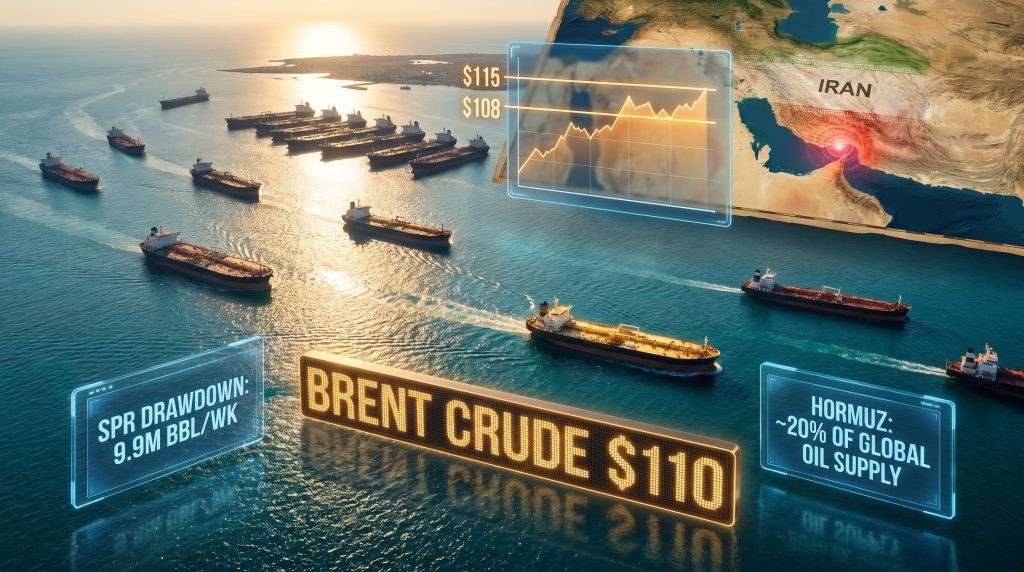
Energy markets have long operated on a fundamental principle: uncertainty commands a premium. When the source of that uncertainty involves the world's most critical oil transit corridor, that premium does not simply evaporate because a planned military action is postponed. The decision by the Trump administration to hold off on a strike against Iran has produced a modest softening in crude prices, but Brent's persistent grip near the $110 per barrel level tells a more complex story about how traders are currently pricing geopolitical risk. For a broader view, crude oil price trends in 2025 provide essential context for what is unfolding.
A diplomatic pause and a diplomatic resolution are structurally different market signals, and energy traders are treating them accordingly. Oil holds near $110 after Trump delays Iran strike precisely because the underlying variables that created this price environment remain fully intact. The Strait of Hormuz is still under stress, Iranian export capacity is being constrained by a US naval blockade, global commercial inventories are deteriorating rapidly, and the probability of resumed hostilities has not been negotiated away.
Markets are not pricing in peace. They are pricing in a temporary ceasefire of rhetoric. The $110 floor reflects the cost of sustained uncertainty, not the cost of active conflict.
When big ASX news breaks, our subscribers know first
The Strait of Hormuz: Why One Waterway Can Hold the World to Ransom
The Geography of Vulnerability
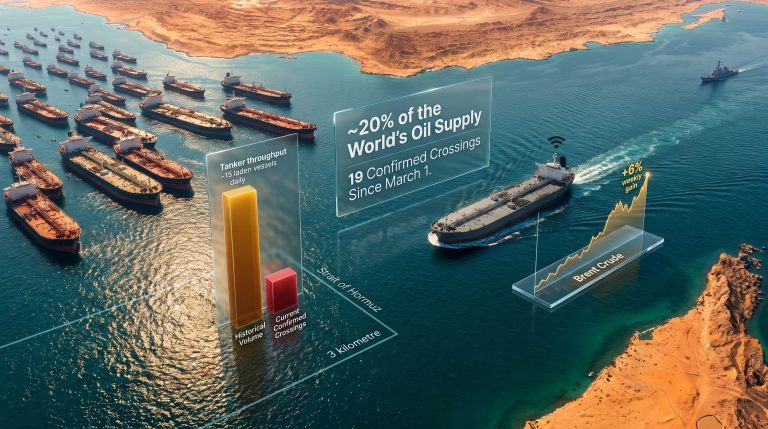
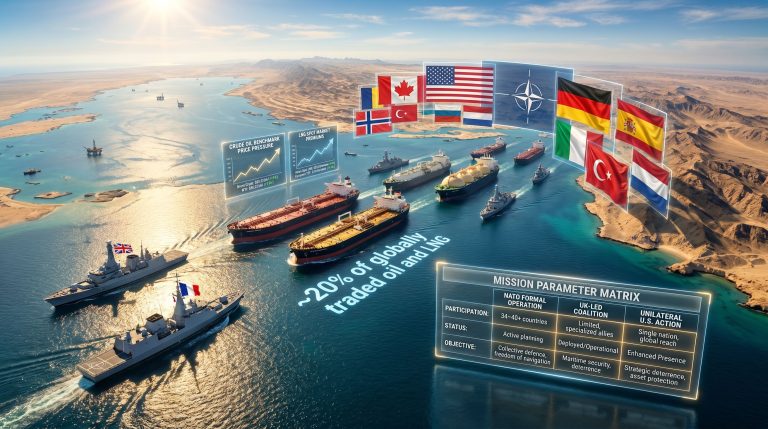
Approximately 20% of all globally traded oil passes through the Strait of Hormuz, a narrow body of water separating Iran from the Arabian Peninsula. At its narrowest point, the navigable shipping channel is barely a few kilometres wide, creating a physical chokepoint that no strategic reserve drawdown can fully replicate. A partial or complete closure does not merely reduce supply volumes; it severs the primary arterial route connecting Gulf producers to Asian demand centres.
The cascading exposure across importing nations highlights just how irreplaceable Hormuz is:
- Japan and South Korea have responded to the crisis by deepening bilateral oil procurement ties, prioritising supply security over cost efficiency
- India faces acute import cost pressure with limited short-term diversification options
- China imports a substantial portion of its crude through this route, compounding already deteriorating refinery economics
- Australia secured 3 emergency jet fuel cargoes from China for June delivery, maintaining import levels near 140,000 b/d, despite Beijing's ongoing ban on refined product exports
What makes Hormuz exposure particularly difficult to hedge is that strategic petroleum reserves are designed to buffer short disruptions, not extended closures. When blockade conditions are sustained, as they appear to be, the calculus changes fundamentally.
Iran's Floating Stockpile: A Blockade in Numbers
One of the most revealing data points in the current market is the accumulation of approximately 23 Iran-controlled tankers anchored near Kharg Island, the country's principal crude loading terminal. This represents the highest concentration of idle tankers since the US naval blockade of the Arabian Sea commenced, and it signals something critical: Iranian crude is being produced but cannot reach buyers.
Iran's floating oil stockpile has reportedly surged by 65% since blockade conditions intensified, meaning onshore and offshore storage is filling toward capacity at an accelerating rate. This is not merely a headline statistic. When a major exporting nation's floating storage reaches saturation, it signals that production curtailments may follow, further tightening the global supply picture regardless of what happens diplomatically.
The SPR Dilemma: Record Drawdowns and a Hidden Infrastructure Risk
Numbers Behind the Emergency Response
The United States has deployed its Strategic Petroleum Reserve at an unprecedented pace in response to the current supply disruption. The data reveals just how extraordinary the intervention has become:
| Metric | Current Data |
|---|---|
| Weekly SPR drawdown (record) | 9.9 million barrels |
| Daily drawdown rate | ~1.4 million b/d |
| Total remaining SPR inventory | 374 million barrels (lowest since July 2024) |
| Biden-era average drawdown rate | ~1.0 million b/d |
| Domestic vs. export split | ~60% domestic / ~40% exported |
| May US crude export threshold | Potentially exceeding 5.5 million b/d for the first time |
European buyers have been particularly active in acquiring niche SPR grades, with Bryan Mound Sour attracting notable international interest. The export component of these releases is effectively functioning as a geopolitical instrument, subsidising global supply at a moment when Hormuz flows remain constrained.
The Salt Cavern Problem Nobody Is Discussing
What receives far less attention than the headline drawdown numbers is the physical infrastructure risk created by accelerated extraction. The US SPR is stored in salt cavern systems along the Gulf Coast, and these geological formations are not infinitely resilient to rapid extraction cycles.
Pulling barrels out at record pace increases the susceptibility of cavern walls to salt falls and structural deformation, potentially compromising the long-term storage integrity of sites that took decades and billions of dollars to develop. This is not a theoretical concern; it is a documented engineering risk associated with rapid pressure cycling in solution-mined salt caverns.
Warning: If accelerated extraction damages the physical integrity of SPR storage caverns, the United States could face a structurally reduced emergency buffer capacity at precisely the moment geopolitical risk remains elevated. This is a long-term consequence that short-term price management calculations rarely account for.
Russia's Sanctions Waiver: The Secondary Price Ceiling
How Washington Is Running a Dual-Track Price Management Strategy
Alongside SPR deployments, the Trump administration extended a 30-day sanctions waiver allowing designated vulnerable nations to purchase Russian seaborne crude and refined products without penalty, provided cargoes were loaded onto vessels before June 17. India's refinery sector is positioned to continue Russian crude purchases under this framework.
The combined effect of these two mechanisms creates what is effectively a dual-track price management architecture:
- Track 1: Domestic supply injection via record SPR drawdowns, feeding both home refiners and export markets
- Track 2: Global supply preservation via Russian crude waiver extensions, keeping Russian barrels in commercial circulation despite the broader sanctions framework
Together, these instruments appear to be containing Brent crude within a $108 to $112 trading band, preventing a full breakout to $130 or beyond, while simultaneously preventing the kind of demand destruction that a prolonged $130 price environment would accelerate. Furthermore, the trade war impact on oil markets adds another layer of complexity to this already fragile pricing equilibrium.
IEA Warnings and the Inventory Deterioration Signal
IEA Executive Director Fatih Birol publicly stated that commercial oil inventories across OECD member nations are deteriorating at an accelerating rate, and that this depletion is occurring despite the largest coordinated strategic reserve release in the organisation's history, totalling 400 million barrels. The implication is stark: even maximum policy intervention is struggling to offset the structural supply gap that Hormuz disruption has created.
This is the kind of data point that separates a cyclical price spike from a structurally embedded supply problem. When inventory drawdowns persist through the largest emergency release ever coordinated, the market is signalling that demand for physical barrels is outstripping everything policymakers can throw at it. In addition, OPEC's market influence remains a critical variable in determining how long this imbalance can persist.
Emerging Market Demand Destruction: Country by Country
The downstream consequences of sustained elevated crude prices are becoming visible across emerging economies. The responses vary considerably by country:
| Economy | Policy Response | Demand Impact |
|---|---|---|
| India | Retail price hikes twice in one week; waiver-backed Russian crude | Moderate demand suppression; trade deficit widening |
| China | Refinery run cuts; export ban maintained | Throughput at lowest since August 2022 |
| Kenya | Protests; government-to-government supply disrupted | Severe economic and social disruption |
| Japan/South Korea | Bilateral procurement deepening | Supply security prioritised over cost optimisation |
| Australia | Emergency jet fuel secured from China | Supply continuity maintained |
India raised fuel prices twice within a single week, the first increases in four years, as the government abandoned price suppression policies under mounting fiscal pressure. Indian airlines subsequently requested refiners delay further jet fuel price increases. Meanwhile, China's April crude throughput fell to 13.3 million b/d, the lowest monthly reading since August 2022, as processing margins turned negative under a combined refined product export ban and elevated input costs.
Analysts have estimated that China's gasoline consumption could contract by as much as 5.5% in 2026 if elevated prices persist through the year. In Kenya, nationwide protests and police confrontations broke out across major urban centres following fuel price spikes, with previous government-to-government supply arrangements from the Middle East disrupted by the conflict.
The next major ASX story will hit our subscribers first
LNG Investment Accelerating Despite Short-Term Disruption
Why Crisis Conditions Are Paradoxically Driving Long-Term Capital Commitment
One of the less intuitive dynamics playing out in global energy markets is the acceleration of long-term LNG investment decisions even as short-term supply chains fracture. Elevated commodity prices and structural supply anxiety are compelling developers and buyers to lock in capacity years in advance. The global LNG supply outlook suggests this trend is likely to intensify as buyers seek long-term security.
| Project | Capacity | Key Parties | Status |
|---|---|---|---|
| Commonwealth LNG (Louisiana) | 9.5 mtpa | Kimmeridge / Mubadala / CPP | FID confirmed; $9.75B financing secured |
| Alaska LNG | 20 mtpa | Glenfarne / ConocoPhillips | 30-year supply deal signed; FID approaching |
| LNG Canada Phase 2 | 14 mtpa | Shell / Petronas / Mitsubishi / PetroChina / Kogas | FID targeted by end-2026 |
The Commonwealth LNG facility in Louisiana is targeting first production by end-2030, while the Alaska LNG project, backed by a newly signed 30-year supply deal with ConocoPhillips, is advancing toward a final investment decision on its 20 mtpa liquefaction plant. Asia's gas demand signals, particularly from Northeast Asian buyers dealing with the consequences of the Hormuz disruption, are strengthening the commercial logic for each of these projects.
Russia has also quietly added four additional LNG carriers to its Arctic dark fleet, expanding its export infrastructure under sanction constraints. Separately, a threatened industrial strike in Australia carries the potential to further tighten an already stressed global LNG supply balance.
Upstream Repositioning: Major Corporate Moves
Beyond the macro price dynamics, a series of significant corporate decisions are reshaping the upstream and midstream landscape:
- Santos (ASX:STO) commenced first oil production from the Pikka project in Alaska, with a production plateau target of 80,000 b/d by Q3 2026, adding incremental Alaska North Slope crude to global flows at a strategically relevant moment
- INPEX agreed to acquire CNPC's 10.67% stake in Australia's Browse project, encompassing the Brecknock, Calliance, and Torosa gas fields, reflecting a direct long-term bet on sustained Asian gas demand
- Anglo American completed its divestiture of Australian metallurgical coal assets to Dhilmar Ltd for up to $3.875 billion, marking a full exit from steelmaking coal
- Equinor is advancing offtake discussions for its South West Arkansas lithium project with Standard Lithium, targeting an FID in 2026 and first production in 2029
The power sector is also undergoing structural transformation. NextEra Energy and Dominion Energy announced a $66.8 billion merger, which would create a combined entity with over 130 GW of generation capacity, the largest utility consolidation in US history. The transaction directly reflects the capital scale required to meet surging electricity demand from AI data centre infrastructure.
Three Scenarios: Where Oil Prices Go From Here
Scenario Modelling: The Pathway Forward
Scenario 1: Sustained Diplomatic Pause (Base Case)
Brent consolidates between $108 and $115. SPR drawdowns continue eroding the strategic buffer. Russian waiver extensions provide incremental relief. Hormuz remains partially functional with reduced tanker traffic.
Scenario 2: Escalation Resumes (Bear Case for Supply)
A resumed military strike against Iran triggers full or partial Hormuz closure. Brent tests $130 to $140 within days of a confirmed action. OECD commercial inventories reach critically low levels within 60 to 90 days. Demand destruction accelerates sharply across price-sensitive emerging markets.
Scenario 3: Full De-escalation and Negotiated Agreement (Bull Case for Demand)
Iran accepts terms; the US naval blockade is lifted. Brent corrects sharply toward $85 to $90 as risk premium unwinds. Iranian barrels re-enter the market, adding 1 to 2 million b/d of incremental supply. However, oil geopolitics analysis suggests OPEC faces renewed internal cohesion pressure as the market balance shifts under this scenario.
Analytical Note: The asymmetry of outcomes is the central market dynamic here. Escalation scenarios produce price moves of $20 to $30 per barrel to the upside, while full de-escalation would likely compress prices by $20 to $25. This skewed payoff profile explains why traders are reluctant to fully price out the geopolitical risk premium even during periods of diplomatic quiet.
Frequently Asked Questions: Oil Prices and the Iran Situation
Why Is Oil Still Near $110 If Trump Delayed the Iran Strike?
A postponement reduces the immediate probability of supply disruption but does not eliminate the underlying risk. Hormuz remains constrained, Iranian floating storage is building, and IEA inventory data confirms global commercial stocks are deteriorating faster than policy responses can offset. Reporting from the Economic Times confirms that even following the delay announcement, prices held firm near the $110 level.
What Would Cause Oil Prices to Fall Significantly From Current Levels?
A credible, verifiable agreement between the US and Iran that reopens Hormuz to normal tanker traffic would likely trigger a sharp unwinding of the embedded risk premium, potentially returning Brent toward $85 to $90.
How Long Can the US Sustain SPR Drawdowns at the Current Rate?
At roughly 1.4 million b/d, the remaining 374 million barrels of SPR inventory would theoretically be exhausted within approximately 267 days of continuous drawdown. Physical infrastructure constraints and policy decisions would almost certainly moderate this trajectory well before that point, particularly given the documented risk of salt cavern deformation under accelerated extraction.
Which Countries Are Most Exposed to the Current Oil Price Environment?
Emerging market economies with high energy import dependencies face the sharpest fiscal and economic pressure. India, Kenya, Pakistan, and Indonesia are among the most acutely exposed, while advanced economies with deeper capital markets and subsidy mechanisms are better positioned to absorb the shock over the near term.
This article is for informational purposes only and does not constitute financial or investment advice. Oil price forecasts and scenario projections involve inherent uncertainty and should not be relied upon as the basis for investment decisions. Readers are encouraged to consult independent financial advisers before making any investment-related decisions. Further data and ongoing energy market reporting is available at OilPrice.com.
Want to Capitalise on the Next Major Commodity Discovery Before the Broader Market?
While geopolitical uncertainty keeps oil near $110 and reshapes global energy flows, Discovery Alert's proprietary Discovery IQ model scans ASX announcements in real time, instantly identifying significant mineral and energy discoveries and delivering actionable alerts to subscribers ahead of the crowd — explore historic discovery returns on Discovery Alert's discoveries page to see what early positioning can mean, and begin your 14-day free trial at Discovery Alert to secure your market-leading edge.