June 13, 2026
Oil rises as markets assess supply risk after Iran denies US talks, creating significant volatility across global energy markets as traders evaluate potential disruptions to critical supply chains. The complex interplay between supply disruptions, trader psychology, and government interventions creates volatile pricing dynamics that extend far beyond immediate conflict zones. Understanding these market forces requires examining both the structural vulnerabilities of global energy networks and the economic mechanisms that drive price discovery during periods of uncertainty.
How Global Oil Markets React to Geopolitical Supply Disruptions
Energy market volatility during regional conflicts stems from fundamental economic principles governing commodity pricing under supply constraints. When geopolitical events threaten major production or transit routes, markets immediately factor potential disruptions into current pricing, creating what economists term a risk premium. This premium reflects not just current supply shortfalls but anticipated future constraints based on conflict probability assessments.
Furthermore, the relationship between Trump tariffs and OPEC policies significantly influences how markets interpret supply risks during geopolitical tensions.
The Economic Theory Behind Energy Price Volatility
The mathematical relationship between supply risk and commodity pricing follows established economic models where price increases correlate with perceived probability of disruption multiplied by potential supply shortfall magnitude. During the March 2026 tensions involving Iran, this dynamic manifested clearly when Brent crude futures rose $4 (4 percent) to $103.94 per barrel, while West Texas Intermediate climbed $3.49 (4 percent) to $91.62.
Market participants utilise sophisticated algorithms that continuously recalculate risk premiums based on real-time geopolitical developments. The dramatic price swings observed in recent conflicts demonstrate how quickly these calculations adjust. However, crude futures had previously dropped more than 10 percent following announcements of potential diplomatic negotiations, only to recover when Iran denied engagement in talks with Washington.
Historical Patterns of Oil Market Responses to Middle East Tensions
Analysis of previous Middle Eastern conflicts reveals consistent patterns in market behaviour, though the magnitude and duration of price impacts vary based on specific circumstances. The 2019 attacks on Saudi Aramco facilities, the 2011 Libyan civil war, and various Iranian nuclear programme tensions each created distinct market responses that provide frameworks for understanding current dynamics.
Key characteristics of energy market responses include:
• Initial spike magnitude: Typically 5-15% price increases within 24-48 hours of confirmed supply threats
• Volatility persistence: Elevated price swings continuing 2-6 weeks beyond initial events
• Recovery patterns: Gradual price normalisation as alternative supply sources activate
• Policy intervention effects: Government strategic reserve releases creating 3-7% temporary price reductions
Supply Chain Vulnerabilities in Critical Maritime Chokepoints
The global oil transportation network depends heavily on several critical maritime passages, with disruptions creating immediate supply bottlenecks. These chokepoints represent structural vulnerabilities where relatively small geographic areas control disproportionate percentages of global energy flows.
Major Oil Transit Vulnerabilities:
| Chokepoint | Daily Volume (Million Barrels) | Global Share | Alternative Routes |
|---|---|---|---|
| Strait of Hormuz | 21.0 | 18% | Limited overland pipelines |
| Strait of Malacca | 16.0 | 14% | Lombok/Makassar Straits |
| Suez Canal/SUMED | 9.2 | 8% | Cape of Good Hope |
| Bab el-Mandab | 6.2 | 5% | Cape route (extended) |
The war has effectively halted approximately one-fifth of global oil and liquefied natural gas shipments through the Strait of Hormuz. Nevertheless, limited tanker traffic has resumed with two vessels bound for India successfully transiting on Monday.
When big ASX news breaks, our subscribers know first
What Drives Oil Price Fluctuations During Regional Conflicts?
Oil rises as markets assess supply risk after Iran denies US talks primarily due to multiple intersecting factors that extend beyond simple supply and demand calculations. Market psychology, speculative positioning, and policy responses create complex feedback loops that can amplify or dampen initial price movements.
The Risk Premium Mechanism in Commodity Markets
Risk premiums in oil markets operate through sophisticated pricing models that incorporate probability assessments, supply elasticity calculations, and demand destruction thresholds. During the recent Middle Eastern tensions, market analysis from Macquarie suggested price floors of $85-90 with natural drift toward $110 ranges until Strait of Hormuz operations normalise.
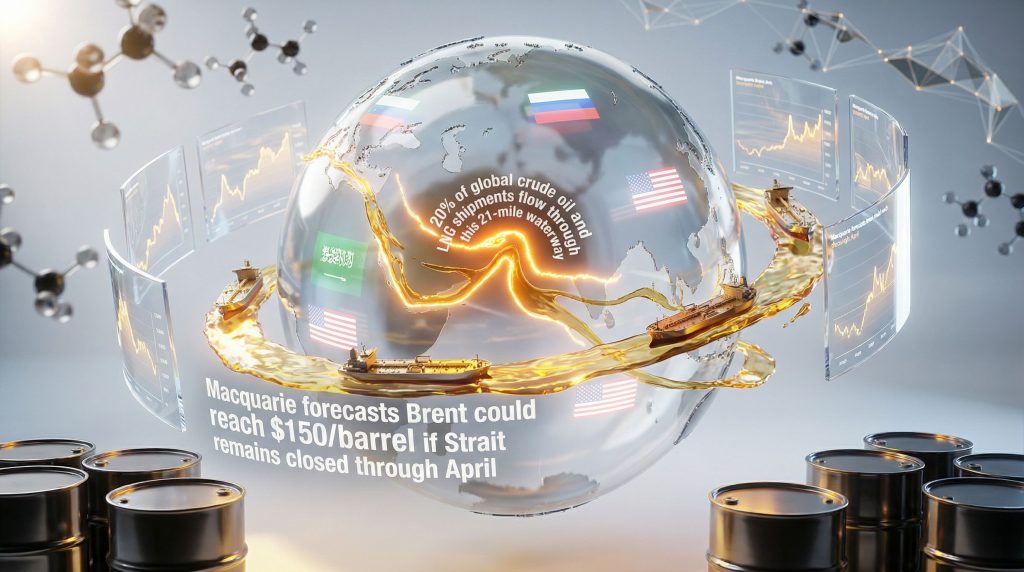
"If the strait remains effectively closed through April, Brent crude could reach $150 per barrel, representing a 45% premium above current levels."
The premium calculation mechanism considers several variables:
• Disruption probability: Statistical likelihood of continued supply constraints
• Alternative supply capacity: Available production increases from other regions
• Inventory cushions: Strategic and commercial storage levels globally
• Demand elasticity: Consumer and industrial response to higher prices
Trader Psychology and Speculative Positioning
Professional energy traders employ both fundamental analysis and technical trading strategies that can create momentum effects during volatile periods. The March 2026 market movements exemplified this dynamic, with Tim Waterer from KCM Trade noting that postponing strikes on Iranian power plants effectively removed much of the war premium from oil prices.
"Markets are finding their footing in these uncertain conditions," he observed, characterising the subsequent recovery following diplomatic developments.
Speculative positioning influences price discovery through several mechanisms:
-
Momentum trading: Technical analysis driving buy/sell decisions based on price trends rather than fundamentals
-
Options market hedging: Derivatives trading creating additional volatility as market makers adjust positions
-
Algorithmic execution: High-frequency trading amplifying price movements during periods of high volatility
-
Fund flows: Investment fund redemptions or allocations creating large-scale position changes
Strategic Petroleum Reserve Interventions and Market Stabilisation
Government intervention through strategic petroleum reserve releases represents a critical stabilisation mechanism during supply disruptions. The International Energy Agency Executive Director has been consulting with Asian and European governments regarding possible further reserve releases if deemed necessary.
In addition, analysis of Venezuela oil policy changes demonstrates how diplomatic shifts can influence global supply availability during crises.
Reserve intervention effectiveness depends on several factors:
• Release magnitude: Volumes sufficient to offset supply shortfalls
• Coordination timing: Synchronised releases among major consuming nations
• Market communication: Clear messaging about intervention duration and conditions
• Inventory levels: Available reserve quantities for sustained releases
Understanding the Strait of Hormuz Economic Impact
The Strait of Hormuz represents the world's most critical energy chokepoint, with its 21-mile width at the narrowest point controlling approximately 20% of global crude oil and LNG shipments. This geographic constraint creates unique economic vulnerabilities that extend far beyond immediate regional impacts.
Global Energy Transit Statistics and Dependencies
The strait's strategic importance stems from its role as the primary export route for Persian Gulf oil producers, including Saudi Arabia, Iran, Iraq, Kuwait, Qatar, and the UAE. These nations collectively control approximately 40% of global oil reserves and 25% of current production capacity.
Strait of Hormuz Transit Dependencies:
| Country | Daily Exports (Million Barrels) | Strait Dependency | Alternative Capacity |
|---|---|---|---|
| Saudi Arabia | 7.5 | 85% | East-West Pipeline (5 mbpd) |
| Iran | 2.1 | 100% | None operational |
| Iraq | 3.8 | 95% | Limited northern routes |
| Kuwait | 2.7 | 100% | None |
| UAE | 3.1 | 90% | Abu Dhabi pipeline (1.5 mbpd) |
The concentration of global energy flows through this narrow waterway creates systemic risk that cannot be easily mitigated through alternative routing. Current conflict has demonstrated this vulnerability, with shipments effectively halted, though limited tanker traffic has resumed.
Alternative Supply Route Economics and Feasibility
While several alternative routes exist for Persian Gulf oil exports, each presents significant economic and logistical constraints that limit their ability to fully replace Strait of Hormuz capacity. The most viable alternatives include overland pipelines, extended shipping routes, and increased production from other regions.
Primary Alternative Routes:
• Saudi East-West Pipeline: 5 million barrel per day capacity, but limited to Saudi crude only
• Iraq-Turkey Pipeline: 1.6 million barrel capacity, subject to regional political stability
• Cape of Good Hope Route: Extended transit time adding 2-3 weeks and significant shipping costs
• Russian/Central Asian Routes: Northern corridors with limited spare capacity
The economics of alternative routing involve substantial cost increases. Cape route shipping adds approximately $2-4 per barrel in transportation costs, while overland pipeline capacity remains insufficient to handle full Strait volumes.
Regional Production Capacity and Backup Infrastructure
Persian Gulf producers maintain varying levels of alternative export infrastructure, though none can fully replace Strait of Hormuz capacity. Saudi Arabia possesses the most developed alternative systems, while smaller producers like Kuwait and Bahrain have virtually no backup routing options.
Recent attacks on energy infrastructure have highlighted additional vulnerabilities beyond maritime chokepoints. For instance, facilities in Isfahan and Khorramshahr have experienced direct impacts, including damage to gas company offices, pressure-reduction stations, and pipeline infrastructure feeding power generation facilities.
How Energy Sanctions Affect Global Oil Pricing Mechanisms
Sanctions regimes create artificial market segmentation that fundamentally alters global oil pricing dynamics. By restricting access to specific supply sources, sanctions generate scarcity premiums while simultaneously creating opportunities for non-sanctioned suppliers to capture market share at elevated prices.
Temporary Waiver Programs and Market Access
The United States temporarily waived sanctions on Russian and Iranian oil already at sea during the recent crisis, creating immediate market impacts. This policy intervention demonstrates how sanctions modifications can provide short-term supply relief without permanent policy reversals.
The waiver mechanism specifically targeted oil already in transit, limiting supply increases to pre-existing shipments rather than enabling new production flows. This approach provides temporary market relief while maintaining broader sanctions architecture integrity.
Waiver Programme Characteristics:
• Limited duration: 30-day windows preventing long-term market dependence
• Specific cargo targeting: Only vessels already at sea qualify for exemptions
• Buyer restrictions: Limited to specific refinery destinations or trading partners
• Volume constraints: Maximum quantities based on pre-sanctions shipping patterns
Premium Pricing for Sanctioned Crude in Asian Markets
Paradoxically, Iranian crude has traded at premiums to ICE Brent following sanctions waivers, with traders offering supplies to Indian refiners above benchmark pricing. This premium structure reflects market recognition that Iranian crude provides substitute value for unavailable Persian Gulf supplies rather than discounted alternative sourcing.
The premium pricing mechanism demonstrates several market dynamics:
-
Supply substitution value: Iranian crude replaces other Persian Gulf sources rather than competing with them
-
Risk-adjusted pricing: Buyers willing to pay premiums for reduced exposure to conflict zones
-
Refinery compatibility: Specific crude quality matching existing processing infrastructure
-
Logistics optimisation: Established shipping and trading relationships reducing transaction costs
Strategic Reserve Release Coordination Among IEA Members
International Energy Agency coordination mechanisms enable synchronised strategic reserve releases among major consuming nations during supply emergencies. The IEA Executive Director's consultations with Asian and European governments regarding potential additional releases illustrate multilateral cooperation frameworks.
Effective reserve coordination requires:
• Synchronised timing: Coordinated release announcements maximising market impact
• Proportional contributions: Each member nation contributing based on consumption levels and available reserves
• Duration agreements: Unified positions on release duration and market exit strategies
• Communication protocols: Consistent messaging preventing market confusion or speculation
What Are the Long-Term Economic Implications of Energy Infrastructure Attacks?
Infrastructure attacks during conflicts create lasting economic consequences that extend far beyond immediate supply disruptions. These impacts influence investment patterns, insurance costs, and strategic planning across the global energy sector.
Investment Climate for Middle East Energy Projects
Regional conflicts fundamentally alter risk assessments for energy infrastructure investments throughout the Middle East. Project economics must now incorporate significantly higher security costs, extended payback periods, and elevated political risk premiums.
Key investment impact factors include:
• Security infrastructure costs: Additional 15-25% capital expenditure for physical protection systems
• Insurance premium increases: 200-400% higher coverage costs for facilities in conflict zones
• Extended development timelines: 18-36 month delays for regulatory approvals and security assessments
• Financing constraints: Limited availability of project financing for politically unstable regions
Moreover, understanding US oil production decline patterns helps contextualise how regional conflicts affect global investment flows.
Insurance Costs and Risk Assessment for Energy Companies
Energy sector insurance markets have responded to increased infrastructure vulnerability with dramatically higher premiums and more restrictive coverage terms. War risk insurance for Persian Gulf operations now commands premium rates 3-5 times pre-conflict levels.
Insurance Market Adjustments:
| Coverage Type | Premium Increase | Deductible Changes | Coverage Limits |
|---|---|---|---|
| War Risk | 400-500% | $50M minimum | Reduced maximum coverage |
| Political Risk | 300-400% | $25M minimum | Shorter policy terms |
| Business Interruption | 250-300% | Extended waiting periods | Limited force majeure |
| Marine Transit | 200-250% | Higher per-voyage limits | Restricted routing |
Supply Chain Diversification Strategies for Major Consumers
Large energy consumers are accelerating supply chain diversification initiatives to reduce dependence on Middle Eastern sources. These strategies involve both geographic diversification and alternative energy development programmes.
Major consuming nations have implemented several diversification approaches:
-
Enhanced Strategic Reserves: Increasing stockpile targets from 90 to 120-180 days consumption
-
Alternative Supplier Development: Long-term contracts with non-Middle Eastern producers
-
Renewable Energy Acceleration: Expedited deployment reducing petroleum dependence
-
Regional Refining Capacity: Domestic processing capability reducing import vulnerabilities
Market Forecasting Models for Oil Price Trajectories
Professional energy market forecasting relies on sophisticated models that incorporate multiple variables including supply disruption probability, demand elasticity, inventory levels, and policy intervention likelihood. Current models suggest significant price volatility persistence through April 2026.
Scenario Analysis: $85-90 Floor vs. $110-150 Ceiling Projections
Macquarie's analysis establishes key price parameters based on conflict duration and intensity scenarios. The firm expects price floors of $85-90 representing alternative supply activation costs, with natural drift toward $110 ranges assuming normal Strait of Hormuz operations resume.
Price Forecast Scenarios by Disruption Duration:
| Scenario | Duration | Brent Price Range | Probability Assessment | Key Assumptions |
|---|---|---|---|---|
| Quick Resolution | 2-4 weeks | $85-95 | 35% | Diplomatic breakthrough |
| Extended Disruption | 6-8 weeks | $95-110 | 40% | Partial strait reopening |
| Prolonged Conflict | 12+ weeks | $110-150 | 25% | Sustained closure |
The $150 per barrel ceiling scenario assumes Strait closure through April, representing a level where demand destruction becomes significant enough to balance reduced supply availability.
Demand Growth Projections vs. Supply Disruption Variables
Global oil demand continues growing at approximately 1.2-1.5 million barrels per day annually, creating baseline supply requirements that compound disruption impacts. Current forecasting models must balance this underlying demand growth against potential supply constraints from ongoing conflicts.
Critical demand variables include:
• Economic growth correlation: GDP expansion driving transportation and industrial consumption
• Price elasticity thresholds: Consumer behaviour changes at various price levels
• Seasonal consumption patterns: Winter heating demand and summer driving seasons
• Alternative fuel substitution: Rate of electric vehicle adoption and renewable energy deployment
Furthermore, OPEC meeting insights provide crucial context for understanding how production decisions affect supply forecasts.
Central Bank Policy Responses to Energy-Driven Inflation
Energy price increases create direct inflationary pressures that central banks must address through monetary policy adjustments. The current oil price volatility has prompted policy discussions regarding appropriate responses to energy-driven inflation.
Priyanka Sachdeva from Phillip Nova brokerage noted that "markets anticipate disruption through April, creating continued upward pressure on Brent prices while maintaining inflation momentum." This dynamic presents central banks with challenging policy trade-offs between growth support and inflation control.
The next major ASX story will hit our subscribers first
Regional Economic Adaptation Strategies During Energy Crises
Major economic regions have developed specific adaptation strategies to manage energy supply disruptions, ranging from emergency response protocols to long-term structural adjustments. These strategies demonstrate how different economic systems respond to energy security challenges.
Asian Refinery Capacity and Alternative Sourcing
Asian nations, particularly China, India, and Japan, have invested heavily in refinery capacity expansion and supply source diversification following previous energy crises. Current Indian refinery purchases of Iranian crude at premiums to ICE Brent demonstrate active alternative sourcing strategies.
Asian adaptation strategies include:
• Refinery flexibility: Processing capabilities for various crude grades reducing supply source dependence
• Strategic partnerships: Long-term supply agreements with multiple producing regions
• Emergency protocols: Government-coordinated response plans for supply disruptions
• Technology investments: Enhanced storage and transportation infrastructure
European Energy Security Measures and Reserve Management
European nations have developed comprehensive energy security frameworks following previous supply disruptions, particularly those related to Russian natural gas supplies. Current coordination with the International Energy Agency regarding strategic reserve releases demonstrates these preparedness measures.
European approaches emphasise:
-
Coordinated reserve releases: Multinational cooperation in emergency response
-
Supply route diversification: Multiple import corridors reducing single-point failures
-
Alternative energy acceleration: Renewable capacity deployment reducing petroleum dependence
-
Regulatory frameworks: Emergency powers enabling rapid supply chain adjustments
North American Production Ramp-Up Potential
North American producers maintain significant spare production capacity that can be activated during global supply disruptions, though activation requires 6-18 months due to drilling and completion lead times. Recent energy conference discussions in Houston highlighted this production flexibility as a strategic advantage.
US Energy Secretary Chris Wright has downplayed the current crisis, potentially reflecting confidence in North American supply response capabilities. However, oil executives at the same conference expressed concerns about longer-term economic impacts, suggesting more cautious industry perspectives.
Investment Implications for Energy Sector Stakeholders
Energy sector investment patterns shift significantly during geopolitical crises, creating both opportunities and risks across different industry segments. Understanding these dynamics provides insights for both institutional and individual investors.
Upstream vs. Downstream Sector Performance During Crises
Upstream oil and gas companies (exploration and production) typically benefit from higher commodity prices during supply disruptions, while downstream operations (refining and marketing) face mixed impacts depending on specific market conditions and operational geography.
Sector Performance Characteristics:
| Sector | Crisis Performance | Key Drivers | Risk Factors |
|---|---|---|---|
| Upstream | Generally positive | Higher commodity prices | Operational disruptions |
| Midstream | Mixed results | Increased transportation demand | Infrastructure vulnerabilities |
| Downstream | Variable impacts | Margin compression vs. volume | Supply chain disruptions |
| Integrated | Balanced exposure | Diversified operations | Complex hedge strategies |
Renewable Energy Acceleration as Risk Mitigation
Energy security concerns during conflicts accelerate renewable energy adoption as consuming nations seek to reduce dependence on volatile fossil fuel markets. This trend creates long-term investment opportunities in solar, wind, and energy storage technologies.
Renewable energy advantages during crises include:
• Supply security: No geopolitical disruption risk for solar and wind resources
• Price stability: Fixed production costs independent of global commodity markets
• Energy independence: Reduced reliance on energy imports and trade relationships
• Infrastructure resilience: Distributed generation reducing single-point failure risks
Transportation and Logistics Sector Impacts
Energy transportation and logistics companies experience complex impacts during supply disruptions, with some segments benefiting from higher demand while others face operational challenges. Tanker shipping rates typically increase during supply route disruptions.
The resumption of limited tanker traffic through the Strait of Hormuz demonstrates ongoing operational challenges for maritime transportation companies. Only two vessels successfully completed transits to India during recent reporting periods, highlighting continued logistical constraints.
Regional Economic Recovery Patterns After Energy Supply Disruptions
Historical analysis of energy crisis recovery patterns provides insights into expected timelines and structural changes following current disruptions. Recovery typically occurs in phases, with immediate price normalisation followed by longer-term infrastructure and relationship adjustments.
Historical Timeline Analysis of Market Normalisation
Previous energy crises demonstrate typical recovery patterns spanning 6-18 months, depending on conflict resolution speed and infrastructure restoration requirements. Market price normalisation often precedes physical infrastructure recovery by several months.
Typical Recovery Phase Timeline:
• Immediate (0-4 weeks): Initial diplomatic efforts and price volatility
• Short-term (1-3 months): Partial supply restoration and alternative route activation
• Medium-term (3-12 months): Infrastructure repair and normal shipping resumption
• Long-term (12+ months): Investment pattern normalisation and security upgrades
Additionally, OPEC market influence patterns significantly affect recovery trajectories and long-term market stability.
Infrastructure Rebuilding Costs and Timeline Projections
Energy infrastructure repair and enhancement following conflicts require substantial capital investment and extended timelines. Current damage to Iranian gas facilities in Isfahan and Khorramshahr represents immediate restoration needs, while broader security upgrades may require years to complete.
Infrastructure restoration considerations include:
-
Damage assessment timelines: 3-6 months for comprehensive facility evaluations
-
Repair versus replacement decisions: Cost-benefit analysis for damaged infrastructure
-
Security enhancement integration: Upgrading protection systems during rebuilding
-
Regulatory approval processes: Government oversight and safety certifications
Long-Term Structural Changes in Global Energy Trade
Major energy disruptions often catalyse permanent changes in global trade patterns, supply chain strategies, and energy infrastructure development. Current tensions may accelerate existing trends toward supply diversification and renewable energy adoption.
Expected structural changes include:
• Enhanced strategic reserves: Increased stockpiling among major consuming nations
• Alternative route development: Investment in bypass infrastructure and alternative transportation
• Technology advancement: Improved monitoring and security systems for critical infrastructure
• Partnership evolution: Shifting alliances and supply relationships based on reliability assessments
The current crisis demonstrates how oil rises as markets assess supply risk after Iran denies US talks, creating lasting implications for global energy trade relationships. These developments will likely influence energy policy decisions for years to come, as markets adjust to supply disruption probabilities and geopolitical risk assessments.
Consequently, oil rises as markets assess supply risk after Iran denies US talks represents more than a temporary price adjustment—it signals a fundamental reassessment of energy security priorities across major consuming nations and producing regions alike.
Disclaimer: This analysis incorporates data and insights from various market sources and industry reports. Oil market forecasts involve significant uncertainty and actual outcomes may differ materially from projections. Investment decisions should consider individual risk tolerance and professional financial advice. Price forecasts and market analysis represent current assessments subject to rapid change based on evolving geopolitical and economic conditions.
Ready to Capitalise on Energy Market Volatility?
With oil markets experiencing dramatic price swings due to geopolitical tensions and supply disruptions, savvy investors are seeking opportunities across ASX-listed energy companies that could benefit from sustained higher commodity prices. Discovery Alert's proprietary Discovery IQ model delivers instant notifications on significant mineral and energy discoveries, helping subscribers identify actionable investment opportunities ahead of broader market movements during these volatile periods.