June 28, 2026
The Hidden Architecture of Oil Price Risk: Why Geopolitical Chokepoints Define Energy Markets
Most commodity analysts focus on supply and demand fundamentals when assessing current crude oil prices. Yet history repeatedly demonstrates that the single most powerful short-term price driver is not inventory data or production quotas, but rather the geography of risk embedded in global energy transit networks. When military conflict intersects with the world's most constrained shipping corridors, markets do not simply reprice supply, they reprice uncertainty itself.
That dynamic is playing out with full force in mid-2026, as oil rises as renewed U.S.-Iran strikes reignite Middle East supply fears across global energy markets. Understanding why crude benchmarks respond so sharply to military developments requires a deeper look at the structural vulnerabilities built into the world's energy infrastructure.
When big ASX news breaks, our subscribers know first
The Strait of Hormuz: A Single Point of Failure in Global Energy Architecture
Why No Alternative Exists at Scale
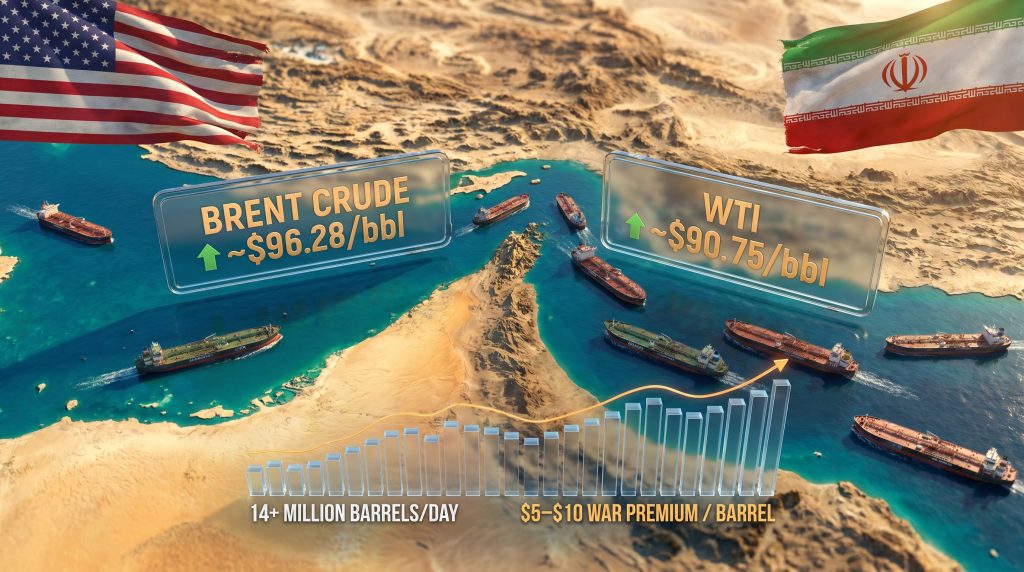
The Strait of Hormuz is not merely an important shipping lane. It is the functional bottleneck through which approximately 20% of the world's oil supply passes on any given day. At peak flow, that represents more than 14 million barrels of crude oil and refined products transiting a maritime corridor barely 33 kilometres wide at its narrowest navigable point.
What makes this chokepoint uniquely dangerous from an energy security perspective is the near-total absence of viable alternatives. Unlike disruptions to land-based pipelines, which can often be partially rerouted within weeks, a closure or partial blockade of the Strait of Hormuz affects:
- Multiple exporting nations simultaneously, including Saudi Arabia, Iraq, Kuwait, the UAE, Bahrain, and Qatar
- Liquefied natural gas (LNG) flows in addition to crude oil
- Refined product supply chains feeding Asian and European consumers
- Petrochemical feedstock networks with limited inventory buffers
The nations most exposed to prolonged disruption include Japan, South Korea, China, and India, all of which depend heavily on Persian Gulf crude imports with limited short-term substitution capacity.
How Markets Price Chokepoint Risk Differently from Standard Supply Disruptions
A key insight often overlooked in mainstream energy commentary is that chokepoint risk is fundamentally different from conventional supply disruptions in how it transmits through futures markets. When a pipeline goes offline or a production facility experiences outages, traders can model the volume impact with reasonable precision. When a maritime chokepoint faces military threat, the pricing mechanism shifts entirely.
Furthermore, as Reuters reported on escalating supply disruption concerns, the oil market trade risks embedded in active conflict zones create pricing dynamics that go well beyond simple volume calculations.
Markets confronting chokepoint risk are not estimating lost barrels. They are estimating the probability distribution of every possible outcome, from minor transit delays to complete blockade scenarios, and pricing the weighted average of that distribution.
This is why even a partial stand-down agreement, where vessels are permitted to move freely through contested waters, can produce significant price softening even without a single additional barrel entering global supply. The market is repricing probability, not volume.
Understanding the War Premium: What $5-$10 Per Barrel Actually Represents
The Mechanics of Geopolitical Risk Pricing in Crude Futures
Since U.S.-Iran hostilities escalated in late February 2026, energy analysts have estimated that global crude benchmarks have been carrying a persistent geopolitical risk premium of approximately $5 to $10 per barrel. This figure deserves careful interpretation because it is widely cited but rarely explained.
The war premium does not represent confirmed supply losses. It represents the market's real-time probabilistic assessment of future disruption scenarios, discounted back to present value and embedded into spot and near-term futures pricing. The premium fluctuates based on:
- Diplomatic signalling from Switzerland-based negotiations between U.S. and Iranian delegations
- Confirmed military strike activity and the scale of targeted infrastructure
- Insurance market pricing for Persian Gulf transit routes, which feeds directly into tanker availability
- Strategic petroleum reserve drawdown expectations among major consuming nations
The war premium is also asymmetric in how it responds to news flow. Escalation events tend to produce sharp, rapid premium expansion, while de-escalation signals produce more gradual unwinding. This asymmetry reflects deep-seated investor risk aversion in commodity markets during active military conflicts. Consequently, the market volatility reset observed across broader financial assets during this period has amplified these swings further.
Market Reactions: Reading the Price Movements of June 2026
Benchmark Performance Across the Escalation Cycle
The price action surrounding the most recent wave of U.S. military strikes on Iranian missile storage facilities, drone depots, and coastal radar installations provides a textbook illustration of how geopolitical risk transmits into energy markets.
| Benchmark | Session Movement | Price Level |
|---|---|---|
| West Texas Intermediate (WTI) | +0.71% | $69.72/barrel |
| Brent Crude | +0.36% | $72.25/barrel |
| WTI (post-strike session, ~2%) | Recovery rally | ~$90.75/barrel |
| Brent (post-strike session, ~2%) | Recovery rally | ~$96.28/barrel |
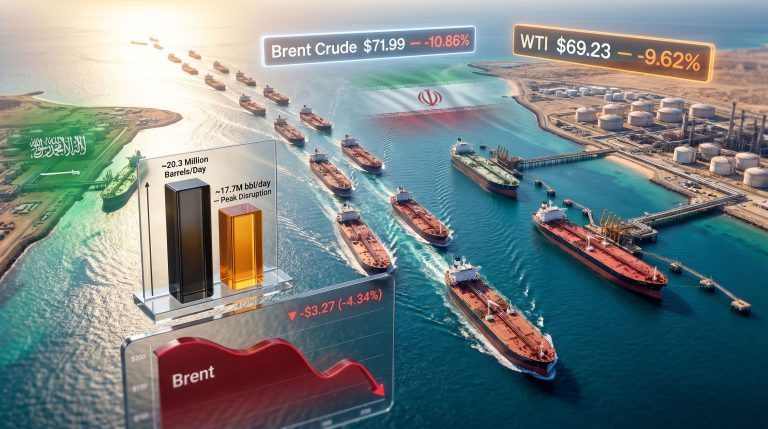
WTI's brief slide below $70 per barrel on Friday, June 27, 2026 was particularly significant. That threshold had not been breached since February 27, 2026, the day immediately preceding the formal outbreak of hostilities. The subsequent recovery on renewed strike reports confirmed that the conflict remains the dominant pricing variable overriding broader macroeconomic headwinds.
The Whipsaw Pattern: What De-escalation Then Re-escalation Reveals About Market Psychology
One of the most instructive dynamics of this conflict's market impact has been the extreme sensitivity to diplomatic signalling. When the United States previously called off an imminent wave of strikes during a brief diplomatic window, crude benchmarks shed approximately 10% within a compressed timeframe. The subsequent resumption of military action rapidly reversed those losses.
This pattern reveals something important about how professional energy traders are currently positioning. They are not taking directional bets on conflict resolution. Instead, many are managing optionality, holding positions that benefit from volatility itself regardless of whether prices ultimately move higher or lower. This structural feature of current market positioning amplifies price swings in both directions. As the Wall Street Journal noted on supply disruption concerns, the scale of these swings is consistent with historically extreme risk environments.
The Diplomatic Variable: Switzerland Talks and Ceasefire Scenarios
What a Ceasefire Would and Would Not Do to Oil Prices
High-level negotiations between U.S. and Iranian delegations have been conducted in Switzerland, with U.S. Vice President JD Vance leading the American side. Following the latest round of U.S. strikes, a source connected to the negotiations confirmed that discussions were placed on hold, though representatives from both sides remained present in country, signalling that the diplomatic process had not been permanently suspended.
A senior Trump administration official subsequently clarified that negotiations had not been abandoned and that technical discussions around a memorandum of understanding remained on schedule. A separate U.S. official confirmed that both sides had agreed to a temporary stand-down, with vessels permitted to move freely through contested waters.
From a market pricing perspective, the scenarios break down as follows:
| Scenario | Likely Price Impact | Timeframe |
|---|---|---|
| Durable ceasefire confirmed | -$5 to -$10/barrel (war premium unwinding) | Days to weeks |
| Talks collapse, no agreement | +$10 to +$20/barrel | Rapid |
| Sustained blockade of Hormuz | Brent potentially toward $150/barrel | Weeks to months |
| Status quo: low-level conflict continues | Premium persists at $5-$10/barrel | Ongoing |
Disclaimer: Scenario price projections represent analyst modelling of tail-risk outcomes and should not be interpreted as investment advice or reliable forecasts. Energy markets are subject to extreme volatility and outcomes may differ materially from modelled scenarios.
Why OPEC+ Production Increases Cannot Solve a Transit Problem
The Volume-versus-Security Distinction That Markets Understand
OPEC+ announced a production quota increase of 188,000 barrels per day for July 2026. Under normal market conditions, this would represent a meaningful supply addition capable of softening prices. In the current environment, however, the market has largely discounted this contribution, and for a structurally sound reason.
The core concern driving the war premium is not whether sufficient oil exists in the ground. It is whether that oil can reach buyers through the Strait of Hormuz. OPEC's market influence addresses production volumes while leaving the transit problem entirely unresolved. Furthermore, several of the OPEC+ members most capable of executing quota increases are Persian Gulf nations directly operating within the conflict zone, creating operational constraints on their ability to fully deliver committed volumes.
In addition, OPEC demand forecasts have been revised repeatedly throughout this conflict period, reflecting the difficulty of modelling consumption patterns during active geopolitical disruption. Non-OPEC producers including the United States, Canada, and Brazil have partially compensated for Persian Gulf reductions through accelerated export growth. However, the scale of the disruption, which has seen Persian Gulf producing nations collectively reduce output by more than 14 million barrels per day representing roughly 14% of pre-war global supply, is not something alternative producers can offset within any near-term timeframe.
The next major ASX story will hit our subscribers first
The Macroeconomic Transmission Channels of Elevated Crude Prices
Beyond the Pump: How $90-$100+ Oil Reshapes the Broader Economy
The economic consequences of sustained crude oil elevation extend well beyond energy sector earnings into the broader macroeconomic environment. Notably, the oil market trade risks arising from this conflict have created cascading effects across multiple industries simultaneously:
- Inflation persistence: Energy costs are a direct input into headline CPI calculations in virtually every major economy, and sustained oil above $90/barrel creates meaningful upward pressure that complicates central bank rate normalisation cycles
- Supply chain cost cascades: Airlines, shipping operators, chemical manufacturers, and food distributors all face direct margin compression, with cost pass-through effects elevating consumer prices broadly
- Emerging market stress: Net energy importing nations across Southeast Asia and Sub-Saharan Africa face acute balance-of-payments deterioration when global oil prices surge, potentially triggering currency pressure and sovereign financing challenges
- Insurance market feedback loops: Elevated Persian Gulf transit risk pushes up marine insurance premiums, which compounds shipping cost inflation independently of fuel prices themselves
A less commonly discussed transmission channel involves the petrochemical sector. Naphtha, a crude oil derivative used as feedstock in plastics, synthetic fibres, and pharmaceutical manufacturing, faces severe supply disruption when Persian Gulf flows are constrained. This creates secondary inflation pressure across consumer goods categories that do not immediately register as energy-related in standard CPI decomposition.
Frequently Asked Questions
Why does the oil market react so strongly to Iranian military activity specifically?
Iran's geographic position along the northern coast of the Strait of Hormuz gives it the physical capacity to threaten transit through the chokepoint in ways that most other regional actors cannot replicate. This geographic reality means Iranian military actions carry asymmetric weight in energy market pricing relative to conflicts in other regions.
What is the significance of WTI falling below $70 per barrel?
The $70 level represented a psychologically and technically significant threshold because it aligned with pre-conflict pricing levels. Its breach signalled that underlying demand concerns and macro headwinds were creating downward pressure even within the elevated conflict environment, before the subsequent recovery on renewed strike reports restored the war premium.
How do tanker insurance markets amplify oil price volatility?
When military activity escalates around key transit corridors, marine war risk insurance premiums rise sharply. This increases the effective cost of moving Persian Gulf crude independently of the oil price itself, constraining tanker availability and creating supply tightness that feeds back into spot market pricing.
Can strategic petroleum reserves meaningfully buffer a Hormuz disruption?
Major consuming nations collectively hold strategic petroleum reserves capable of supplementing supply for a defined period. However, these reserves are designed for short-term bridging rather than sustained multi-month disruptions. A prolonged Hormuz closure would exhaust reserve buffers and force more fundamental demand destruction responses.
This article contains forward-looking analysis, scenario modelling, and market commentary that involves significant uncertainty. Nothing in this article constitutes financial or investment advice. Energy markets are subject to rapid and unpredictable change driven by geopolitical, regulatory, and macroeconomic factors beyond any analyst's ability to reliably forecast.
Want to Stay Ahead of the Next Major Market-Moving Discovery?
While geopolitical risk premiums reshape energy markets overnight, significant mineral discoveries on the ASX can generate equally dramatic price movements — and Discovery Alert's proprietary Discovery IQ model delivers real-time alerts the moment these opportunities emerge, turning complex data across 30+ commodities into clear, actionable insights. Explore historic examples of exceptional discovery returns and begin your 14-day free trial at Discovery Alert to position yourself ahead of the broader market.