August 25, 2026
The global energy landscape faces unprecedented challenges as oil prices and Middle East conflict continue to shape market dynamics across international commodity exchanges. Furthermore, the petroleum industry's structural vulnerabilities create cascading effects that extend far beyond regional boundaries, highlighting the interconnected nature of modern energy systems.
Structural Forces Driving Energy Market Volatility
The relationship between oil price rally factors extends beyond simple supply disruption calculations. Energy markets operate through complex feedback mechanisms where trader psychology, algorithmic trading systems, and strategic petroleum reserve policies interact to create amplified price movements.
Current Market Performance Indicators:
- Brent crude futures reached $105.37 per barrel in April 2026, representing a 1.4% daily increase
- West Texas Intermediate crude climbed to $102.97 per barrel, showing 1.6% gains
- March 2026 recorded a historic 64% monthly price surge in Brent crude, the largest increase in LSEG's dataset spanning back to June 1988
These price levels reflect markets attempting to incorporate multiple risk scenarios simultaneously. According to analysis from the International Energy Agency, supply normalisation timelines extend far beyond immediate diplomatic progress. Infrastructure restoration, insurance cost adjustments, and shipping route resumption involve extended periods measured in weeks or months rather than days.
Maritime Chokepoint Dependencies
Global petroleum distribution systems concentrate enormous volumes through narrow geographic passages, creating structural vulnerabilities that energy markets must continuously price into contract valuations.
Critical Transit Route Analysis:
| Route | Daily Flow (Million Barrels) | Global Share | Alternative Capacity | Rerouting Time |
|---|---|---|---|---|
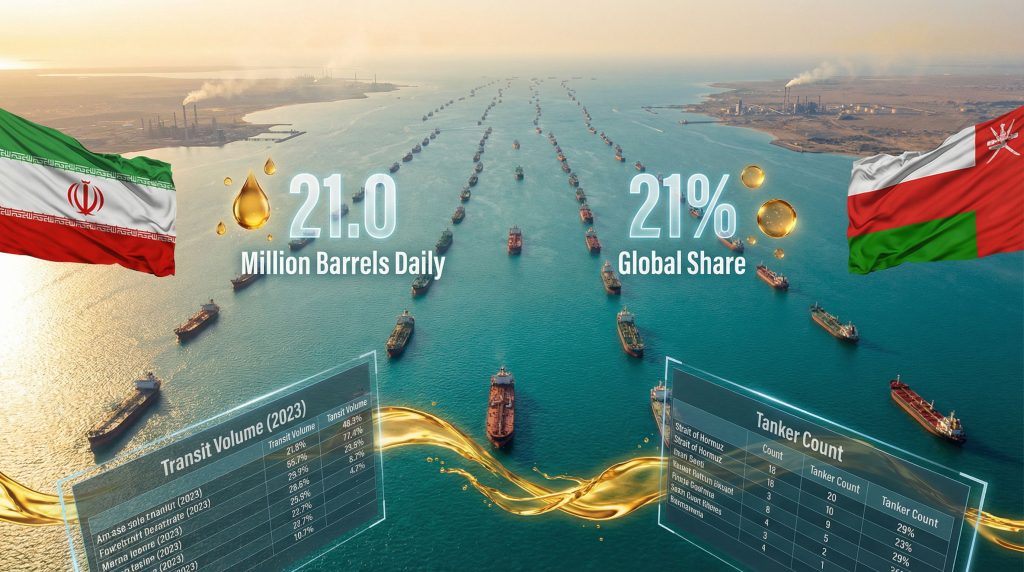
| Strait of Hormuz | 21.0 | 21% | 3-5 million bpd pipeline | N/A |
| Suez Canal/SUMED | 9.2 | 9% | Cape routing available | +10-14 days |
| Strait of Malacca | 15.6 | 16% | Lombok/Makassar Straits | +3-5 days |
| Bab el-Mandeb | 6.2 | 6% | Cape routing available | +10-14 days |
The Strait of Hormuz represents the single most critical vulnerability, carrying approximately 20% of global oil and liquefied natural gas trade. Limited pipeline alternatives mean that any sustained closure would force massive rerouting through alternative maritime passages.
Risk Premium Calculation Mechanisms
Energy futures markets incorporate geopolitically-driven risk premiums estimated at $20-40 per barrel during periods of heightened uncertainty. These premiums reflect quantifiable cost components rather than speculative positioning:
- Marine Insurance Escalation: Protection and Indemnity insurance costs increase proportionally with threat assessments
- Alternative Routing Expenses: Circumnavigating Africa adds 6,000+ kilometres to voyage distances
- Strategic Reserve Uncertainty: Government intervention timing creates additional pricing variables
- Infrastructure Targeting Risk: Direct threats against energy assets require security cost premiums
When big ASX news breaks, our subscribers know first
Production Impact Assessment
OPEC production impact analysis reveals crude oil output declined by 7.3 million barrels per day in March 2026 compared to February levels, primarily reflecting forced export reductions resulting from transit route disruptions.
Simultaneously, the U.S. oil production decline experienced its largest reduction in two years during January 2026, following severe winter storms. These concurrent supply disruptions from both geopolitical and weather-related factors created compound pressure on global petroleum availability.
Supply Chain Structural Vulnerabilities
Modern petroleum distribution operates on efficiency optimisation principles that minimise inventory buffer capacity. This just-in-time approach creates systemic fragility when key components face disruption:
- Inventory Minimisation: Refined product stockpiles maintained at operationally necessary levels rather than safety margins
- Transit Route Concentration: Alternative pathways often lack sufficient capacity to absorb displaced volumes
- Processing Facility Dependencies: Refineries configured for specific crude grades cannot easily substitute alternative supplies
- Distribution Network Integration: Downstream logistics systems optimised for normal flow patterns struggle with rerouted supplies
Algorithmic Trading and Price Discovery Dynamics
The 64% monthly increase in oil prices during March 2026 reflects price discovery mechanisms operating under extreme information asymmetry. Moreover, oil price movement analysis shows modern commodity futures markets incorporate algorithmic trading systems that can create feedback loops.
Electronic Trading System Amplification
Algorithmic trading platforms employ multiple automated strategies that amplify volatility during crisis periods:
- Sentiment Analysis Processing: Real-time news parsing identifies keyword patterns associated with geopolitical escalation
- Technical Signal Recognition: Chart patterns and volatility indicators trigger automated trade execution
- Momentum Following Strategies: Price movement acceleration creates self-reinforcing trading cycles
- Liquidity Provision Withdrawal: Market makers reduce position sizes during high-volatility periods
These mechanical processes can create price movements that exceed underlying fundamental justifications, as trading algorithms respond to technical triggers rather than supply-demand calculations.
Economic Transmission Mechanisms
Elevated oil prices and Middle East conflict create cascading economic impacts extending far beyond energy markets. Current evidence suggests these transmission effects are materialising across multiple sectors.
Regional Economic Stress Indicators
Tourism Sector Impacts:
- Qatar's travel and tourism firms face mounting pressure on cash flow amid regional instability
- Demand suppression reflects both direct conflict avoidance and indirect cost escalation effects
Financial Market Stress:
- GCC USD sukuk and bond spreads reached five-year highs according to Fitch analysis
- Credit risk premiums increased across regional markets reflecting heightened uncertainty
Storage and Infrastructure Costs:
- Fujairah energy storage costs rose amid Middle East conflict
- Upstream margin compression affects traders and refiners managing inventory positioning
Policy Response Activation
Central banks and development institutions across the region implemented proactive support measures recognising the broader economic contagion potential:
- Qatar Central Bank: Rolled out liquidity support measures targeting financial system stability
- Qatar Development Bank: Implemented loan guarantees and inflation support programmes for private sector relief
- Regional Coordination: Multiple GCC institutions activated contingency financing facilities
Currency and Trade Balance Effects
Oil price increases create complex currency dynamics through petrodollar recycling mechanisms. Furthermore, trade war oil impacts demonstrate how energy-exporting economies experience currency strengthening pressures while import-dependent regions face exchange rate weakness.
Import Dependency Vulnerability Analysis
Different economic regions demonstrate varying exposure levels to energy price shocks:
- East Asian Economies: Face acute exposure due to 70-90% import dependency on Middle Eastern crude supplies
- European Markets: Experience dual pressure from energy costs and currency fluctuation effects
- North American Producers: Benefit from domestic production capacity while facing refined product cost increases
- Emerging Market Economies: Struggle with foreign exchange pressures and fiscal budget constraint impacts
Long-Term Structural Implications
Sustained energy price volatility historically accelerates structural changes in global energy systems. According to Reuters analysis, current price levels may catalyse faster adoption of alternative energy technologies and infrastructure resilience investments.
Energy Transition Acceleration Factors
High petroleum costs create economic incentives for alternative energy development:
- Renewable Energy Competitiveness: Solar and wind power become more cost-competitive at sustained high oil price levels
- Electric Vehicle Adoption: Transportation cost calculations shift in favour of electric alternatives
- Energy Efficiency Investment: Industrial processes face economic pressure to reduce energy intensity
- Strategic Diversification: Governments prioritise energy independence through domestic alternative development
Supply Chain Resilience Building
Companies and governments increasingly prioritise supply chain redundancy over efficiency optimisation:
- Geographic Diversification: Alternative supply sources reduce dependence on concentrated production regions
- Infrastructure Redundancy: Multiple transit routes and storage facilities provide backup capacity
- Strategic Stockpiling: Emergency reserves receive increased investment despite carrying costs
- Technology Integration: Smart grid systems and distributed generation reduce centralised infrastructure dependence
The next major ASX story will hit our subscribers first
Investment Flow Redistribution
High energy prices redirect global capital allocation patterns, creating lasting economic development implications. In addition, energy-producing regions attract increased investment while energy-intensive industries face margin compression and potential relocation pressures.
Derivative Market Insights
Options markets provide forward-looking insight into trader expectations about future volatility patterns. Current elevated implied volatility levels suggest markets expect continued uncertainty for extended periods, indicating that price stability may not return quickly.
Corporate Risk Management Adaptation
Airlines, shipping companies, and other energy-intensive industries employ increasingly sophisticated hedging strategies to manage price volatility exposure. However, extreme price movements can overwhelm traditional risk management tools, forcing operational adjustments.
Future Market Structure Evolution
Technology-driven resilience building may gradually reduce the strategic importance of current chokepoints. Advances in energy storage, smart grid technology, and distributed generation systems create alternatives to centralised energy infrastructure.
Geopolitical Realignment Possibilities
Sustained energy price volatility could accelerate efforts to develop alternative supply sources and transit routes. Investment in pipeline infrastructure, LNG export facilities, and renewable energy systems may eventually reduce global dependence on traditional petroleum chokepoints.
The intersection of oil prices and Middle East conflict demonstrates how concentrated geographic vulnerabilities create systemic risks throughout global economic systems. Understanding these structural relationships provides essential context for evaluating energy market dynamics and their broader economic implications across multiple time horizons.
This analysis is based on publicly available market data and should not be considered investment advice. Energy markets involve substantial volatility and risk factors that require careful consideration in any investment or policy decisions.
Seeking Opportunities in Energy Market Volatility?
Discovery Alert's proprietary Discovery IQ model delivers real-time notifications on significant ASX mineral discoveries, including energy-related commodities, enabling subscribers to identify actionable opportunities ahead of broader market movements. Begin your 14-day free trial today at Discovery Alert and position yourself to capitalise on market-leading insights during periods of global energy uncertainty.