June 7, 2026
When Words Move Markets: How Military Rhetoric Shapes Global Energy Pricing
Every commodity trader understands one foundational truth about crude oil: the price you see on a screen reflects not just what is being pumped today, but what the market believes could stop being pumped tomorrow. No region on Earth generates more of that forward-looking anxiety than the Persian Gulf. When military rhetoric escalates in this corridor, the premium embedded in Brent and WTI futures widens immediately, often before a single barrel is disrupted. This is not irrational panic. It is a precise, if imperfect, attempt to price in tail risk across a system that moves roughly one-fifth of the world's daily oil supply through a waterway that could be closed by a determined adversary in hours.
Understanding why oil spikes on Israeli defense chief's threats of new strikes requires stepping beyond the news cycle and into the mechanics of how geopolitical risk transmits through energy pricing. The current episode is not an isolated event. It is the latest iteration of a structural feedback loop that has intensified across the past twelve months, as successive military operations have systematically degraded Iranian infrastructure and ratcheted up the probability of retaliatory disruptions touching the Gulf's critical export architecture.
When big ASX news breaks, our subscribers know first
The Language of Military Briefings and What It Costs Per Barrel
How Official Statements Function as Market-Moving Instruments
Most economic data releases move markets because they change the probability distribution of future central bank decisions. Military statements operate differently. They shift the probability distribution of physical supply availability, and in a world where spare capacity buffers have been eroded, any credible narrowing of the supply outlook carries immediate price consequences.
Israeli Defence Minister Israel Katz delivered remarks at a military ceremony in late April 2026 that traders interpreted as a near-term operational signal rather than diplomatic background noise. His message was clear in its strategic framing: Israel may soon need to act again against Iran to ensure the regime cannot pose existential threats to Israel, the United States, and the broader democratic world for years to come. He characterised the damage already inflicted on Iran across the preceding twelve months as severe across military, economic, and energy dimensions, noting that years of capability development had been reversed.
The significance here is not purely what was said, but the venue, the timing, and the accompanying intelligence context. Israeli media simultaneously reported a fresh military build-up and incoming U.S. defence aid shipments arriving at Israeli ports, lending the verbal statement operational credibility that pure political rhetoric rarely carries.
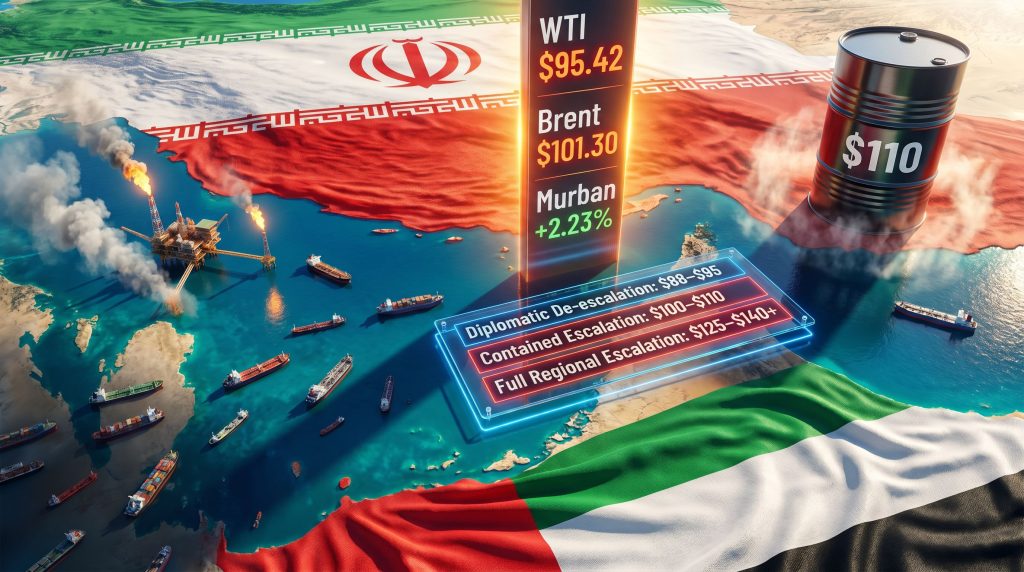
When a defence minister speaks at a military ceremony while logistics evidence of operational preparation is simultaneously surfacing, energy markets treat the combination as a forward supply disruption signal. The price response was immediate: Brent crude pushed back toward the $101.30 level, with Murban Crude recording a sharper 2.23% gain on the same session, indicating Gulf-specific supply anxiety was amplifying the broader move.
The Trump-Netanyahu Coordination Framework
Katz also described a coordinated strategic alignment between Washington and Jerusalem, with U.S. President Donald Trump and Prime Minister Benjamin Netanyahu working jointly toward completing campaign objectives in a manner designed to prevent Iran from reconstituting a threat to Israel, the United States, and the free world across generational timeframes. He framed Israeli support for American diplomatic efforts as genuine while simultaneously reserving the right to independent action if campaign objectives require it.
This dual-track signalling creates a particularly complex market environment. The existence of U.S.-Israel coordination provides some reassurance that escalation will be calibrated. However, Israel's explicit reservation of independent operational authority introduces irreducible uncertainty about timing and targeting decisions. Markets cannot fully price this dynamic because it depends on closed-room decisions made by a small number of individuals operating under classification constraints.
A senior U.S. administration official, speaking anonymously, confirmed that Washington was weighing a plan to sustain its blockade on Iranian ports while coordinating with allies to impose higher costs on Tehran's attempts to subvert the free flow of energy through international waterways. The language of cost-imposition, rather than resolution, signals a campaign designed for duration, not rapid conclusion. This structural framing is directly bearish for supply certainty and bullish for risk-adjusted crude pricing.
The South Pars Dimension: When Shared Infrastructure Becomes a Battlefield
Why Striking a Joint Gas Field Changes Alliance Calculus
South Pars is not simply a large gas field. It is the world's largest natural gas reservoir, shared between Iran and Qatar, and it forms the productive backbone of one of the planet's most significant LNG export operations. Qatar's Ras Laffan industrial complex, which processes South Pars gas into LNG for global export markets, supplies a substantial portion of the LNG that heats European homes, powers Asian industrial facilities, and fuels power generation across import-dependent economies from Japan to Pakistan.
When Israeli military operations struck South Pars infrastructure, the event crossed a qualitative threshold that previous strikes on purely Iranian military or nuclear facilities had not. The fire was subsequently brought under control, but the production disruption risk and the downstream market transmission effect were immediate. More significantly, the strike drew Qatar, a U.S. treaty partner and major LNG exporter, into direct proximity with the conflict in ways that complicate the alliance architecture underpinning Western strategic coherence in the Gulf.
Qatar's response characterised the strike as dangerous and irresponsible, language unusually sharp for a nation that has historically maintained carefully balanced relationships with both Iran and Western military allies. Furthermore, this response reflects genuine Qatari strategic exposure: Doha cannot simultaneously host U.S. military operations, share critical infrastructure with Iran, and remain insulated from escalation. South Pars made that insulation structurally impossible.
The Ras Laffan Retaliation and Its Global LNG Implications
Iran's reported retaliatory strikes on Qatar's Ras Laffan refinery complex represent a deliberate escalation doctrine: imposing costs on U.S.-aligned Gulf nations to demonstrate that Iranian retaliation carries regional reach beyond Israeli and American targets. Ras Laffan processes a significant share of global LNG supply, and any sustained damage to that facility would cascade through European and Asian import markets with speed and severity.
The table below summarises the current energy infrastructure threat landscape:
| Infrastructure Asset | Location | Global Role | Threat Status |
|---|---|---|---|
| South Pars Gas Field | Iran/Qatar border | World's largest gas reservoir | Strike damage recorded, fire controlled |
| Ras Laffan Complex | Qatar | Major global LNG processing hub | Iranian retaliatory strike reported |
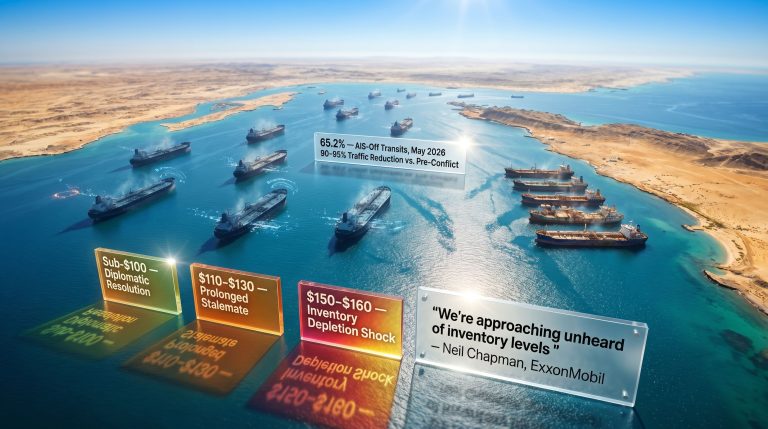
| Strait of Hormuz | Persian Gulf narrows | ~20% of global daily oil transit | Partial disruption, 40+ tankers stranded |
| Saudi/UAE Facilities | Gulf Region | ~15% combined global supply | Under explicit Iranian threat |
Iranian leadership has issued explicit threats against Saudi Arabian and UAE energy facilities, widening the conflict's theoretical perimeter to encompass the Gulf's two largest remaining export hubs. Whether these threats represent operational intentions or strategic deterrence is precisely the uncertainty that energy markets are currently pricing into the $5.88 Brent-WTI spread observed in early May 2026.
Decoding the Price Signals: What the Numbers Actually Reveal
Reading the May 2026 Crude Market Structure
The pricing snapshot from early May 2026 contains more information than the headlines typically extract. Examining the full cross-section of crude benchmarks reveals a layered picture of geographic risk distribution:
| Benchmark | Price | Change | What It Signals |
|---|---|---|---|
| WTI Crude | $95.42 | +0.64% | U.S. supply buffer partially insulating domestic pricing |
| Brent Crude | $101.30 | +1.23% | Atlantic market pricing in Hormuz disruption premium |
| Murban Crude | $98.82 | +2.23% | Gulf-specific anxiety running highest in regional benchmark |
| Heating Oil | $3.899 | +2.16% | Downstream product markets amplifying upstream risk |
| Gasoline | $3.527 | +2.05% | Consumer-level transmission of geopolitical premium now active |
The 2.23% Murban gain against Brent's 1.23% is analytically significant. Murban, produced by ADNOC in Abu Dhabi, is a benchmark specifically reflecting Gulf loading and export conditions. Its outperformance against Brent suggests that traders are pricing Gulf-specific supply disruption risk at a premium to the broader geopolitical uncertainty that Brent captures. When the regional benchmark moves faster than the global benchmark, the market is telling you the risk is being located precisely rather than distributed broadly.
American Petroleum Institute data confirmed very large draws on both crude inventories and refined product stockpiles in the reporting period, adding a demand-side supply tightness layer to the geopolitical disruption premium. This combination — physical stock draws plus war risk premium — is typically the configuration that produces the most sustained upward price trajectories rather than the brief spikes that reverse within sessions.
The broader consumer impact is already visible. U.S. average gasoline prices exceeded $4.50 per gallon in early May 2026, approaching a four-year seasonal high. This figure represents the downstream endpoint of crude pricing, refining margin expansion, and logistics disruption flowing simultaneously into retail fuel costs.
Scenario Mapping: Three Pathways Forward for Energy Markets
Structured Analysis of Escalation Trajectories
Energy markets are not binary. They price probability-weighted distributions of outcomes. The three scenarios below are not predictions. They are structured frameworks for thinking about how different decision chains could affect physical supply and benchmark pricing over the next six to eighteen months.
Scenario 1: Diplomatic De-escalation
- U.S.-Iran nuclear and energy talks produce a working ceasefire framework
- Israel suspends further strikes in response to Washington's explicit request, which Prime Minister Netanyahu has publicly acknowledged receiving
- Iranian port blockades are moderated in exchange for Iranian concessions on enrichment caps
- Brent retreats toward the $88-$95 range as the geopolitical risk premium compresses
- Trigger signal to watch: Resumption of formal JCPOA-framework talks with third-party mediators present
Scenario 2: Contained Escalation
- Israel conducts limited additional strikes on Iranian military targets, avoiding civilian and shared energy infrastructure
- Iran responds with calibrated attacks on Gulf facilities, staying below the threshold that would trigger direct NATO response
- Hormuz remains technically open but operationally constrained, with transit costs elevated and insurance premiums prohibitive for some operators
- Brent stabilises in the $100-$110 band with LNG markets facing sustained tightness through 2025-2026
- Trigger signal to watch: Murban-Brent spread behaviour and Hormuz transit insurance rate movements
Scenario 3: Full Regional Escalation
- Israeli strikes expand beyond military targets into broader Iranian energy and civilian infrastructure
- Iran activates Hormuz closure contingency, supported by Houthi and Hezbollah proxy network intensification
- Saudi and UAE facilities targeted in retaliatory strikes, triggering emergency IEA stock release coordination
- Brent tests $125-$140+, with the EU's own warning of a multi-year energy crisis becoming the operational baseline
- Trigger signal to watch: Iranian official statements explicitly referencing Hormuz closure as a policy option, plus tanker insurance market suspension signals
| Scenario | Directional Probability | Brent Target | Key Decision Node |
|---|---|---|---|
| Diplomatic De-escalation | Moderate | $88-$95 | U.S.-Iran deal framework viability |
| Contained Escalation | Currently Elevated | $100-$110 | Israeli operational restraint boundary |
| Full Regional Escalation | Lower but Materially Rising | $125-$140+ | Hormuz closure activation |
Disclaimer: Scenario price targets represent analytical frameworks based on historical supply disruption precedents and current market positioning, not investment recommendations. Actual outcomes will depend on political decisions, military developments, and diplomatic channels that cannot be predicted with precision.
Geographic Exposure: Who Bears the Heaviest Load
Mapping the Cascading Effects Across Import-Dependent Economies
The Hormuz disruption is not symmetrically distributed across the global economy. Its impact concentrates heavily in Asian import-dependent nations, European aviation and industrial sectors, and smaller economies with limited ability to absorb energy price shocks.
Asia-Pacific:
- More than 40 India-bound vessels were reported stranded near Hormuz as of early May 2026, with Indian inflation accelerating as high energy prices began transmitting through the domestic economy
- The first post-war tanker successfully reaching South Korea through the strait was treated as a logistics milestone, reflecting how completely normal shipping operations had been disrupted
- Japan's LNG import dependency makes it particularly exposed to any sustained disruption of Qatar's Ras Laffan export capacity
Europe:
- Germany's emergency sourcing of Israeli jet fuel as Hormuz disruptions crippled airlines represents a new form of energy security dependency, replacing Middle East supply chains with Israeli alternatives
- Lufthansa disclosed that a sustained Strait of Hormuz closure would add $2 billion in additional fuel costs to its operations, a figure that illustrates the aviation sector's acute vulnerability to Gulf energy geography
- The EU issued a formal warning that the energy crisis arising from the Iran-Israel conflict could last for years, a striking statement that reflects structural rather than transient disruption concerns
- European gas markets were bracing for a potential doubling of winter prices according to trader positioning data
- The EU suspended methane regulations as energy constraints overrode environmental policy priorities, and separately moved to reconsider domestic gas drilling prohibitions that had been in place under climate frameworks
South Asia and Smaller Economies:
- Pakistan issued emergency LNG tenders for two cargoes as a deepening power crisis stretched domestic generation capacity, whilst simultaneously opening Iran land corridors as alternative routes beyond Hormuz
- The cascading effect from expensive LNG through Pakistan's power infrastructure into industrial and residential supply represents the humanitarian end of the energy crisis spectrum that headline crude prices alone do not capture
A Paradoxical Beneficiary:
- U.S. fuel exports hit record highs as the Hormuz crisis reshaped global energy trade flows, with American exporters filling supply gaps created by Gulf disruption. This repositions North America as a geopolitically stable alternative supply source, accelerating a structural shift in global LNG and refined product trade that was already underway before the current conflict began
- Canada's oil and gas industry was identified as having a particular opportunity window, with a U.S.-Canada oil pipeline nearing go-ahead status as shippers locked in volumes
The next major ASX story will hit our subscribers first
Washington's Strategic Architecture: Diplomacy and Pressure Simultaneously
The Dual-Track Approach and Its Market Consequences
The Trump administration's posture toward the Iran conflict is structurally unusual: it is simultaneously sustaining military pressure on Iranian energy infrastructure through strikes on Iran-flagged oil tankers, coordinating with Israel on campaign objectives, and pursuing diplomatic channels that could produce an energy deal. These tracks are not necessarily contradictory in strategic theory, but they create maximum market uncertainty because any given day's price movement can be driven by whichever track generates news flow.
The most direct demonstration of Washington's market influence came when Trump paused the Hormuz escort plan known as Project Freedom, an initiative designed to provide naval protection for commercial vessels transiting the strait. Oil prices fell below $100 per barrel immediately following that announcement, demonstrating that U.S. policy decisions carry price transmission power comparable to — and in this instance exceeding — Israeli military statements. Consequently, when tankers became stranded again following the plan's suspension, prices reversed.
This bidirectional price sensitivity to U.S. decisions creates a specific trading dynamic: short-term positioning around Washington policy signals has become as important as long-term fundamental supply analysis. For investors and corporate hedgers, this means volatility itself has become a structural feature of the market environment, not a temporary aberration awaiting resolution.
The financial pressure campaign running alongside military operations includes U.S. strikes on Iran-flagged oil tankers and an active crackdown on Iraqi oil networks allegedly facilitating Iranian crude sales. Iraq denied U.S. claims that a Deputy Minister had assisted Iranian oil sales, but the investigation itself signals that Washington is systematically closing the revenue channels Iran has historically used to circumvent sanctions regimes. In addition, U.S. senators pushed to reinstate Russian oil sanctions, raising the prospect of a simultaneous two-front energy sanctions architecture that would materially tighten global supply balances. The trade war oil impact of these compounding pressures is increasingly difficult to separate from the purely military dimensions of the conflict.
The Longer Game: Structural Vulnerabilities That Outlast Any Single Conflict
Why This Crisis Is Accelerating Pre-Existing Energy Security Pressures
The International Energy Agency published an assessment confirming that tight global gas markets would persist through 2030, establishing a structural baseline against which any supply shock carries disproportionate impact. This is not a crisis creating scarcity from abundance. It is a crisis arriving into a market already operating with limited resilience. Furthermore, OPEC's market influence continues to shape how swiftly spare capacity can be mobilised in response to these disruptions.
Several structural repositioning moves are underway that will shape energy markets long after the current conflict resolves:
- Australia ordered LNG exporters to reserve 20% of their production for the domestic market and separately announced a $7 billion fuel stockpile initiative, reflecting a national-level determination to reduce exposure to Middle East supply chain vulnerability
- The EU's suspension of methane regulations and reconsideration of domestic drilling bans represents a fundamental recalibration of the balance between climate policy objectives and energy security requirements
- Barclays assessed that UAE oil supply growth would accelerate in a post-OPEC constraint environment, identifying the Gulf state as a key swing supplier if Saudi production capacity becomes operationally constrained
- Saudi Arabia's decision to cut June oil prices by less than the market expected, despite persistent Hormuz risks, was interpreted as a deliberate signal of supply confidence designed to manage market psychology rather than purely reflect cost dynamics
The energy transition paradox embedded in this crisis deserves explicit recognition. Import-dependent economies under acute supply pressure are not accelerating renewable buildout. They are, in fact, doing the opposite: extending fossil fuel dependencies, reopening domestic extraction debates, suspending environmental regulations, and paying premium prices for geopolitically stable hydrocarbon supply from North American producers. The conflict is not an accelerant for the energy transition. In the near to medium term, it is a retardant, reinforcing structural demand for fossil fuels precisely at the moment when the transition was supposed to be reducing that demand.
Key Indicators for Monitoring Escalation Risk
For investors, energy procurement officers, and analysts tracking this situation, the following leading indicators provide the earliest signals of trajectory change. Notably, Iran's threats against regional targets remain one of the most closely watched variables across all of the metrics listed below:
- Murban-Brent spread behaviour: widening signals Gulf-specific deterioration; compression signals localised risk receding
- Hormuz transit insurance rates: market pricing for ship insurance through the strait provides a real-time risk gauge independent of political statements
- U.S.-Iran diplomatic channel activity: any resumption of third-party mediated talks involving Oman or European intermediaries historically precedes price retreats
- Israeli port logistics monitoring: military build-up indicators at Israeli ports, including publicly reported defence aid arrivals, provide operational readiness signals
- API and EIA inventory data: sustained large draws during a geopolitical premium environment confirm physical tightness compounding risk pricing, whilst inventory builds suggest demand destruction is offsetting disruption effects
- Tanker stranding data near Hormuz: real-time vessel tracking near the strait provides ground-truth supply chain disruption evidence that policy statements cannot obscure
This article presents analysis of publicly available market and geopolitical information. Nothing contained herein constitutes investment advice or a recommendation to buy or sell any financial instrument. Energy price forecasts involve significant uncertainty, and actual market outcomes may differ materially from scenarios described.
Want to Stay Ahead of the Next Major ASX Mineral Discovery?
While geopolitical shocks continue to reshape global energy markets, Discovery Alert's proprietary Discovery IQ model scans ASX announcements in real time — instantly identifying significant mineral discoveries across more than 30 commodities and translating complex data into clear, actionable insights for investors at every level. Explore how historic discoveries have generated substantial market returns on Discovery Alert's dedicated discoveries page, and begin your 14-day free trial today to position yourself ahead of the market.